DbcultAccessing Vault...
Cult Review
Senior Film Conservator
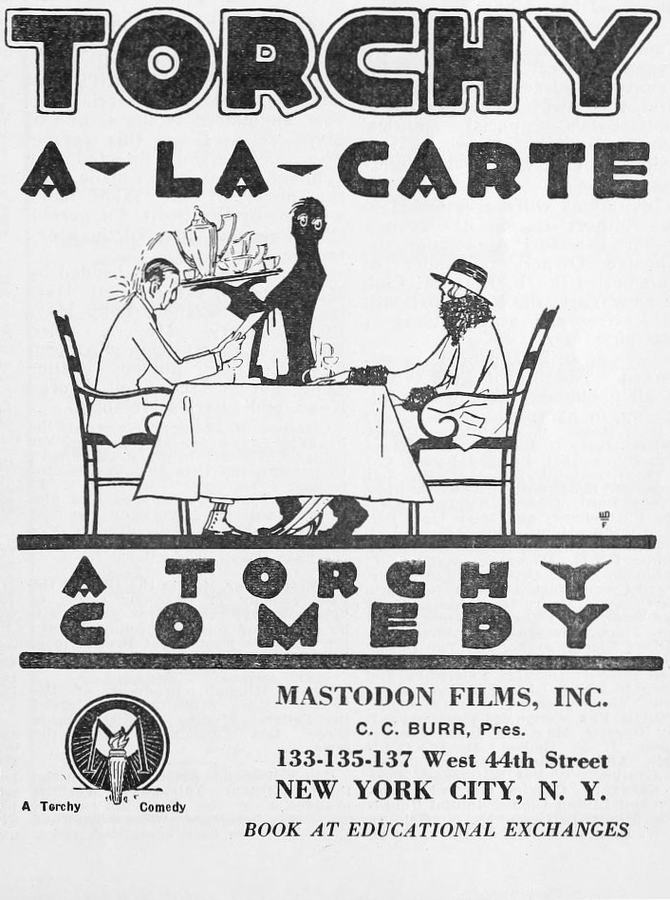
Stepping into the world of Torchy a la Carte, one is immediately struck by its understated ambition. This isn't a grand epic or a sprawling melodrama; rather, it’s a meticulous, almost anthropological, study of a singular urban fixture: the lunch wagon, and its indefatigable manager, Torchy. In an era often defined by monumental cinematic gestures – think of the sweeping historical narratives or the stark social commentaries that dominated the silver screen – Torchy a la Carte carves out its own quiet niche, offering a glimpse into the quotidian rhythms that underpin the bustling metropolis. It’s a film that finds profundity not in explosive plot points, but in the subtle interactions and the persistent spirit of its central character, brought to life with an endearing authenticity by the inimitable Johnny Hines.
The brilliance of Sewell Ford’s conception lies in elevating what could easily be a mere backdrop into a vibrant, living entity. The lunch wagon isn't just a place where food is served; it's a crucible of humanity, a transient sanctuary where the city's diverse denizens converge under the watchful, often wry, eye of Torchy. Here, the lines between customer and confidant blur, and each transaction carries the weight of unspoken stories. Hines, as Torchy, embodies this role with a nuanced performance that transcends the typical silent film histrionics. His expressions, though subtly rendered, convey a deep reservoir of empathy, resilience, and an almost philosophical detachment that allows him to observe the human comedy and tragedy unfolding before him. Unlike the more overt dramatic stylings seen in a film like The Penalty, where Lon Chaney’s grotesque physicality dominates, Hines's appeal is in his understated realism, making Torchy feel like a man you might genuinely encounter on a late-night street corner.
The narrative, while seemingly simple—Torchy manages a lunch wagon—unfolds with an episodic grace that reveals the intricate web of urban existence. We don't witness a singular, overarching conflict so much as a series of vignettes, each contributing to a broader mosaic of city life. These brief encounters, from the weary laborer seeking a hot meal to the furtive couple sharing a moment of quiet intimacy, paint a vivid picture of the early 20th-century urban landscape. Ford’s writing, even filtered through the visual language of silent cinema, suggests a keen observational wit, an understanding of the small, telling details that define character and circumstance. This approach stands in stark contrast to the more overtly plotted and morally charged narratives of films such as Within the Law, which focused on grander themes of justice and redemption. Torchy a la Carte, by comparison, finds its moral compass in the everyday decency and quiet perseverance of its protagonist.
Johnny Hines, a prolific actor of the era, truly anchors this film. His portrayal of Torchy is a masterclass in silent comedy and understated drama. He doesn't rely on broad slapstick, though moments of gentle humor certainly punctuate the proceedings. Instead, Hines builds Torchy from a series of gestures, glances, and subtle physical reactions that communicate volumes. The way he meticulously prepares a sandwich, the patient tilt of his head as he listens to a customer’s woes, the slight slump of his shoulders at the end of a long night—these are the brushstrokes of a performer deeply attuned to the nuances of human experience. His comedic timing is impeccable, often deriving from the absurdity of everyday situations rather than forced gags, aligning him more with the observational humor of early character studies than the more exaggerated antics of some contemporaries. This makes him a relatable figure, a quiet hero navigating the challenges of his particular world, much like the resourceful protagonists in films

IMDb —
1918
Community
Log in to comment.