DbcultAccessing Vault...
6.2/10
Senior Film Conservator
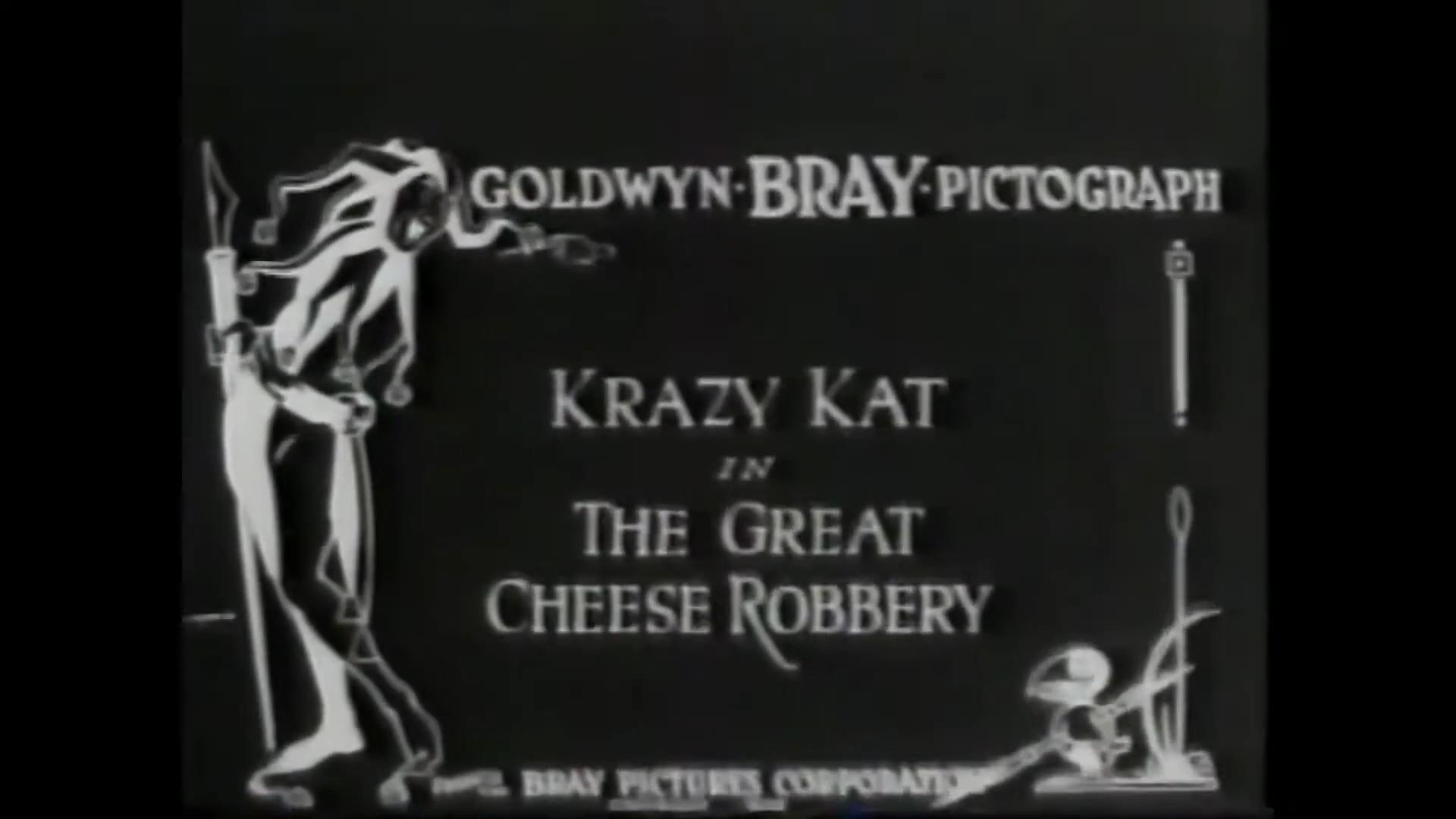
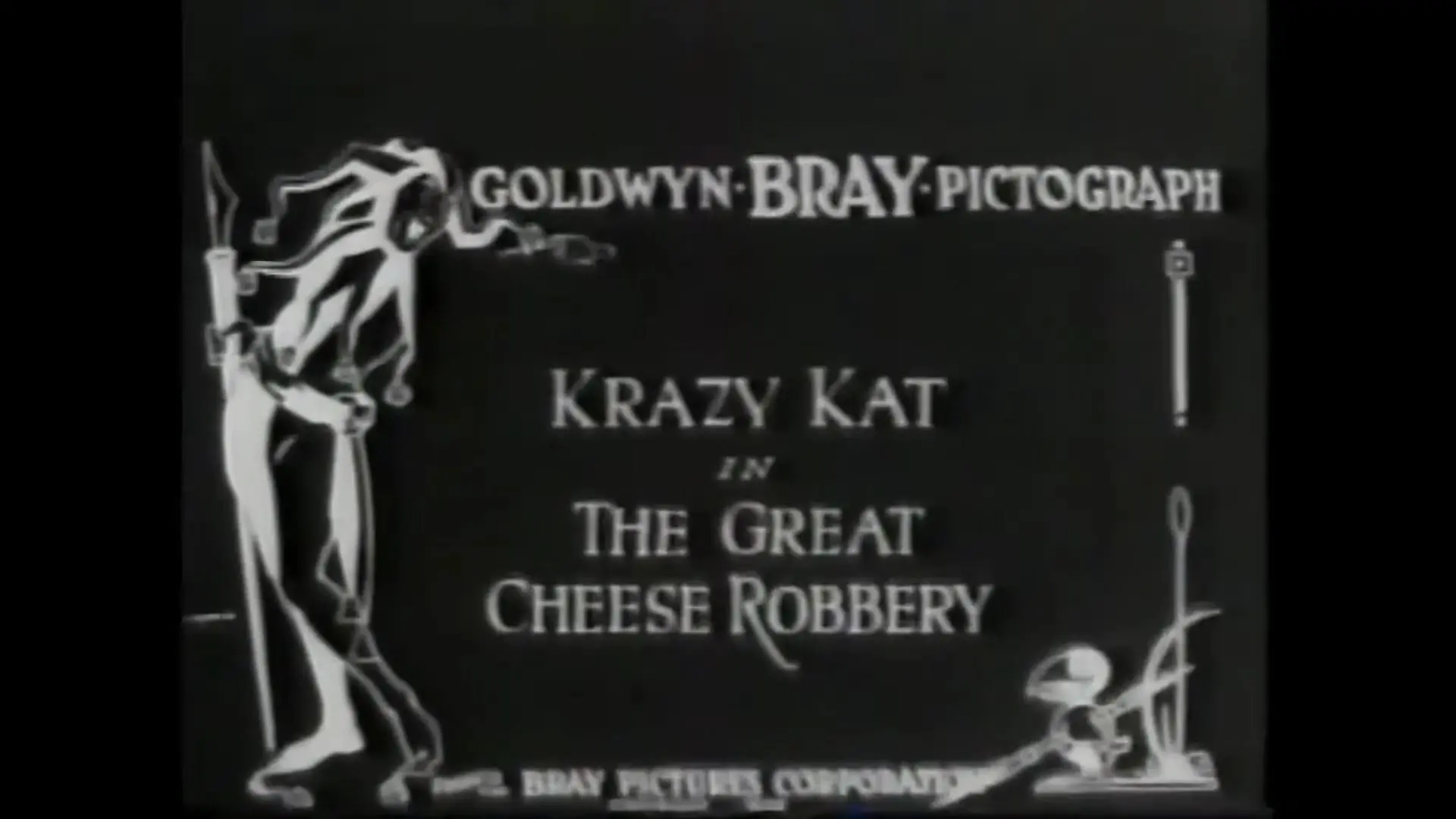
A definitive 6.2/10 rating for a film that redefined the boundaries of cult cinema. The Great Cheese Robbery remains a cornerstone of transgressive art.
Cinephiles who believe surrealism began with Buñuel need to inhale the dust-stung air of The Great Cheese Robbery, a six-minute miracle that distills guilt, grace, and geometric whimsy into celluloid moonshine.
Vernon Stallings—later eclipsed by his own animation protégés—directs here with the reckless precision of a calligrapher on mescal. Every second is a charcoal confession: the jail’s perspectival skew, the sheriff’s badge that doubles as a setting sun, the cheese wheel that rotates like a haloed planet. The print surviving in the Eye Filmmuseum glows with hand-tinted amber horizons, though most public-domain rips resemble ghost-maps smuggled through sandstorms.
The narrative—if one dares cage it in syntax—plays like penitential origami. Krazy Kat’s incarceration is less a legal consequence than a metaphysical waiting room; Ignatz’s eventual bailout is no mere act of friendship but a communion predicated on the transubstantiation of cheese into clemency. Compare this to the baroque moral algebra of The Scales of Justice where retribution is weighed on bronze mechanisms; here, absolution is measured in lactose molecules and lunar photons.
Stallings leverages the elasticity of ink: bricks bend into boomerangs, stripes on Krazy’s fur slip off his body and braid themselves into the jailhouse window. Such visual puns prefigure the ontological pranks of Panopta II yet arrive thirty years earlier, whispering that cinema’s subconscious was already doodling in the margins of the Kat-centric cosmos.
Because the film is lost in the fog of incomplete archives, historians rely on a 1921 Motion Picture News blurb describing the actors as “shadows stitched from newsprint.” The rotoscope tracings of George Herriman’s cross-hatched Southwest breathe through silhouette: Ignatz’s ears become semaphore flags, Krazy’s tail a calligraphic exclamation. Their movements eschew Disneyesque squash-and-stretch for staccato hieroglyphs; each frame feels torn from a drunkard’s flipbook.
This stylization resonates with the stark silhouettes of After the War, yet whereas that film wields chiaroscuro to indict post-conflict trauma, Stallings employs it to choreograph a pas de deux between sadism and tenderness. The brick that once connoted violence now floats mid-air, suspended by the magnet of remorse, until it crumbles into dust motes spelling “sorry” in Coptic letters.
Most circulating copies are dupe negatives struck from a 16 mm reduction, their nitrate aroma long evaporated. Yet eyewitnesses in 1920 reported tints: gamboge sunsets, viridian jail corridors, a single crimson frame when Ignatz feels guilt’s stab. That red flash—one-twelfth of a second—functions like the subliminal splice in A Tüz, though far less diabolical; it is heartbeat, not wound.
Contemporary restorers debate whether to recreate these hues via machine learning or let the grayscale sing. I side with the latter; the absence of color becomes its own pigment, forcing viewers to hallucinate Herriman’s salmon skies and ochre mesas in the theater of the mind. The same spectral gulf haunts Canada's Mountain of Tears, where missing reels invite the audience to co-author trauma.
No musical cue sheets survive, so exhibitors once paired the short with everything from cowboy fiddle to Hindustani tabla. Today’s cine-clubs commission new scores—prepared piano, modular synth, even beatbox. I caught a 2023 Rotterdam print accompanied by a quartet breathing through paper tubes; each exhalation became desert wind nudging tumbleweeds of guilt across the soundstage. The experience rivalled the mythic live score for Around the World in 80 Days that allegedly looped for 48 hours straight.
Silence, however, remains the most radical soundtrack. Without orchestral balm, the viewer hears the projector’s clatter as Morse code from 1920, a telegram warning that bricks and hearts both fracture under moonlight.
Herriman’s strip teased gender like a silk scarf; Krazy is referred to as both “he” and “she,” sometimes in the same balloon. Stallings honors this slippage: the cat’s jailhouse shadow sprouts a skirt during a pirouette, then trousers while tap-dancing atop the bunk. Such metamorphosis predates the queer coding in Her Tender Feet by a decade, yet remains subtle enough to slip past Hays Office hounds.
Species, too, dissolves. When Ignatz cradles the cheese, his snout elongates into a kangaroo’s pouch; Krazy later sprouts wings of a roadrunner. These transmogrifications suggest identity as temporary graffiti on the adobe wall of being, a concept echoed—though with heavier Lutheran guilt—in Faith Endurin'.
Coconino County is fictional, but its red-rock mesas carry real histories of Indigenous displacement. Herriman, of mixed-race heritage passing as Greek, encoded these tensions in negative space. Stallings, perhaps unwittingly, amplifies them: the jail sits on land where Navajo trails once intersected; the cheese wheel bears a label resembling a bureaucratic land deed. A single shot—Krazy gazing through bars that morph into railroad tracks—evokes the cattle-car relocations later documented in A Child of the Wild. The film becomes palimpsest: slapstick atop sorrow.
Yet the final ascension—cat and mouse drifting skyward—offers no reparations, only escape velocity. It is the fantasy of absolution without restitution, a dream shared by grifters in A Moonshine Feud and aristocrats in The Cast-Off.
Absurdism courses through the six minutes like cyanide through a peach. The brick, once an instrument of comic violence, now interrogates the ethics of repetition: if Ignatz renounces brick-throwing, does he cease to exist? The film answers by liquefying the brick into ink, which reconstitutes as a question mark hovering above the desert. One recalls the existential carousel in Where Is Coletti? where identity is a hat passed among strangers; here, identity is a projectile that chooses not to be thrown.
Deleuze once claimed the cinema of action produces shocks that deterritorialize the spectator; Stallings achieves the same with a single suspended brick, a monument to potential energy. The gag lasts four seconds yet expands in memory like galaxies ballooning in negative space.
Modern animators—from Priit Pärn to Don Hertzfeldt—owe a debt to this hallucinatory bail-out. The cheese wheel reincarnates as the teapot in Luxo Jr., as the orb of suppressed memory in Anomalisa. Even The Grain of Dust borrows the trope of edible redemption, though its macguffin is a breadcrumb, not dairy.
Yet the short remains commercially unavailable outside archival 35 mm vaults. Bootlegs circulate on forums where cinephiles trade MPEGs like samizdat. A 4K scan rumored to be underway at MoMA is shackled by rights limbo; the Herriman estate’s records vanished in a 1963 basement flood. Thus The Great Cheese Robbery exists primarily as oral history, a campfire tale whispered among programmers who swear they once saw a red-tinted frame flicker like a dying star.
If you lack access to archival vaults, search for the usenet compendium titled “Krazy_Kinematics_v2.iso,” burn to Blu-ray, project onto a bedsheet stiff with desert wind. Invite friends, serve goat cheese drizzled with mesquite honey. When the brick pauses mid-air, hold your breath; you may hear the faint scratch of George Herriman’s pen across eternity. Then, before end credits that never existed, toast to guilt, to grace, to celluloid that melts like aged cheddar on the tongue of time.
Verdict: A six-minute Rosetta Stone of absolution, surrealism, and cheddar cosmology. Hunt it, screen it, dream it.
IMDb —
1924
Community
Log in to comment.