DbcultAccessing Vault...
Cult Review
Senior Film Conservator
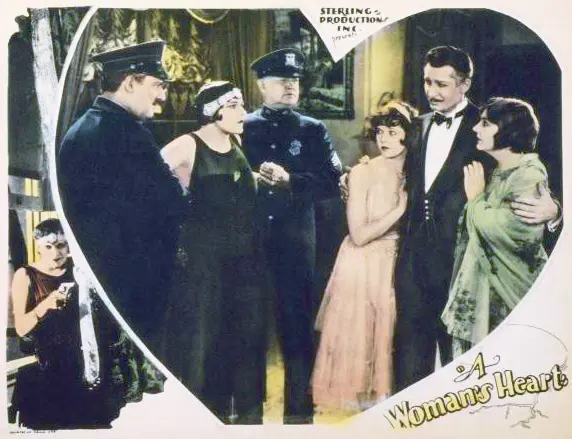
Short answer: No, unless you are a dedicated historian of silent-era domestic melodramas. While it offers a window into the rigid moral structures of the mid-1920s, the film’s reliance on convenient deaths to solve complex emotional problems makes it feel more like a lecture than a narrative.
This film is for viewers who enjoy dissecting the 'vamp' archetype and the evolution of the social-problem film. It is absolutely not for anyone who requires their protagonists to have a backbone or a story that doesn’t resolve itself through a literal murder-suicide.
1) This film works because it refuses to sugarcoat Eve’s mercenary motivations in the first act, presenting a refreshingly honest look at marriage as an economic survival strategy.
2) This film fails because its final third abandons character development in favor of a chaotic, violent resolution that feels disconnected from the established emotional stakes.
3) You should watch it if you want to see Enid Bennett navigate a role that balances 1920s glamour with a surprisingly modern sense of existential dread.
In 1926, the concept of a woman marrying for money was hardly new, but A Woman's Heart treats the subject with a bluntness that is almost jarring. Eve Allen (Enid Bennett) doesn’t pretend to love John Waring (Gayne Whitman). She is transparent about her transaction.
This setup provides a fascinating contrast to other films of the era like Slaves of Pride, where pride and wealth are often treated with more romanticized nuance. Here, the wealth is just a tool, and the pride is a burden that John is willing to carry if it means owning a piece of Eve's life.
The direction by Phil Rosen—though often uncredited in contemporary discussions—leans heavily on the physical space between the actors to convey the emotional void of the Waring household. When they return from their honeymoon, the sets feel cavernous and cold, reflecting a marriage that is already a tomb.
Bennett’s performance is the anchor. She doesn't play Eve as a villain, but as a woman who has run out of options. It is a weary, heavy-lidded performance that suggests the character is bored by her own scandal. This is a stark contrast to the more theatrical performances found in films like The Third Degree (1926).
Ralph Deane (Edward Earle) is the weak link in the narrative chain. He is presented as the 'old sweetheart,' the man who represents true love. However, the film quickly reveals him to be a predatory opportunist who breaks down Eve's resistance through sheer persistence rather than charm.
The scene in the car, where they drive through the country, is meant to be a moment of liberation. Instead, it feels claustrophobic. The cinematography captures the blurring landscape, but the focus remains on Ralph’s invasive proximity to Eve. It’s a moment that highlights the era's complicated view of consent and romantic persistence.
Compared to the more nuanced masculine archetypes in The Kentuckians, Ralph is a cardboard cutout of a home-wrecker. He lacks the internal conflict necessary to make Eve's obsession with him believable to a modern audience.
The inclusion of the 'Vixen' character (Mabel Julienne Scott) further complicates Ralph’s standing. If Ralph is the man Eve loves, and Ralph is the man the Vixen kills out of jealousy, then Eve’s taste in men is catastrophically poor. This realization isn't framed as a character flaw, but as a tragic circumstance of 'a woman's heart.'
Patsy Allen (Lois Boyd), Eve's sister, serves as the film’s moral watchdog. Her role is to bridge the gap between the audience's expected morality and the characters' transgressive behavior. She is the one who investigates Ralph’s double life, playing detective in a way that recalls the gritty resourcefulness of characters in Blue Jeans.
Patsy’s visit to Ralph’s home is one of the few sequences with genuine tension. The lighting shifts from the bright, sterile environments of the Waring estate to a more shadowed, noir-adjacent aesthetic. This is where the film finally finds its pulse.
However, Patsy’s agency is ultimately undermined by the script. She finds the truth, but she cannot prevent the violence. She is a witness to a train wreck that she saw coming from the first reel. This lack of impact makes her character feel like a narrative device rather than a person.
In many ways, Patsy is the most frustrating character because she represents the audience's common sense. Watching her fail to stop Eve from ruining her life is an exercise in cinematic frustration. It’s effective, but it’s not exactly enjoyable.
The character of Vixen is a fascinating, if problematic, relic of the silent era. She is the 'sensuous woman'—a label used in 1926 to denote a character who has already been discarded by polite society. She exists only to provide a violent resolution to the plot.
Her jealousy is the engine that drives the climax. When she shoots Ralph during his fight with John, it isn't an act of justice; it's a spasm of possessive rage. The film uses her as a 'deus ex machina' with a gun. By having her kill Ralph and then herself, the writers efficiently remove all the obstacles to Eve and John’s reconciliation.
This is lazy writing. It’s a trope that was already becoming tired by the mid-20s, seen in various forms in films like The Snarl. It robs the characters of the need to make difficult choices. Eve doesn't have to choose between John and Ralph because Ralph is dead. John doesn't have to forgive Eve because his rival has been erased.
The Vixen’s suicide is the final punctuation mark on this narrative cowardice. It’s a clean-up crew in the form of a character. It’s brutal, it’s simple, and it’s profoundly unsatisfying.
If you are looking for a deep exploration of the human condition, look elsewhere. If you are looking for a masterclass in silent film pacing, you might find more value in Mad Love or The Song of the Soul.
However, A Woman's Heart is worth watching if you want to understand the cynical underbelly of the 1920s. It is a film that admits love is often secondary to survival, and that 'happy endings' are sometimes just the result of everyone else being dead. It’s a dark, perhaps unintentional, commentary on the era.
The film’s technical merits—its solid cinematography and Enid Bennett’s expressive face—keep it from being a total loss. But it is a film of moments rather than a cohesive whole. It works as a series of tableaus about misery.
A Woman's Heart is a fascinating, if deeply flawed, artifact. It isn't a good movie by modern standards, but it is an important one for those studying the history of the domestic drama. It captures a moment in time when cinema was struggling to reconcile Victorian morality with the burgeoning realism of the Jazz Age.
The ending is the real kicker. Eve returns to John, 'now believing that John is the only man for her.' This isn't a realization of love; it's a realization of logistics. Ralph is dead. John is rich. The choice is made for her. It’s a brutal conclusion that the film tries to pass off as a happy one. It works. But it’s flawed. And that is exactly why it remains an interesting piece of cinema to dissect almost a century later.
IMDb 5.5
1929
Community
Log in to comment.