DbcultAccessing Vault...
Cult Review
Senior Film Conservator
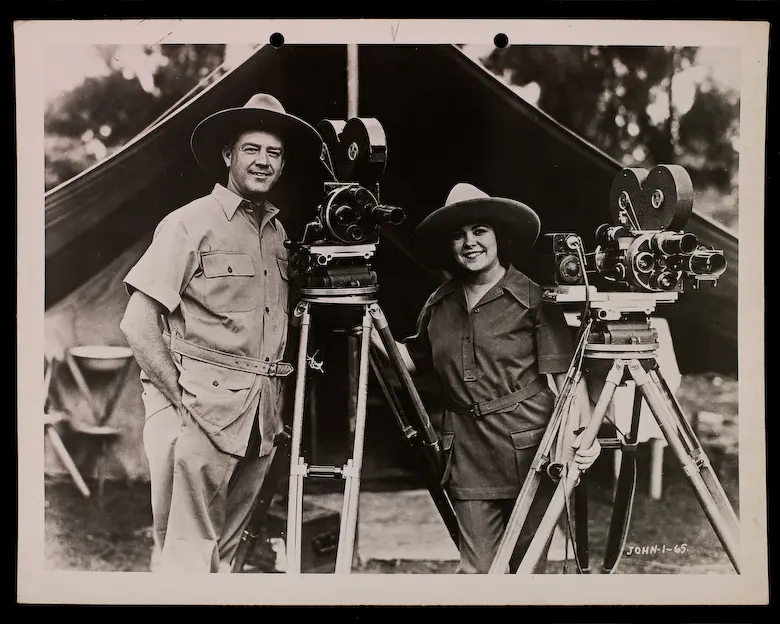
When Martin and Osa Johnson first set foot on the sun‑scorched dunes of East Africa, their ambition radiated like a beacon for the era’s burgeoning fascination with exoticism. Their cameras, bulky yet resolute, became extensions of their very eyes, capturing moments that would have otherwise dissolved into the dust of oblivion. The film opens with a sweeping aerial tableau of the Serengeti, a palette of ochre and umber that instantly immerses the viewer in a world where the horizon is both a promise and a threat.
What distinguishes this documentary from contemporaneous travelogues is its refusal to romanticise the wilderness as a mere stage for human heroics. Instead, the Johnsons present a dialogue—a visual conversation—between themselves and the creatures they pursue. Osa’s narration, soft yet authoritative, often interjects with philosophical musings: “The lion does not roar for applause; it roars because the wind carries its song across the plains.” This lyrical cadence is juxtaposed against Martin’s methodical, almost scientific, commentary on animal behavior, creating a symphonic tension that propels the narrative forward.

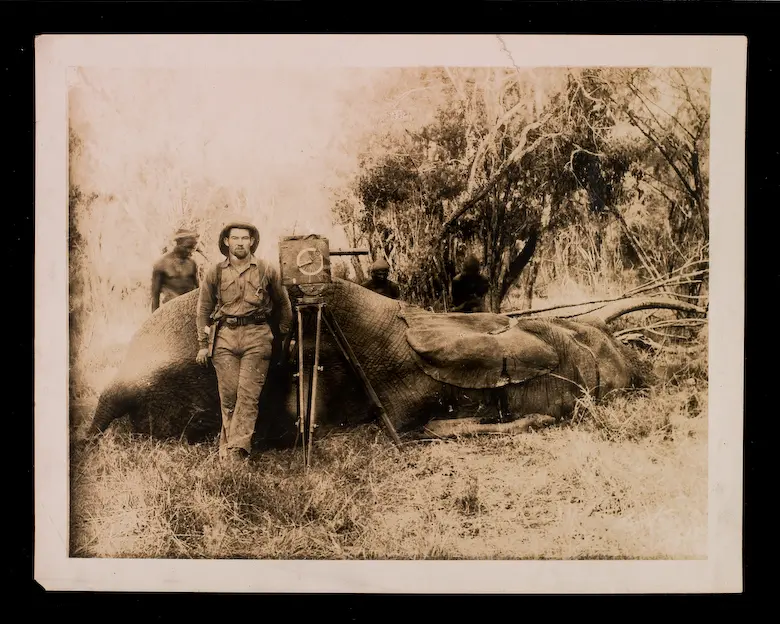
The first substantive encounter occurs at the banks of the mighty Zambezi, where a herd of elephants ambles in slow, deliberate procession. The camera lingers on the matriarch’s weathered visage, allowing the audience to contemplate the weight of memory carried within each wrinkle. The Johnsons’ reverence is palpable; they do not intrude, merely observe, granting the audience a rare intimacy with these leviathans of the savanna.
Later, a sudden thunderstorm forces the explorers into a thicket where a pack of hyenas emerges, their guttural cackles echoing like an ancient chorus. The scene is shot in chiaroscuro, the dark canopy pierced by fleeting shafts of lightning that illuminate the predators’ gleaming eyes. The Johnsons’ decision to remain still, to become part of the tableau, showcases their profound respect for the ecosystem’s balance—a balance that modern documentaries often dramatise rather than honour.
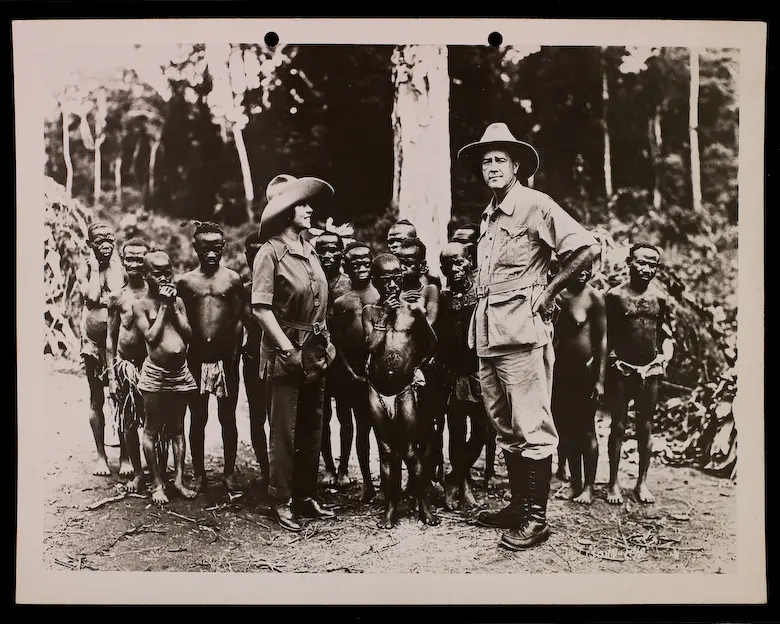
The narrative’s apex arrives when the couple ventures into an uncharted rainforest, a verdant labyrinth that seems to breathe with its own pulse. Here, the film’s cinematography shifts dramatically; the camera adopts a handheld, almost frenetic quality, mirroring the protagonists’ heightened adrenaline. The dense foliage is rendered in saturated greens, while the occasional burst of a scarlet bird or the glint of a beetle’s carapace offers chromatic relief.
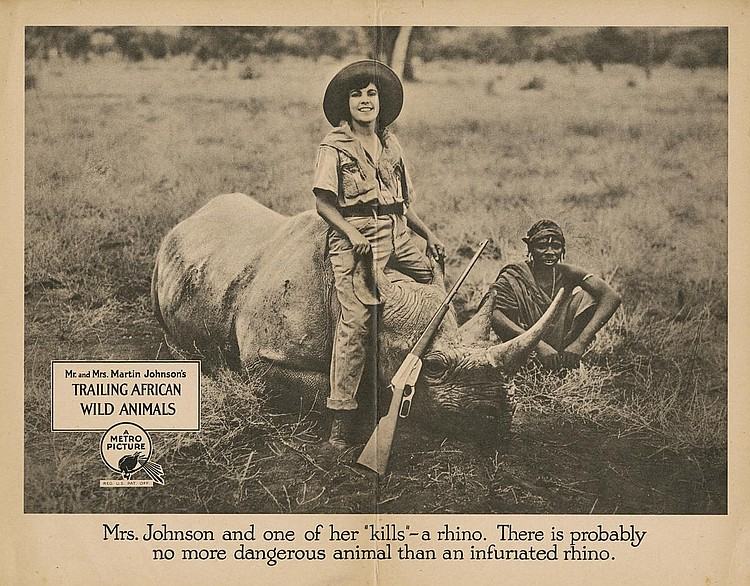
It is within this emerald abyss that the Johnsons encounter the fabled black rhinoceros. The animal’s silhouette, half‑concealed by mist, emerges with a gravitas that halts time. The camera captures the rhino’s slow, deliberate gait, each footfall resonating like a drumbeat against the forest floor. Osa’s voice, hushed, conveys awe: “In its eyes, I see the weight of ages, the echo of a world that has survived the march of men.” The moment is both triumphant and melancholic, underscoring the documentary’s underlying meditation on preservation.
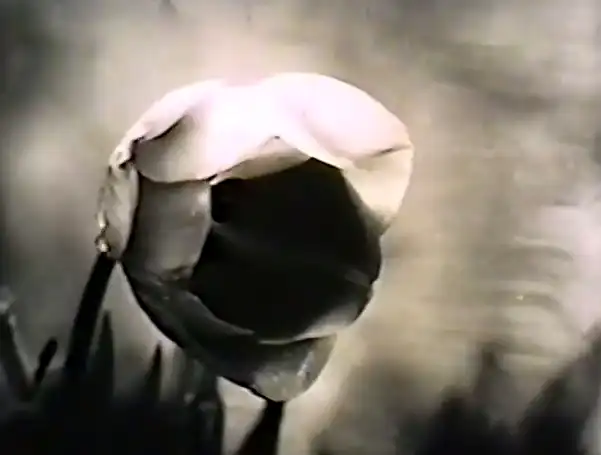
When juxtaposed with contemporaneous works such as Sapho (1917)—a melodramatic exploration of human desire—the Johnsons’ film stands out for its unflinching commitment to authenticity. Unlike the sensationalist spectacle of The Magic Note, which employs fantastical elements to dramatise its narrative, Trailing African Wild Animals remains grounded, allowing the wilderness to speak for itself.
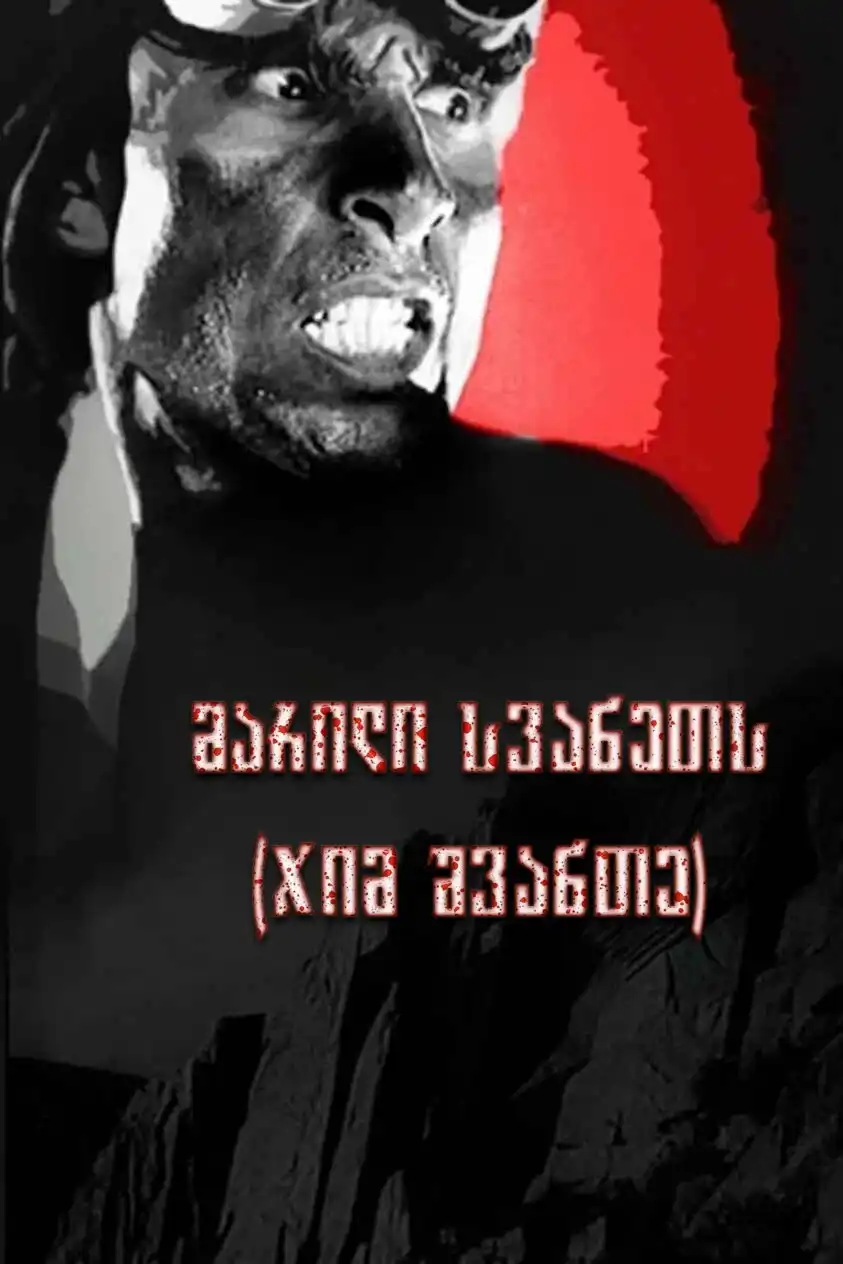
Even when compared to the stark realism of Der Verächter des Todes, the Johnsons’ documentary shares a kinship in its unvarnished portrayal of struggle, yet diverges in tone: where the former delves into existential dread, the latter celebrates the sublime beauty of the natural world.
From a technical standpoint, the film is a marvel of early 20th‑century craftsmanship. The use of natural lighting, particularly during sunrise sequences over the Maasai Mara, creates a palette that oscillates between amber and cobalt, echoing the film’s thematic dualities. The editing is deliberately paced; long takes allow the viewer to linger, fostering a contemplative atmosphere that modern fast‑cut documentaries often sacrifice.
The sound design, though limited by the era’s technology, employs a strategic blend of ambient wildlife noises and Osa’s narration. This auditory restraint ensures that the audience remains anchored in the environment, hearing the rustle of grass, the distant roar of a lion, and the subtle crackle of a campfire—all of which coalesce into an immersive soundscape.
Beyond its visual splendor, the documentary raises poignant questions about the ethics of wildlife documentation. The Johnsons, while undeniably pioneers, occasionally tread the fine line between observation and intrusion. Their decision to capture specimens for scientific study—though typical of the period—invites contemporary critique, reminding us that the lens can be both a tool of enlightenment and an instrument of exploitation.
The film also offers a rare glimpse into indigenous African perspectives, albeit filtered through a Western gaze. Brief interludes feature tribal elders sharing oral histories about the animals, providing a cultural counterpoint that enriches the narrative tapestry.
The enduring influence of Trailing African Wild Animals can be traced through subsequent nature documentaries, most notably the groundbreaking work of Sir David Attenborough. The Johnsons’ emphasis on respectful observation and narrative intimacy set a template that reverberates in modern wildlife storytelling.
Moreover, the film’s aesthetic choices echo in contemporary visual art, where the interplay of light and shadow in natural settings continues to inspire photographers and filmmakers alike. Its commitment to authenticity, despite technological constraints, serves as a benchmark for creators seeking to balance artistic vision with factual integrity.
In sum, Trailing African Wild Animals is not merely a record of an expedition; it is a meditation on humanity’s place within the grand tableau of life. The Johnsons’ journey, captured in grainy yet glorious frames, invites viewers to contemplate the delicate interdependence between observer and observed. It challenges us to ask: when we venture into the wild, do we seek dominion, or do we aspire to communion?
For those yearning to experience a film that marries adventure with introspection, that balances spectacle with subtlety, this documentary stands as a luminous beacon—a reminder that the most compelling stories are those that honour the subjects they portray.

IMDb —
1931
Community
Log in to comment.