DbcultAccessing Vault...
Cult Review
Senior Film Conservator
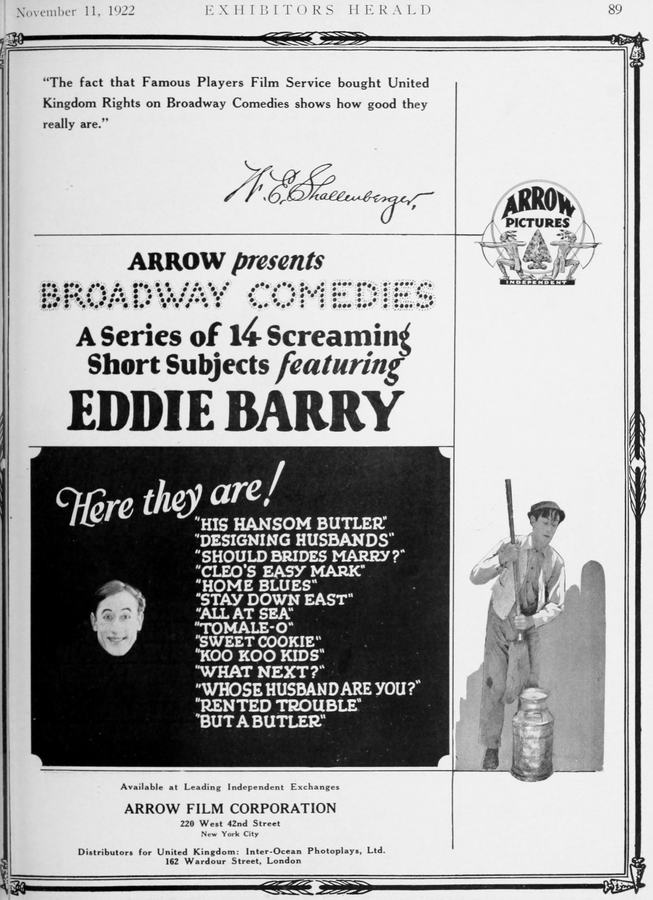
To understand Koo Koo Kids, one must first dismantle the prevailing notion that silent-era shorts were merely crude precursors to the feature film. In the mid-1920s, the Christie Film Company stood as a sophisticated rival to the chaotic slapstick of Mack Sennett. While Sennett leaned into the grotesque and the violent, Christie comedies—exemplified here—favored a certain suburban elegance, a situational humor that felt more grounded in the burgeoning middle-class reality of the Roaring Twenties. This film is a quintessential artifact of that era, a time when the cinematic vernacular was evolving from broad pantomime into a more nuanced, character-driven farce.
The casting of Vera Reynolds is a stroke of genius. Known for her work in more dramatic fare like A Kiss in Time, Reynolds brings a level of poise and genuine acting ability to the role that elevates the material. She doesn't just react to the chaos; she facilitates it with a twinkle in her eye that suggests a self-awareness often missing from the broader comedies of her contemporaries. Her performance here contrasts sharply with the heavy melodrama found in The Two-Soul Woman, proving her range as a cornerstone of the silent screen.
The set design of Koo Koo Kids functions as a character in its own right. The Christie studio was famous for its high production values, and the interior spaces depicted here are laden with the geometric precision of Art Deco influences. This structural rigidity provides the perfect backdrop for the fluid, often messy human interactions. When Eddie Barry enters the frame, the spatial harmony is immediately disrupted. Barry possesses a rubber-jointed physicality that feels almost liquid, sliding through doorways and over furniture with a grace that belies the clumsiness of his character.
Unlike the sprawling maritime adventures of Wild Waves and Women, which relied on the vastness of the exterior world, Koo Koo Kids finds its tension in the claustrophobic confines of a domestic setting. It is a film about the friction of personality, the way two people can occupy the same room and inhabit entirely different psychological universes. The "Koo Koo" of the title refers not just to a literal state of eccentricity, but to the rhythmic, clockwork-like nature of the comedy itself—a pulse that beats faster as the misunderstandings mount.
One cannot overlook the cinematography. The 1926 release window placed Koo Koo Kids at the pinnacle of silent film technology. The lighting is crisp, utilizing the high-contrast orthochromatic film stock of the day to create deep blacks and luminous whites. This visual clarity is essential for a film that relies so heavily on visual cues and micro-expressions. In an era where many shorts were still shot with a static camera, the subtle pans and tilts used here to follow the action suggest a director who understood the camera's role as an active participant in the joke.
Comparatively, while Who Is Number One? utilized suspense and mystery to engage its audience, Koo Koo Kids achieves engagement through pure, unadulterated joy. There is a sequence involving a staircase that is as meticulously choreographed as any ballet. It is this dedication to the craft of comedy—the refusal to take the easy way out with a cheap gag—that marks the Christie style. The film demands the viewer's full attention, as the humor is often layered; a primary physical gag might be happening in the foreground while a subtle character beat unfolds in the background.
Eddie Barry’s contribution to the Christie stable is often undervalued in contemporary discussions of silent comedy. In Koo Koo Kids, he displays a "straight man" sensibility that is actually quite radical. He doesn't beg for laughs. Instead, he allows the absurdity of his situation to speak for itself. This stoicism makes the eventual breakdown into chaos all the more satisfying. It’s a different energy than the frantic desperation seen in I'm on My Way, offering a more cerebral approach to the slapstick genre.
Vera Reynolds, meanwhile, acts as the film's emotional anchor. Even in the height of the "Koo Koo" madness, she maintains a shred of relatable humanity. It is this quality that made her such a star for Cecil B. DeMille and later for the Christie brothers. She possesses a cinematic magnetism that draws the eye, even when she is simply standing still. Her chemistry with Barry is palpable; they operate like a seasoned comedy duo who have spent years perfecting their shorthand. This rapport is what differentiates Koo Koo Kids from more disparate ensemble pieces like The Upheaval.
Released during a period of transition in Hollywood, Koo Koo Kids represents the last great flowering of the silent short before the advent of the talkies. There is a sense of unbridled creativity here, a willingness to experiment with the medium because the rules were still being written. The film lacks the cynicism of later sound-era comedies, replacing it with a whimsical optimism that is infectious. When viewed alongside more somber works like The Greater Law or the European sensibilities of A 111-es, the sheer American vitality of this short becomes even more apparent.
The Christie brothers were masters of the "two-reeler," and Koo Koo Kids is a masterclass in pacing. There isn't a wasted frame. Every shot serves the dual purpose of advancing the plot and setting up the next payoff. This economic storytelling is a lost art in an age of bloated runtimes and over-explained narratives. The film trusts its audience to keep up, to understand the visual cues, and to find the humor in the subtext. It is as much an intellectual exercise as it is a physical one.
Reflecting on the broader landscape of 1920s cinema, one might look at Der Millionenonkel to see how different cultures approached the concept of the "eccentric" character. While the European model often leaned into the grotesque or the satirical, the American model—as seen in Koo Koo Kids—was much more interested in the physical manifestation of that eccentricity. It is a celebration of the body in motion, a testament to the power of the face and the gesture to convey complex emotions without a single spoken word.
To watch Koo Koo Kids today is to take a trip back to a more innocent, yet technically sophisticated, era of entertainment. It reminds us that comedy doesn't need high-concept premises or vulgarity to be effective. It only needs a deep understanding of human nature and a willingness to see the absurdity in our daily lives. Whether compared to the dramatic weight of The Lion and the Mouse or the moral inquiries of The Devil's Prize, this short holds its own as a vital piece of the cinematic puzzle.
In the pantheon of Vera Reynolds' work, this might be viewed as a lighthearted diversion, but for the student of film history, it is much more. It is a bridge between the primitive slapstick of the 1910s and the sophisticated screwball comedies of the 1930s. It captures a moment in time when the screen was a place of endless possibility, where a couple of "Koo Koo Kids" could turn a living room into a universe of laughter. It remains a sparkling example of the Christie brothers' legacy and a must-watch for anyone who appreciates the foundational elements of visual comedy. The interplay between Reynolds and Barry is a masterclass in silent partnership, proving that even without sound, the chemistry between two performers can be deafeningly clear.
IMDb 6.8
1919
Community
Log in to comment.