DbcultAccessing Vault...
Cult Review
Senior Film Conservator
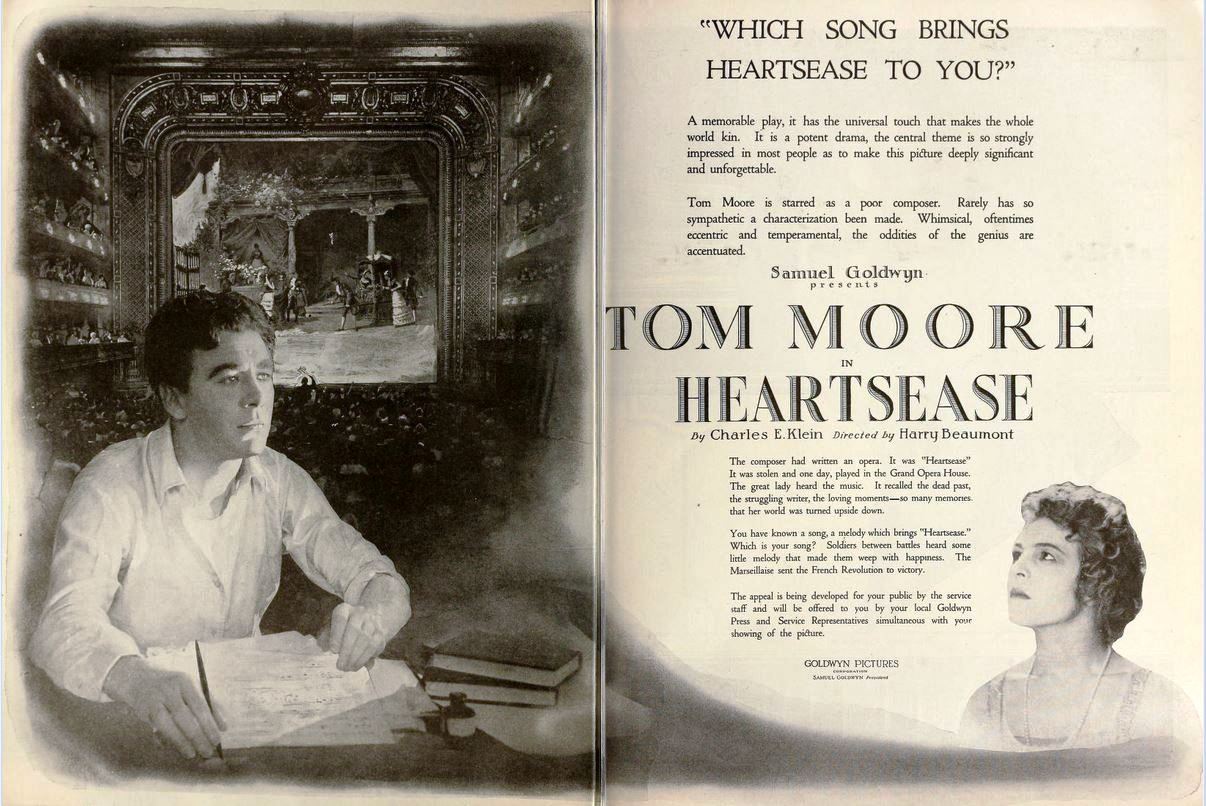
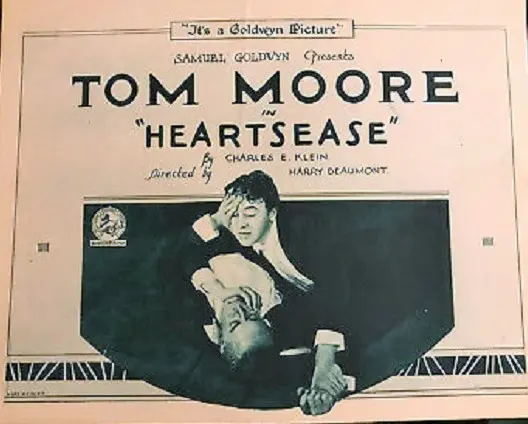
To witness Heartsease is to engage with a cinematic artifact that captures the intersection of theatrical melodrama and the burgeoning sophistication of silent film narrative. Directed with a keen eye for emotional architecture, this 1919 production transcends its temporal origins, offering a searing critique of the parasitic nature of fame. The story of Eric Temple, portrayed with a haunting vulnerability by Tom Moore, serves as a timeless allegory for the artist’s struggle against a world that values the veneer of success over the substance of creation. Unlike the rugged charm Moore displayed in Jubilo, his performance here is one of internalized anguish, a portrait of a man whose very soul is being harvested by a less capable rival.
The film, adapted from the stage play by Charles Klein and Joseph I.C. Clarke, retains much of its proscenium-born gravity while utilizing the visual fluidity of the Goldwyn Pictures aesthetic. It is a work that breathes through its shadows, using the high-contrast lighting of the era to delineate the moral chasm between the protagonist and his antagonist. While films like The Narrow Path explored the moral crossroads of the individual in a modernizing world, Heartsease narrows its focus to the specific, agonizing trauma of artistic erasure. It is not merely a story of theft; it is a story of ontological displacement.
Tom Moore’s portrayal of the beleaguered composer is a masterclass in silent-era restraint. He avoids the hyperbolic gesticulation that often marred the performances of his contemporaries, opting instead for a weary stoicism that makes his eventual outbursts of grief all the more devastating. His chemistry with Mary Warren provides the film with its emotional ballast; she represents the 'Heartsease' of the title—not just the name of the opera, but the solace required to endure the unendurable. In contrast to the more flamboyant characterizations found in The Strange Woman, the ensemble here operates with a collective understanding of the script’s somber undercurrents.
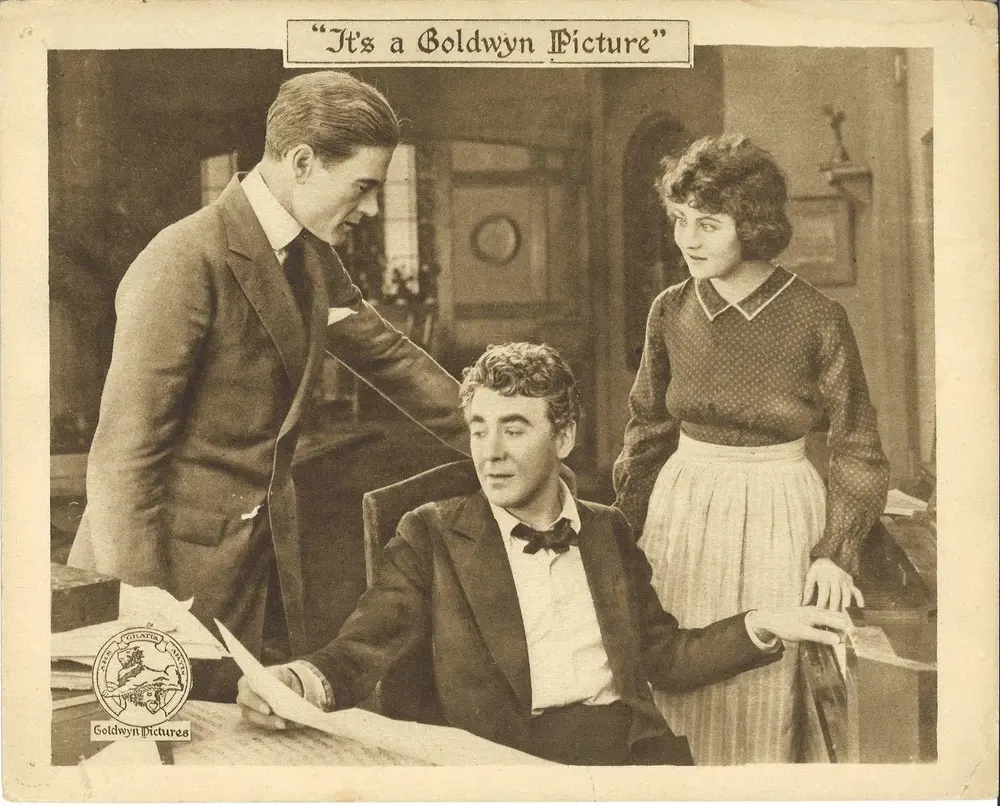
The antagonist, played with a chilling lack of remorse by Sidney Ainsworth, embodies the banality of evil. He is not a mustache-twirling villain but a man of profound mediocrity who understands that in the theater of life, perception is the only reality that carries currency. The theft of the score is presented not as a singular moment of madness but as a calculated exploitation of Temple’s precarious social standing. This dynamic echoes the social hierarchies explored in The Sentimental Lady, yet it carries a more nihilistic edge, as it strikes at the heart of the creative impulse itself.
One cannot discuss Heartsease without acknowledging the technical prowess of the Goldwyn studio during this period. The cinematography captures the claustrophobic tension of Temple’s attic lodgings, contrasting them sharply with the opulent, expansive stages where his stolen work is premiered. This visual dichotomy serves as a metaphor for the internal versus the external life. The use of tinting—though often lost in modern reproductions—originally served to heighten the atmospheric shifts between the cold reality of poverty and the warm, deceptive glow of the limelight. In terms of pacing, the film exhibits a deliberate tempo that mirrors the slow build of a musical composition, a far cry from the frantic energy of Rowdy Ann.
The screenplay by Edfrid A. Bingham manages to distill the complexity of the original play into a series of potent visual beats. There is a specific sequence where Temple hears his own music being performed from a distance—a melody he knows in his marrow but can no longer claim as his own—that remains one of the most heartbreaking moments in silent cinema. It captures a sense of alienation that is almost existential, comparable to the themes of identity and deception found in Obmanutaya Yeva.
Coming at the tail end of the Great War, Heartsease reflects a society grappling with the fragility of truth. The idea that a man’s life work could be so easily appropriated by another resonated with an audience that had seen the world upended. The film touches upon the desperation of the working class and the callousness of the artistic elite, themes that would later be explored with more overt political intent in films like The Crime of the Hour. However, Heartsease keeps its feet firmly planted in the soil of personal drama, making its universal observations through the lens of individual suffering.
The supporting cast, including Alec B. Francis and Rosemary Theby, provides a rich texture to the world. Francis, in particular, brings a paternal warmth that serves as a necessary counterpoint to the cold machinations of the plot. The narrative structure, while following the traditional beats of melodrama, allows for moments of quiet reflection that are surprisingly modern. It avoids the episodic nature of serials like The Ventures of Marguerite, opting instead for a cohesive, character-driven arc that prioritizes psychological depth over spectacle.
Charles Klein was a master of the 'social problem' play, and Heartsease is a prime example of his ability to weave a compelling narrative around a core of moral indignation. His tragic death on the Lusitania only a few years prior to this film's release adds a layer of poignancy to the production. One can feel the weight of his theatrical legacy in the way the scenes are constructed—each one a brick in a wall that slowly closes in on the protagonist. This film stands as a testament to the enduring power of his storytelling, much like the thematic endurance found in Over Niagara Falls.
The resolution of the film, while satisfying the audience's desire for justice, does not shy away from the scars left by the ordeal. There is no simple return to the status quo; Temple is changed by his experience, his innocence discarded in favor of a hard-won wisdom. This nuanced approach to the 'happy ending' sets Heartsease apart from more frivolous fare like Mary Moves In or the lighthearted escapades of Wild Oats.
In the grand tapestry of silent cinema, Heartsease is often overshadowed by the larger-than-life epics of Griffith or the slapstick genius of Keaton. Yet, it occupies a vital space in the history of the medium. It is a film that demands empathy, a work that asks the viewer to consider the intrinsic value of the human spirit in the face of systemic exploitation. The performances are grounded, the direction is purposeful, and the thematic core remains as relevant today—in our era of digital piracy and AI-generated content—as it was in 1919.
If you seek a film that combines the narrative density of a great novel with the visual poetry of the silent era, Heartsease is an essential viewing. It lacks the exoticism of Sadounah or the rugged landscapes of The Girl from Outback, but it possesses an emotional honesty that is far more rare. It is a reminder that while a song can be stolen, the soul that sang it remains indomitable. This is a story of survival, of the quiet triumph of the genuine over the fraudulent, and it continues to resonate with a haunting, melodic beauty that refuses to be silenced by the passage of time.
The film’s exploration of the composer’s psyche provides a fascinating parallel to the real-world struggles of artists during the transition from the 19th to the 20th century. In a world increasingly dominated by industrialization and the commodification of art, Heartsease stands as a defiant shout into the void. It is a cinematic experience that lingers in the mind like a half-remembered tune, challenging us to look beneath the surface of success and find the truth that lies within the music.
IMDb 7.4
1918
Community
Log in to comment.