DbcultAccessing Vault...
6.1/10
Senior Film Conservator
A definitive 6.1/10 rating for a film that redefined the boundaries of cult cinema. Trapped remains a cornerstone of transgressive art.
Stepping into the flickering glow of Max Fleischer's 1920 animated short, Trapped, is akin to peeking through a temporal window into the very nascent days of cinematic artistry. It's a testament to raw, unbridled creativity, a delightful concoction of live-action and hand-drawn animation that, even a century later, retains an almost hypnotic charm. Fleischer, a name synonymous with innovation in the early 20th century animation landscape, crafted a piece that transcends its simple premise, offering a nuanced glimpse into the evolving relationship between the animator and their creation, between reality and the boundless imagination of the inkwell.
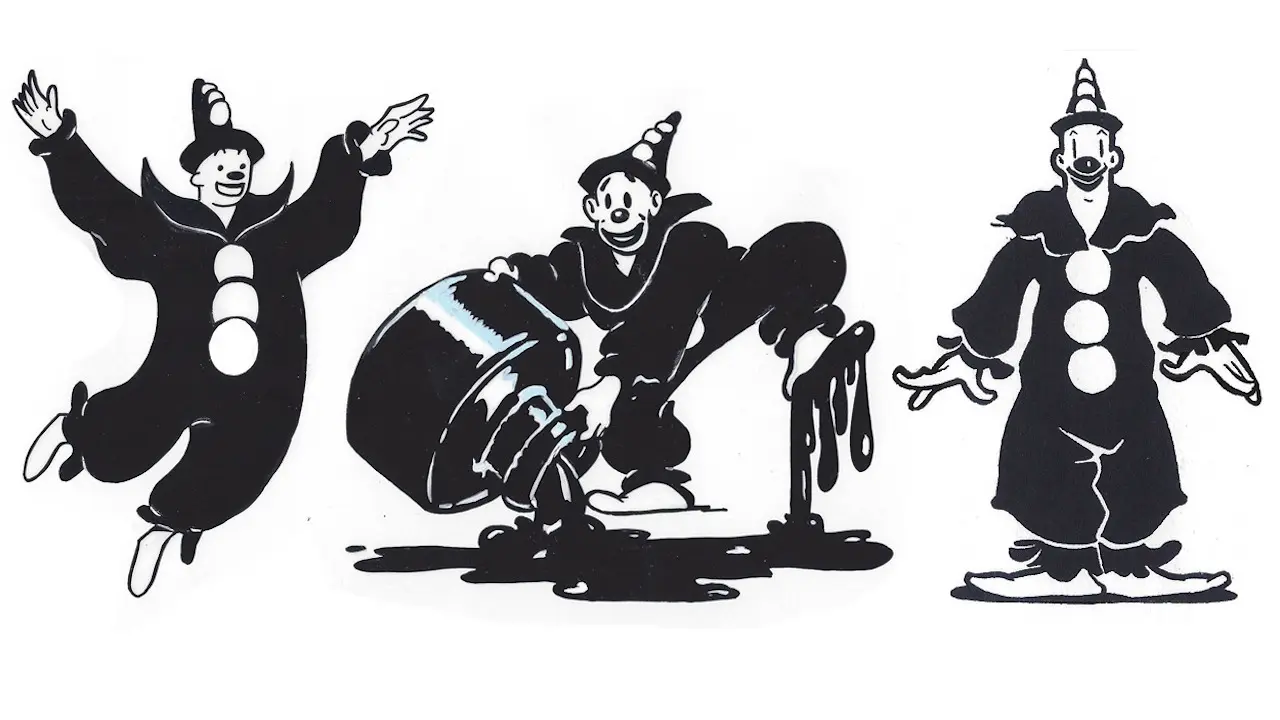
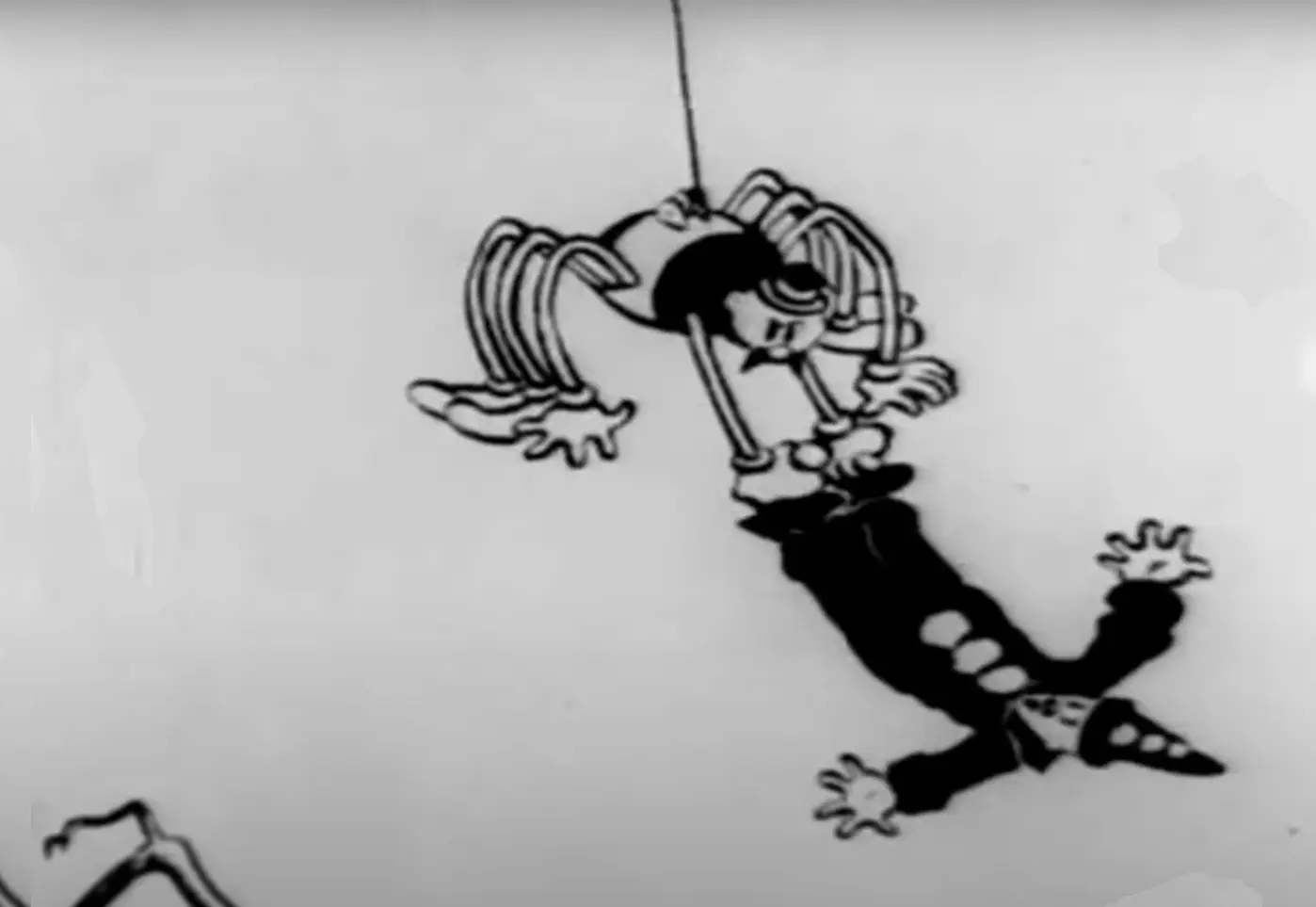
The central conceit of Trapped hinges on a dual narrative, a clever structural choice that elevates it beyond a mere series of gags. On one side of this whimsical coin, we witness the frantic escapades of Ko-Ko the Clown, the iconic animated character who would become Fleischer's enduring muse. Ko-Ko, a figure of pure, unadulterated elasticity and expressive movement, finds himself in a predicament that is both absurdly comical and surprisingly tense: he is pursued relentlessly by a truly grotesque, yet undeniably cartoony, spider. The arachnid, with its spindly legs and menacing, bulbous body, is a marvel of early character design, embodying a primal fear while simultaneously eliciting chuckles through its exaggerated movements. The chase sequence is a masterclass in silent film pacing, relying entirely on visual cues and the kinetic energy of Ko-Ko's desperate flight.
Ko-Ko's struggle is not just a simple flight for survival; it's a commentary on the very nature of animation itself. He is a character born of ink, yet he possesses an undeniable will, a frantic desire to escape the confines of his two-dimensional world and the impending doom represented by the spider. This dynamic, where the animated figure seems to possess a life beyond the animator's pen, is a recurring motif in Fleischer's Out of the Inkwell series, and Trapped exemplifies it with particular poignancy. The lines between the drawn and the real blur, as Ko-Ko's plight feels genuinely urgent, despite its fantastical origins.
Parallel to Ko-Ko's animated ordeal, we are introduced to the live-action Max Fleischer himself, ensconced in his office. His problem, while decidedly more grounded than a giant spider, is no less frustrating: a mischievous mouse has invaded his workspace, creating its own brand of chaos. This juxtaposition is where Trapped truly shines. Fleischer, the architect of Ko-Ko's animated universe, finds himself a victim of a very real, very tangible annoyance. The irony is palpable: the man who can conjure worlds and creatures with a stroke of his pen is powerless against a tiny rodent. It's a wonderfully humanizing touch, grounding the fantastical elements in a relatable, everyday struggle. The meticulous detail in Fleischer's live-action segments, from the cluttered desk to his exasperated expressions, provides a stark contrast to the fluid, often surreal movements of Ko-Ko.
The thematic resonance of the title, Trapped, becomes abundantly clear through this dual narrative. Both Ko-Ko and Max are, in their own unique ways, ensnared. Ko-Ko by the relentless pursuit of his eight-legged antagonist, and Max by the persistent intrusion of the mouse. This shared predicament creates an unexpected empathy, bridging the gap between the animated and the actual. It suggests that the feeling of being cornered, of facing an overwhelming adversary, is a universal experience, irrespective of whether one exists in ink or in flesh. The genius of Fleischer lies in his ability to draw these thematic parallels without explicit exposition, allowing the audience to intuit the connections through the sheer brilliance of his visual storytelling.
Technically, Trapped is a marvel for its era. The seamless integration of Ko-Ko into the live-action environment, a hallmark of the Out of the Inkwell series, was revolutionary. While not explicitly using rotoscoping for Ko-Ko's initial creation (he was often drawn from scratch or based on Fleischer's brother, Dave, in a clown suit), the technique of combining live-action plates with animated cels was a painstaking process that demanded incredible precision. The way Ko-Ko interacts with real-world objects, even if subtly, demonstrates an early understanding of spatial relationships and perspective that many of Fleischer's contemporaries were still grappling with. This innovative spirit is what truly sets Fleischer apart, much like the narrative ambition seen in early dramatic films such as The Empire of Diamonds or the intricate character work in Scaramouche, though in a vastly different medium.
The humor in Trapped is distinctly vaudevillian, relying on slapstick, exaggerated reactions, and the inherent absurdity of the situations. Ko-Ko's frantic efforts to escape, his limbs stretching and contorting in impossible ways, are pure visual comedy. Similarly, Max's increasingly exasperated attempts to catch the mouse, often resulting in minor self-inflicted mishaps, provide a more understated, observational humor. It's a blend of high-energy antics and quiet frustration, a comedic yin and yang that keeps the audience engaged throughout its brief runtime. This approach to humor, rooted in physical comedy and character reactions, was a staple of the era, reminiscent of the delightful domestic chaos found in shorts like The Custard Cup, albeit with Fleischer's unique animated twist.
Fleischer's distinctive aesthetic, often described as more industrial and grounded than the burgeoning, softer styles emerging elsewhere, is evident here. The backgrounds are often sparse, allowing Ko-Ko's movements to dominate the frame. The character designs, particularly that of the spider, possess a slightly unsettling quality that adds an edge to the comedy, preventing it from becoming overly saccharine. This departure from conventional cuteness, a hallmark of Fleischer's studio, paved the way for more complex animated narratives and characters in later years. The raw, almost sketch-like quality of Ko-Ko's animation gives him a vibrant, immediate presence, a stark contrast to the more polished, 'realistic' animation that would come to define other studios.
The lasting impact of Trapped, and indeed the entire Out of the Inkwell series, cannot be overstated. These shorts were instrumental in establishing animation as a legitimate art form, capable of complex storytelling and technical innovation. They demonstrated that animated characters could interact convincingly with the real world, opening up a Pandora's Box of creative possibilities for future generations of animators. The fundamental concept of a character breaking the fourth wall, interacting with its creator, or even escaping its two-dimensional confines, finds its roots firmly planted in Fleischer's pioneering work. This metafictional playfulness was groundbreaking, predicting later experiments in cinema and even video games where the boundaries between observer and observed are constantly challenged.
Considering its place in cinematic history, Trapped stands as a fascinating artifact. It's a snapshot of a time when the rules of filmmaking were still being written, when every new short was an opportunity for invention. The technical hurdles Fleischer and his team overcame to create such a fluid and believable interaction between live-action and animation were immense, requiring meticulous planning and execution. The dedication to this craft is palpable in every frame, a stark reminder of the passion that fueled these early cinematic pioneers. One can draw parallels to the early narrative ambitions of films like Told in the Hills or the structural complexity of The Golden Flame, all pushing the boundaries of what cinema could achieve, albeit in different genres.
The enduring appeal of Trapped lies not just in its historical significance, but in its timeless themes. The struggle against an unseen or overwhelming force, the frustration of being unable to control one's environment, and the playful subversion of reality are all concepts that continue to resonate with audiences today. Ko-Ko's plucky determination and Max's relatable exasperation are archetypal, speaking to fundamental human experiences. The short, though simple in its narrative arc, manages to evoke a surprising range of emotions, from amusement to a subtle sense of tension, all without uttering a single word.
Fleischer's unique vision, often leaning into the slightly darker, more surreal aspects of animation, is fully on display. Unlike the often idyllic and pastoral settings found in some contemporary works, Fleischer embraced the urban, the industrial, and even the slightly grotesque. This aesthetic choice gives his work a distinct character, a gritty charm that sets it apart. The spider in Trapped, for instance, is not a cute, cuddly creature; it's genuinely unsettling, adding a layer of genuine peril to Ko-Ko's predicament. This artistic bravery in depicting less-than-charming antagonists was a hallmark of Fleischer's later, more mature works, and it's fascinating to see its nascent forms here.
The influence of shorts like Trapped can be traced through generations of animators and filmmakers. The idea of characters breaking the fourth wall, or interacting with the 'real' world, became a powerful storytelling tool. From cartoon characters stepping out of the screen to modern-day meta-narratives, the seed of these concepts was sown in the inkwells of Max Fleischer. It's a foundational text for anyone interested in understanding the evolution of animated storytelling, showcasing how early pioneers grappled with the inherent limitations of their medium and transformed them into opportunities for groundbreaking artistic expression.
In an era dominated by live-action spectacles like The Avenging Arrow or sophisticated dramas such as A Parisian Scandal, animation was still finding its voice. Trapped, with its playful yet profound exploration of confinement and escape, demonstrated animation's unique capacity for metaphor and philosophical inquiry, wrapped in a package of delightful visual comedy. It's a reminder that even the simplest of plots, when handled by a master of the craft, can yield layers of meaning and enduring fascination.
The enduring power of Trapped lies in its ability to transport us to a time of boundless invention, where the magic of cinema was still being discovered. It's a charming, intelligent, and historically significant piece that continues to captivate. The ingenious interplay between Ko-Ko's animated struggle and Max's very human frustration is a testament to Fleischer's unparalleled vision and his indelible mark on the art of animation. It’s a short that, despite its age, feels vibrantly alive, a crucial stepping stone in the journey of an art form that would soon conquer the world. The ingenious premise of dual 'traps' – one fantastical, one mundane – ultimately converges to illuminate a universal truth about the human (and animated) condition: that sometimes, no matter how hard we try, we're all just trying to escape something, whether it's a giant spider or a tiny mouse.
The sheer audacity of blending these two realities, the hand-drawn and the filmed, was not merely a technical feat; it was a conceptual triumph. Fleischer was not just animating; he was engaging in a meta-commentary on creation itself, on the power of the artist to bring forth life, and the surprising ways that life can then assert its own will. This dialogue between creator and creation, so elegantly woven into the fabric of Trapped, is what elevates it from a simple cartoon to a significant piece of cinematic art. It's a silent, yet eloquent, conversation about agency, freedom, and the delightful chaos that ensues when the ink spills beyond the page.
Ultimately, Trapped remains a vibrant, pulsating example of early 20th-century ingenuity. It's a delightful journey into the mind of a pioneer, a charming exploration of what it means to be stuck, and a powerful reminder of the boundless possibilities that lie within the simple act of drawing a line. This short film, seemingly unassuming, holds within its brief frames a universe of innovation, humor, and enduring artistic vision that continues to inspire and entertain, proving that sometimes the biggest ideas come in the smallest, most whimsical packages.
IMDb 5.8
1932
Community
Log in to comment.