DbcultAccessing Vault...
Cult Review
Senior Film Conservator
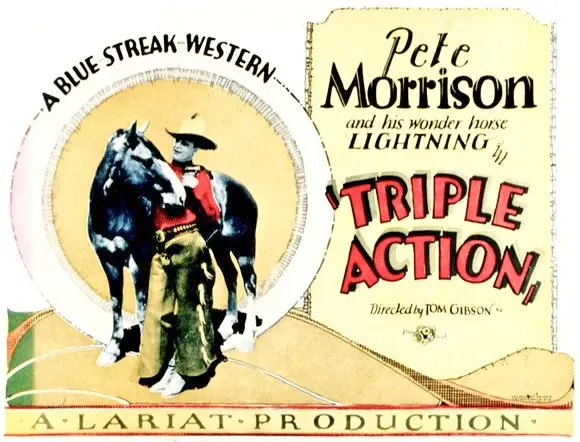
Short answer: yes, Triple Action is worth watching if you are a student of genre evolution or a fan of high-concept silent stunts, but casual viewers may find its middle act ponderous. This film is specifically for those who enjoy 'Poverty Row' Westerns that take wild risks with their plot, and it is definitely NOT for those who require the polished pacing of modern prestige cinema.
Released in 1925, Triple Action represents a moment in film history where the Western genre was beginning to feel the pressure of over-saturation. To combat this, director and star Leon De La Mothe (often working under the name Leon Kent) decided to inject a shot of adrenaline into the tired 'wronged ranger' trope. The result is a film that feels like a collision between a traditional oater and a proto-action thriller. It is gritty, occasionally nonsensical, and surprisingly dark in its depiction of biological warfare via infected cattle.
The primary conflict of Triple Action is refreshingly high-stakes for a 1920s B-Western. While most films of this era were content with simple bank robberies or land grabs, this film introduces the concept of diseased cattle as a weapon of mass economic destruction. This film works because it treats the 'sick herd' with a genuine sense of dread, rather than just a plot convenience. When Blackie Braxton, played with a sneering malice by Harry von Meter, directs the infected animals toward the Méndez hacienda, the film takes on a tension reminiscent of a modern contagion thriller.
One specific scene that stands out is the initial border crossing. The way the camera captures the dust and the sheer mass of the cattle creates a sense of overwhelming force. It makes Dave Mannion’s failure feel inevitable rather than negligent. If you look at other films from this period, such as Hitchin' Posts, you see a similar focus on the logistical nightmares of the frontier, but Triple Action heightens this by making the cattle themselves the 'villains' of the piece.
The 'Triple Action' of the title refers to the film's climax, which features a parachute jump that must have been jaw-dropping for 1925 audiences. This film fails because it spends a bit too much time in the recovery phase; after Dave is shot by Braxton, the pacing slows to a crawl while he is nursed back to health by Donna Méndez (Dolores Gardner). However, the introduction of Dick Clayton, the aviator brother, completely shifts the film’s DNA. This sudden pivot from horses to airplanes is jarring, but it provides the kind of 'stunt-first' entertainment that defined the silent era.
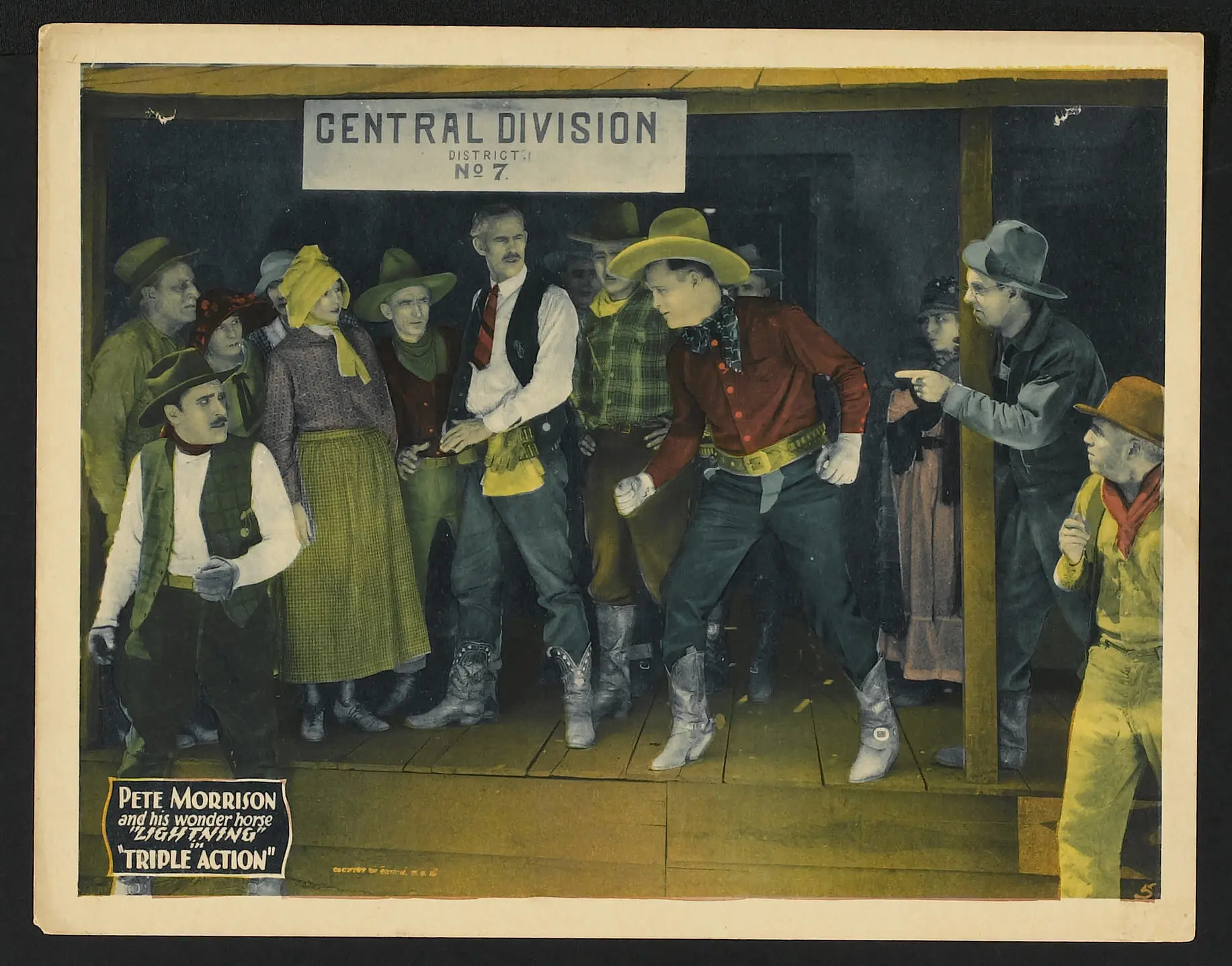
The parachute sequence itself is remarkably well-staged. Unlike the more grounded drama found in The Better Wife, Triple Action embraces the absurdity of its premise. Watching Leon De La Mothe drop from a biplane into a den of outlaws is a pure 'cinema of attractions' moment. It reminds the viewer that before film was an art form of deep dialogue, it was an art form of 'how did they do that?' This sequence is a precursor to the aerial acrobatics seen in Sky-Eye, proving that the Western was always looking for ways to modernize itself.
Leon De La Mothe is not a subtle actor, but in a silent Western, subtlety is often a liability. He possesses a rugged, physical presence that makes the fight scenes feel impactful. His chemistry with Lightning the Horse is arguably more convincing than his romance with Doris Clayton. There is a specific moment where Dave realizes he has been framed, and De La Mothe’s facial contortions—while exaggerated—perfectly convey the agony of a man losing his social standing. It’s a performance that shares the DNA of the desperate protagonists in Fate's Frame-Up.
The supporting cast is a mixed bag. Harry von Meter is a standout as the villain, bringing a heavy-set, intimidating physicality to the role of Blackie. Conversely, the female leads are given little to do other than act as catalysts for Dave's actions. While Donna Méndez is given a moment of agency when she summons the rangers, she is quickly sidelined once the men with guns (and planes) arrive. This is a common trope of the era, seen in films like The Price of Pleasure, where the female experience is secondary to the male's social redemption.
You should watch it if you want to see the exact moment the Western genre realized it could be an 'action movie' in the modern sense. The integration of aviation into a story about cattle ranching is an unconventional observation that makes this film more than just another silent relic. It is a bold, if somewhat clunky, attempt to bridge the gap between the old world and the new. This film works because it refuses to stay in the lane of a traditional Western, pivoting into a high-stakes rescue mission that utilizes every tool available to the 1925 filmmaker.
Triple Action is a fascinating, if flawed, piece of silent cinema. It lacks the poetic grace of a film like Pettigrew's Girl, but it makes up for it with sheer audacity. The film’s willingness to throw a parachute into a Western is a debatable creative choice—some might say it ruins the atmosphere, while others (like myself) find it a brilliant piece of b-movie showmanship. It is a loud, dusty, and ambitious film that deserves to be remembered for its 'triple' threat of action, even if the narrative connective tissue is a bit frayed. If you can forgive the slow middle section, the payoff is a literal high-flying victory for the underdog.
IMDb —
1925
Community
Log in to comment.