DbcultAccessing Vault...
Cult Review
Senior Film Conservator
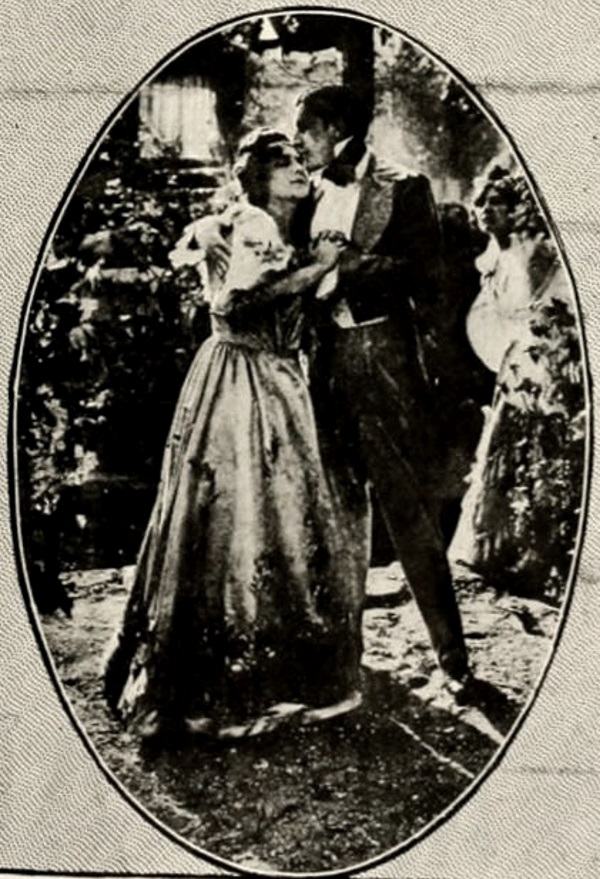
Inside the Théâtre Pathé, a beam of carbon-arc light cleaves the smoky dark, and Trompe-la-Mort unfurls like a velvet choker laced with razor wire. The title card—ornate white letters trembling against obsidian—already hints at the film’s central dare: to cheat death, not by miracle, but by sheer, defiant reinvention. Few silents have ever stitched Balzac’s panoramic cynicism so seamlessly to cinema’s newborn grammar of cuts, dissolves, and iris-ins; fewer still have given us an anti-hero whose moral silhouette flickers so hypnotically that we root for the abyss itself.
Director Henri Gouget—also essaying the hawklike detective Corentin—opens on La Rochelle’s penitentiary at twilight. Instead of stolid stone, we get a living organism: walls sweat, gates yawn like iron jaws, guards march in mechanical spasms. The camera, unusually mobile for 1913, glides past shackled ankles and arrives at Jacques Collin (Alexandre Arquillière), whose gaze could etch glass. One match-cut—waves crashing over rocks—equals escape; no exposition, just kinetic inevitability. The sequence feels modern, almost Malick-like in its willingness to let nature conspire with crime.
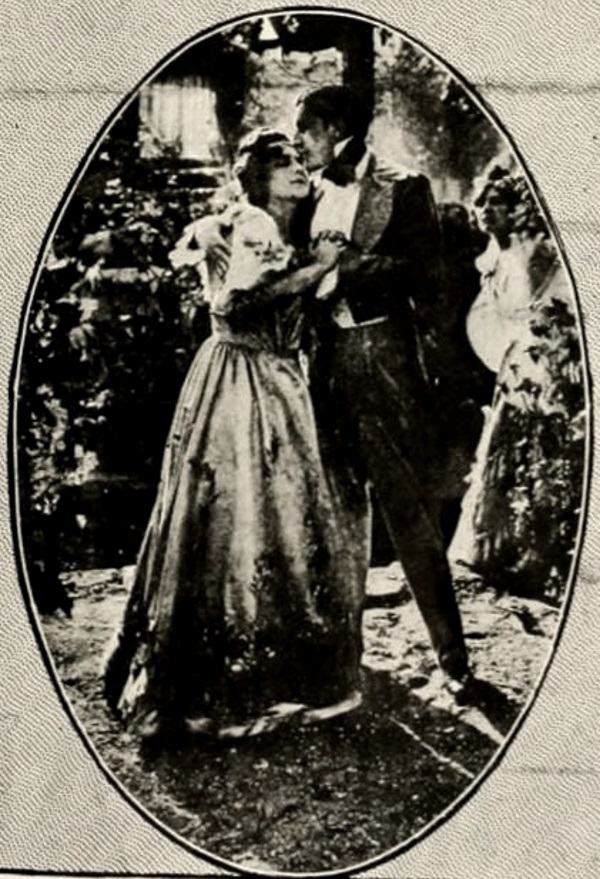
Collin’s transformation into Vautrin occurs inside a seaside cave lit by a single lantern. We watch him pop a false beard, dust talc over prison pallor, and step out into moonlight reborn. Arquillière’s performance here is a marvel of micro-gestures: the slight widening of eyelids, the almost erotic satisfaction of smoothing moustache wax. Silent cinema rarely granted actors this granular close-up; Pathé’s 35mm stock, usually grainy as sand, somehow preserves every glint, turning the actor’s face into a topographical map of deceit.
Production designer Paul Guidé constructs a labyrinthine boarding house whose corridors meet at cockeyed angles. Residents drift through doorways like moths; wallpaper peels in curls that resemble forged banknotes. Into this hive steps Vautrin, now calling himself abbé Herrera, radiating the paternal menace of a priest who could sell absolution by the pound. The intertitles—hand-lettered in jagged scrawl—introduce each tenant as both victim and co-conspirator: Lucien (André Liabel), fragile as rice paper; Esther (Josette Andriot), luminous yet already fraying at the edges like an overexposed photograph.
The film’s midpoint erupts in a bohemian café where patrons sport harlequin patches, monocles, or mourning veils. Gouget choreographs a tango of glances: Corentin enters, recognizes Vautrin, and plants a hand on his shoulder—an electric jolt immortalized in a freeze-frame that flickers for three deliberate beats. No dialogue card intrudes; the silence screams louder than any shout. Cinematographer Camille Bardou tilts the camera five degrees off-axis, warping perspective so that the café appears to slide into the Seine. In that skewed moment, we feel the entire underworld tilt toward doom.
Esther’s trajectory from seamstress to kept woman unfolds like a fever dream. Collin pimps her not with brute coercion but with whispered futures: a box at the Opéra, pearls that glow like “little moons against the throat.” When Baron de Nucingen (Henry Roussel) first spies her, Gouget cuts to the Baron’s POV: Esther’s face superimposed atop a pile of gold louis, literalizing the transaction. Yet Andriot’s performance complicates the objectification; her eyes flicker with terror and complicity, a silent protest that needles the viewer’s conscience.
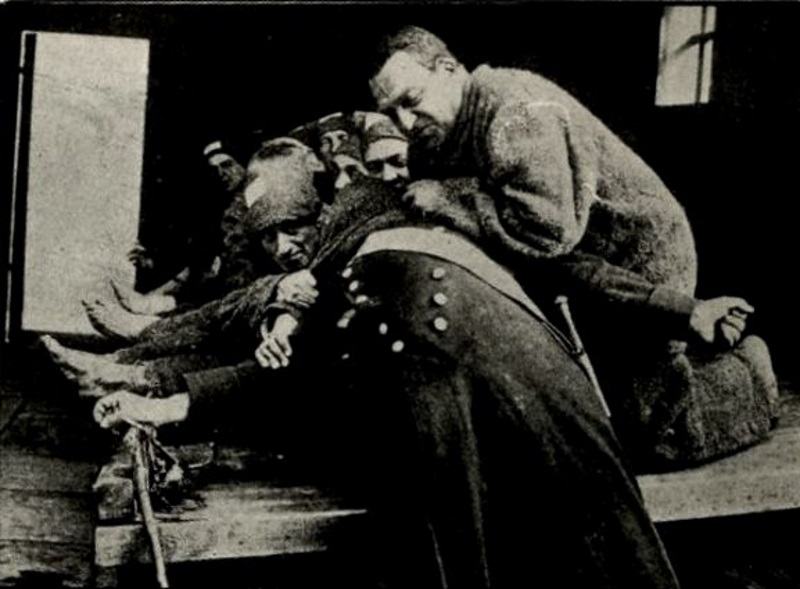
Lucien’s arrest precipitates the film’s most harrowing sequence: a single take, 47 seconds, of the poet’s hand clutching a phial of prussic acid. Gouget positions the camera below a wrought-iron balustrade so the sky becomes a barred window. As Lucien downs the poison, the frame irises in to a black circle—an optical gasp that mimics death’s pupil dilating. The next shot lands us in the morgue, where Vautrin, now behind glass, witnesses the sheet pulled back from Lucien’s waxen face. Arquillière’s silent howl—mouth agape, eyes streaming—distills remorse into something primal.
The finale stages a moral somersault worthy of Kafka. Collin, cornered, produces a morocco-leather portfolio stuffed with love letters from duchesses, magistrates, and bishops—each signature a fuse aimed at the Restoration’s powder keg. He offers the state a Faustian swap: immunity plus the prefecture of police in return for the incriminating cache. The bureaucrats, shot from a high angle that dwarfs them like beetles, scurry and capitulate. Collin exits the Palais de Justice not in shackles but in plumed bicorne, a bureaucratic Lucifer promoted to archangel. The last intertitle reads: “Order has enlisted Chaos; the wolf now guards the sheep.”
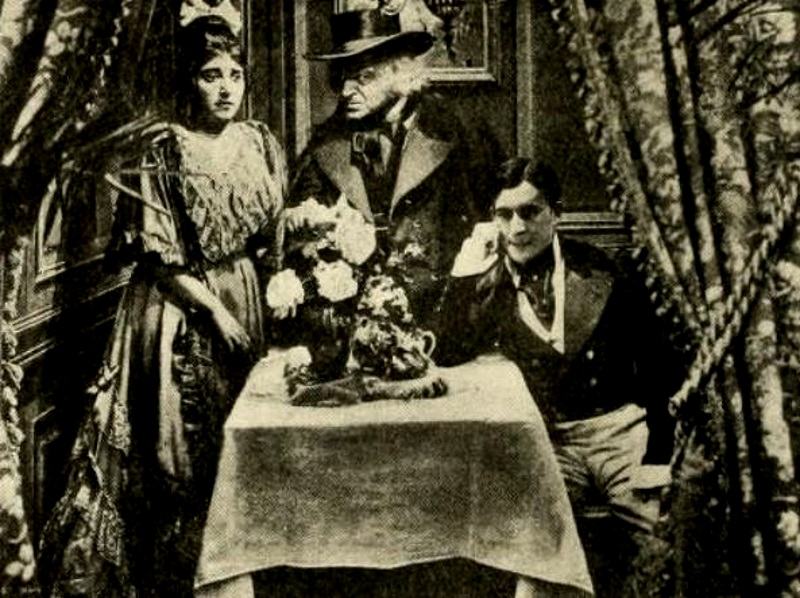
Restoration prints at Cinémathèque Française reveal a sophisticated tinting scheme: cobalt nights, amber interiors, sickly green for prison corridors. These hues, achieved by dyeing nitrate frames in wine-bath vats, pulse with emotional syntax. When Esther swallows arsenic, the image flashes crimson—an early form of emotional color grading that predates The Mystery of the Rocks of Kador by two full years.
Silent-era clichés vanish in Arquillière’s hands. Watch the tiny shrug when he pockets a bribe: shoulders lift, suspend, then settle with the languid satisfaction of a cat. Josette Andriot, only nineteen during filming, conveys Esther’s spiritual disintegration by letting her collarbone jut ever more sharply against décolletage—a visual anorexia of the soul. Even minor players like Renée Sylvaire (as the aunt-housekeeper) communicate volumes: she counts rosary beads with the mechanical urgency of a telegrapher tapping SOS.
Gouget’s average shot length hovers around 4.2 seconds—lightning for 1913. Cross-cuts between Esther’s boudoir and Corentin’s stakeout create a temporal braid that tightens toward catastrophe. During the rooftop scuffle, the tempo accelerates to 2-second intervals, prefiguring Eisensteinian montage but with Gallic swagger rather than Soviet bombast.
Modern revivals often pair the film with live improvisations: accordion wheezes, typewriter clicks, wine glasses rubbed to whale-song. The most effective score I’ve heard—composed by Florent Belin for the 2022 Bologna Cinema Ritrovato—uses bowed psaltery and slowed heartbeats, weaving a sonic fog that swallows the audience whole.
Place Trompe-la-Mort beside The Ticket of Leave Man and you see continental pessimism colliding with Victorian moralism. Pair it with The Adventures of Kathlyn and notice how both franchise their rogues across serial cliffhangers—only Balzac’s villain graduates from episode to empire.
The original negative, held at Gaumont-Pathe Archives, shows evidence of scissor-snips: two frames shaved where Collin kisses Lucien’s forehead—an affection deemed “suspect” by the 1914 Board of Moral Oversight. Restorationists have grafted duplicate frames from a 16 mm print discovered in a Buenos Aires attic, restoring the homoerotic subtext that lubricates the film’s moral corrosion.
The DNA of The Exploits of Elaine, A Melbourne Mystery, and even Fritz Lang’s Dr. Mabuse thrums with Collin’s polymorphic spirit. Yet no remake has dared replicate the 1913 film’s closing cynicism where crime literally pays in government bonds.
Trompe-la-Mort is not merely a silent relic; it is a scalpel to the scab of modernity, exposing how identity, capital, and power swirl in a danse macabre that predates our crypto-scams and deep-fakes by a century. It seduces, appalls, and—most unnervingly—entertains with the elegance of a top-hat cobra. Watch it once for historical bragging rights; watch it twice to discover the moment your own reflection slips on a mask and smiles back, complicit.
IMDb —
1928
Community
Log in to comment.