DbcultAccessing Vault...
Cult Review
Senior Film Conservator
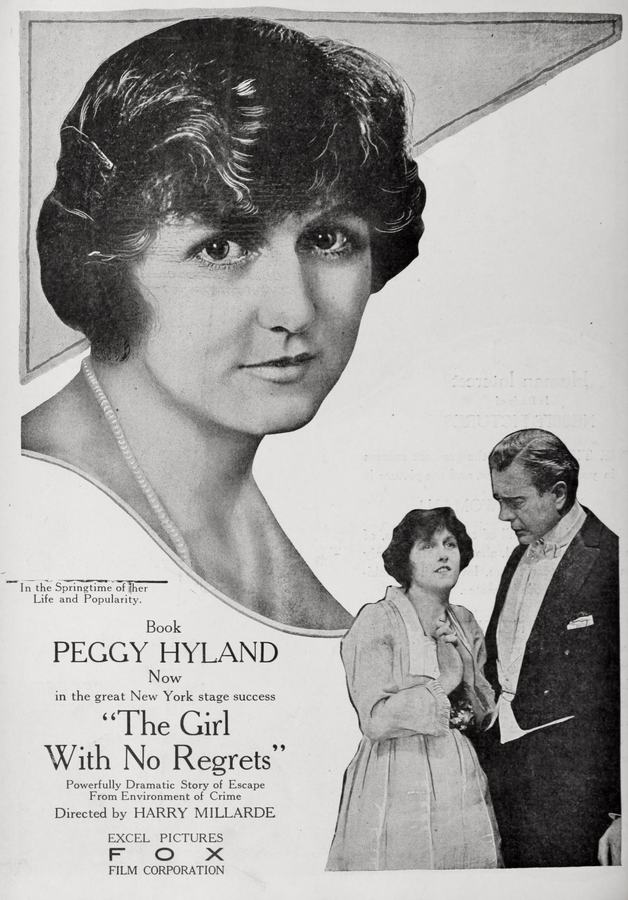
There’s a certain alchemical magic to silent cinema, a unique ability to transmute raw human emotion and complex narrative into a visual symphony that transcends the lack of spoken dialogue. Few films encapsulate this better than The Girl with No Regrets, a fascinating relic from 1923 that, despite its age, pulses with an enduring vitality. It’s more than just a period piece; it’s a vibrant tapestry woven from threads of ambition, disillusionment, and the relentless pursuit of self in a world eager to define you. This isn't just a story; it's an experience, a plunge into the tumultuous depths of a nascent metropolis where innocence is often a casualty and survival a high art.
At its core, the film introduces us to Signa Herrick, portrayed with a captivating blend of vulnerability and burgeoning resilience by Peggy Hyland. Signa begins her journey in the quaint, unassuming landscape of a small Wisconsin town, a setting that feels almost idyllic in its simplicity, yet simultaneously suffocating for a spirit destined for more. Her initial predicament is both a comedic and poignant commentary on social niceties and the subtle cruelties of well-intentioned deceit. As a stenographer, her skills are, shall we say, less than exemplary – a polite understatement for what is essentially professional inadequacy. The crushing blow comes when she discovers her continued employment isn't a testament to her burgeoning talent, but rather a compassionate gesture, a quiet favor extended by her boss to honor the memory of her recently departed father. This revelation, a stinging indictment of her perceived capabilities and a stark reminder of her dependent status, ignites a spark within Signa. It’s a moment of profound embarrassment, yes, but also a catalyst for an awakening, a realization that her small-town existence, however comfortable, is ultimately a gilded cage.
The ensuing exodus from Wisconsin to the sprawling, pulsating heart of New York City is not merely a change of scenery; it is a metamorphosis. Signa sheds the skin of the provincial, the sheltered, the underestimated, embarking on a quest for autonomy and self-definition. Her destination is the bustling abode of her married sister, Janet, a sanctuary that quickly proves to be anything but. New York, in all its roaring twenties glory, is a character unto itself here – a seductive, dangerous siren song that promises both boundless opportunity and unimaginable peril. The film masterfully captures this dual nature, depicting a city that is simultaneously a beacon of progress and a crucible of corruption. This urban landscape, much like the one explored in The Sex Lure, becomes a testing ground for moral fortitude, a place where the lines between right and wrong are perpetually blurred by the intoxicating allure of wealth and power.
It is within this vibrant, chaotic milieu that Signa’s true adventure begins. She is, almost immediately, drawn into a vortex of intrigue that would make any dime-novel detective proud. Jewel thieves, with their shadowy machinations and illicit glamour, become an inescapable part of her new reality. These aren't just faceless antagonists; they represent a darker, more alluring side of the city's underbelly, a world where quick wits and moral flexibility are currency. Counterbalancing their menace are the diligent, often relentless, detectives, symbols of a justice system struggling to maintain order amidst the burgeoning chaos. Signa, caught between these opposing forces, finds her loyalties and perceptions constantly challenged.
But the narrative's true brilliance lies in its introduction of an alcoholic millionaire and his avaricious, scheming relatives. This particular plot thread elevates the film beyond a simple crime caper, transforming it into a nuanced exploration of human greed and familial dysfunction. The millionaire, a tragic figure, is both a victim of his own indulgences and a prize for his rapacious kin. Their machinations, their whispered conspiracies, and their ruthless pursuit of his fortune add a layer of psychological depth that is remarkably sophisticated for its era. It’s a classic tale of inheritance and betrayal, reminiscent of the intricate power struggles depicted in The Lords of High Decision, but infused with a distinctly urban, Jazz Age cynicism.
Peggy Hyland's portrayal of Signa is nothing short of captivating. She navigates the character's arc with an emotional honesty that transcends the limitations of silent film acting. We witness Signa's initial timidity give way to a steely resolve, her naiveté slowly replaced by a pragmatic understanding of the world's harsh realities. Hyland’s expressive eyes and subtle gestures convey a wealth of unspoken thoughts and feelings, allowing the audience to connect deeply with her journey. Her performance is a masterclass in conveying complex inner turmoil without uttering a single word, a testament to her profound talent and the power of visual storytelling.
The supporting cast, too, delivers performances that are both memorable and integral to the film's success. Al Fremont, as one of the pivotal male figures, brings a gravitas and understated intensity that perfectly complements Hyland’s more effervescent presence. Betty Schade and Charles Clary, likely playing some of the scheming relatives or perhaps figures from Signa’s past, excel in their roles, adding texture and depth to the ensemble. Even the smaller roles, filled by talents like Eugene Burr, Jack Nelson, Beverly Travers, Harry von Meter, and William Ellingford, contribute to the rich tapestry of characters that populate Signa's tumultuous new life. Each actor, through their physicality and facial expressions, paints a vivid picture of their character's motivations and moral compass, or lack thereof.
Evelyn Campbell and Raymond L. Schrock, the screenwriters, deserve immense credit for crafting a narrative that is both intricate and compelling. They weave together multiple plot threads – the personal journey of Signa, the criminal underworld, and the domestic drama of the millionaire's family – with remarkable dexterity. The pacing is expertly handled, allowing for moments of tense suspense, unexpected humor, and genuine emotional resonance. The story never feels rushed, yet it maintains a brisk momentum that keeps the audience utterly engrossed. The dialogue cards, sparse and impactful, serve to punctuate the visual storytelling rather than dominate it, a hallmark of effective silent film writing. Their ability to craft such a nuanced and engaging story without the crutch of spoken words is truly commendable, showcasing a deep understanding of visual narrative principles.
Beyond the performances and the script, the direction of The Girl with No Regrets is equally noteworthy. The film utilizes its visual language with striking effectiveness. The cinematography captures the stark contrast between the bucolic simplicity of Wisconsin and the frenetic energy of New York. Shots of the city’s towering buildings and bustling streets convey a sense of overwhelming scale and opportunity, while tighter shots emphasize the emotional intensity of the characters’ struggles. The use of light and shadow, a nascent element of what would later become film noir, is employed to great effect, particularly in scenes involving the jewel thieves and their clandestine activities. This visual style, which hints at the shadowy moral landscapes of future crime dramas, creates an atmosphere of suspense and moral ambiguity that is palpable throughout the viewing experience. It’s a testament to the directorial vision that such atmosphere is achieved without the aid of sound.
Thematic resonance is another strong suit of The Girl with No Regrets. The film explores themes of social mobility and the American Dream, albeit a version of it tinged with the grit and grime of urban reality. Signa’s journey is a microcosm of countless individuals who flocked to cities like New York seeking a better life, only to find that success often came at a price. It delves into the corrupting influence of wealth, demonstrating how money can warp human relationships and drive individuals to desperate, often immoral, acts. The film also subtly touches upon the burgeoning independence of women in the 1920s, as Signa, despite her initial vulnerabilities, ultimately asserts her agency in a male-dominated world. This portrayal of a woman navigating treacherous waters with growing self-reliance resonates with the spirit of the era, a time of significant social change and evolving gender roles.
In comparing it to other films of its era, The Girl with No Regrets stands out for its sophisticated blend of genres. While it contains elements of a crime thriller, it also possesses the emotional depth of a character study and the social commentary of a drama. It shares some thematic DNA with films like The Unwelcome Mrs. Hatch, in its exploration of societal judgment and personal redemption, but injects a more pronounced sense of urban peril. The intricate plotting and moral ambiguity might also draw parallels to the mysteries found in A szentjóbi erdö titka, though with a distinctly American flavor. It manages to feel both representative of its time and remarkably ahead of it, hinting at the narrative complexities that would define later decades of cinema.
The film's enduring appeal lies in its timeless portrayal of human nature. The struggles Signa faces – the desire for independence, the temptation of shortcuts, the confrontation with moral dilemmas – are universal. While the flapper dresses and silent film conventions firmly place it in the 1920s, the emotional core remains as relevant today as it was a century ago. It reminds us that the human heart, with all its aspirations and frailties, remains constant, regardless of the era. The silent medium, far from being a barrier, actually enhances this universality, allowing the audience to project their own interpretations onto the characters’ expressions and actions, fostering a deeper, more personal connection.
For those uninitiated into the world of silent films, The Girl with No Regrets serves as an excellent entry point. It’s engaging, well-acted, and tells a compelling story without ever feeling overly melodramatic or outdated. The clarity of its narrative, coupled with the strong performances, ensures that even modern audiences accustomed to sound and color will be drawn into Signa’s perilous journey. It’s a powerful testament to the artistry of early cinema, demonstrating that a story well told, even without spoken words, can resonate across generations. It encourages viewers to actively engage with the visual storytelling, to infer emotions and motivations from subtle cues, a skill that enhances appreciation for all forms of cinematic art.
The film’s title itself, The Girl with No Regrets, is a fascinating paradox. Does it refer to Signa’s eventual triumph over adversity, her ability to navigate the treacherous waters of New York without succumbing to despair or remorse? Or does it hint at a darker, more cynical interpretation, suggesting that in a world so rife with corruption, regret is a luxury one simply cannot afford? This ambiguity adds another layer of intrigue, inviting viewers to ponder the true meaning of 'no regrets' in a context where every choice carries significant weight. It challenges us to consider what it truly means to live without regret, particularly when confronted with the harsh realities of a morally ambiguous world, where innocence is often irrevocably lost and survival sometimes demands difficult compromises.
In conclusion, The Girl with No Regrets is far more than a historical curiosity; it is a vibrant, compelling piece of cinematic art that deserves to be rediscovered and celebrated. It offers a window into the past, yes, but also a mirror reflecting timeless human struggles. From Signa’s initial humiliation to her immersion in a world of jewel thieves, detectives, and avaricious relatives, her journey is one of profound transformation. It’s a film that leaves a lasting impression, prompting reflection on themes of identity, morality, and the relentless pursuit of self in a world that constantly tests one's resolve. This movie doesn't just entertain; it provokes, it enthralls, and it reminds us of the enduring power of storytelling, even in its most nascent forms. It’s a film that, despite its silent nature, speaks volumes about the human condition and the enduring allure of the grand, dangerous adventure that is life itself.
IMDb 5.8
1916
Community
Log in to comment.