DbcultAccessing Vault...
5.1/10
Senior Film Conservator
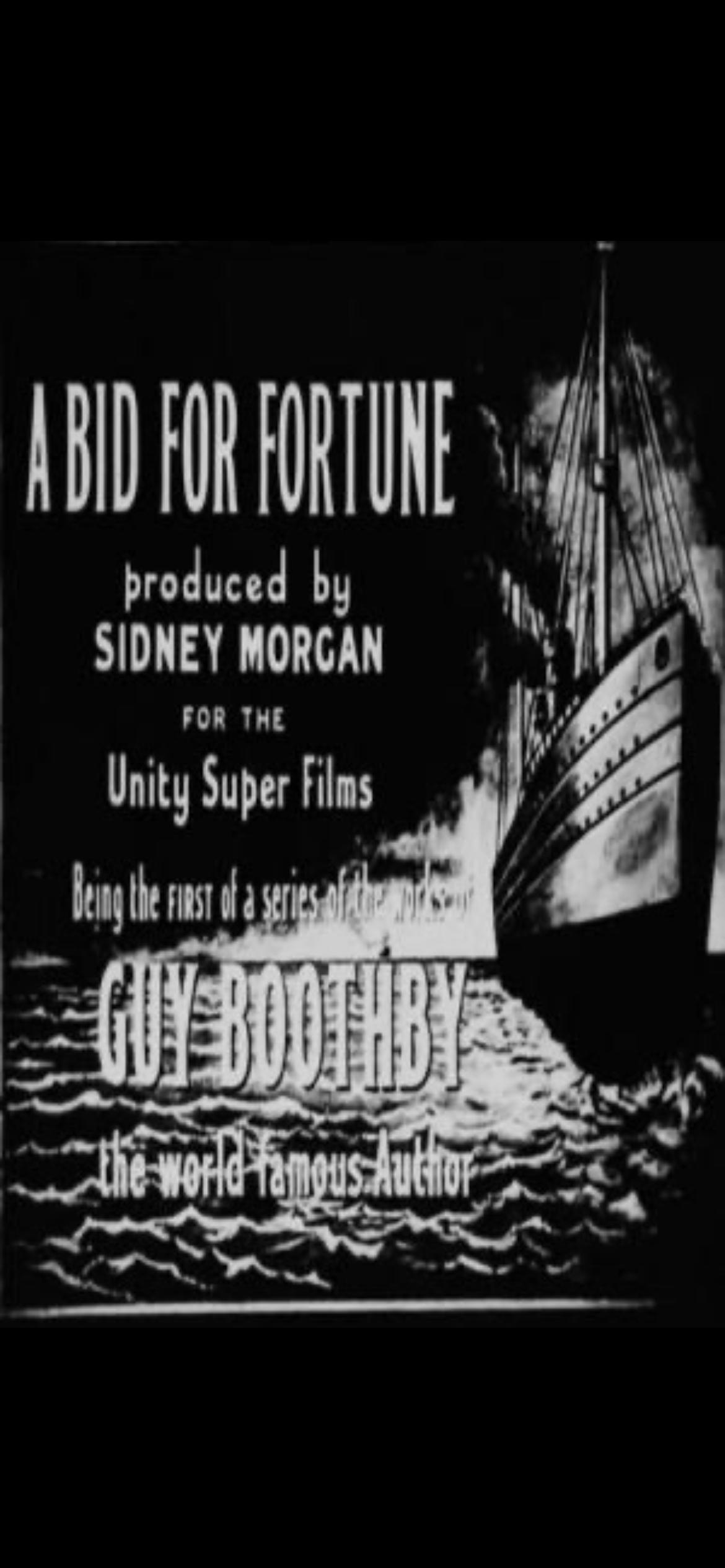
A definitive 5.1/10 rating for a film that redefined the boundaries of cult cinema. A Bid for Fortune remains a cornerstone of transgressive art.
Stepping back into the nascent years of cinematic storytelling often reveals a fascinating tapestry of ambition, experimentation, and a nascent understanding of the medium's profound power. 'A Bid for Fortune,' a silent film from an era still grappling with the language of the moving picture, presents a narrative that, while ostensibly straightforward, hints at deeper currents of societal fascination with the mystical and the unknown. Crafted from the pen of Guy Boothby, a writer known for his adventure and mystery tales, the film plunges us into a world where an occult scientist, a figure of both intellectual prowess and moral ambiguity, orchestrates a cunning scheme to acquire a highly prized Chinese staff. This isn't merely a tale of theft; it's a window into the anxieties and excitements of a public eager for stories that stretched the bounds of conventional reality.
The central conflict, the audacious attempt by an occult scientist to purloin a unique Chinese staff from a fastidious collector, serves as a compelling hook. In a cinematic landscape still finding its footing, such a premise would have resonated with audiences accustomed to dime novels and theatrical melodramas that often featured enigmatic villains and precious artifacts. The 'occult scientist' archetype itself is a potent symbol of the era's simultaneous reverence for and apprehension of scientific progress, especially when it veered into the mystical or the ethically dubious. This character embodies the fear that knowledge, unchecked by a moral compass, could lead to nefarious ends. The staff, more than just a decorative item, becomes a MacGuffin laden with implied power, its Chinese origin lending it an exotic, almost supernatural mystique that would have been particularly appealing to Western audiences of the time.
The performances in 'A Bid for Fortune' are, as expected for the period, largely reliant on exaggerated gestures and expressive facial contortions to convey emotion and intent without the aid of dialogue. Violet Graham, A. Harding Steerman, and Sydney Vautier, the principal players, navigate this silent landscape with a theatricality that was then the norm. Steerman, likely portraying the titular occult scientist, would have had the challenging task of embodying both intellectual menace and a chilling detachment, relying on subtle shifts in posture and intense gazes to project his sinister intentions. Graham, perhaps as a character caught in the crossfire or an unwitting accomplice, would have conveyed vulnerability or determination through her physical presence. Vautier, in turn, would have anchored the more grounded aspects of the narrative, perhaps as the beleaguered collector or a detective figure.
The pacing of silent films often strikes modern viewers as deliberate, yet within their own context, they were often quite dynamic. 'A Bid for Fortune,' with its premise of a high-stakes theft, would likely have employed cross-cutting and quick intertitles to build suspense and accelerate the narrative when necessary. The tension inherent in a planned heist, especially one involving an object of perceived mystical power, offers ample opportunity for dramatic flair. One can imagine sequences of clandestine meetings, desperate chases, and perhaps even a confrontation imbued with a sense of the supernatural, all meticulously choreographed to keep the audience on the edge of their seats. The film's ability to maintain engagement without spoken words is a testament to the skill of early filmmakers in harnessing visual storytelling to its fullest extent.
The role of the intertitle in 'A Bid for Fortune,' as in all silent cinema, cannot be overstated. These textual inserts were not mere transcriptions of dialogue but crucial narrative devices, providing exposition, conveying character thoughts, and sometimes even delivering moral pronouncements. For a plot involving an 'occult scientist' and a 'Chinese staff,' intertitles would have been vital in establishing the mystical properties of the artifact and the esoteric knowledge pursued by the villain. They would have elucidated the complex motivations and the intricate steps of the scientist's plan, guiding the audience through the narrative's twists and turns. The visual composition, too, would have played a pivotal role. Early cinematography, while rudimentary by today's standards, was incredibly inventive, using dramatic lighting, forced perspective, and rudimentary special effects to create mood and atmosphere. Imagine the scientist's lair, perhaps dimly lit with flickering shadows, or the collector's study, opulent yet vulnerable, both settings contributing to the film's overall mystique.
Comparatively, films like The Golem and the Dancing Girl (1917), though a comedy, also dabbled in the supernatural and the uncanny, demonstrating the era's openness to fantastical elements. While 'A Bid for Fortune' likely leans more into thriller territory, the shared willingness to explore the extraordinary connects them. Similarly, the dramatic tension and sense of impending peril found in some sequences might echo the more action-oriented silent films such as Manden med Staalnerverne (1917), though the occult angle in Boothby's adaptation distinguishes it significantly. The core appeal, however, remains the same: a compelling conflict that transcends the mundane.
The adaptation of Guy Boothby's work for the screen is itself noteworthy. Boothby was a prolific Australian writer whose adventure stories, often featuring exotic locales and thrilling plots, were immensely popular during the late 19th and early 20th centuries. His narratives were ripe for cinematic interpretation, offering strong characterizations and clear dramatic arcs that translated well to the visual medium. 'A Bid for Fortune' would have benefited from Boothby's inherent understanding of suspense and character motivation, even if the film version had to simplify or condense certain elements to fit the constraints of early cinema. The film's success, even if modest, would have underscored the growing appetite for adaptations of popular literature, a trend that would only intensify as the film industry matured. The essence of Boothby's storytelling—the clash of wills, the pursuit of treasure, and the shadowy presence of villainy—would have been meticulously preserved, albeit through a different artistic lens.
The period itself, roughly the mid-to-late 1910s, was a crucible for cinematic innovation. Filmmakers were rapidly developing new techniques in editing, camera movement, and mise-en-scène. While 'A Bid for Fortune' might not be celebrated today as a groundbreaking masterpiece, it exists within this exciting period of artistic ferment. It contributes to the vast mosaic of silent films that collectively pushed the boundaries of visual narrative, laying the groundwork for the more complex storytelling of the decades to come. One can observe parallels in the ambition to tell grand stories, even with limited technology, comparing it to other dramatic works of the time like The World, the Flesh and the Devil (1914) or As a Man Sows (1914), both of which explored moral complexities and societal struggles through the then-novel medium.
The fascination with the occult and the exotic was not merely a passing fad in the early 20th century; it reflected deeper cultural currents. The spiritualist movement, the rise of various esoteric societies, and a general curiosity about Eastern philosophies and artifacts all contributed to an atmosphere where a story about an 'occult scientist' and a 'Chinese staff' would find a receptive audience. The staff itself, likely depicted as an ancient, intricately carved object, would have served as a tangible link to a world beyond ordinary comprehension, a symbol of hidden power that the scientist desperately seeks to harness. This desire for mastery over the unknown, often through illicit means, is a timeless narrative trope that 'A Bid for Fortune' taps into effectively.
The film, therefore, is more than just an adventure story; it's a cultural artifact in itself, reflecting the popular imagination of its time. It speaks to a public that was simultaneously enamored with scientific progress and intrigued by the supernatural. The character of the occult scientist, a figure who blends the rational with the mystical, is a perfect embodiment of this duality. His pursuit of the staff is not just about material gain but about unlocking secrets, about wielding a power that transcends conventional understanding. This thematic richness, even in a silent film, provides ample ground for interpretation and appreciation, allowing us to connect with the concerns and curiosities of a bygone era.
While many silent films, including potentially 'A Bid for Fortune,' have been lost to the ravages of time or are only available in fragmented forms, their existence reminds us of the sheer volume and diversity of early cinematic output. The act of reviewing such a film, even sight unseen or through historical accounts, is an exercise in cinematic archaeology, piecing together fragments of information to reconstruct a sense of its original impact and artistic merit. The film’s very title, 'A Bid for Fortune,' suggests a grand ambition, a high-stakes gamble, which could apply not only to the narrative itself but also to the nascent film industry's own audacious attempts to capture the public's imagination.
The enduring fascination with these early works, even those less known than, say, The Poor Little Rich Girl (1917) or Behind the Scenes (1914), stems from their foundational role in establishing cinematic grammar. They experimented with visual metaphors, developed character archetypes, and refined narrative pacing in ways that continue to influence filmmaking today. 'A Bid for Fortune,' with its intriguing premise and period-specific themes, stands as a testament to the creative energies that pulsed through the early film studios, proving that even a simple plot could be imbued with layers of cultural resonance and dramatic tension. Its very existence, however fleeting in the historical record, enriches our understanding of cinema's formative years and the boundless imagination of its pioneers.
To truly appreciate 'A Bid for Fortune' is to approach it not with modern expectations but with an understanding of its historical context and the technological limitations and creative innovations of its era. It is a snapshot of popular entertainment, a reflection of societal interests in the mystical and the adventurous, and a foundational piece in the grand narrative of cinematic evolution. Guy Boothby's vision, brought to life by the interpretive skills of Violet Graham, A. Harding Steerman, and Sydney Vautier, offers a tantalizing glimpse into a world where silent shadows conveyed profound dramas and the lure of the occult held a powerful sway over the public imagination. It reminds us that the quest for fortune, whether material or arcane, remains a timeless human endeavor, perpetually captivating storytellers and audiences alike across generations.
IMDb 5
1936
Community
Log in to comment.