DbcultAccessing Vault...
Cult Review
Senior Film Conservator
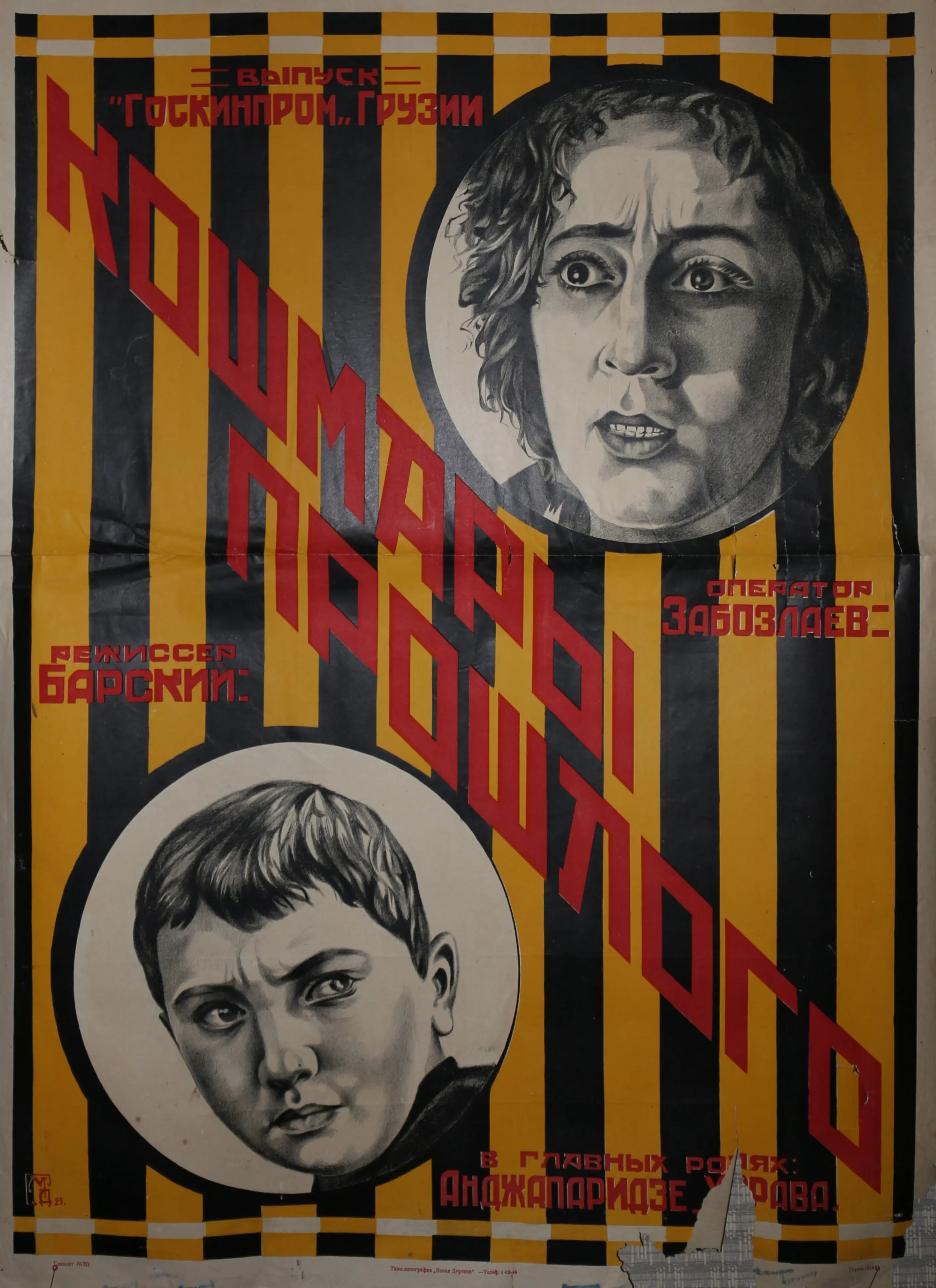
Does Tsarsulis sashinelebani demand your attention in the modern era? Short answer: yes, but only if you have the stomach for a relentless, unvarnished depiction of class-based suffering that offers no easy exits.
This film is a mandatory watch for students of early Soviet-era cinema and those who appreciate the raw power of Georgian performance art. It is absolutely not for viewers seeking escapism or a lighthearted evening; this is a heavy, rhythmic pulse of historical trauma.
Before we dive into the technical mastery of Grigori Arustanov’s direction, let's establish the fundamental impact of this work through three clear lenses:
The film opens with a sequence that is deceptively beautiful. We see the golden waves of grain and the rhythmic movement of the harvest. It looks like a celebration. But Arustanov quickly subverts this.
We see the peasant’s face—a mixture of pride in the work and a growing, hollow realization. The camera lingers on the landowner’s boots as they step onto the soil the peasant has bled over. It is a simple, punchy visual metaphor.
The contrast between the 'good land' and the 'bad land' isn't just a plot point; it's a character in itself. The bad land is shot with harsh, high-contrast lighting that makes the dirt look like jagged stone. It’s a landscape that refuses to love you back.
Veriko Anjaparidze provides the emotional spine of the film. Her performance is a masterclass in economy of movement. She doesn't need to wail to show grief; she simply stares into the empty cooking pot.
There is a specific scene where she watches her husband prepare to leave for the city. The way she adjusts his worn coat—a garment that is more holes than fabric—tells you everything about their shared history. It’s heartbreaking because it’s quiet.
Akaki Khorava, playing the lead, brings a physical presence that feels like a coiled spring. You can see the 1905 revolution brewing in his eyes long before the script explicitly mentions political unrest. He is a man being pushed until he has no choice but to push back.
The pacing of Tsarsulis sashinelebani is deliberate. Some might call it slow, but I would argue it is rhythmic. It mimics the repetitive nature of manual labor and the slow crawl of a hungry day.
Unlike the frantic energy found in The Wig-Wag System, this film breathes. It forces you to sit with the characters in their small, dark huts. The cinematography uses shadows not just for style, but to represent the encroaching walls of poverty.
However, the move to the city introduces a tonal shift that is jarring. While the rural scenes feel timeless, the city scenes feel a bit more like a standard industrial drama. It works. But it’s flawed.
Tsarsulis sashinelebani is worth watching because it provides a rare, authentic glimpse into the Georgian perspective of the 1905 revolution. It moves beyond simple propaganda to find the human heart beating underneath the political messaging. If you value historical accuracy and powerhouse acting, it is an essential piece of cinema.
The acting from the ensemble cast is top-tier, specifically the chemistry between Anjaparidze and Khorava. The film’s ability to make the landscape feel like an antagonist is a feat of brilliant directing.
The costume design feels lived-in and authentic, avoiding the 'clean peasant' trope often seen in lesser period pieces like Anita Jo.
The narrative structure is somewhat predictable if you are familiar with Soviet revolutionary cinema. The 'city' as a symbol of both hope and further corruption is a bit of a cliché, even if it was fresh at the time.
Compared to the nuanced character work in Still Waters, some of the supporting characters here feel like caricatures of 'evil' or 'good.'
Grigori Arustanov’s vision is one of stark contrasts. He doesn't shy away from the ugliness of hunger. There is a scene involving a meager meal that is shot with such intensity it becomes uncomfortable to watch.
This isn't the stylized misery of Dämon und Mensch. This is grounded. It’s dirty. It’s real. The camera often stays at eye level with the peasants, refusing to look down on them or romanticize their plight.
The transition to the city brings a change in visual language. The wide-open, albeit cruel, horizons of the country are replaced by cramped, vertical compositions. The city feels like a trap made of stone and steel.
When looking at other films of the era, like The Fatal Sign, Tsarsulis sashinelebani stands out for its lack of melodrama. It doesn't rely on shocking twists; it relies on the steady accumulation of small tragedies.
It shares some thematic DNA with The Poor Boob in its exploration of the 'little man' against the system, but the tone is worlds apart. Where other films might find comedy in the struggle, Arustanov finds only gravity.
I found the ending to be a bit of a propaganda-fueled hammer to the head. It’s effective, certainly, but it lacks the subtlety of the film’s first half. It feels as though the director was looking over his shoulder at the censors.
Tsarsulis sashinelebani is a bruising, essential piece of Georgian history. It captures a moment in time where the old world was dying and the new world hadn't yet been born. Despite its occasionally heavy-handed messaging, the performances and the atmosphere make it a towering achievement of its genre.
"A film that doesn't just show you history; it makes you breathe the dust of it."
If you are willing to engage with its darkness, you will find a film that is deeply rewarding and surprisingly modern in its critique of economic inequality. It’s a gut-punch of a movie. And sometimes, that’s exactly what cinema should be.
IMDb —
1916
Community
Log in to comment.