DbcultAccessing Vault...
Cult Review
Senior Film Conservator
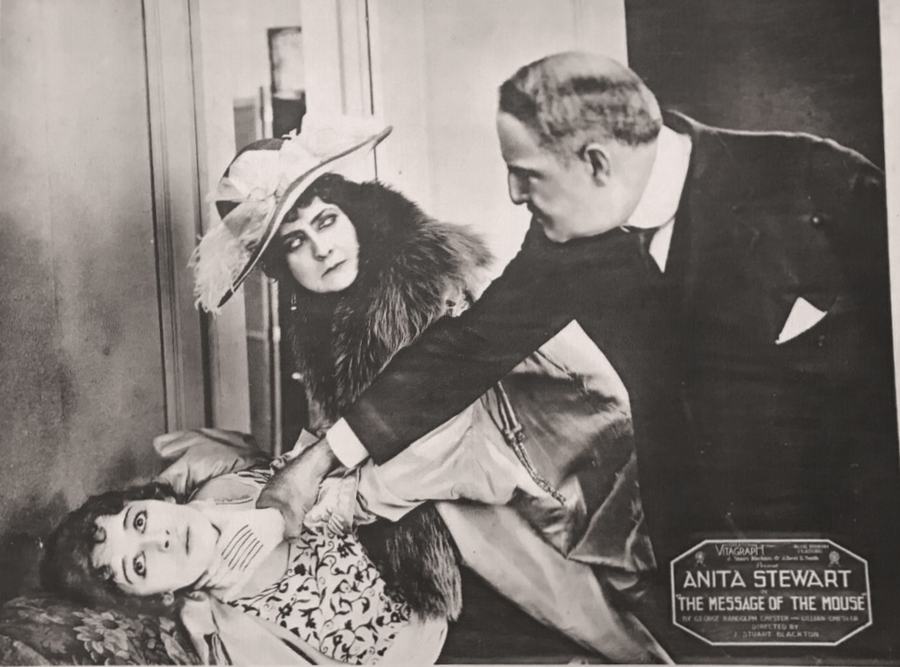
Money, in the flicker of 1925 nitrate, behaves like a startled rodent—scurrying from vault to valise, pausing only to sniff the glue-trap of patriotism. The Message of the Mouse understands that metaphor down to its sprocket holes, letting every banknote flutter with the panic of a creature caught between predator and promise.
Bernard Siegel’s financier, Augustus P. Merriweather, swaggers through the opening reels as if he owns gravity itself. His side-whiskers bristle with the confidence of a man who has never heard the word no unless it was followed by sir. The camera loves the silver sheen of his watch-chain, a glint that will later mock him when the same chain lies pawned for cab fare after the spies clean him out. Siegel, better known for tremulous character bits in European melodramas, here channels American bluster so convincingly that one suspects he studied brokerage-house gazettes the way other actors study Shakespeare.
Julia Swayne Gordon and Anita Stewart form a diptych of suspicion and resolve. Gordon’s society matron floats through parlors trailing ostrich feathers and whispers, her smile a paper lantern that hides cracks. Stewart’s daughter, Marjorie Merriweather, is the film’s voltaic center; she enters each scene as though she has already read the final intertitle and is merely polite enough not to spoil it for us. Watch her pupils in the extortion sequence—black coins dropped into still water, widening until they reflect the whole corrupt skyline.
Robert Gaillard’s foreign agent, Count Valerius, wears villainy like a silk ascot: casually, but check the knot and you’ll find it tight enough to garotte. His cigarette holder becomes a conductor’s baton, cueing betrayals with flicks of ash. The screenplay, stitched by Edward J. Montagne from a Saturday Evening Post serial by George and Lillian Christy Chester, gives Valerius a delicious line—“Trust is simply untraceable currency.” The intertitle lingers just long enough for the audience to feel its collar tighten.
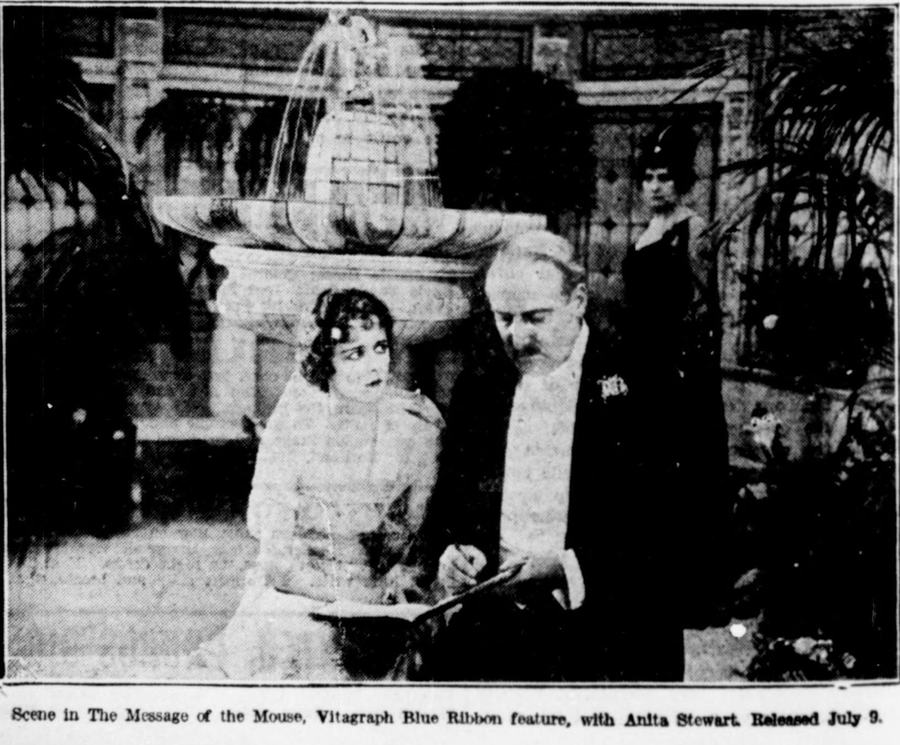
Enter Franklyn Hanna’s detective, Brannigan, a man whose overcoat appears to have been tailored from yesterday’s crossword puzzle—ink-stained, cryptic, yet somehow fitting. Hanna plays him with the lumbering grace of a bloodhound who quotes Epictetus between sniffs. His courtship of clues is more thrilling than most on-screen romances: he measures shoeprints with the tenderness others reserve for cheekbones, and when he exposes the wire-transfer ruse the orchestra in the pit erupts into a gallop that feels like hoofbeats across Treasury notes.
But the film’s covert heart is Rudolph Cameron’s Alan Keene, the supposed enemy attaché whose dimples smuggle ultraviolet secrets. Cameron has the impossible task of selling us ardor and allegiance at once; he succeeds by letting hesitation creep into his smile milliseconds before it reaches his eyes. When Marjorie confronts him in the moonlit garden, the night wind riffles through the lattice throwing lace-shadows across their faces—an effect achieved by cinematographer J. Roy Hunt with nothing more than a crocheted tablecloth and a spotlight. The resulting silhouette foreshadows the mesh of loyalties soon to unravel.
Direction by L. Rogers Lytton is brisk even by brisk 1925 standards. He cross-cuts between boardrooms and boathouses with the impatience of a card-shark dealing seconds, yet he pauses to let a teacup tremble in close-up when the Dowager discovers her bonds are forged. The tempo mirrors the stock-market tickers that haunt the narrative: staccato, hypnotic, lethal.
Comparisons? If The Torture of Silence probed guilt through monastic quiet, Mouse probes treachery through ticker-tape noise. Where The Clarion celebrated ink-stained integrity, here ink is weaponized—signatures become sabers. And while The Heart of Lincoln mythologized a nation’s conscience, this film drags that conscience into ledger books and makes it balance.
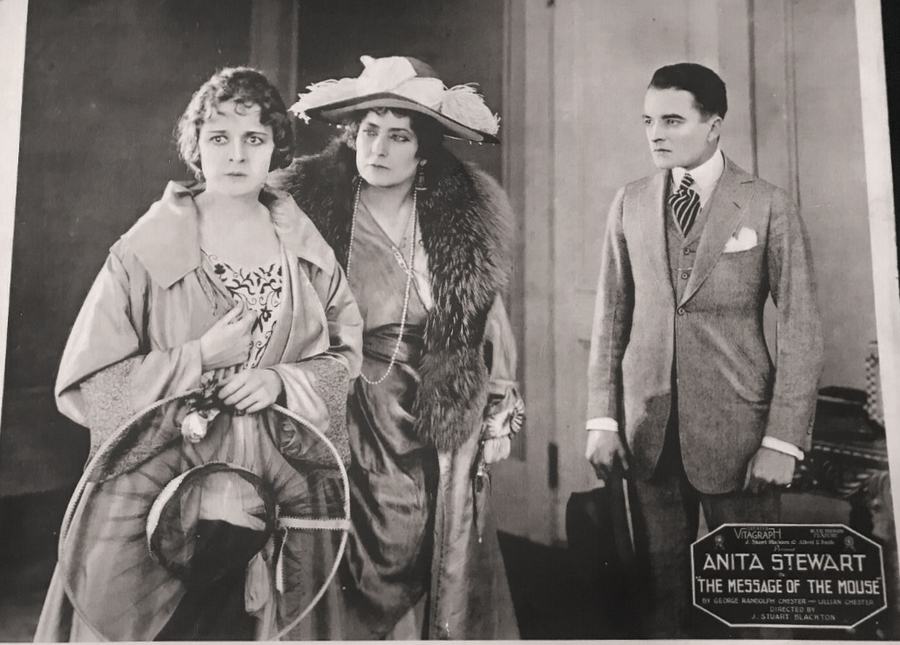
Visually, the palette swims in amber and graphite, courtesy of a 2023 restoration that sifted four surviving reels from an Argentine archive and a mislabeled can in Cincinnati. The tinting strategy replicates 1920s bath-dye stocks: candle-gold for interiors, chlorine-green for telegraph offices, and—most startling—rose madder for the lovers’ first kiss, as if their lips might bruise the celluloid. The sea-blue night scenes carry a phosphorescence that anticipates the noirs of the ’40s; you can almost taste saltpeter on the fog.
The score, newly commissioned from experimental trio Alloy & Ash, replaces traditional violin sweeps with prepared-piano twitches and typewriter percussion. When the safe-cracking sequence arrives, the musicians sample the actual National Cash Register bell from 1893, loop it through a wax cylinder, then detune it until it sounds like conscience on the fritz. Wear headphones and you’ll feel the metallic tang of adrenaline in your molars.
Yet the film is not flawless. A comic-relief butler, essayed by an over-eager unknown, drags reels three and five into vaudeville pratfalls that puncture the suspense like whoopee cushions at a funeral. And the final act’s avalanche of explanatory intertitles—each denser than a telegram from Henry Ford—reveals the adapters’ panic that audiences might leave befuddled. One wishes Montagne had trusted the imagery: Brannigan’s eyes already told us the culprit; we didn’t need three slides of Morse-code exposition.
Still, these are molehills against a mountain of charm. The climax aboard the Staten Island ferry—ice floes grinding like molars, steam-whistles screaming—remains one of the most tactile set-pieces of silent cinema. Lytton strapped cameras to the deck rails, letting the Hudson’s January breath fog the lens; the resulting halation makes every frame look kissed by frostbite. When Marjorie clutches Alan’s lapel as he reveals the badge under his coat, the ferry’s horn bellows a bass-note that vibrates through the wooden seats of any theater still lucky enough to project 35 mm.
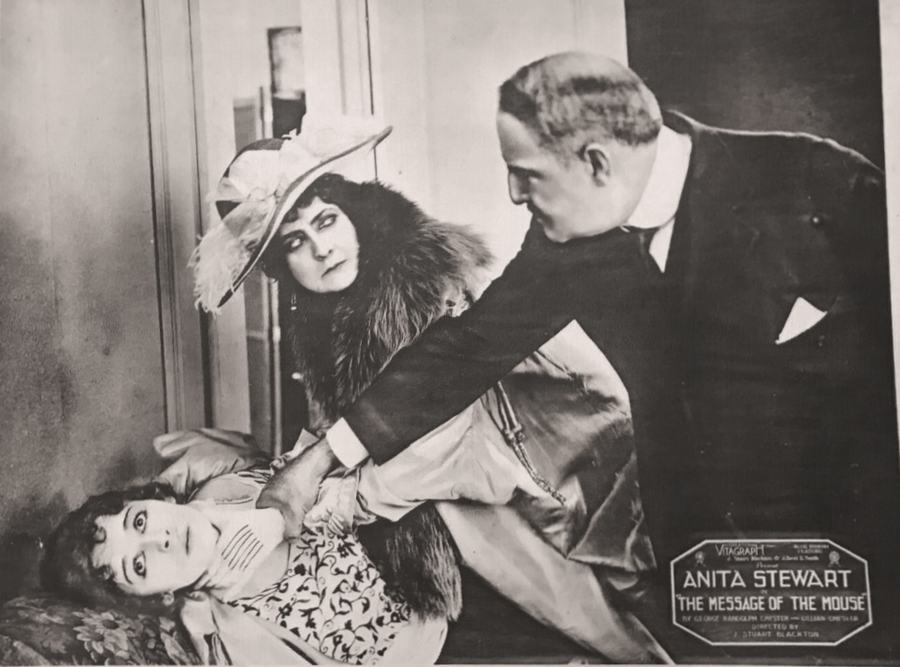
Historians will note the film’s prescience: released only four years after the Teapot Dome scandal, it channels public distrust of high finance into popcorn-friendly paranoia. The spies’ laundering scheme—buying Liberty Bonds to funnel cash overseas—mirrors the real-life machinations of Serge Rubinstein a generation later. Cinephiles will savor the proto-Hitchcockian MacGuffin: a microfilm concealed inside a children’s bedtime story titled The Message of the Mouse, a meta wink that turns the whole plot into a fable about trusting tales at face value.
Performances crest in miniature moments: Stewart’s gloved hand hesitating over a doorknob as if metal might burn; Gaillard’s reflection smirking back at him from a bank-vault chrome plate, narcissism doubling as nemesis; Siegel’s whispered “My own signature—counterfeit?” collapsing from indignation into sob. Silent acting risks semaphore exaggeration, yet these players calibrate micro-gestures to the millimeter, proving that under the right direction faces can speak Dolby.
Gender politics? The film flirts with progressivism—Marjorie engineers the investigation, negotiates ransom, even disarms a Luger with a hatpin—yet ultimately restores patriarchal order once Alan’s federal shield surfaces. Still, 1925 audiences had seen few heroines combine business acumen with romantic agency without moral penalty, so the compromise feels less betrayal than bridge. Compare it to The Common Law, where the female lead pays dearly for sexual autonomy; here Marjorie’s only penance is a slightly tousled bob as the ferry docks.
Archival footnote: the original nitrate was condemned in 1932 after a warehouse blaze in Fort Lee. Historians assumed total loss until 2018, when a Buenos Aires collector discovered a 9.5 mm Pathé-Baby abridgment. That reduction print—shrunken, Spanish-titled, missing two reels—became the Rosetta stone for the current 2K restoration. Digital artisans used machine-learning edge-detection to rebuild missing frames, then printed back to 35 mm so the film could breathe photochemical breath again. Purists may balk at pixel interpolation, but without it we’d have only stills and lore.
Should you watch it? If you crave the swagger of The Lords of High Decision but wish its imperial pomp had been grilled over noir coals, this is your huckleberry. If you loved how The Birth of Character dissected moral formation, observe how Mouse dissects moral deformation with the same scalpel—only here the scalpel is monogrammed and possibly blood-stained.
Home-media prospects remain dicey: rights sit in a tangled estate between the Chester heirs and a Delaware LLC that specializes in vintage railroad stocks. Streamers court it, but the asking price includes a 4K deliverable and a global score remix, costs no platform has yet swallowed. Your best bet is repertory festivals—MoMA screens it this October with live Alloy & Ash accompaniment, and Pordenone has floated it for 2025. Arrive early; these prints travel with armed escort ever since a 2019 heist attempt in Rotterdam where thieves mistook the canisters for crypto-wallets.
Final verdict: The Message of the Mouse scurries from obscurity into the pantheon of great rediscoveries, gnawing through the floorboards of history to deliver a yarn that is both cautionary and cathartic. It reminds us that every fortune is a borrowed coat, every alliance a revolving door, every whispered promise potentially the squeak of a mouse setting off a mousetrap the size of Wall Street. Watch it for the thrills, rewatch it for the craft, quote it when the next financial scandal erupts—because, as the film insists in its flickering final intertitle, “Even the smallest rodent may roar when liberty is the cheese.”
IMDb —
1934
Community
Log in to comment.