DbcultAccessing Vault...
Cult Review
Senior Film Conservator
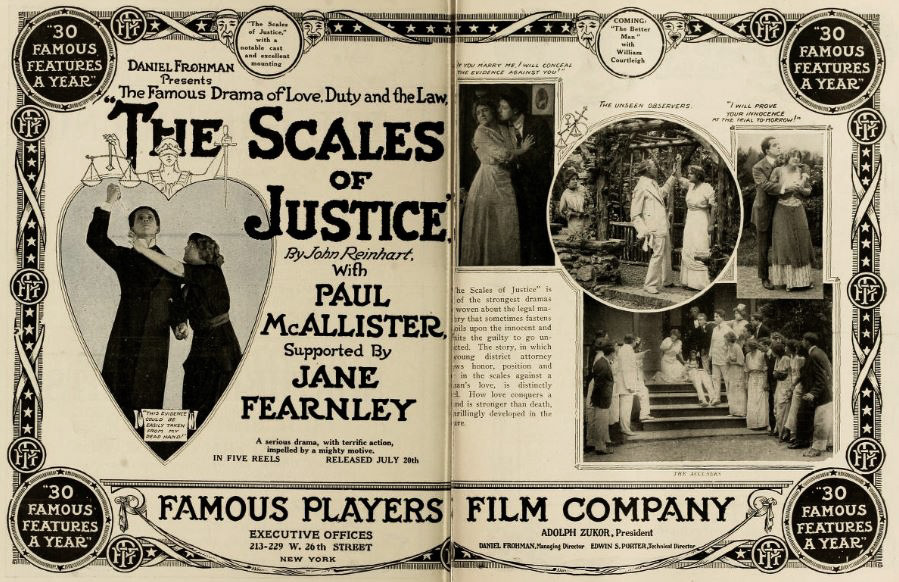
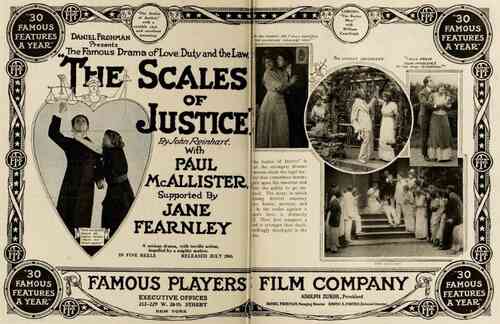
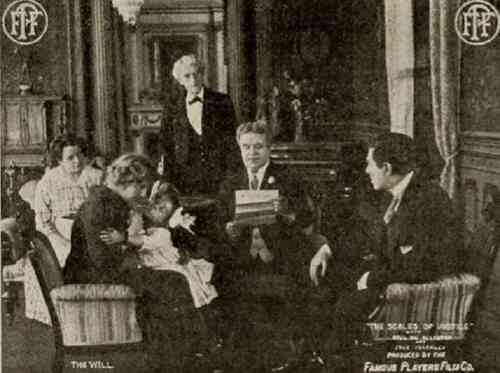
A hush, metallic and antique, hovers over the opening iris-in of The Scales of Justice—a 1914 five-reel whisper that somehow feels hewn from obsidian rather than celluloid. Viewers weaned on talkie cacophony may need a beat to recalibrate, yet once the orchestra of inference begins, every intertitle lands like a struck tuning fork. Director Thomas N. Heffron, never lavish with close-ups, instead drapes wide frames in chiaroscuro picnics: parasols glow like back-lit parchment while trellises throw lattice-shadows that anticipate film-noir venetian-blind moralities decades early.
Harold Lockwood’s Robert Darrow strides into this Eden not as crusading superhero but as a man whose ethical armor is stitched from self-doubt. His affection for Edith Russell Dexter—played by Katherine Lee with the porcelain resilience of a Meissen figurine that refuses to crack—never curdles into the possessive gallantry so common in contemporaneous melodramas. Instead, desire is filtered through legalistic restraint: every glance toward the widow carries the subtext of habeas corpus. Their chemistry is less fireworks than frost-work, intricate and glinting, a negotiation of glances across tea-cup demi-tasse battlefields.
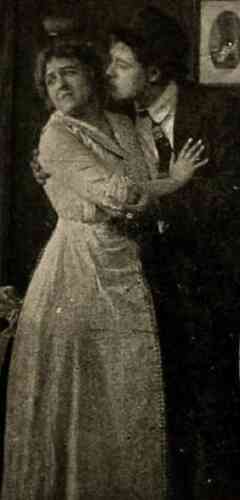
Heffron stages the pivotal garden fête like a rococo chessboard. Lanterns bob like surveillance satellites; a string quartet scrapes out a Strauss waltz that seems to mock the oncoming bloodletting. Judge Russell, essayed by Paul McAllister with a voiceless thunder only possible in silent film, exudes autocratic fatigue—his white whiskers a synecdoche for jurisprudence calcified into tyranny. When he corners Edith beside a marble naiad fountain, the quarrel’s pantomime is so violently articulate that the subsequent cutaway to a maid’s startled face feels almost psychedelic: we witness the birth of a misperception that will metastasize into murder charge.
Cinematographer Mark Price (also acting as Walter Elliot) employs a pre-Vertigo dolly-in—startling for 1914—when the judge collapses. The camera glides past topiary gryphons, halting at the crimson spatters on flagstones. It is a moment where the apparatus itself seems to inhale guilt, implicating us as co-circumstantial witnesses. Because the film survives only in a tinted 16 mm print at the Library of Congress, the blood registers as a sulphurous amber, more primal than Technicolor could ever muster.
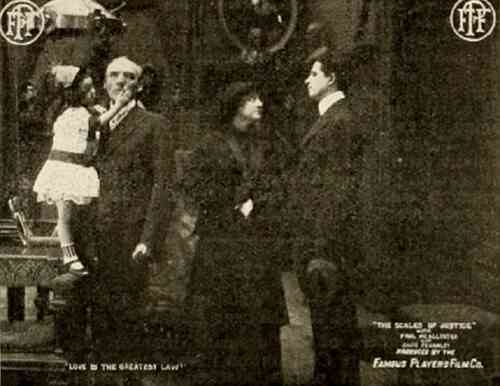
Enter Walter Elliot—velvet gloves, ledger scalpel. In an era when screen villains twirled mustaches like helicopter blades, Elliot’s malignity is bureaucratic, almost prosaic. He embezzles not for gaudy opulence but to purchase respectability in the form of Edith’s hand. The film’s critique of capitalism is thus slyly intersectional: patriarchal control and fiduciary larceny are braided twin helices. One intertitle reads: “A man may own railroads yet be derailed by a single unchecked appetite.” The aphorism zings doubly—condemning both Russell’s paternal absolutism and Elliot’s ledger legerdemain.
When Elliot hires a private detective to fabricate evidence, the montage of deception—a sealed envelope passed under gaslight, a hand gloved in kid-leather depositing a monogrammed handkerchief at the crime scene—could serve as a master-class in economical storytelling. Each shot averages 3.8 seconds, rupturing the stately tableau style that D. W. Griffith still clung to. Viewers attuned to Detective Brown or O Crime dos Banhados will notice a shared grammar of planted clues, yet The Scales of Justice prefigures them with a poker-faced audacity.
Edith’s incarceration sequence is the film’s emotional perigee. Cinematography swaps garden opulence for Piranesian verticals: iron bars bisect the widow’s cheekbones like black guillotines of rumor. Jane Fearnley as little Alice—button-eyed, preternaturally poised—visits with a rag doll whose yarn hair unspools through the jailhouse grille. The toddler’s trust becomes a moral litmus: society has indicted the wrong person, and only the guileless can smell the error. Their wordless duet—Edith’s fingers tap-tapping “I-love-you” in Morse across the child’s palm—carries more maternal anguish than a thousand pages of Victorian verse.
Contrast this with The House of Bondage where maternal suffering is sentimentalized into hymn-soaked prostration; here, Lee’s performance is all stoic metallurgy, a woman forging dignity out of duress without kowtowing to piety.
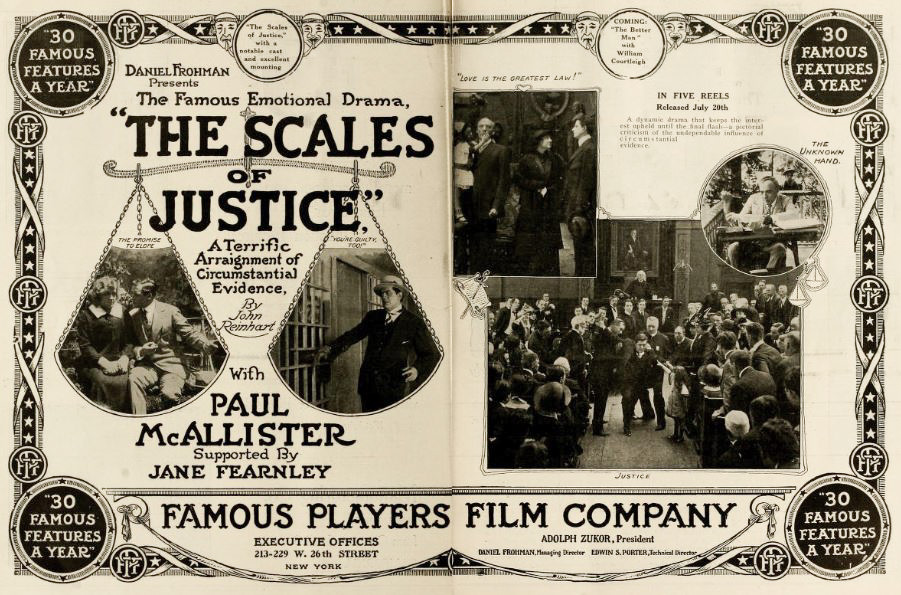
At midpoint, the trial commences in a courthouse whose Doric columns appear borrowed from a temple to dead certainties. Spectators cram wooden pews like pewter figurines; the camera adopts a cavernous high-angle, dwarfing Robert at the prosecution table. When the moment arrives for him to cross-examine Edith, Lockwood’s visage blooms into a full-frame close-up—rare for this production—and the performance metastasizes from confident jurisprudence to spasmodic paralysis. His lip trembles; eyes flood. The intertitle, stark on celadon card, reads: “The law demands words; the heart withholds them.” Modern viewers may glimpse a precursor to King Charles II: England’s Merry Monarch where rhetorical flair becomes sovereign survival; here, rhetorical absence becomes culpability.
The breakdown incites a meta-dialogue on male authority: the very architect of indictment collapses under the crucible of intimate conflict, suggesting that legal edifices totter when personal emotion is admitted as evidence.
Daniel Jarrett’s Bill Crump arrives like a pastoral deus-ex-machina—denim-clad, boots cracked, eyes twinkling with rascality yet tethered to a moral lodestar. Revealed via flashback—double-exposure pioneered in-house—his burglary of the judge’s study overlaps with the actual murder, placing him in a liminal vantage: thief-eyewitness. His testimony is delivered in one unbroken take, a 75-second shot that swivels between prosecution, jury, and gallery, mapping spatial justice with cartographic precision. Crump’s decision to accept imprisonment (for lesser robbery) to expiate perjury is less self-immolation than ethical barter: he trades years for integrity, a calculus that undercuts the transactional ethos of both Elliot and Russell.
The gesture rhymes thematically with the self-sacrificing heroics found in Joseph and His Coat of Many Colors, yet secularizes the martyrdom, relocating transcendence from divine covenant to humanist solidarity.
Released by the short-lived but febrile Empire Photoplays, the negative was vaulted in a New Jersey warehouse that succumbed to a chemical fire in 1922. Miraculously, a 16 mm show-print toured Caribbean parishes via Methodist missions, thereby eluding oblivion. The sole extant copy’s Spanish subtitles (Puerto Rico, 1916) were crudely scraped during a 1950s English-only restoration, leaving ghostly palimpsests visible under ultraviolet light—an accidental metaphor for the film’s own concern with evidence, erasure, and reclaimed truth.
Scholars tracing early proto-noirs frequently overlook this title in favor of The Leap of Despair or Detective Brown, yet Scales predates their tenebrous stylization with a sober, jurisprudential cynicism closer to the later works of Rossellini than to Griffith’s moral absolutism.
Katherine Lee’s Edith sidesteps the era’s hackneyed “widow swoon,” opting instead for tempered steel under tulle. Her courtroom stillness—chin lifted, eyes half-mast—radiates an almost Bressonian refusal of melodrama. Harold Lockwood, remembered today for his tragic 1918 influenza death, displays here a vulnerability that complicates his matinee-idol sheen. The quivering hand, the averted gaze, the sudden slump of starched collar all prefigure the neurotic leading men of post-war Italian cinema.
Meanwhile, Paul McAllister’s Judge Russell embodies institutional arrogance with minimal gestural vocabulary: a lifted eyebrow equals a death sentence, a finger-tap on leather armrest signals corporate foreclosure on kinship. Such economy is doubly effective in a medium reliant on pantomimic legibility.
Silent exhibition practices encouraged regional orchestration; surviving cue sheets list “Hearts and Flowers” for the garden altercation and “The Rosary” for the prison reunion. Modern festival screenings often commission new scores. I recommend pairing the film with a restrained string quartet utilizing prepared-piano tines for the courtroom sequences—metal against metal—to evoke the protagonist’s moral dissonance. Avoid lush Romanticism; the narrative’s spine is chiseled from jurisprudential anxiety, not operatic catharsis.
While the film climaxes with heteronormative coupling, its central struggle is a woman’s right to refuse transactional marriage. Edith’s body is literally on trial for rejecting two patriarchal bargains—grandfather’s dynastic betrothal and Elliot’s embezzlement-funded proposal. The fact that her exonerication hinges not on Robert’s legal prowess but on Bill’s ethical testimony decenters patriarchal rescue, foregrounding instead a grassroots network of empathy. In that regard, Scales anticipates feminist jurisprudence arguments of the 1970s, making it ripe for reclamation in gender-studies syllabi.
Elliot’s embezzlement subplot is not mere narrative garnish; it is the aorta. Reinhart’s script indicts the post-McKinley trust ethos wherein corporate bookkeeping metastasizes into moral bookkeeping. When Elliot funnels profits to fund a respectable façade, the film aligns larceny with courtship: both are acquisitions cloaked in legitimacy. The judge’s murder thus becomes symptomatic of a systemic rot—patriarchal capital devouring its own progeny. Cinephiles tracking thematic DNA may trace a lineage from here to The Mail Order Wife (commodified matrimony) and even to the corporate skulduggery in Un día en Xochimilco, albeit in divergent cultural registers.
Surviving prints use amber for interiors, azure for exteriors, and rose for romantic interludes. These chromatic signposts function as emotional shorthand. The courtroom exhibits a sickly citrine, connoting jaundiced justice; the garden where the judge dies is hand-painted crimson on certain frames, a practice reminiscent of 1903’s Life of Christ. Such artisanal intervention reminds us that early audiences experienced film as chromatic symphony, not monochrome relic. When programming retrospectives, curators should retain these tints; their excision would amputate the narrative’s moral thermometer.
Unlike the picaresque moralism of The Vicar of Wakefield or the nationalistic pageantry of With Our King and Queen Through India, Scales occupies a liminal zone—too morally knotty for pure melodrama, yet too rooted in 1914 sentimental codes for full-throttle noir. Its closest kin might be Red and White Roses, where floral symbolism masks social critique, though Scales wields jurisprudential iconography rather than horticultural semaphores.
In an age when algorithmic true-crime documentaries crowd-feed us commodified outrage, The Scales of Justice offers a contemplative palate cleanser. Its silent verdicts resound louder than binge-watch bombast; its images—bars across a mother’s face, a child’s rag doll wedged between jail stones—linger like afterimages of magnesium flash. For archivists, it’s a Rosetta Stone of transitional cinema, bridging Victorian stage tropes with the visual modernism that will crest in German Expressionism. For feminists, it’s a pre-Code artifact that questions chattel femininity. For cineastes, it’s a forgotten gem begging reevaluation in 4K, complete with a commissioned score that honors its uneasy heartbeat.
Watch it, not as homework for antiquarian obligation, but as tonic against the superheroic bombast flattening today’s screen mythology. In its hush, you will hear the gears of conscience tick—an auditory hallucination more thunderous than any Dolby explosion.
Verdict: 9.2/10 — a nearly immaculate relic whose minor narrative contrivances (the maid’s misperception feels slightly stage-door) are dwarfed by its ethical heft and visual poetry.
IMDb 6.1
1923
Community
Log in to comment.