DbcultAccessing Vault...
Cult Review
Senior Film Conservator
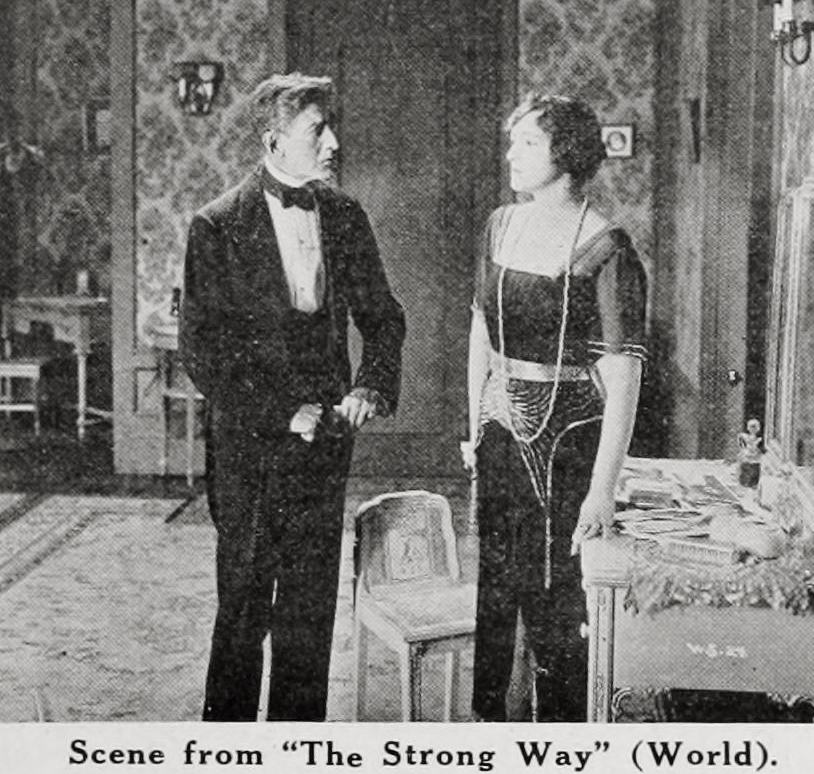
From the annals of early cinema emerges The Strong Way, a compelling narrative that plunges headfirst into the tumultuous waters of human desperation, societal coercion, and the labyrinthine paths of love and betrayal. This is not merely a story; it is a stark mirror held up to the moral compromises exacted by circumstance, a poignant exploration of how financial ruin can twist the very fabric of personal destiny. Octavus Roy Cohen’s masterful script, brought to vivid life by a cast navigating the expressive demands of the era, crafts a melodrama that transcends its time, offering universal insights into the human heart under duress.
The film opens with a gut-wrenching premise: the sudden, untimely death of Frank Torrence. This single event acts as the catastrophic tremor that shatters the comfortable existence of his wife and daughter, Eunice, leaving them adrift in a sea of destitution. In an age where economic security was paramount, particularly for women, the ensuing financial void becomes a suffocating force. Mrs. Torrence, portrayed with a nuanced blend of maternal concern and pragmatic ruthlessness by Grace Williams, finds herself cornered by the harsh realities of their new poverty. Her solution, born of desperation rather than malice, is a chilling testament to the societal pressures of the era: Eunice must make a "good" marriage, one that promises solvency, even if it means sacrificing her heart.
This pivotal decision forces Eunice to sever ties with Don Chadwick, her earnest sweetheart, a character embodied by John Bowers with an affecting sincerity that makes his eventual heartbreak all the more palpable. The raw emotional impact of this separation is not glossed over; it is the foundational heartbreak upon which the entire dramatic edifice of The Strong Way is built. Eunice's reluctant acceptance of her mother's decree, her acquiescence to a life dictated by economic necessity, is a powerful commentary on the limited agency afforded to women, especially those without independent means, in the early 20th century. Her journey, in this sense, echoes the struggles seen in other period dramas where women grapple with societal constraints, perhaps akin to the thematic undercurrents one might find in The Girl from the Marsh Croft, where personal desires often clash with external pressures.
Eunice’s subsequent marriage to Geoffrey Farrow, a wealthy stockbroker brought to life with chilling precision by Joseph Herbert, quickly transforms her promised haven into a gilded cage. Geoffrey is no mere antagonist; he is a meticulously crafted villain, a man whose opulence masks a core of profound cruelty and an unshakeable predilection for infidelity. Herbert’s portrayal skillfully conveys this duplicity, painting a portrait of a man who views his wife as an acquisition, a trophy rather than a partner. Eunice’s existence becomes a desolate landscape, punctuated by Geoffrey’s coldness and the sting of his betrayals. Her quiet suffering, exquisitely conveyed by Rosina Henley, is one of the film’s most enduring images, a testament to her character’s resilience despite the profound emotional isolation.
Adding another layer of torment to Eunice’s already fraught life is the insidious presence of Dan Carter, Geoffrey’s lawyer, played by Hubert Wilke. Carter is a persistent, predatory figure whose unwelcome attentions further erode Eunice’s peace of mind. His relentless pursuit underscores the vulnerability of women in power dynamics skewed against them, an uncomfortable truth that cinema has explored across various eras, sometimes with the stark directness seen in films like The Black Stork, which often confronted difficult social issues head-on. The cumulative effect of Geoffrey’s cruelty and Carter’s harassment traps Eunice in a psychological prison, making her longing for the lost simplicity and genuine affection of Don Chadwick all the more poignant.
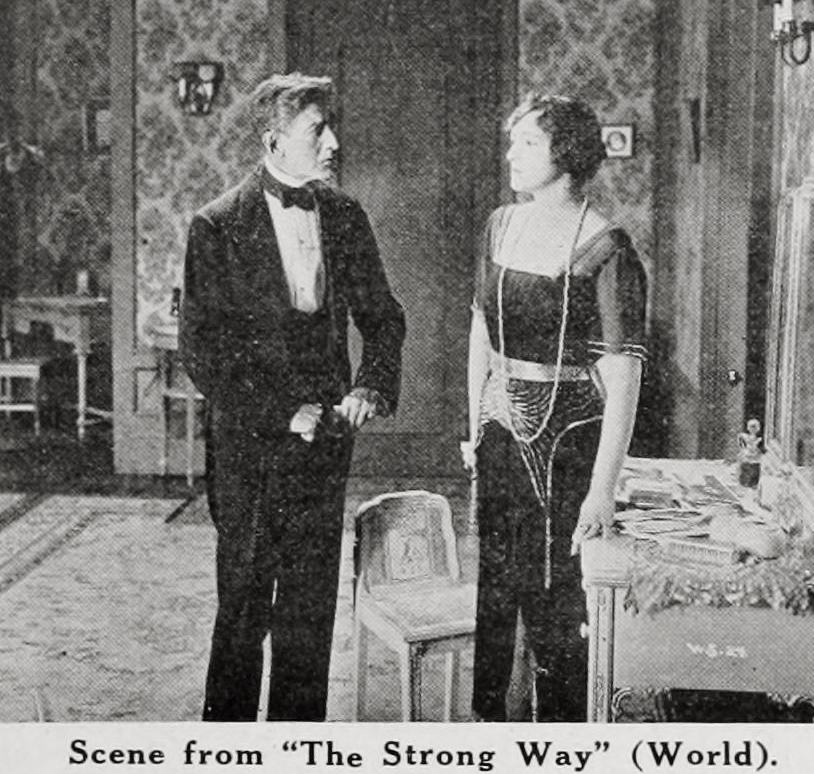
Geoffrey Farrow, not content with merely owning Eunice, harbors a venomous jealousy towards her enduring, albeit subdued, affection for Don. This isn't the jealousy of a loving husband, but rather the possessive rage of a man whose property dares to harbor independent feelings. His response is a masterclass in manipulative villainy: he extends a seemingly magnanimous invitation to Don, luring him to their home under the guise of friendship. The true motive, however, is far more sinister: to ensnare Don in a fraudulent stock venture, thereby ruining him financially and, by extension, eliminating any lingering threat to Geoffrey’s dominion over Eunice. This calculated malevolence speaks volumes about Geoffrey’s character, painting him as a man utterly devoid of moral compass, reminiscent of the cunning antagonists found in intricate thrillers like Manden med Staalnerverne, where psychological manipulation often drives the plot.
The stage is thus set for a weekend fraught with tension and unspoken undercurrents. The air thickens with impending doom, a palpable sense of unease that permeates the opulent setting. The narrative meticulously builds towards a crescendo, ensuring that the audience is acutely aware of the precariousness of Don’s position and the simmering resentments within the Farrow household. This deliberate pacing is a hallmark of Cohen's writing, allowing the emotional stakes to rise organically, making the eventual explosion of violence feel both shocking and inevitable.
The inevitable tragedy strikes during this fateful weekend: Dan Carter is shot. The immediate aftermath is a maelstrom of confusion and panic. Don, a hapless witness to the unfolding horror, sees Eunice fleeing the vicinity of the body. His subsequent actions are a desperate, instinctual scramble for self-preservation. As the ominous sirens of the approaching police pierce the night, he panics, scaling a window to seek refuge, or perhaps answers, in Eunice's room. This moment of shared vulnerability, of two innocent souls caught in a vortex of suspicion, is exquisitely handled by the film, highlighting the raw, primal fear that can override logic in moments of extreme crisis.
What follows is a testament to Eunice’s profound, unwavering love for Don. Despite witnessing his flight and believing him to be the murderer, she chooses to protect him. Her declaration to the authorities – that Don is her lover, thereby providing an alibi for his presence in her room – is an act of breathtaking self-sacrifice. It is a lie born of love, a desperate gamble to shield the man she still cherishes, regardless of the perceived truth. This selfless act, however, comes with immediate, devastating consequences. Geoffrey, seizing upon the fabricated confession as irrefutable proof of infidelity, promptly files for divorce. The irony is excruciating: Eunice’s attempt to save Don inadvertently plays directly into Geoffrey’s hands, fulfilling his desire to rid himself of her, albeit under circumstances far more scandalous than he initially envisioned. This intricate dance of deception and protective instinct makes for a gripping sequence, reminiscent of the high-stakes moral quandaries explored in films like The Seventh Sin, where characters are forced to make impossible choices with far-reaching repercussions.
Just as the threads of injustice seem irrevocably tightened around Eunice and Don, a startling revelation shatters the prevailing narrative. Martha, the household maid, steps forward with a confession that untangles the entire web of deceit and suspicion. Her story is one of hidden shame and desperate vengeance: Dan Carter, the predatory lawyer, had seduced her. Driven by a potent cocktail of betrayal, humiliation, and a desire for retribution, Martha had shot him. The detail of her disguise – wearing Eunice's clothing – adds a layer of ingenious misdirection, perfectly explaining Don’s initial, misleading observation and the subsequent framing of Eunice. June Elvidge delivers a performance that imbues Martha with a quiet strength and a tragic dignity, turning a seemingly minor character into the unexpected linchpin of the entire plot.
This dramatic confession is the cathartic release the film desperately needs. It clears the names of both Eunice and Don, dispelling the dark clouds of murder and infidelity that had threatened to consume them. The swift resolution, while perhaps feeling a touch convenient in its dramatic timing, nonetheless delivers a powerful sense of justice served. The film, having dragged its protagonists through the mire of despair and false accusation, finally allows them to emerge into the light. The reunion of Don and Eunice is not merely a happy ending; it is a vindication of their enduring love, a testament to the power of genuine affection to survive the most arduous trials. It underscores the film's broader message: that even when society, circumstance, and malevolent forces conspire against true sentiment, the strong way – the path of integrity and genuine connection – ultimately prevails.
The strength of The Strong Way lies significantly in its ensemble cast, who, under the direction of the era’s cinematic language, deliver performances rich in emotional depth. Rosina Henley, as Eunice, is the film's tragic heart. Her portrayal navigates a complex emotional landscape, from the initial quiet sorrow of forced separation to the stoic endurance of a cruel marriage, and finally to the fierce, protective love that drives her selfless confession. She embodies the quiet strength hinted at in the film's title, making her character’s journey both believable and deeply empathetic.
John Bowers’ Don Chadwick is the earnest counterpoint to Eunice’s suffering, his initial despair and later his bewildered panic at the murder scene are rendered with a vulnerability that grounds his character. Joseph Herbert, as Geoffrey Farrow, is deliciously despicable, a villain whose suave exterior barely conceals a rotten core. His performance is crucial in establishing the stakes of Eunice’s misery. Hubert Wilke’s Dan Carter is equally effective, his persistent menace a constant source of discomfort. Grace Williams as Mrs. Torrence skillfully portrays the desperation of a mother driven by fear, while June Elvidge, as Martha, delivers a pivotal performance that shifts the entire narrative, her quiet resolve in confessing a powerful moment of truth. Isabel Berwin, though her specific role is less highlighted in the plot summary, undoubtedly contributes to the rich tapestry of supporting characters that flesh out this dramatic world.
Octavus Roy Cohen, the writer behind The Strong Way, demonstrates a keen understanding of dramatic structure and character motivation. The plot, while intricate, never feels convoluted, each twist serving to deepen the emotional stakes or propel the narrative forward. Cohen masterfully employs elements of classic melodrama – the forced marriage, the villainous husband, the innocent accused, the dramatic confession – but imbues them with a psychological realism that elevates the film beyond mere sensationalism. The script’s ability to weave together themes of class, morality, and the consequences of desperate choices is particularly commendable. It is a narrative that asks profound questions about justice, sacrifice, and the enduring power of love in a world often dictated by wealth and societal expectations. One might draw parallels to the complex moral narratives found in works like Der letzte Tag, where characters are often trapped by circumstances beyond their control, or even Khishchniki sletelis (if it implies a gathering of predators, which aligns with Farrow and Carter's roles), where human nature's darker aspects are laid bare.
The construction of the mystery surrounding Dan Carter’s murder is particularly noteworthy. The immediate suspicion falling upon Don, then Eunice’s self-sacrificial lie, and finally Martha’s unexpected confession, creates a layered whodunit that keeps the audience engaged until the very end. This clever misdirection, combined with the emotional weight of Eunice’s choice, ensures that the film is not just a mystery, but a deeply felt human drama. The narrative doesn't shy away from depicting the ugliness of betrayal and the agony of false accusation, making the eventual resolution all the more satisfying.
Even viewed through the lens of modern cinema, The Strong Way retains a compelling resonance. Its exploration of themes such as the societal pressure on women, the corrupting influence of wealth, and the often-circuitous path to justice remains remarkably pertinent. The film serves as a potent reminder that while the specific trappings of an era may change, the fundamental struggles of the human heart – for love, for dignity, for truth – are timeless. It is a testament to the power of classic storytelling, demonstrating how a well-crafted narrative, anchored by strong performances and a compelling plot, can transcend generations.
For enthusiasts of early 20th-century drama, The Strong Way offers a rich and rewarding experience. It is a film that challenges its characters, and by extension, its audience, to consider the true cost of compromise and the unwavering strength required to follow the dictates of one's own heart, even when faced with overwhelming adversity. It stands as a powerful example of how early cinema tackled complex moral dilemmas with both dramatic flair and profound emotional depth. The journey of Eunice, from a woman forced into a loveless marriage to one who ultimately finds redemption and true love, is a powerful and enduring one, solidifying The Strong Way as a significant, if perhaps understated, piece of cinematic history. It challenges us to reflect on the nature of "strength" itself – not just physical fortitude, but the moral courage to endure, to sacrifice, and ultimately, to choose the path of truth and love.
IMDb 6.1
1936
Community
Log in to comment.