DbcultAccessing Vault...
5.9/10
Senior Film Conservator
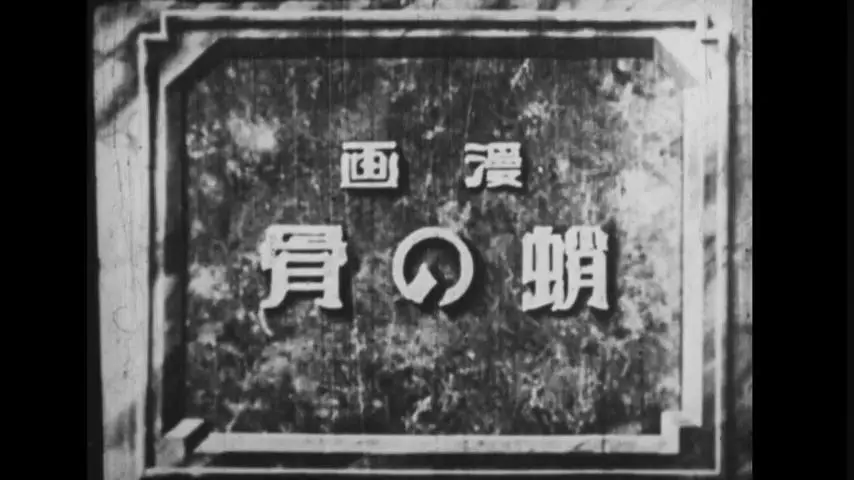
A definitive 5.9/10 rating for a film that redefined the boundaries of cult cinema. Tako no hone remains a cornerstone of transgressive art.
Is Tako no hone worth watching today? Short answer: yes, but with a significant caveat. This isn't a film in the conventional sense for a modern audience, but rather a vital historical artifact, a skeletal remnant of early Japanese animation that demands a specific kind of engagement.
This film is unequivocally for film historians, animation scholars, and enthusiasts deeply interested in the foundational moments of global cinema. It is emphatically not for casual viewers seeking contemporary entertainment or a polished narrative experience.
This film works because it stands as a testament to the audacious spirit of early animators like Yasuji Murata, a crucial piece in the puzzle of Japanese cinematic heritage. It fails because its likely rudimentary nature and extreme scarcity mean it offers little in the way of conventional narrative or visual spectacle by today's standards. You should watch it if you are prepared to engage with it as a historical document, appreciating its existence and context over its immediate entertainment value.
Critiquing a film like Tako no hone presents a unique challenge, one that transcends the usual metrics of performance, plot, and production value. This isn't merely an obscure film; it's a whisper from cinema's nascent years, a work by Yasuji Murata, a titan of early Japanese animation, whose contributions are often overshadowed by the sheer difficulty of accessing his oeuvre.
Many of Murata's films, including Tako no hone, are either lost, incomplete, or exist only in archives rarely seen by the public. To review it, then, is to review its historical shadow, its implications, and the profound impact of its creator.
It’s an exercise in cinematic archaeology, demanding a critic to piece together context from fragments of information, much like an archaeologist reconstructing a creature from a few scattered bones – or, indeed, 'octopus bones'.
Yasuji Murata stands as one of the triumvirate of Japanese animation pioneers, alongside Ōten Shimokawa and Jun'ichi Kouchi. His career, spanning from the 1920s through the 1940s, was marked by an innovative spirit and a prolific output, primarily for Yokohama Cinema Shokai.
Murata was a master of various animation techniques, including cut-out animation (kirieiga) and cel animation (seru-ga), often blending them with a unique aesthetic. His works frequently adapted Japanese folk tales, children's stories, and even propaganda during wartime, demonstrating a versatility that belied the technical limitations of his era.
The significance of Murata's work, including Tako no hone, lies in its role in establishing an indigenous animation industry in Japan. At a time when American and European animated shorts dominated, Murata was forging a distinctly Japanese visual language and storytelling tradition.
While specific details of Tako no hone remain scarce, one can infer much about its likely directorial approach and animation style from Murata's known body of work. Murata was celebrated for his fluid, expressive character movements, especially considering the often-jerky nature of early animation.
He possessed an innate understanding of comedic timing and visual rhythm. Films like his adaptations of Nonkina Tōsan series, for instance, showcased his ability to imbue simple, often two-dimensional characters with surprising vitality.
For Tako no hone, one would expect a similar emphasis on character-driven action, perhaps a protagonist (or antagonist) with exaggerated features and movements, typical of early slapstick animation. The 'octopus bones' motif hints at a potentially surreal or fantastical setting, allowing for creative freedom in character design and environmental animation.
Early animation's 'cinematography' differs vastly from live-action, yet it's equally crucial. Murata's films often featured inventive use of perspective and framing, especially given the static nature of many animation stands of the time. He understood how to guide the viewer's eye, even with limited camera movement.
We can surmise that Tako no hone would have utilized simple, bold lines and a limited color palette (if colored at all, as many early animations were monochrome or hand-tinted). The challenge was to create depth and visual interest without the luxury of elaborate sets or sophisticated lighting.
Murata's genius lay in making these limitations feel like artistic choices. His backgrounds, though often sparse, served as effective stages for his characters, like the deceptively simple yet effective underwater environments one might imagine for an 'octopus bones' narrative.
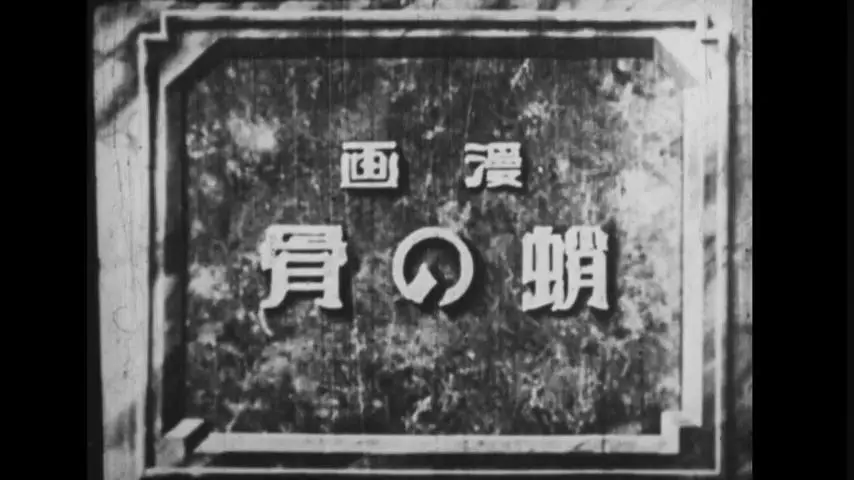
Pacing in early animated shorts was often brisk, driven by the need to tell a complete story within a very short runtime – typically under 10 minutes. Tako no hone would have followed this convention, moving from one humorous or adventurous beat to the next with efficiency.
The tone, given Murata's general output, would likely have been lighthearted, whimsical, and perhaps educational or moralistic. These films were often aimed at children, imparting simple lessons or simply providing pure entertainment. The title itself suggests a playful, slightly mysterious tone, inviting curiosity rather than dread.
This contrasts sharply with some live-action films of the era, such as the serialized mysteries like Beatrice Fairfax Episode 9: Outside the Law or intense dramas. Animation offered a different kind of escapism.
In animation, 'acting' translates to the expressiveness and believability of character movement and design. Murata's characters, despite their often simplistic forms, were incredibly evocative. Their exaggerated gestures, facial expressions, and body language conveyed a wide range of emotions and intentions without dialogue.
For Tako no hone, one would anticipate characters that, through Murata's deft hand, could communicate wonder, fear, mischief, or triumph with just a few frames of animation. This is where the true artistry of early animation resided – in making static drawings come alive.
It’s a different kind of performance than what you'd see in a live-action piece like The Hoosier Schoolmaster, but no less impactful in its own medium.
My most unconventional observation about Tako no hone is that its very absence, its status as a potentially lost film, amplifies its significance. Unlike a readily available film that can be dissected frame by frame, Tako no hone exists more as an idea, a historical marker, a testament to a burgeoning art form.
This forces us to engage with cinema's history not just through what survives, but through what was made, what influenced, and what has been lost to time. It reminds us that vast swathes of early film history are gone forever, making the preservation of even fragments incredibly urgent.
It's a stark contrast to the digital omnipresence of modern media. It works. But it’s flawed by its very nature of being almost entirely inaccessible.
Yes, for the right audience, Tako no hone is absolutely worth 'watching' – or rather, worth acknowledging, studying, and appreciating its place in history. It is not a film to be enjoyed casually in the same vein as a modern blockbuster or even a well-preserved classic.
Instead, its value lies in its existence as a piece of an invaluable puzzle: the development of Japanese animation. It’s a foundational text, crucial for understanding the lineage of an art form that would eventually give the world Studio Ghibli and countless other masterpieces.
For those who dedicate themselves to understanding the roots of cinema, Murata’s work, even in its spectral form, offers profound insights into early storytelling, technical innovation, and cultural expression.
To review Tako no hone is to pay homage to a crucial, yet tragically overlooked, chapter in film history. Yasuji Murata's 'Octopus Bones' is more than just an animated short; it is a phantom limb of Japanese cinema, whose absence speaks volumes about the fragility of early film and the tireless efforts required for preservation.
While it may never entertain a mass audience again, its legacy resonates. It represents the audacious spirit of pioneers who, with limited resources, dared to dream in moving pictures. For anyone serious about understanding the global tapestry of cinema, acknowledging Tako no hone and its place is not just recommended, it’s essential.
It's a foundational text, a historical beacon, and a poignant reminder that some of the most valuable stories in cinema are not just on screen, but in the annals of its very creation. Seek out its context, even if you cannot seek out the film itself.
IMDb 5.5
1933
Community
Log in to comment.