DbcultAccessing Vault...
5.5/10
Senior Film Conservator
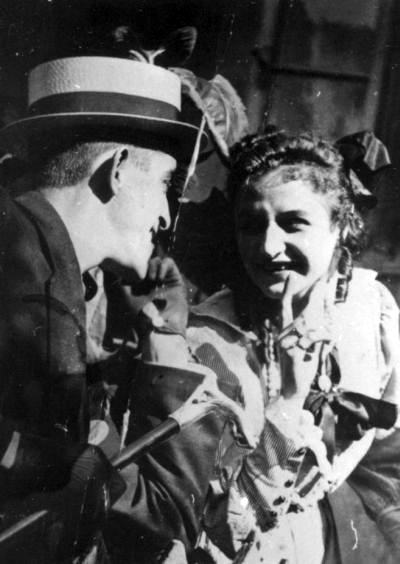
A definitive 5.5/10 rating for a film that redefined the boundaries of cult cinema. Lyubovta e ludost remains a cornerstone of transgressive art.
There is a moment—easy to miss if you blink—when the camera in Lyubovta e ludost lingers on a paper lantern swaying above a Sofia sidestreet. The lantern is cheap, crinkled, probably bought for five leva, yet in the tremulous flare of 1917 nitrate it glows like a pocket sun. That instant distills the entire film: gaudy, fragile, absurdly radiant. Vassil Gendov, pulling triple duty as co-writer, co-director, and comic chameleon, stages love not as destiny but as mischief, a carnival hustle where tomorrow’s mortgage is beaten by today’s grin.
Forget the received wisdom that early Balkan cinema hermetically sealed itself within national folklore. Lyubovta e ludost is conversant in the international grammar of slapstick—Keaton’s stoic resilience, Max Linder’s velvet smirk—but filters them through a local sensibility that smells of strong Turkish coffee and rust-bound trams. Intertitles, when they appear, are calligraphic grenades: brief, explosive, and wickedly polite. One card reads, „A telegram from Gabrovo is sharper than a winter rose.“ The sentence is untranslatable without losing its thorn, yet any audience, bilingual or not, catches the sarcastic shiver.
The visual wit is even sharper. Gendov blocks his farce inside a bourgeois winter garden—wrought-iron trellises, potted palms, statuary whose eyes seem to follow every fib. Depth is staged diagonally: foreground aunt dozing, mid-ground suitor skulking, background window framing urban modernity. The result is a tri-layered suspense gag worthy of Salambo’s colossal sets, yet achieved with nothing grander than furniture shuffled like chess pieces.
At its frothy core, the plot is a duel between liquidity and liquidity of another sort: cash versus charisma. Aunt Kera’s preferred nephew-in-law hails from Gabrovo, a mountain town proverbial for stingy merchants. The film never shows him—his absence becomes a running joke—but his capital looms like a storm cloud. Against this purse stands our nameless student, armed solely with neurasthenic theatrics and a friend willing to impersonate a werewolf. Their victory is not merely amorous; it is a cultural referendum. By ridiculing the affluent bumpkin, the movie sides with Sofia’s bohemian underbelly, the cafés where poets paid in verse and waiters accepted sonnets as tips.
Yet Gendov refuses proletarian pieties. His lovers crave respectability; they simply want it on their own terms. When the final embrace dissolves into a freeze-frame—an effect astonishingly ahead of its time—we sense the couple hasn’t toppled the system, pick-pocketed it. That sly ambiguity keeps the comedy effervescent rather than didactic.
Zhana Gendova, the director’s spouse and muse, plays the girl with a kinetic flutter of ribbons and sideway glances. Watch her inch toward a doorway: shoulders hesitant, feet already sprinting in the mind. It is a masterclass in pre-Method physicality, closer to marionette than method, yet throbbing with hormonal electricity.
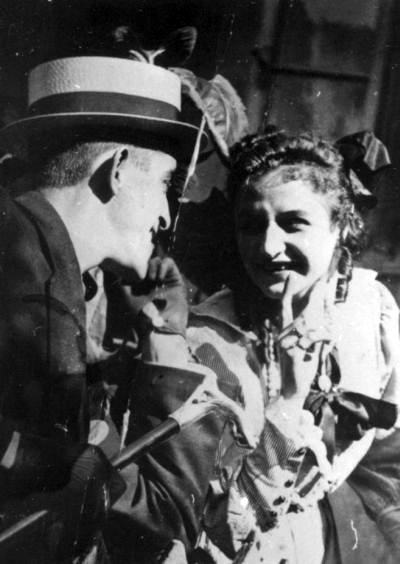
Vassil Gendov’s dual turn—timid swain and fake neurotic—showcases silent cinema’s elastic identity. His fabricated tics anticipate Charlie’s fake blind man in City Lights by over a decade. The performance peaks in a dinner scene where every spoonful of soup threatens a seizure. The camera dares not cut; we observe in real time as etiquette warps into surreal ballet.
Maria Toromanova-Hmelik’s Aunt Kera is the axis. She begins as stock tyrant—eyebrows like circumflex accents—then unravels into something touchably absurd. When she genuflects, clutching an ottoman for divine aid, piety and panic fuse; you laugh, then instantly check yourself for blasphemy.
Editors in 1917 Bulgaria did not splice on Steenbecks; they gnawed raw stock with bravery and scissors. The resultant tempo is staccato, caffeinated, almost Soviet in its dialectical collisions. Observe the telegram insert: a static shot of ink on paper, followed by a smash-cut to aunt’s pupils dilating like black holes. Information and reaction occupy adjacent frames, no expository fat. Compared to the languid longueurs of Out of the Darkness, this is slam-bang modernity.
Shot on leftover negative stock from a cancelled newsreel, the film flaunts its scars. Perforation holes occasionally intrude like celluloid acne; sunlight burns through sprockets turning day into amber dusk. Rather than hamper, these defects lend immediacy, the sense we’re peeping through history’s cracked keyhole. Budgetary constraints birthed ingenuity: the winter garden set is recycled from a theatrical production of A Midsummer Night’s Dream; fairy lights became paper lanterns; Puck’s flower pots reincarnated as palms.
Financing, according to urban legend, came partly from a wager. Gendov bet a distillery tycoon he could finish a feature before the cognac barrels matured. He won by twelve days, screened the rough cut in the tycoon’s cellar, collected enough cash to pay lab fees, and secured a lifetime supply of brandy for press junkets. The anecdote smells of apocrypha, yet perfectly matches the picture’s tipsy bravado.
Like most silents, the exhibition never included a definitive score. Contemporary cine-clubs in Plovdiv favored salon orchestras—violins sawing Viennese waltzes, cymbals clanging whenever the mad suitor stomped. Recently, the Bulgarian National Filmoteca commissioned a minimalist trio: accordion, double-bass, washboard. Their motif for the lovers is a hesitating waltz in 5/4, forever refusing to resolve, mirroring the narrative’s dance of evasion. If you stream an illegal rip online, mute the anachronistic EDM someone slapped on; supply your own Balkan brass or, better, the hush of your pulse.
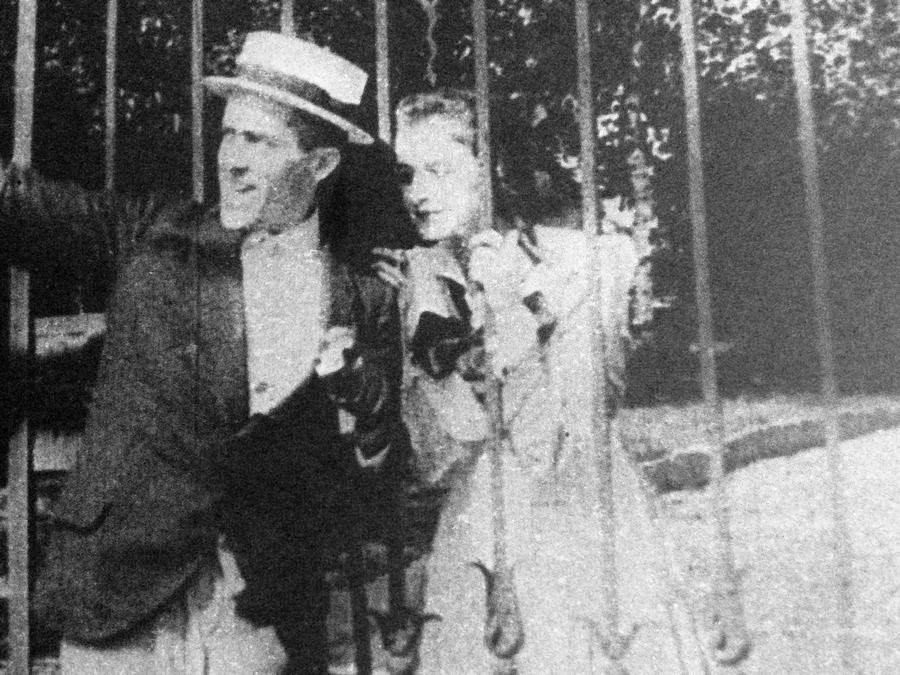
Place Lyubovta e ludost beside Ivonne, la bella danzatrice and you notice both pivot on female mobility—bodies escaping patriarchal choreography. Yet whereas Ivonne pirouettes toward tragedy, Gendov’s heroine tap-dances into conjugal comedy, suggesting Bulgarian society allowed, if grudgingly, more elastic gender roles.
Stack it against Betty and the Buccaneers: both exploit cross-dressing and role-play, but Betty’s escapades are swashbuckling fantasy. Here, masquerade infiltrates the parlour, lampooning bourgeois neuroses rather than high-seas myth. The film is closer kin to A Stormy Knight’s domestic skirmishes, though it lacks that picture’s expressionist shadows, opting instead for sunlit caricature.
Historians routinely cite The Final Curtain as the Balkans’ first post-war meta-commentary. Nonsense. Gendov’s frothy trifle beat it to the punch, smuggling subversion inside a cream puff. Its DNA can be traced through later Bulgarian classics: the carnival humours of The Tied Up Balloon, the bureaucratic satire in Yo Ho Ho. Even the grim social frescoes of the 80s thaw carry its fingerprints—a reminder that before the stark realism of the Kitchen Sink, Bulgarian audiences preferred their truths sugared with pratfalls.
Archivally, the picture survived near-oblivion. In 1953 a flood in the Boyana vaults turned most negatives to pulp; only one 35mm print, laced with mold, endured. Restoration in 1998 used optical printing, digital despeckle, and plenty of prayer. The result is 58 minutes of fluctuating grain, a ghost in the machine that somehow amplifies the comedy—like watching history giggle at its own bruises.
1. Hunt down the 2K restoration on reputable niche streamers; avoid YouTube rips watermarked by crypto casinos.
2. Play it late, lights off, volume loud enough to hear the projector’s phantom clack.
3. Pair with a crisp Traminer wine—it flirts, then bites, much like the film.
4. After credits, re-watch the lantern shot in slow-mo; notice how its flicker matches the girl’s heartbeat cadence, a visual Morse code spelling yes.
Gendov once quipped that comedy is tragedy happening to someone else faster. In Lyubovta e ludost the speed is blinding, the tragedy merely social, the laughter seismic. It reminds us that revolutions sometimes wear whoopee-cushion shoes, and that love, when cornered, invents more personalities than a vaudeville troupe. Nearly eleven decades later, the film still feels like a dare: risk ridicule, risk poverty, risk the aunt’s fury—just don’t risk boredom. It endures not because it preaches eternal passion, but because it proves passion can jimmy open locked doors with nothing more than nerve and a false moustache.
Seek it, then watch your own pulse quicken. The lanterns are still swaying.
IMDb —
1924
Community
Log in to comment.