DbcultAccessing Vault...
6.2/10
Senior Film Conservator
A definitive 6.2/10 rating for a film that redefined the boundaries of cult cinema. Tut-Ank-Amen remains a cornerstone of transgressive art.
A Pharaonic Fable: Dreams, Destiny, and Dislocation There are films that gently nudge the boundaries of reality, and then there's Tut-Ank-Amen, a cinematic marvel that doesn't just nudge, but rather smashes through them with the force of an ancient vase. This isn't merely a film; it's an audacious fever dream captured on celluloid, a testament to the boundless imagination of its creator, Raymond Dandy, who not only penned this extraordinary narrative but also graced the screen as its central figure. Forget linear storytelling; we are plunged headfirst into a whimsical odyssey where the mundane collides with the magnificent, and the echoes of an ancient past reverberate with startling clarity in a decidedly modern present. What begins as a simple accident escalates into a profound meditation on identity, escapism, and the irresistible allure of history, all wrapped in a package of delightful absurdity.
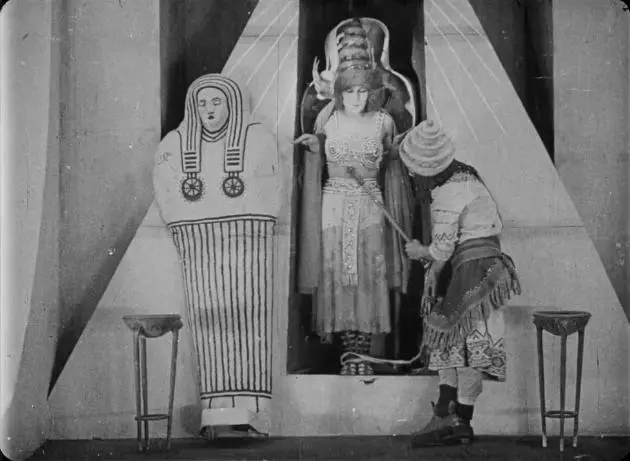
The Genesis of a Golden Slumber Our journey commences with Dandy, an everyman whose ordinary existence is dramatically interrupted by an unfortunate, yet profoundly pivotal, encounter with a falling vase. This blunt force trauma, rather than merely inducing a headache, becomes the unlikely catalyst for an unparalleled psychic voyage. As consciousness wanes, reality warps, and Dandy's subconscious mind, unleashed from its earthly tether, constructs an elaborate, glittering prison of historical fantasy. He awakens, not in a hospital bed, but on a throne, transformed into none other than the legendary Pharaoh Tutankhamun. This initial premise is nothing short of brilliant, immediately setting a tone of playful surrealism that permeates every frame. It taps into a universal human desire for escapism, for a life less ordinary, and for the tantalizing fantasy of wielding immense power and living in unparalleled luxury. The transition is seamless, a testament to the film's commitment to its dream logic, inviting us to suspend disbelief entirely and revel in the sheer audacity of its conceit. Raymond Dandy, in this dual role, undertakes a fascinating exploration of contrast – the unassuming individual versus the divine ruler – a dynamic that forms the very bedrock of the film's comedic and dramatic tension.
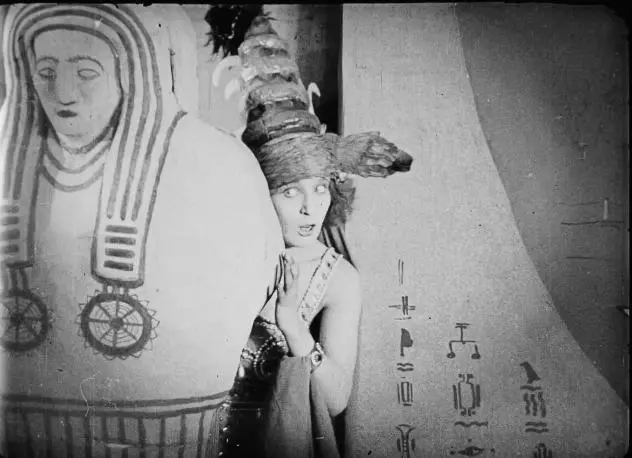
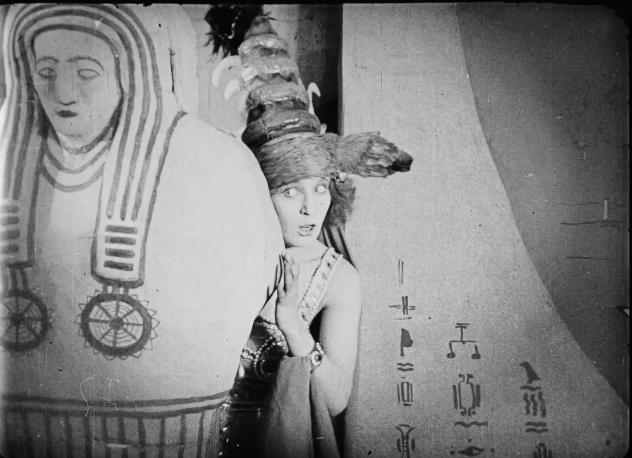
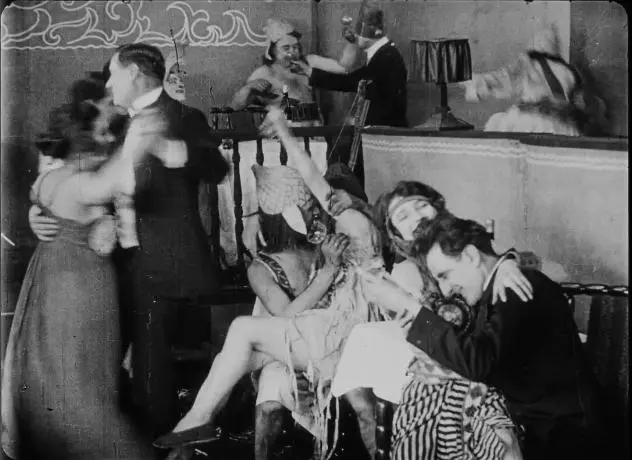
An Ancient World Reimagined with Unbridled Splendor The ancient Egypt conjured within Dandy's dream is a spectacle to behold, a vibrant tapestry woven from historical exoticism and pure, unadulterated fantasy. We are treated to lavish scenes of Tutankhamun reviewing his formidable army, a display of martial might and regal pomp that must have been breathtaking for audiences of its era. The grandeur is palpable, from the meticulously imagined costumes to the opulent set pieces that transport us directly into the heart of a bygone civilization. But it's not all solemnity and statecraft; the palace life depicted is one of uninhibited joy and extravagance. Magnificent parties are a constant feature, awash with charming slaves, exotic dancers, and an atmosphere of hedonistic delight. The film revels in these moments of sensory overload, presenting a vision of ancient Egypt that is less archaeological record and more a glorious, wish-fulfilling fantasy. The visual storytelling, even without the benefit of modern effects, must have captivated viewers, painting a picture of a world where every desire is instantly gratified, and every moment is a celebration. The performances, particularly from Raymond Dandy as the pharaoh, embody this luxurious detachment, conveying a monarch who is accustomed to absolute power and boundless pleasure. The supporting cast, including Karl Leiter, Lissie Scott, and Renée Soeré, undoubtedly contributed to this vivid tableau, creating a believable, if fantastical, court around their dream-king. The contrast between this dream world and Dandy's presumed ordinary reality is the beating heart of the film's initial charm, a powerful testament to the escapist power of cinema itself.
The Archaeologist's Quest: Reincarnation and the Looming Collision Just as Dandy settles into his dream of divine right, the narrative introduces its ingenious twist, a bridge between his unconscious fantasy and the relentless march of time. Enter an intrepid archaeologist, a woman driven by an almost mystical conviction. She believes, with unwavering certainty, that she is the reincarnation of Tutankhamun's long-lost wife. This belief isn't just a quirky character trait; it's the very engine of the film's escalating absurdity. Her unwavering faith propels her to organize a meticulously planned excavation, a quest not merely for historical artifacts, but for a personal reunion across millennia. The dramatic tension builds as her team delves deeper into the sands, inching closer to the resting place of the pharaoh. The film masterfully juxtaposes the tranquility and grandeur of Dandy’s dream world with the gritty, determined efforts of the archaeological expedition. It's a clever narrative device that foreshadows the inevitable collision, building anticipation for the moment when these two disparate realities must, by some cosmic decree, intertwine. The concept of reincarnation, while a spiritual belief, is used here as a fantastic plot mechanism, granting a sense of destiny to the archaeologist's pursuit and adding a layer of profound, yet humorous, significance to her actions. It raises questions about the persistence of love, memory, and identity beyond the confines of a single lifetime, even as it sets the stage for pure comedic chaos.
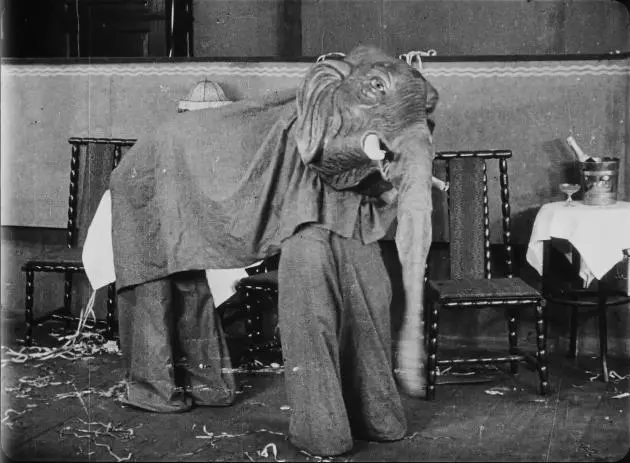
Worlds Collide: Anachronistic Anarchy and the Comedy of Eras The climax of this extraordinary tale arrives with the unearthing of Tutankhamun's coffin. This act of archaeological triumph inadvertently tears a passage between Dandy's dream-world and the waking reality, unleashing a torrent of truly incredible situations. The film truly shines in these moments of cultural and temporal clash. Imagine the bewilderment, the sheer hilarity, as ancient sensibilities and modern conventions collide. This is where Raymond Dandy’s genius as a writer comes to the fore, crafting scenarios that are both uproarious and thought-provoking. What happens when a pharaoh's opulent court suddenly intersects with the dust and tools of a modern excavation site? How do ancient customs fare against contemporary logic? The film delights in these anachronisms, extracting every ounce of comedic potential from the juxtaposition. It’s a masterclass in situational comedy, reminiscent in its spirit of incongruity to films like Left at the Post, where characters are thrown into utterly alien environments, producing delightful chaos. The blend of fantasy and farce is executed with remarkable precision, ensuring that the audience is not only entertained but also continually surprised by the escalating absurdity. The performances by Karl Leiter, Lissie Scott, and Renée Soeré must have played a crucial role in grounding these fantastical elements with believable reactions, whether of shock, confusion, or bemused acceptance. The narrative cleverly avoids simply being a dream sequence; it posits a genuine, if fleeting, merging of dimensions, elevating its stakes and magnifying its comedic impact. This segment of the film is a vibrant playground for the imagination, demonstrating how even the most far-fetched concepts can be rendered utterly captivating through inventive storytelling and committed performances.
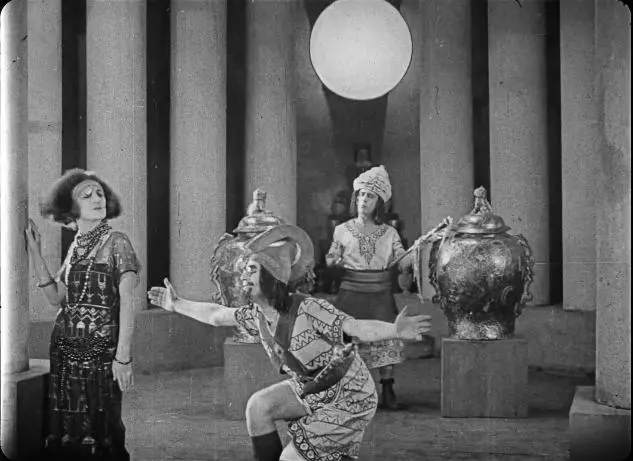
The Vision of Raymond Dandy: A Master of Whimsy It’s impossible to discuss Tut-Ank-Amen without acknowledging the singular vision of Raymond Dandy. As both the writer and a principal actor, Dandy imbues the film with a distinct personality, a blend of sophisticated whimsy and an almost childlike delight in the fantastical. His writing demonstrates a profound understanding of comedic timing and narrative construction, weaving together disparate elements into a cohesive, if delightfully chaotic, whole. The film’s strength lies in its refusal to take itself too seriously while simultaneously committing fully to its outlandish premise. This balance is a delicate act, one that Dandy navigates with impressive dexterity. His performance as Dandy, the ordinary man, and then as the majestic Tutankhamun, is central to the film's success. He portrays the initial bewilderment and subsequent regal arrogance with a nuanced touch, allowing the audience to empathize with his dream-state while also marveling at his transformation. The film, in many ways, feels like a direct window into Dandy's own imaginative landscape, a place where history and fantasy dance hand-in-hand. This personal touch, this unfiltered creative energy, is what elevates Tut-Ank-Amen beyond a mere curiosity into a genuinely memorable piece of cinema. It stands as a testament to the power of a single artistic voice to shape an entire world, even if that world exists primarily within the confines of a dream and a movie screen. The film's unique premise, where a dream state becomes so vivid it begins to bleed into reality, offers a fascinating parallel to the psychological twists found in films like The Masquerader, where identity itself is fluid and perception is everything, albeit with a far more comedic bent here. Dandy’s narrative choices ensure that the audience remains captivated, perpetually wondering what new, incredible situation will arise next from this fantastical confluence of epochs.
A Timeless Treasure of Imagination In conclusion, Tut-Ank-Amen is more than just a film; it's an experience. It’s a delightful journey into the heart of human imagination, a playful exploration of what happens when the lines between reality and fantasy, past and present, become delightfully blurred. The film's enduring appeal lies in its audacious premise, its vibrant portrayal of ancient Egypt, and the sheer comedic genius of its execution. It challenges our perceptions of what is possible, both within the confines of a dream and within the realm of cinematic storytelling. The performances by Karl Leiter, Lissie Scott, Raymond Dandy, and Renée Soeré contribute to a richly textured narrative that remains engaging and endlessly entertaining. It reminds us that sometimes, the most profound truths can be found in the most whimsical of dreams, and that a well-placed vase can indeed be the catalyst for an epic adventure. If you're seeking a film that defies categorization and celebrates the sheer joy of inventive storytelling, then Tut-Ank-Amen is an absolute must-see. It's a cinematic artifact in its own right, a golden relic of creativity that continues to shine brightly, inviting new generations to partake in its unique brand of pharaonic fantasy and modern-day mirth. It leaves you wondering, perhaps, if your own unconscious might hold a forgotten kingdom, just waiting for the right moment—or the right head injury—to emerge.
IMDb —
1921
Community
Log in to comment.