DbcultAccessing Vault...
Cult Review
Senior Film Conservator
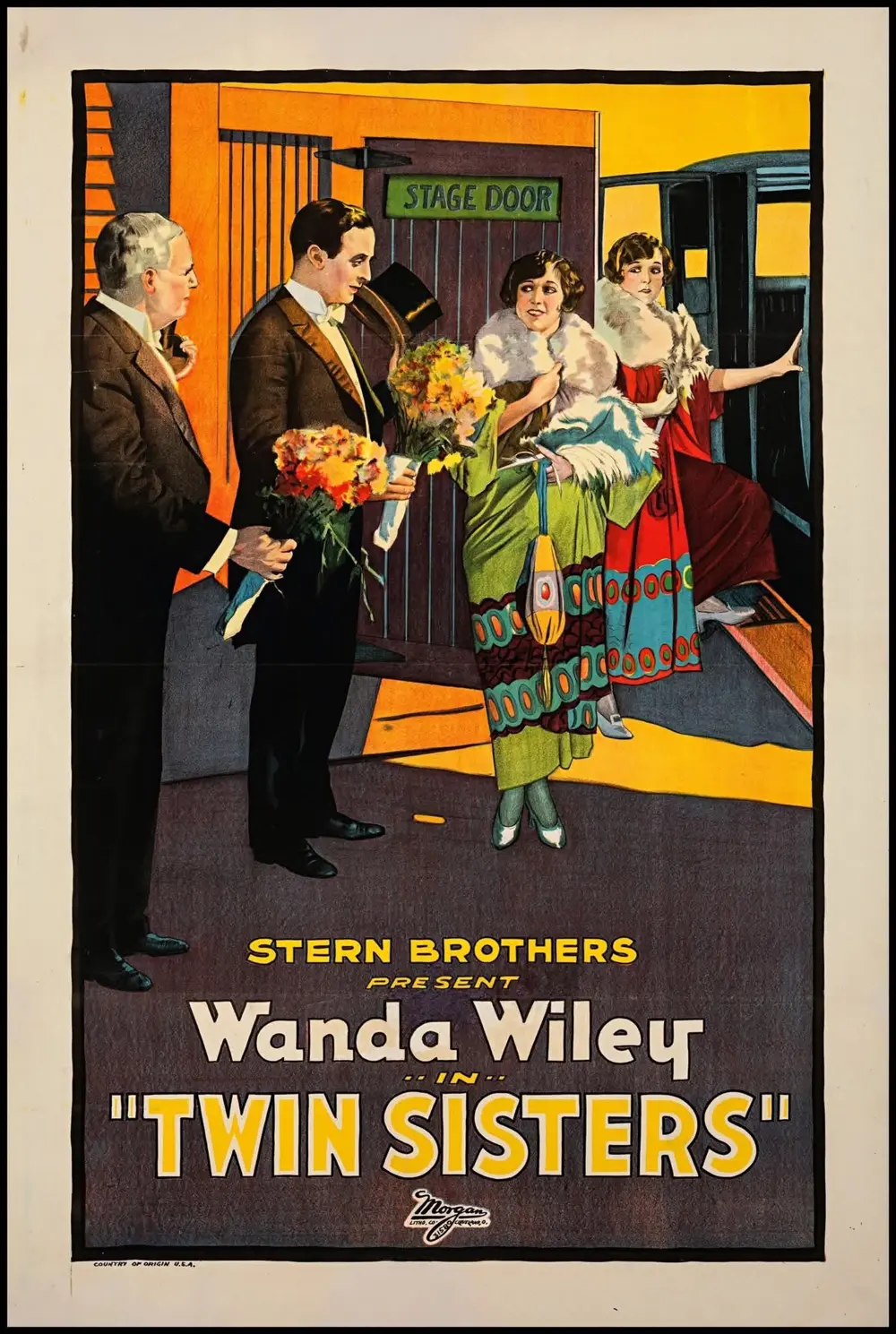
Is Twin Sisters worth watching today? Short answer: yes, but with a nuanced understanding of its historical context and genre limitations. This silent-era comedy is a fascinating historical artifact best suited for dedicated cinephiles, film historians, and enthusiasts of early filmmaking who appreciate the foundational elements of cinematic storytelling. It is decidedly not for those seeking modern pacing, sophisticated narrative twists, or a film that transcends its period's technical and narrative conventions.
At its core, Twin Sisters is a delightful exploration of a timeless comedic trope – mistaken identity – elevated by the ambitious dual performance of Wanda Wiley. While it offers genuine moments of charm and some impressive acting for its time, it also struggles with the inherent limitations of its era, particularly in terms of narrative depth and comedic precision.
This film works because of Wanda Wiley's ambitious, if occasionally uneven, dual performance, which provides the central comedic and dramatic thrust, showcasing her range in differentiating two distinct characters visually.
This film fails because its comedic timing often feels dated, relying heavily on broad physical humor that can sometimes fall flat for a contemporary audience, and the plot, while charming, lacks the thematic depth that would elevate it beyond a simple genre piece.
You should watch it if you appreciate the foundational elements of cinematic storytelling, enjoy silent-era performances, and are curious about the evolution of the mistaken identity trope in early film.
The trope of mistaken identity is as old as storytelling itself, finding its roots in ancient Greek comedies and Shakespearean plays. In cinema, it offers a fertile ground for both humor and pathos, often serving as a catalyst for narrative complications. Twin Sisters, released in an era where visual storytelling was paramount, leans heavily into this conceit.
The film’s plot, revolving around two sisters – one a stage star, the other homeless – both portrayed by Wanda Wiley, is a testament to the silent era’s ingenuity. Directors and actors of the time had to convey complex emotions and plot points without dialogue, relying on exaggerated expressions, body language, and the clever use of title cards. Here, the visual confusion is the engine of the story.
What makes this particular iteration fascinating is the stark contrast between the sisters' lives. The stage star inhabits a world of glamour and public adoration, while her twin navigates the harsh realities of the street. This juxtaposition, while ripe for social commentary, is primarily exploited for comedic effect as the men in their lives struggle to discern which sister is which. It’s a simple setup, yet endlessly effective in generating confusion.
One could argue that the film, in its simplicity, actually highlights the power of visual storytelling. The audience is clued into the deception, allowing us to revel in the characters' bewilderment. This shared secret between the film and its viewer creates a unique bond, a complicity in the unfolding chaos. It's a fundamental trick of the trade, used just as effectively in All Wet or even later, more sophisticated comedies.
The success of Twin Sisters hinges almost entirely on Wanda Wiley's ability to convincingly portray two distinct characters. This was no small feat in the silent era, where subtle nuances could easily be lost. Wiley, to her credit, attempts to imbue each sister with a unique physicality and emotional register, though with varying degrees of success.
Her portrayal of the stage star is, predictably, more flamboyant. We see grand gestures, a confident posture, and a certain theatricality in her expressions – a knowing smirk, a dramatic sigh, eyes that command attention. This is a woman accustomed to being watched, and Wiley reflects that in her every move. When mistaken for her sister, the star's confusion and indignation often provide the film's sharpest comedic beats.
Conversely, the homeless sister is depicted with a more subdued, perhaps even weary, demeanor. Her movements are less expansive, her gaze often downcast or wary. Wiley attempts to convey a sense of a life lived on the margins, through hunched shoulders and a general air of defensiveness. The challenge here is making this character equally engaging without the inherent glamour of her twin.
It's in the moments of direct comparison that Wiley truly shines, or occasionally stumbles. When Charles King's character, for instance, finds himself conversing with the 'wrong' sister, Wiley must quickly shift her entire persona. While sometimes the transition feels a little too abrupt, at other times, her ability to switch between the pampered celebrity and the street-hardened survivor is genuinely impressive, a testament to the physical demands of silent acting.
My unconventional observation here is that Wiley's performance inadvertently highlights the performative nature of identity itself. The stage star is always 'on,' even off stage, while the homeless sister, by necessity, has perhaps learned to mask her true self. The film, despite its comedic intentions, touches upon how circumstance shapes our public and private faces.
T. Page Wright, as director, faced the unenviable task of making the dual role believable and the comedic timing effective without the benefit of sound. His approach in Twin Sisters is largely functional, prioritizing clarity over stylistic flair, which for a film of this nature, is often the wisest choice.
The cinematography, while not groundbreaking, effectively differentiates the two worlds the sisters inhabit. Scenes with the stage star are often brighter, with more ornate backdrops, perhaps hinting at the artificiality of her world. In contrast, the segments featuring the homeless sister likely employ darker, grittier lighting and simpler, more stark environments, visually reinforcing her challenging circumstances. This visual contrast is crucial for the audience to follow the narrative threads.
Wright utilizes standard silent film techniques to facilitate the mistaken identity gags. We see a lot of reaction shots, particularly from Charles King's character, whose bewildered expressions are meant to mirror the audience's own. Close-ups on Wiley's face are employed to highlight her attempts at differentiation, or her confusion when she is mistaken for her sister.
The editing is straightforward, often cutting between scenes to build comedic tension as the men pursue the 'wrong' woman. While not as innovative as some of the more experimental silent films, it serves the story well. There's a particular scene where King's character might approach one sister, only for the camera to cut to the other reacting to an entirely different situation, underscoring the absurdity of the confusion without needing complex split-screen effects.
It’s my contention that Wright’s direction, while solid, never quite pushes the material to its full potential. The film remains a competent, rather than transcendent, example of its genre. It works. But it’s flawed. The limitations of the script, penned by T. Page Wright himself, perhaps restricted what could be achieved visually.
Pacing in silent films is a unique beast. Without spoken dialogue, the rhythm of a scene is dictated by the editing, the music (often live), and the actors' movements. Twin Sisters maintains a relatively brisk pace for its era, keen to keep the comedic misunderstandings coming. The film rarely lingers too long on any one moment, understanding that its core appeal lies in the rapid succession of mix-ups.
The tone is predominantly lighthearted and comedic, as one would expect from a mistaken identity plot. There are moments, however, where the plight of the homeless sister introduces a touch of pathos. These brief shifts in tone add a layer of humanity to the proceedings, preventing the film from becoming a purely farcical exercise. It's a delicate balance, and for the most part, the film manages it without jarring the audience.
For a modern viewer, this pacing might still feel slow. The broader physical comedy and the reliance on title cards to convey dialogue require a different kind of engagement. It’s a film that demands patience and an appreciation for a different rhythm of storytelling. If you're accustomed to the rapid-fire dialogue and quick cuts of contemporary cinema, you might find yourself occasionally checking your watch, but that's a reflection of evolving cinematic language, not necessarily a flaw in the film itself. The film’s tone is consistently charming, even if its gags don't always land with modern precision.
Yes, Twin Sisters is worth watching today, especially for those interested in film history and the evolution of comedic tropes. It offers a valuable glimpse into silent-era filmmaking. The film is a solid example of how early cinema tackled complex narrative devices. It's an important piece for understanding the foundations of a genre.
Twin Sisters is a perfectly respectable silent-era comedy that serves as a charming, if not groundbreaking, example of its kind. Wanda Wiley's dual performance is the undisputed highlight, a testament to the sheer talent and physical exertion required of actors in an age before synchronized sound. While it won't redefine your understanding of cinema, it offers a pleasant diversion and a fascinating historical document.
It’s a film that asks for a degree of historical empathy from its audience. Approach it not as a competitor to modern blockbusters, but as a foundational piece, a stepping stone in the grand tapestry of film history. For those willing to make that leap, Twin Sisters provides a delightful, if somewhat predictable, journey into the comedic heart of the roaring twenties. It's a film that reminds us of cinema's earliest magic tricks, and for that alone, it earns its place in the archives.
IMDb 6.7
1918
Community
Log in to comment.