DbcultAccessing Vault...
Cult Review
Senior Film Conservator
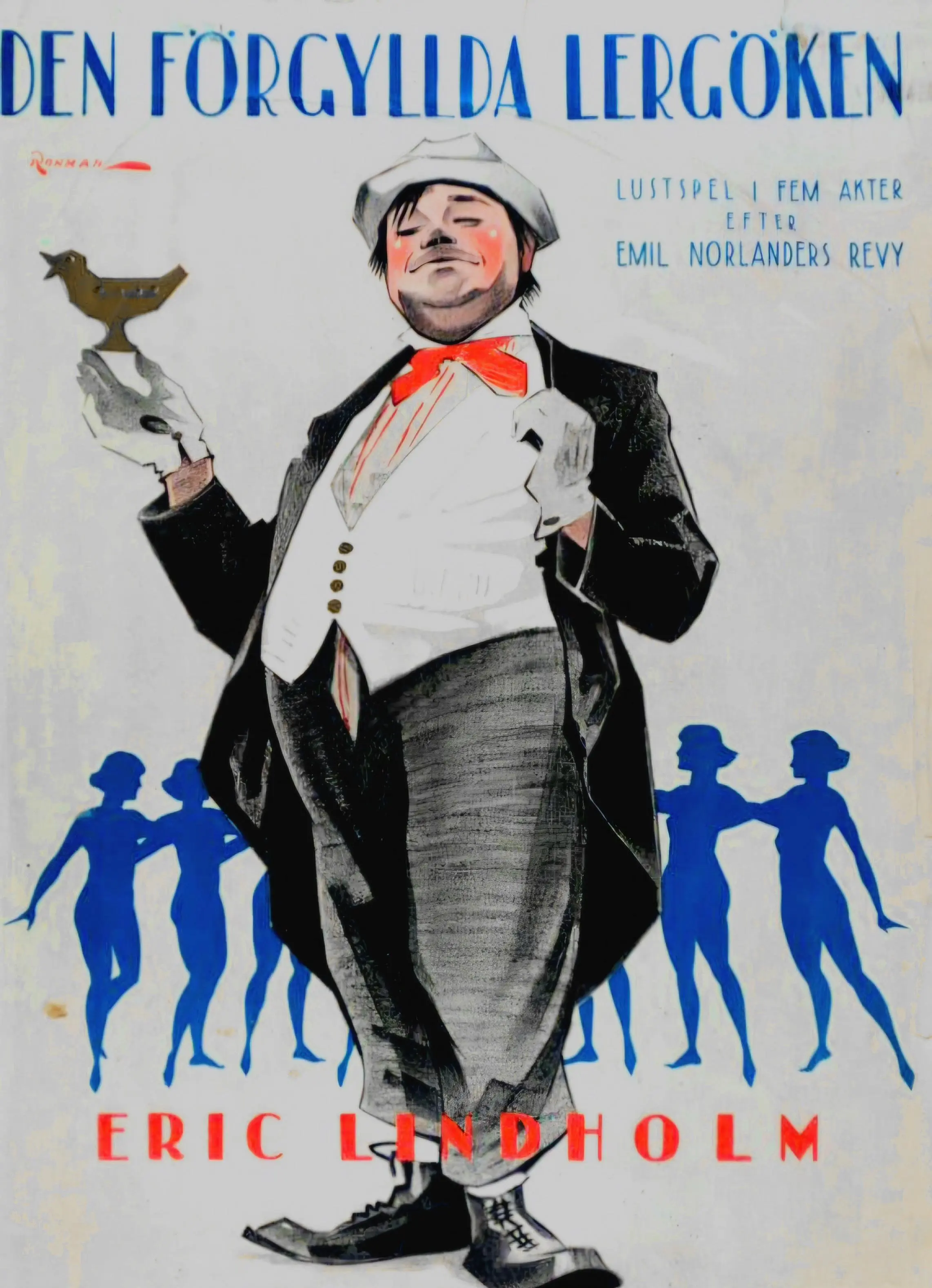
The cinematic landscape of the early 20th century often served as a canvas for exploring the human condition, sometimes with stark realism, at other times with whimsical fantasy. Emil Norlander’s Den förgyllda lergöken stands as a fascinating artifact from this era, a film that, despite its apparent simplicity, delves into profound human desires through the lens of a fantastical dream. It’s a narrative tapestry woven with threads of aspiration, escapism, and the transformative power of imagination, all set against the evocative backdrop of a Swedish Midsummer night.
The core premise, concerning two vagrants, Luft-Kalle (Erik Lindholm) and Coal-Jocke (Hartwig Fock), who stumble upon a magical wish-granting object in a dream, immediately draws the viewer into a realm where the mundane intersects with the miraculous. This isn't merely a simple fairy tale; it's an allegorical journey into the psyche of those marginalized by society, offering a poignant commentary on their yearning for a different reality. The film effectively captures the melancholic romance of the hobo's life, a transient existence often devoid of comfort, yet rich in the freedom of the open road and the boundless expanse of dreams. The stark contrast between their waking hardship and their fantastical slumber is a powerful visual and thematic device, underscoring the universal human need for hope.
Norlander, as the writer, crafts a story that transcends its immediate context, touching upon universal themes. The choice of a Midsummer evening is particularly potent. In Nordic folklore, Midsummer is a time when the veil between worlds thins, when magic is most potent, and when dreams often carry prophetic weight. This cultural resonance imbues the hobos' dream with an almost sacred significance, elevating it beyond a mere nocturnal hallucination to a spiritual encounter. The appearance of the fairy queen, a figure often associated with nature’s benevolent yet unpredictable forces, further solidifies this mystical atmosphere. Her gift, the gilded clay cuckoo, is not just an object; it is a symbol of hope, a tangible representation of the impossible made possible. The 'gilded' aspect suggests a veneer of preciousness over something humble and earthy, mirroring the transformation of the hobos' ordinary lives through extraordinary means.
The performances, particularly from Lindholm and Fock, are central to the film’s charm. While details about early cinematic acting styles can be scarce, one can infer from the narrative that their portrayals would have needed to convey both the weary resignation of their waking lives and the unbridled joy and wonder of their dream state. Their characters are archetypes – the everyman figures upon whom the audience projects their own desires for wish fulfillment. Gullan Ehrenmark, Märta Reiners, Stina Guttormsen, Anna Herzman, Greta Fock, and Anna-Lisa Lindzén, though perhaps in supporting or minor roles, would have contributed to the overall fabric of this dreamlike world, populating the fantastical landscape with figures that reinforce its otherworldly quality. The earnestness of their portrayals would have been crucial in selling the fantastical elements to an audience still becoming accustomed to the moving image.
One cannot discuss Den förgyllda lergöken without acknowledging its place within the nascent years of cinema. Films of this era were often experimental, pushing the boundaries of what was technically possible and narratively conceivable. The depiction of a dream sequence, especially one involving magical elements, would have required innovative visual techniques, perhaps relying on dissolves, superimpositions, or stylized sets to convey the unreality of the hobos’ experience. The film’s power lies not just in its story, but in its ability to transport the viewer to this magical realm, allowing them to momentarily forget the harsh realities of the waking world, much like the hobos themselves. This immersive quality was a hallmark of early cinematic ambition, where the very act of watching was an escape.
Comparisons to other contemporary works can illuminate Den förgyllda lergöken's unique position. While films like A Prisoner in the Harem might explore exotic locales and dramatic human conflict, or The Little Church Around the Corner delve into social morality, Norlander's work leans heavily into pure fantasy and escapism. It shares a thematic kinship with other narratives that explore the thin line between reality and illusion, or the power of objects to transform lives, albeit in a more whimsical, less overtly dramatic fashion than some of its contemporaries. The concept of a magical item granting wishes is a timeless trope, seen across countless cultures and stories, and Den förgyllda lergöken offers an early cinematic interpretation of this enduring fantasy, perhaps echoing the simpler, more direct storytelling of fables.
The film's enduring appeal, even if primarily as a historical curiosity, lies in its direct appeal to the universal human desire for 'what if'. What if our deepest longings could be instantly satisfied? What would we wish for? The narrative doesn't shy away from the potential implications of such power, even within the confines of a dream. It implicitly asks whether true happiness lies in material wealth or in something more ephemeral. The gilded clay cuckoo, with its inherent fragility (being made of clay), might also symbolize the delicate nature of dreams and the fleeting quality of wish-fulfillment, suggesting that even the most potent magic can be transient.
From a production standpoint, creating a fantastical world in the early days of cinema presented significant challenges. Filmmakers often relied on theatrical conventions, painted backdrops, and practical effects to conjure their illusions. The 'fairy queen' character, for instance, would have been brought to life through elaborate costume, perhaps special lighting, and the expressive performance of an actress like Gullan Ehrenmark or Märta Reiners, imbuing her with an otherworldly grace. The portrayal of the cuckoo itself, likely a prop, would have needed to convey its magical essence through its appearance and the reactions of the actors, relying on the audience's imagination to fill in the gaps that modern special effects now address.
The film serves as a reminder of cinema's foundational role as a dream factory. Before sophisticated special effects, the power lay in suggestion, in the suspension of disbelief, and in the actors' ability to convey wonder and conviction. Den förgyllda lergöken, in this regard, is a testament to the imaginative spirit of early filmmakers. It’s a film that speaks to the child within us, the part that still believes in magic and the possibility of wishes coming true, even if only in the realm of sleep. The raw, unrefined quality of early cinema often amplified this sense of wonder, making the fantastical feel even more immediate and profound.
The narrative structure, focused on a dream, allows for a certain narrative freedom, unconstrained by the strictures of realism. This artistic choice distinguishes it from more grounded dramas of the period. While some films might explore social realism, such as perhaps the implied struggles in The Princess of Patches or the domestic complexities of His House in Order, Den förgyllda lergöken opts for a fantastical escape. It’s a bold artistic statement, asserting the power of imagination over circumstance. The film doesn't attempt to solve the hobos' real-world problems; instead, it offers them (and the audience) a temporary, glorious respite through the sheer force of fantasy, a fleeting but potent taste of what could be.
The thematic resonance of wishes and their potential consequences is a recurring motif in literature and film. While Den förgyllda lergöken operates within a dream, the implied questions about the nature of desire and fulfillment linger. Does the dream merely highlight what the hobos lack, or does it offer a deeper psychological insight into their hopes and fears? This introspection, even if subtle, elevates the film beyond a simple fable. It positions the magical cuckoo not just as a plot device, but as a catalyst for exploring existential themes, prompting viewers to consider their own deepest aspirations and the meaning of true contentment.
Emil Norlander’s contribution as the writer is significant. Crafting a compelling narrative, particularly one reliant on fantasy, for the nascent cinematic medium required a keen understanding of visual storytelling and audience engagement. His vision for this tale, rooted in folklore and universal human longing, provided the blueprint for a film that would resonate with viewers seeking an escape from their own realities. The simplicity of the premise belies the depth of its potential interpretation, offering layers of meaning for those willing to look beyond the surface, a testament to the power of a well-conceived narrative idea.
The film's legacy, though perhaps not as widely discussed as some of its more dramatic or groundbreaking contemporaries, lies in its pure, unadulterated embrace of fantasy. It stands as a charming example of early cinema's capacity for wonder, a reminder that before elaborate visual effects became commonplace, stories themselves, coupled with earnest performances and inventive staging, were enough to transport audiences. In an era where cinema was still defining itself, Den förgyllda lergöken carved out a niche for whimsical storytelling, proving that even the most humble narratives could achieve a profound impact through the lens of magic and sincere human emotion.
The performances by Erik Lindholm and Hartwig Fock as the central figures, Luft-Kalle and Coal-Jocke, are crucial in grounding the fantastical elements. Their portrayal of world-weary vagrants who suddenly encounter the extraordinary would have required a delicate balance of realism and wonder. The audience needed to believe in their plight to truly appreciate the escapism of their dream. Their expressions, their body language – these would have been the primary tools for conveying the emotional journey from hardship to magical exhilaration. The supporting cast, including Gullan Ehrenmark, Märta Reiners, Stina Guttormsen, Anna Herzman, Greta Fock, and Anna-Lisa Lindzén, would have contributed to the richness of this dreamscape, whether as fellow ethereal beings or as manifestations of the hobos’ subconscious desires, each playing a vital role in constructing the film’s unique atmosphere.
The film's existence underscores the diverse range of genres and themes explored by early filmmakers. While some were documenting reality or adapting literary classics, others, like Norlander, were venturing into the realm of pure imagination. This variety speaks to the boundless creative energy that characterized the early decades of cinema, an era of experimentation and discovery. Den förgyllda lergöken is a small but significant piece of this larger cinematic mosaic, demonstrating that even a simple story about a magical cuckoo could capture the hearts and minds of an audience, proving the nascent medium's versatility.
It’s easy to view early films through a purely historical lens, appreciating them only for their technical innovations or their place in the timeline of cinema. However, films like Den för
IMDb —
1928
Community
Log in to comment.