DbcultAccessing Vault...
Cult Review
Senior Film Conservator
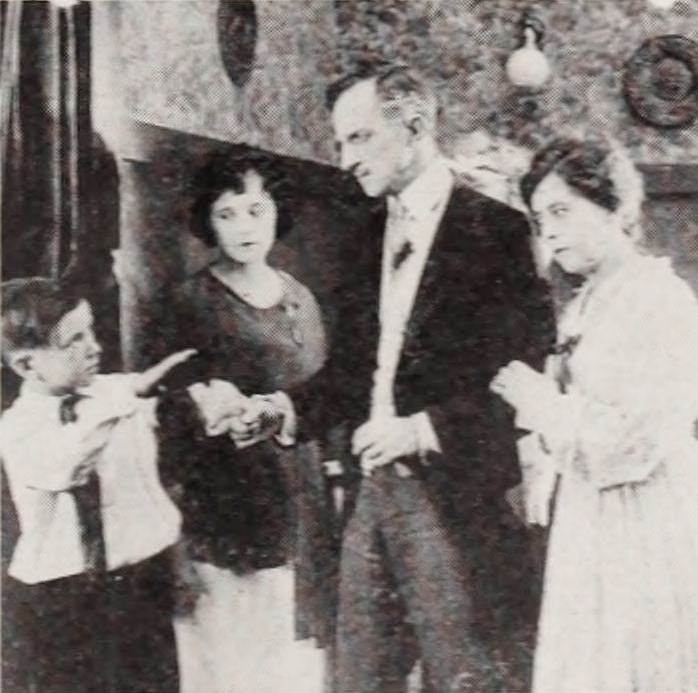
There are films that merely tell a story, and then there are those that burrow deep into the crevices of the human condition, exposing its rawest nerves and most profound vulnerabilities. "Two A.M." unequivocally belongs to the latter category, a silent era tour-de-force that transcends its temporal setting to deliver a timeless meditation on guilt, consequence, and the insidious erosion of the soul. This is not merely a narrative unfolding; it is a psychological autopsy, dissecting the precise moment a life fractures and the harrowing aftermath of a decision made in desperation's cold embrace.
From its opening frames, the film establishes an atmosphere of pervasive dread, a subtle yet suffocating tension that clings to every shadow. Director's vision is masterful, eschewing overt melodrama for a more nuanced, internalised horror. The camera, in its deliberate, almost voyeuristic gaze, becomes an accomplice to the protagonist's burgeoning torment. We are not just observing Arthur Finch; we are trapped within his escalating paranoia, sharing the suffocating weight of his secret. The visual language speaks volumes, a testament to the power of silent cinema when wielded by an artist with a profound understanding of human psychology. Each close-up, each meticulously composed long shot, contributes to a mosaic of despair and desperate hope.
At the heart of this compelling descent is Earle Rodney's utterly breathtaking performance as Arthur Finch. Rodney, an actor often celebrated for his nuanced character work, reaches an apotheosis here, crafting a portrayal so rich in psychological complexity that it beggars belief. Finch is a man teetering on the precipice of ruin, an art dealer whose integrity is compromised by the relentless demands of his creditors and the predatory advances of the unscrupulous Mr. Blackwood. Rodney conveys this initial desperation with a palpable weariness, a subtle tremor in his hands, a haunted look in his eyes that speaks volumes before the fateful hour arrives.
The pivotal scene, the confrontation that culminates in Blackwood's sudden demise at precisely two o'clock, is a masterclass in silent acting. Rodney's transformation from a man cornered to a man utterly shattered, then to a man making a desperate, irreversible decision, is executed with chilling precision. There's no histrionics, no exaggerated gestures; rather, it's a series of micro-expressions, a flicker of panic, a tightening of the jaw, a slow, deliberate movement that signals the crossing of a moral Rubicon. The camera lingers on his face, allowing the audience to witness the internal calculus, the desperate weighing of options, and the ultimate surrender to self-preservation. It's an unnerving spectacle, profoundly human in its flawed response to an impossible situation.
What follows is Rodney's true triumph. Finch's subsequent journey into a self-imposed purgatory is rendered with such excruciating detail that one feels the creeping tendrils of his paranoia. His once-erect posture sags, his gaze becomes shifty, his every interaction fraught with unspoken dread. He is a man perpetually looking over his shoulder, seeing accusers in every shadow, hearing whispers in every silence. Rodney's ability to convey this internal disintegration solely through body language and facial expressions is nothing short of miraculous. He doesn't just act the part; he embodies the very essence of a man consumed by guilt, making Finch's plight tragically relatable despite the extremity of his circumstances. The performance, in its raw honesty, invites comparison to the tormented figures explored in films like The Man of Shame, where moral compromise leads to an internal unraveling, though Rodney's portrayal here feels uniquely visceral and deeply personal.
The title itself, "Two A.M.", is not merely a timestamp but a potent symbol, a recurring motif that anchors the entire psychological landscape of the film. It represents the precise moment of irreversible decision, the boundary between an innocent past and a corrupted future. The film ingeniously employs the concept of time as both a relentless pursuer and a constant reminder of Finch's transgression. The ticking of clocks, though unheard, is felt with an almost physical intensity throughout the narrative, especially in scenes where Finch is alone, wrestling with his conscience. The director uses subtle visual cues – the shadow of a clock hand, the sudden chime of a distant bell – to evoke this ceaseless march of time, each passing minute bringing Finch closer to either exposure or complete mental collapse.
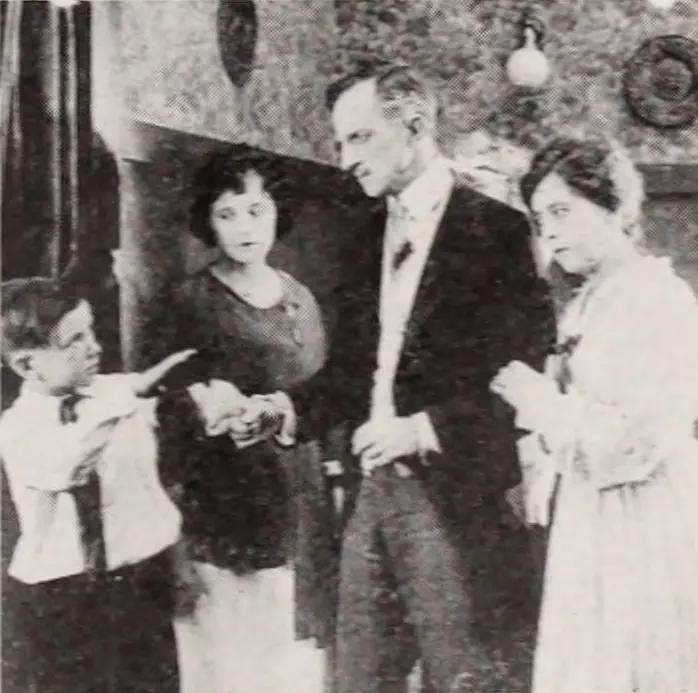
This symbolic use of time elevates "Two A.M." beyond a simple crime drama into a profound exploration of human reckoning. It posits that some moments are so pivotal, so utterly defining, that they permanently alter the fabric of one's existence. The 2 A.M. mark becomes Finch's personal anathema, a constant echo in the corridors of his mind, shaping his every thought and action. It's a brilliant narrative device that imbues the entire film with a sense of inescapable fate, reminiscent of the inescapable moral bind found in works like The False Friend, though here the internal torment is laid bare with even greater psychological precision.
The directorial choices are nothing short of inspired, particularly in how they articulate Finch's deteriorating mental state. The cinematography is often stark, employing deep shadows and limited light sources to mirror the protagonist's internal darkness. The frames frequently feel claustrophobic, trapping Finch within his own home, which transforms from a sanctuary into a gilded cage. The use of mirrors is particularly effective, reflecting Finch's distorted image back at him, symbolising his fractured identity and the schism between the man he pretends to be and the man he truly is.
Pacing is another strong suit. The film eschews rapid-fire editing for a more deliberate, measured rhythm that allows tension to slowly build, like a pressure cooker reaching its inevitable explosion. The moments of silence, punctuated only by the subtle shifts in Rodney's expression or the ominous creak of a floorboard (imagined, yet palpably felt), are more terrifying than any overt threat. It’s a testament to the director's confidence in the material and in Rodney's ability to carry the emotional weight. This meticulous construction of suspense creates a palpable sense of unease that lingers long after the credits roll, a quality shared with other atmospheric thrillers of the era, though "Two A.M." carves out its own distinct niche through its intense focus on internal rather than external conflict.
"Two A.M." is more than just a period piece; it is a foundational text in the canon of psychological drama, demonstrating the silent film's remarkable capacity for profound emotional and thematic exploration. It delves into universal themes of moral compromise, the crushing burden of guilt, and the relentless pursuit of truth – whether by external forces or the individual's own conscience. The film's brilliance lies in its refusal to offer easy answers, presenting Finch's predicament with a stark realism that challenges the audience to confront their own potential for desperation and deception.
Its influence, though perhaps subtle, can be traced through later works that explore the unraveling of a protagonist's sanity under duress. The film's ability to sustain such intense psychological tension without dialogue is a monumental achievement, relying entirely on visual storytelling, the power of performance, and the innate human understanding of fear and remorse. It stands as a stark reminder of the sophisticated narrative techniques employed during the silent era, often underestimated in today's dialogue-driven cinema landscape.
The production design, while understated, perfectly complements the narrative. Finch's study, with its heavy oak furniture and art-laden walls, initially suggests refinement but quickly transforms into a stage for his personal hell. The contrast between the outward appearance of respectability and the internal turmoil is sharply drawn, a visual metaphor for Finch's carefully constructed facade. The costumes, too, are understated yet effective, reflecting the societal constraints and expectations that contribute to Finch's initial desperation. Every element, from the flickering gaslights to the meticulous set dressing, works in concert to enhance the film's pervasive mood.
In conclusion, "Two A.M." is a cinematic experience that grips you from the first frame and refuses to let go. It is a testament to Earle Rodney's extraordinary talent, a masterclass in directorial restraint, and a profound exploration of the darkest corners of the human psyche. More than a century after its creation, its themes resonate with undiminished power, proving that true artistry transcends the limitations of its medium. This is a film that demands to be seen, studied, and felt, a haunting reminder that some decisions, made in the dead of night, cast shadows that stretch across an entire lifetime, irrevocably altering the course of one's destiny. It is a stark, unforgettable vision that cements its place as a silent era masterpiece, a film that speaks volumes without uttering a single word, leaving an indelible mark on the soul of its audience.
IMDb —
1928
Community
Log in to comment.