DbcultAccessing Vault...
7/10
Senior Film Conservator
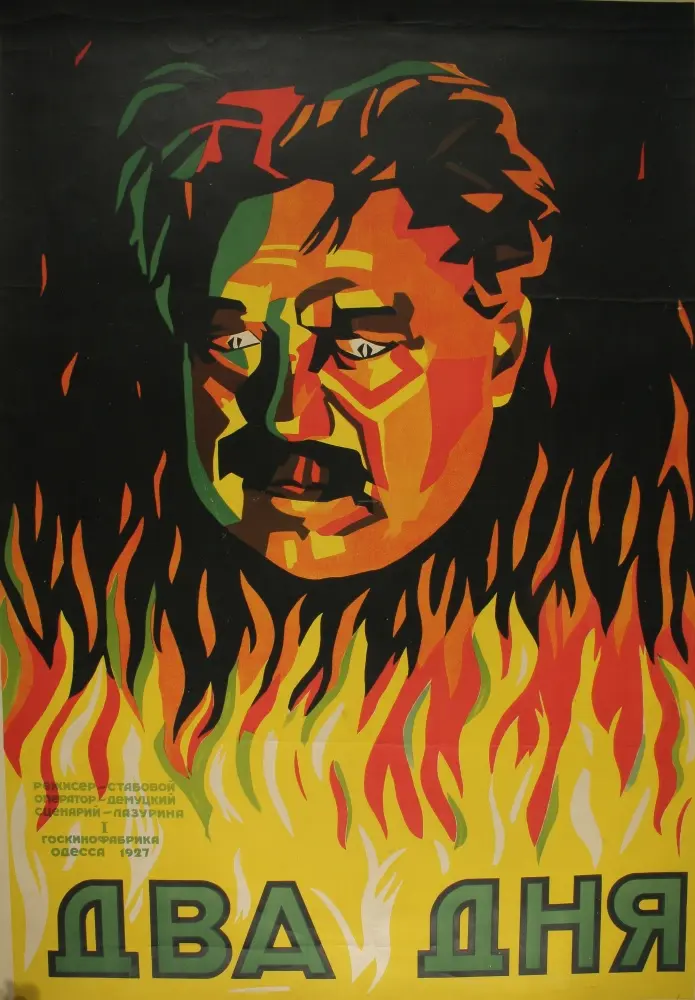
A definitive 7/10 rating for a film that redefined the boundaries of cult cinema. Two Days remains a cornerstone of transgressive art.
Is the 1927 Ukrainian silent film, "Two Days," worth watching today? Short answer: yes, but with a crucial understanding of its historical context and stylistic demands. This isn't a casual viewing experience; it's a powerful, often brutal, historical document wrapped in a deeply personal tragedy.
This film is for cinephiles, historians, and anyone interested in the early evolution of global cinema, particularly from Eastern Europe. It is decidedly NOT for those seeking fast-paced action, clear-cut heroes, or modern narrative conventions. Prepare for a slow burn that culminates in devastating emotional impact.
This film works because: Its unflinching portrayal of class conflict and personal tragedy against a sweeping historical backdrop remains potent, driven by N. Rudakov's masterful, understated performance.
This film fails because: Its pacing can feel deliberate, even slow, to a contemporary audience unaccustomed to silent film conventions, and some narrative beats are reliant on visual cues that might require careful attention.
You should watch it if: You appreciate silent cinema, compelling character studies, and historical dramas that explore the human cost of ideological warfare without easy answers.
"Two Days," directed by Solomon Lazurin, emerges from a pivotal, often overlooked, period in Ukrainian cinema and national history. Released in 1927, it captures the raw wounds and ideological schisms of the 1917-1921 Civil War, a conflict that tore apart families and reshaped the geopolitical landscape. This wasn't merely a backdrop; the war itself is an active, destructive force, permeating every frame and dictating every character's fate.
The film stands as a testament to the early capabilities of Ukrainian filmmakers to craft narratives of profound social commentary, even under the nascent Soviet system. It navigates the complexities of class struggle not with simplistic propaganda, but through the devastating lens of individual human experience. It's a rare, valuable artifact that offers a window into a nation in flux, reflecting the anxieties and hopes of a people caught between empires.
While many silent films of the era, like the broadly entertaining A Regular Fellow, focused on lighter fare or more generalized dramas, "Two Days" plunged headfirst into the brutal realities of its time. This commitment to depicting a specific, painful historical moment is what elevates it beyond a mere curiosity into a significant cultural document.
The plot of "Two Days" is deceptively simple, yet its emotional resonance is anything but. It centers on Anton, a doorman whose unwavering loyalty to his aristocratic employers is tested by the revolutionary fervor gripping Ukraine. His commitment to protecting their buried valuables is a powerful symbol of the old order's fading grasp, a desperate attempt to preserve something tangible amidst the intangible destruction of values.
The return of the landlord's son, separated during the chaotic escape, to Anton's care introduces a fragile, almost paternal bond across class lines. This brief sanctuary, however, is merely a prelude to the true heart of the film's conflict: the arrival of Bolsheviks led by Andrii, Anton's own son. This revelation is a masterstroke, transforming a historical epic into an intimate, agonizing family drama.
Anton's struggle is palpable, a silent scream of paternal love warring with ideological opposition. The scene where the young master accidentally witnesses Andrii unearthing the family treasures is laden with tension, a moment of tragic irony that seals multiple fates. It’s a betrayal not just of trust, but of the unspoken understanding that had briefly existed.
The film's true tragedy isn't the war itself, but the destruction of family bonds and personal loyalties, rendering political victory hollow. The subsequent execution of Andrii, instigated by the very boy Anton protected, is a gut punch, illustrating the cyclical nature of vengeance and the arbitrary cruelty of conflict. This is where "Two Days" transcends its historical setting to speak to universal themes of human frailty and the devastating cost of extremism.
In silent cinema, the weight of a film often rests on the shoulders of its lead actors, whose every gesture, every facial twitch, must convey volumes without a single spoken word. N. Rudakov, as Anton, delivers a performance that is nothing short of mesmerizing. His portrayal is a study in stoic endurance, a man whose internal world is a maelstrom of conflicting emotions, yet whose outward demeanor remains largely impassive.
Consider the scene where Anton harbors the landlord's son in his attic room. Rudakov's eyes convey a complex mix of duty, paternal instinct, and perhaps a flicker of defiance against the encroaching chaos. There’s a quiet dignity in his movements, a sense of a man rooted in tradition trying to navigate a world that has lost its moorings. When he encounters his own son, Andrii, leading the Bolsheviks, Rudakov's face becomes a canvas of agony. The subtle clench of his jaw, the barely perceptible tremor in his hands, speak louder than any dialogue could. It’s a powerful, restrained performance that anchors the entire film.
The supporting cast, including O. Nazarova and V. Grunberg, provide solid counterpoints, but it is Rudakov who truly embodies the film's soul. His ability to convey profound heartbreak and unwavering loyalty through sheer presence and nuanced physicality is a testament to the power of silent acting. He makes Anton’s despair palpable, drawing the audience deep into his tragic world.
Solomon Lazurin's direction in "Two Days" is characterized by a stark, almost documentary-like realism that grounds the melodrama in a harsh reality. He employs a visual language that is both expressive and economical, ensuring that every frame contributes to the narrative's emotional weight. The cinematography, though lacking the elaborate flourishes of some contemporary Western productions, is incredibly effective in establishing tone and atmosphere.
The mansion itself is almost a character, initially a symbol of opulence and stability, then a battleground, and finally, a funeral pyre. Lazurin's use of deep shadows and stark lighting accentuates the moral ambiguities and the impending doom. The contrast between the grandeur of the main house and the cramped confines of Anton's attic room visually underscores the class divide, even as their inhabitants are forced into a shared fate.
The pacing, while deliberate, builds tension with a slow, inexorable dread. Lazurin understands the rhythm of silent storytelling, allowing scenes to breathe, letting the emotional weight of a glance or a gesture fully register. The sequence leading up to Andrii's execution is particularly potent, a masterful display of escalating despair conveyed through careful shot composition and editing that avoids sensationalism in favor of raw, human tragedy. It's a slow burn, but the eventual explosion is all the more impactful for it.
Absolutely, yes. "Two Days" is a profoundly valuable piece of cinematic history and a compelling human drama. It works. But it's flawed. Its historical context alone makes it significant, offering a rare perspective on a tumultuous period from an Eastern European lens. For students of film, it's an essential example of silent-era storytelling and character development.
Beyond its academic value, the film offers a powerful emotional experience for those willing to engage with its style. The themes of loyalty, betrayal, class conflict, and the devastating impact of war on individuals and families are timeless. While the pacing may require patience from modern viewers, the raw power of N. Rudakov's performance and the tragic narrative reward that investment handsomely.
The pacing of "Two Days" is a characteristic feature of silent cinema, often demanding a different kind of engagement from the audience than contemporary films. Lazurin crafts a narrative that unfolds with a measured, almost stately rhythm, allowing the audience to absorb the visual information and the emotional subtext without rushing. This deliberate pace is crucial for building the sense of impending dread that permeates the film.
The initial scenes establish the setting and characters with an unhurried grace, drawing the viewer into the world of the estate before the storm breaks. As the Bolsheviks approach, the tension subtly ratchets up, not through rapid-fire editing, but through extended shots of anxious faces, hurried movements, and the ominous presence of the approaching conflict. This slow build makes the eventual eruption of violence and betrayal all the more shocking and impactful.
The tone is overwhelmingly melancholic, tinged with a deep sense of fatalism. There are no moments of lightheartedness, no easy victories. Even the temporary return of the White Army offers no true solace, merely a shift in the oppressors. The film maintains a consistent air of tragedy, culminating in Anton's final, desperate act of defiance – a conflagration that feels less like an act of revenge and more like a final, despairing cry against the senselessness of it all. It’s a heavy film, emotionally exhausting, but profoundly resonant.
"Two Days" is far more than a simple historical drama; it's a profound exploration of universal human themes. At its core lies the devastating impact of ideological warfare on personal relationships. The schism between Anton and his son Andrii perfectly encapsulates the way political fervor can tear apart the most fundamental bonds of family.
The film also delves deeply into class conflict, not just as a political talking point, but as a lived, painful reality. Anton's unwavering loyalty to his masters, even as their world collapses, speaks volumes about a disappearing social order. The revolutionary zeal of Andrii and his comrades, while perhaps justifiable in its aims, is depicted with an equally brutal, uncompromising edge, suggesting that no side holds a monopoly on righteousness or cruelty.
An unconventional observation here: the mansion itself acts as a silent, suffering protagonist, absorbing the shifting tides of power and ultimately becoming a sacrificial lamb. Its destruction at Anton's hand is not just an act of arson, but a symbolic erasure of a past that refused to die peacefully, and a future that offered no true peace either. Anton's final act, while destructive, is not an act of despair but a profound statement against the futility of all ideological conflict, a refusal to let either side claim the spoils of his life's devotion.
"Two Days" is a challenging, yet ultimately rewarding, cinematic experience. It is not an easy film to watch, nor is it designed to be. Its power lies in its unflinching honesty, its profound humanism amidst the brutal backdrop of war, and the quiet dignity of its central performance. Solomon Lazurin crafted a film that resonates with timeless themes, proving that even without a spoken word, cinema can speak volumes about the human condition.
For those willing to invest their time and attention, "Two Days" offers a rare and valuable glimpse into a crucial historical period, filtered through the lens of deeply personal tragedy. It’s a film that stays with you, prompting reflection on loyalty, betrayal, and the enduring scars of conflict. Highly recommended for the discerning cinephile seeking depth and historical insight.
IMDb —
1925
Community
Log in to comment.