DbcultAccessing Vault...
Cult Review
Senior Film Conservator
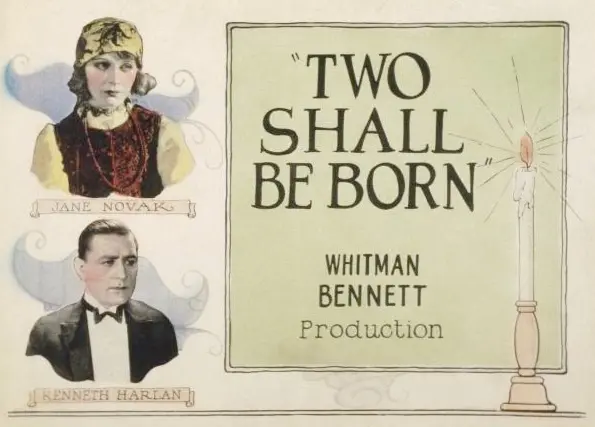
In the rarefied world of silent cinema, 'Two Shall Be Born' (1924) emerges as a cinematic tapestry woven from the threads of love, intrigue, and geopolitical machinations. This film, a testament to the art of storytelling, navigates the complexities of human relationships against the backdrop of international diplomacy.
The narrative unfolds with the poignant demise of Count Florian Zuleski, a Polish nobleman dedicated to fostering perpetual peace among European nations. In his final moments, he entrusts his daughter Mayra with the arduous task of delivering crucial documents to New York, a mission fraught with peril. Mayra's journey is a tour de force of resilience and determination, as she navigates the unfamiliar landscape of the United States.
Upon her arrival, Mayra finds herself disconnected from her intended contact, leading her to seek refuge with her aunt. It is in this setting that she encounters Brian Kelly, a disenfranchised scion struggling to come to terms with his family's disapproval. Brian, having been disinherited by his wealthy father for refusing to enter into a marriage of convenience with the patrician Janet Van Wyck, is a complex figure driven by a desire for autonomy. The convergence of Mayra and Brian's paths sets the stage for a whirlwind romance, as they forge an impromptu matrimony that facilitates Mayra's delivery of the papers.
However, their union is short-lived, as Mayra is kidnapped by the duplicitous Baron von Rittenheim, a Polish traitor with ulterior motives. The baron's nefarious plans are thwarted by Brian, who orchestrates a daring rescue, liberating Mayra from her captor's clutches. The aftermath of this ordeal sees the perfidious baron apprehended and Brian reconciled with his paternal figure, marking a poignant denouement to the narrative.
In terms of thematic resonance, 'Two Shall Be Born' echoes the espionage-laden intrigue of 'The Blue Bonnet' (1924), while its exploration of familial dynamics and romantic entanglements recalls 'The Marriage Lie' (1921). The film's cinematographic style and narrative pacing also invite comparison with 'Es werde Licht! 4. Teil: Sündige Mütter' (1918), a German silent film exploring themes of morality and redemption.
The performances in 'Two Shall Be Born' are noteworthy, with Joseffa De Bok and Sigrid Holmquist delivering compelling portrayals of Mayra and her aunt, respectively. The supporting cast, including Kenneth Harlan and Blanche Craig, add depth to the narrative, imbuing the film with a sense of authenticity.
In conclusion, 'Two Shall Be Born' is a cinematic gem that warrants consideration from scholars and enthusiasts of silent cinema. Its intricate plot, complex characters, and thematic resonance make it a must-watch for those seeking to explore the rich tapestry of film history.
For those interested in exploring similar films, 'The Broken Trestle' (1922), 'Pure But Simple' (1925), and 'The Price of Crime' (1923) offer compelling narratives that intersect with the themes and motifs present in 'Two Shall Be Born'.

IMDb 6.1
1934
Community
Log in to comment.