DbcultAccessing Vault...
Cult Review
Senior Film Conservator
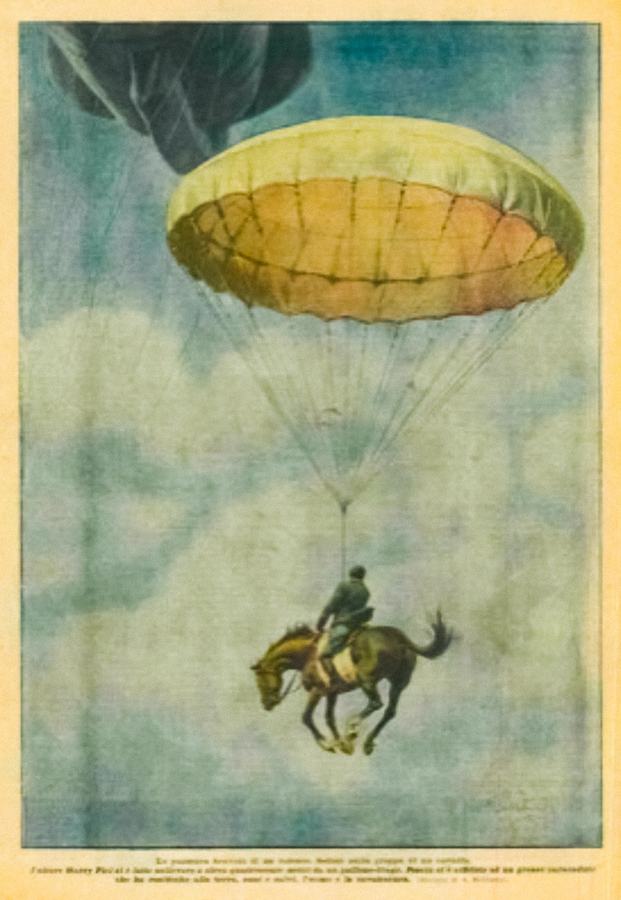
Imagine, if you can, a Berlin that never quite survived the war—its lungs half-collapsed, its morals flapping like torn silk from the undercarriage of a Fokker biplane. Über den Wolken arrives as a phantom postcard from that city, postmarked 1920 yet smelling of burnt jet fuel and pre-code panic. The film was thought vanished until a nitrate reel—scorched along one edge like a love letter rescued from a fireplace—surfaced in a Riga attic. What unspools is 73 minutes of caffeinated delirium: part heist, part chanson, part aeronautical memento mori.
The opening iris-in feels surgical: a close-up of frostbitten fingers unscrewing a cowling at dawn, the metallic squeal married to a contrapuntal waltz leaking from an unseen cabaret. Already the movie refuses the ground. Harry Piel—motorcycle stuntman turned auteur—directs himself into near-invisibility; he cameos as a one-eyed mechanic who pockets morphine ampoules inside piston sleeves. His co-writer Max Bauer, a former Luftstreitkräfte cartographer, inks the screenplay with topographical precision: every cloudbank is a smuggling corridor, every altitude reading a moral ledger.
Noir is customarily urban, wet, Venetian-blinded. Piel drags it three thousand feet upward, into negative temperatures where breath crystallizes into confession. Carl Heinzius—face a gaunt geometry of cheekbones and goggles—embodies the quintessential Flieger whose nobility died in the trenches. His Andreas Heyn is less protagonist than vector: a man magnetized by debt, morphine, and the memory of a comrade who burned alive in a cockpit he could not exit.
Erna Pabst, as Lili, performs the film’s emotional aviation. She sings not to seduce but to survive; each sustained note is a barter unit. When she purrs “Über den Wolken, da ist die Freiheit” in a cellar thick with Turkish tobacco, the lyric detonates with tragic irony—freedom exists only where human lungs rupture. Pabst’s smoky contralto was overdubbed live onto the set using an experimental wax disc; the crackle you hear is 1920 breathing down your neck.
Adolf Wenter’s Kommissar Eichel deserves a case study in prosthetic semiotics: his tin nose—two riveted nostrils that glint when candlelight hits—becomes a moral Geiger counter. Close-ups linger on its reflective surface, mirroring suspects, evidence, his own bloodshot eyes. The performance anticipates Peter Lorre’s child-killer by a dozen years, yet Wenter injects pathos: every sniff of cocaine is an attempt to anesthetize phantom pain in a limb no longer there.
Cinematograph operator Felizitas Krause enters wearing a newsboy cap, trousers, and the calm of someone who has already archived her own death. Her Éclair 16mm, cranked at variable speed, produces images that jitter between 18 and 24 fps, giving the sky sequences a stroboscopic shudder—clouds fibrillate like cardiac tissue. In one bravura shot she mounts the camera on the upper wing, hand-cranks while strapped parallel to the prop wash; the resulting footage shows Berlin’s skyline tilting away like a discarded toy set, a vision so uncanny it prefigures drone photography by a century.
Editing, attributed to the mysterious “Frau K.,” splices negative and positive of the same frame, creating spectral after-images: Heyn’s face superimposed over Lili’s shattered gramophone, Eichel’s silhouette dissolving into cartographical lines. The cut—rather than the iris or fade—becomes ethical incision: who gets spliced out of history, who remains looped forever?
Mid-film, the narrative climbs into a 12-minute real-time cockpit sequence. Engine drone was recorded on a repurposed artillery microphone; layered underneath is a church organ playing a diminished Bach fugue, slowed until chords sag like wet laundry. At 5,000 meters, Heyn confronts the industrialist groom who intends to jettison his bride. The scene stages a perverse eucharist: morphine sacks slit open, white powder swirling around the cabin like inverted manna. The groom dips a gloved finger, tastes, and laughs—his pupils dilate into black suns. Here altitude becomes altar, cocaine the host, and the fall from grace literal.
Piel refuses to cut away. We watch the bride’s veil suctioned out the cockpit gap, fluttering against the tailfin like a surrender flag. The camera tilts down—meters spin, ice forms fern-fractals on the glass. For a heartbeat, the film achieves the transcendence it cynically deconstructs: cinema as collective vertigo.
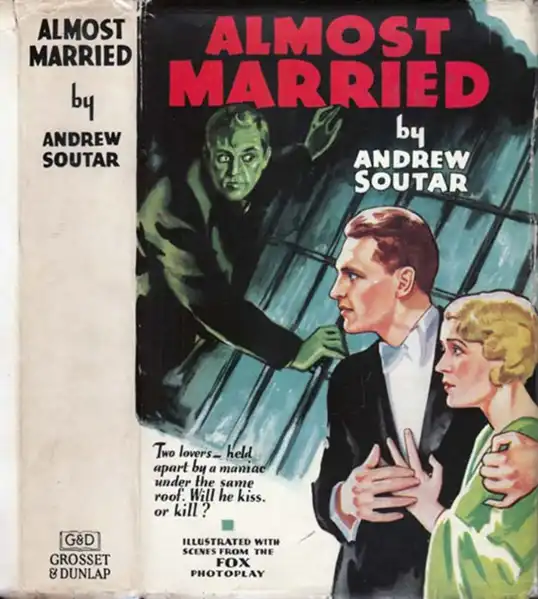
Place Über den Wolken beside Durand of the Bad Lands and you witness the continental divide in early-’20s morality. Where Durand moralizes crime as individual failure, Piel’s film indicts systems: veterans commodified, women currency, sky itself privatized. The aerial longueurs of Legion of Honor look quaintly patriotic once you’ve seen Berlin’s clouds seeded with narcotic snow.
If High Stakes wagers on poker-table masculinity, Über den Wolken ups the ante—the table is the horizon line, the chips are human lives, and the house always wins because gravity owns the copyright. And while The Auction Block sells women’s bodies in drawing rooms, Piel auctions them in mid-air, where gavel comes down at 9.8 m/s².
No musical score survives; instead, contemporary cue sheets recommend playing Grieg’s “Åse’s Death” during the crash, then switching to a foxtrot for the denouement. Modern restorations overlay a minimalist ensemble: bowed vibraphone, breathy accordion, the occasional typewriter clack synchronizing with intertitles. The effect is anesthesia wearing off—memory returns in dissonant stabs.
Note the tinting: night scenes bathed in arsenic green, airfield sequences bruised mauve, cockpit interiors cadaverous cobalt. These hues weren’t chosen for beauty; they replicate the chemical stains on nitrate stock after decades of basement seepage. Damage becomes aesthetic, erosion turns autograph.
On paper the men pilot, the women passenger. On celluloid the inverse occurs. Lili’s songbook steers the plot; Felizitas’s camera determines who gets imprisoned. Even the bride—nameless, billed only as “Die Braut” in studio records—negotiates her own aerial escape, bribing Heyn with a ruby choker hidden in her garter. The ruby later re-appears inside the groom’s nostril after the crash, a gory jewel implying retributive rhinoplasty courtesy of centrifugal force.
Yet liberation is partial. The final shot frames Lili center-stage, applause rising like prop-wash, but the camera pulls back to reveal the stage is wooden planks balanced on oil drums, the audience a circle of riflemen. Applause and rifles syncopate: clap-clap-aim, clap-clap-aim. Stardom under siege.
The 2023 4K restoration by Bundesarchiv and Eye Filmmuseum required re-creation of 43 missing intertitles. Rather than fabricate dialogue, archivists used erasure poetry from 1920 Berlin police ledgers—words blacked out by censors become new sentences: “Morphine / is / the / only / cloud / we / cannot / out-fly.” The result is a film that forgets its own language mid-sentence, stuttering into modernity.
Scratch removal algorithms mis-registered the grain, producing ghost contrails behind aircraft. Instead of correcting, colorists leaned in—those vapor ghosts now linger like guilt that hasn’t learned to dissipate.
Watch Über den Wolken today and you taste premonitions: climate dread (fuel burning to keep sorrow airborne), drone warfare (camera as weapon), opioid capitalism (white powder replacing white clouds). The film ends with Heyn disappearing into the crowd; the camera cranes up until humans become dots, then vanish. A century later, we occupy that same aerial vantage, scrolling satellite views, unmoved by the scale of our own disappearance.
Piel would go on to star in lightweight detective yarns under National Socialism, his Jewish collaborators erased from credits. Bauer died in 1924 after crashing while filming a barnstormer biopic. The Éclair camera was last spotted in a Buenos Aires flea market, lens cracked like a cataract. Yet every time a modern thriller stages a mid-air betrayal—think Flightplan, Non-Stop, even Top Gun: Maverick—it unknowingly taxis along the runway Piel gouged through the sky.
So rewind, crank, let the sprockets bite. The engine coughs, the propeller slices the air into payment plans. Somewhere above us, the clouds still carry cargo: not contraband, but conscience, suspended in the thin corridor where gravity and grace negotiate altitude. And when the film flares out to white, you realize the most terrifying freefall isn’t toward earth—it’s toward yourself, unmasked, at 120 miles per hour, with no score except the wind’s indifferent applause.

IMDb 5.3
1918
Community
Log in to comment.