DbcultAccessing Vault...
6.3/10
Senior Film Conservator
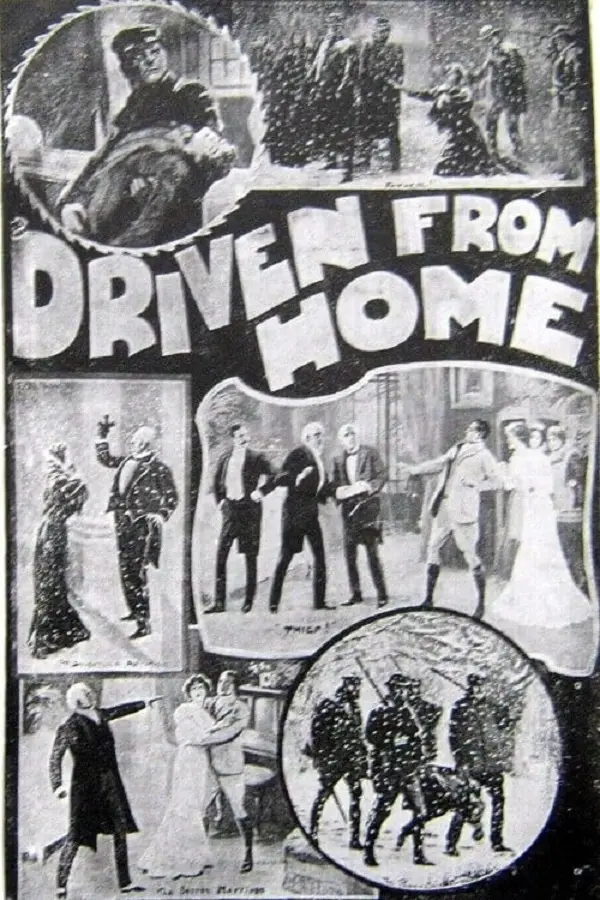
A definitive 6.3/10 rating for a film that redefined the boundaries of cult cinema. Driven from Home remains a cornerstone of transgressive art.
Is Driven from Home worth watching today? Short answer: Yes, but primarily as a historical artifact of 1920s moral anxiety rather than a gripping modern thriller. It is a film for those who appreciate the evolution of the 'fallen woman' genre and silent film completists, but it is certainly not for viewers who demand nuanced character motivations or fast-paced action.
This film exists in a strange intersection of domestic tragedy and pulp exploitation. It captures a moment in cinematic history where the fear of the 'other' and the sanctity of the patriarchal home were the primary drivers of drama. It is a fascinating, if occasionally frustrating, look at how 1927 audiences viewed rebellion and its consequences.
Driven from Home is worth watching if you are a student of silent cinema or an admirer of the legendary Anna May Wong. While the plot is undeniably formulaic, the film offers a window into the cultural fears of the era. The contrast between the cold, moralistic home of the father and the dangerous allure of the opium den provides a visual and thematic tension that keeps the viewer engaged despite the predictable beats.
1) This film works because of its unflinching portrayal of the 'social death' that followed familial exile in the 1920s.
2) This film fails because the father’s motivations are so one-dimensional they border on the absurd.
3) You should watch it if you want to see how early Hollywood utilized the 'Yellow Peril' trope to create tension in domestic dramas.
The core of Driven from Home is the expulsion. In 1927, the idea of a father throwing a daughter out for an unapproved marriage wasn't just a plot point; it was a societal nightmare. Melbourne MacDowell plays the father with a stiffness that feels deliberate. He isn't just a man; he is the personification of a dying social order. When he points to the door, it’s not just a rejection of his daughter, but a rejection of the changing world she represents.
Pauline Garon’s performance is the necessary counterweight. She brings a soft, wide-eyed vulnerability that makes the subsequent scenes in the city feel genuinely threatening. Unlike the more assertive heroines we see in films like Stepping Out, Garon’s character is a leaf in the wind. This passivity is frustrating to a modern audience, but it serves the film's goal of highlighting the dangers of the 'unprotected' woman.
The writing by Enid Hibbard and Ethel Hill leans heavily into the melodrama. There is no middle ground here. You are either in the safety of the home or the clutches of the underworld. This binary view of morality is a hallmark of the era, similar to the stakes found in Ingeborg Holm, though that film handles the social fallout with significantly more grace and realism.
The second act takes us into the 'sinister' opium den, a trope that was ubiquitous in the 1920s. This is where the film finds its most striking visual language. The lighting becomes more expressionistic, casting long shadows that suggest a world where the rules of the daytime no longer apply. The proprietor of the den is a classic silent film villain—all leering eyes and calculated movements.
It is impossible to discuss this section without mentioning Anna May Wong. Even in a supporting role, she commands the screen with a presence that her co-stars struggle to match. Her role here is unfortunately constrained by the stereotypes of the time, but her ability to convey complex emotion with a single glance is evident. She adds a layer of sophistication to a film that otherwise feels quite blunt. Her presence here reminds me of the atmospheric tension in The Chinese Musketeer, where the setting is as much a character as the actors.
The opium den serves as a physical manifestation of the 'ruin' the father predicted. It is a heavy-handed metaphor, but effective within the context of the film's moral framework. The threat isn't just physical; it's spiritual. The film suggests that once you leave the path of obedience, you are only a few steps away from the darkest corners of society. It is a brutal, simplistic message. But it works within the logic of the genre.
Pauline Garon was a staple of the 1920s, and here she does exactly what is required of a 'damsel.' Her acting is broad, which was the standard, but there are moments of quiet desperation that feel surprisingly modern. For instance, the scene where she first realizes she has nowhere to go is played with a lack of histrionics that is genuinely moving. She doesn't scream; she simply deflates.
Anna May Wong, however, is the real draw. Even when the script gives her little to do, she occupies the frame with a tragic dignity. It is a recurring frustration to see her talent used as 'exotic' wallpaper. In Driven from Home, she represents the 'other' that the protagonist is warned about, yet she is the most compelling person on screen. Her performance is a masterclass in silent screen acting, using her hands and eyes to tell a story the intertitles ignore.
The supporting cast, including Virginia Lee Corbin and Ray Hallor, provide solid enough performances, but they are largely overshadowed by the central conflict. The husband, whose marriage causes the exile, feels like a secondary thought. The film is much more interested in the father’s rage and the daughter’s peril than the romance itself. This is a common trait in films like The Bolted Door, where the mechanics of the obstacle are more important than the love story.
The direction is functional, bordering on theatrical. Most scenes are shot in wide or medium setups, allowing the actors to use their full bodies to convey emotion. While this can feel static to modern eyes, it allows for a sense of geography within the sets. You understand the layout of the home and the claustrophobia of the den. It lacks the kinetic energy of something like The Fighting Trail, but it suits the somber tone.
The pacing is where the film struggles. The first act is a slow burn of domestic arguments that could have been trimmed by ten minutes. Once the exile happens, the film picks up speed, but it often feels like it’s rushing toward a conclusion it hasn't fully earned. The transition from the father's house to the opium den feels like a jump between two different movies. One is a kitchen-sink drama; the other is a crime thriller.
Technically, the film is a product of its time. The title cards are descriptive and frequent, often doing the emotional heavy lifting that the actors were already accomplishing visually. However, the set design of the opium den is genuinely impressive. It feels lived-in and grimy, a sharp contrast to the sterile, wealthy environment of the opening scenes. This visual storytelling is where the film truly succeeds.
Driven from Home is a flawed but fascinating relic. It isn't a masterpiece, but it doesn't need to be. It works as a snapshot of a time when the boundaries of the home were considered the boundaries of safety itself. The film is at its best when it leans into its darker, more lurid elements and at its worst when it tries to preach. It is a blunt instrument of a movie, but it hits its marks with enough conviction to be memorable.
If you compare it to other films of the period like Paradise Garden, you see a similar obsession with the purity of the domestic sphere. However, Driven from Home is much darker, more willing to drag its heroine through the mud before offering redemption. It is a tough, sometimes ugly little film that deserves a look for its cast alone. It works. But it’s flawed. Ultimately, it’s a piece of cinema history that reminds us how far we’ve come, and how much we still love a good, messy family scandal.
IMDb 6.5
1931
Community
Log in to comment.