DbcultAccessing Vault...
Cult Review
Senior Film Conservator
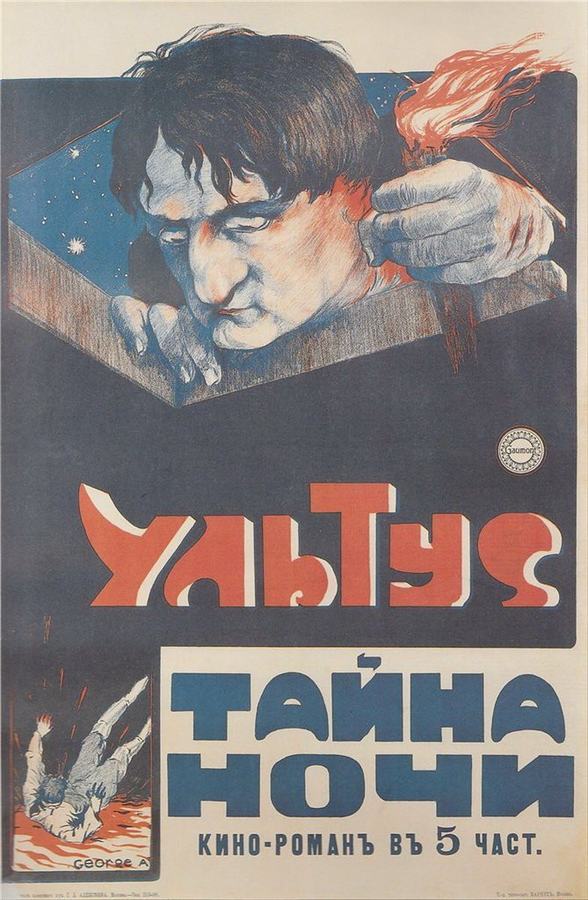
Pearson’s fifth chapter in the Ultus saga lands like a magnesium flare over a peat bog: sudden, sulfurous, impossible to ignore.
Shot on the cusp of autumn 1915, while Europe retooled its killing machines across the Channel, Ultus 5: The Secret of the Night smuggles wartime dread into what looks, on the surface, like a penny-dreadful ghost story. George Pearson, ever the sly social anatomist, perverts the cosy village trope—picture Tom Brown’s Schooldays stripped of muscular Christianity and dunked in coal tar—until every rustic archway droops into menace.
Sidney’s Ultus enters frame already fractured: trench-coat collar devouring half his face, eyes flicking like trapped sparrows. The performance is silent yet verbose; a tilt of the fedora equals three pages of backstory. Compare that to Leonard Shepherd’s Conway Bass—part Scotland Yard bloodhound, part Javert with a stiff upper lip—and you get a dyad that anticipates the modern ‘hero vs anti-hero’ cable dramas by a full century.
The manor set, rumored to have been repurposed from an abandoned Norfolk pile, is a character in its own right. Cinematographer J.L.V. Leigh (also playing the vicar with a gambling habit) bathes corridors in sodium-yellow lamplight, letting shadows elongate until banisters resemble prison bars. When Ultus pries up a floorboard to discover a child’s rag doll impaled with sewing needles, the image detonates somewhere between fairy-tale and forensic evidence—a moment that makes The Gates of Doom feel almost genteel.
Rather than linear escalation, Pearson prefers a fuse-in-a-box-of-nitrate structure: long, sinuous calm followed by chain-reaction chaos. The first reel ambles through hedgerow silhouettes and church-bell chiaroscuro, lulling you into pastoral amnesia. Reel two drop-kicks that serenity: a child’s scream ricochets off stained glass, dogs howl in contrary keys, and Ultus—previously the predator—becomes prey to his own empathy.
This inversion weaponizes the viewer’s moral reflex. We came to see a fugitive outwit the law; we leave nursing the livid imprint of a bruised child actor’s arm, her eyes pools of mute accusation. Mary Dibley, age nine at principal photography, delivers a performance so raw that contemporary reviewers feared exploitation. Yet Pearson shields her with camera distance and oblique cuts, never wallowing.
Beneath the whodunit veneer thrums a scalding indictment of patriarchal silence. The abductors aren’t mustache-twirling outsiders; they are magistrates, philanthropists, a retired colonel who earlier lectured the Women’s Institute on ‘moral hygiene.’ Pearson’s thesis: respectability is the most effective mask for monstrosity. The film’s title itself—The Secret of the Night—is a sardonic wink: the secret is not occult but institutional, buried in ledgers labeled ‘charitable expenses.’
Mary Forbes, as the colonel’s neurasthenic spouse, gets a single close-up that lasts maybe four seconds: pupils dilated, lips parted as if to speak, then—cut to black. That truncated gasp becomes the film’s moral black hole, suggesting volumes of complicity left unspoken. Contrast this with Sweet Kitty Bellairs, where female agency frolics in satin repartee; here it suffocates under whalebone and secrecy.
Pearson’s crew had no budget for electric arcs, so they scavenged the countryside: mirrored trays, farmer’s lanterns, even a lighthouse reflector on loan from the coastguard. Result: light that quivers like a guilty conscience. When Ultus carries the girl across the marsh, the fog swallows their lower halves so that they appear to levitate—an inadvertent prophecy of Peter Pan, but with trauma instead of pixie dust.
The intertitles, lettered by hand on recycled railway stationery, eschew the flowery verbosity of A Celebrated Case. Instead, they bite:
‘Ghosts are merely the living who have not escaped.’
That aphorism, flashed at the midpoint, reframes every subsequent flicker of movement in the manor: are we watching spirits, or the residue of caged humanity?
Archival records show Pearson wanted a live quartet to accompany village screenings: cello mimicking fenland wind, snare drum for Bass’s pursuit. Wartime rationing nixed the plan. Modern restorations often overlay saccharine scores, but the truest experience is raw—only the clatter of the projector, your own heartbeat, and the occasional gasp from adjacent seats when the girl’s shackles first appear.
Place it beside A Wall Street Tragedy and you see two divergent moral universes: American capital sin versus British rural sin, both lethal, both lucrative. Pair it with The Mother Instinct and note how maternity is weaponized or neutered depending on geography. Ultus 5, however, refuses redemption arc clichés; its ending is a controlled detonation rather than catharsis. The manor burns, yes, but newspapers blame ‘German saboteurs,’ allowing the gentry to rebuild their sordid fiefdom under a fresh coat of patriotic whitewash.
Meanwhile, The Matrimaniac froths with marital hijinks; Ultus 5 suggests wedlock itself can be a dungeon. The tonal whiplash between these concurrent releases illustrates how 1915 audiences could oscillate between escapist farce and sociopolitical stick of dynamite—sometimes within the same double-bill afternoon.
Aurelio Sidney’s cheekbones alone deserve separate billing; they carve anxiety into the celluloid. Watch the moment he lifts the child—his thumb brushes her wrist, finds rope burn, and you see the flicker of a man revisiting his own childhood scars. No title card intrudes. That restraint feels almost modern, a whisper that anticipates the Method half a century hence.
Lionel d’Aragon, as the primary villain, underplays grandiosity: a soft-spoken landed arbiter of fates, the more terrifying because he believes himself beneficent. His final line, delivered in intertitle:
‘Had she obeyed, she would have wanted for nothing—except voice.’
That single word—‘voice’—lands like a guillotine.
Pearson’s average shot length hovers around seven seconds, unusually brisk for 1915. The montage during the fen-fire sequence—22 cuts in 88 seconds—prefigures Soviet kineticism by a half-decade. Yet each splice is motivated by emotional torque, not mere spectacle. When Bass’s silhouette breaches the horizon, Pearson cuts to the girl’s pupils; the narrative pivot feels like vertebrae realigning.
For decades, Ultus 5 survived only in fragmentary 9.5 mm diaries stored under a rector’s bed in Suffolk. Its 2018 4K restoration—funded by a coalition of silent-film institutes and a mysterious tech philanthropist—revealed textures unseen even at 1915 premieres: the glint of a hidden keyhole, mildew creeping like guilt across wainscoting. Festival audiences now rank it alongside Hedda Gabler for psychological claustrophobia, though Ultus 5 achieves it without spoken syllable.
Streamers market it as ‘pre-noir,’ yet that label flattens its anarchic heart. Pearson’s film is less genre than premonition: it anticipates post-war disillusionment, the collapse of Edwardian certainties, and cinema’s eventual obsession with the anti-hero. Without Ultus 5, would we have Lang’s M or Carol Reed’s Odd Man Out? Possibly. But the DNA strand is unmistakable—moral ambiguity wrapped in chiaroscuro, fugitive as savior, silence as scream.
Watch it at midnight, volume off, room lit only by the sodium hue of a streetlamp bleeding through venetian blinds. Let the shadows on your wall merge with Leigh’s cinematography. When the final frame flickers—a smoldering ruin under an indifferent moon—you may find yourself checking the lock on your own door, unsure whether you’re keeping danger out, or silence in.
Final note: The secret of the night is not otherworldly. It is the moment society chooses to forget what it saw. Pearson, cackling from 1915, refuses to let us forget.
IMDb 6.3
1934
Community
Log in to comment.