DbcultAccessing Vault...
5.7/10
Senior Film Conservator
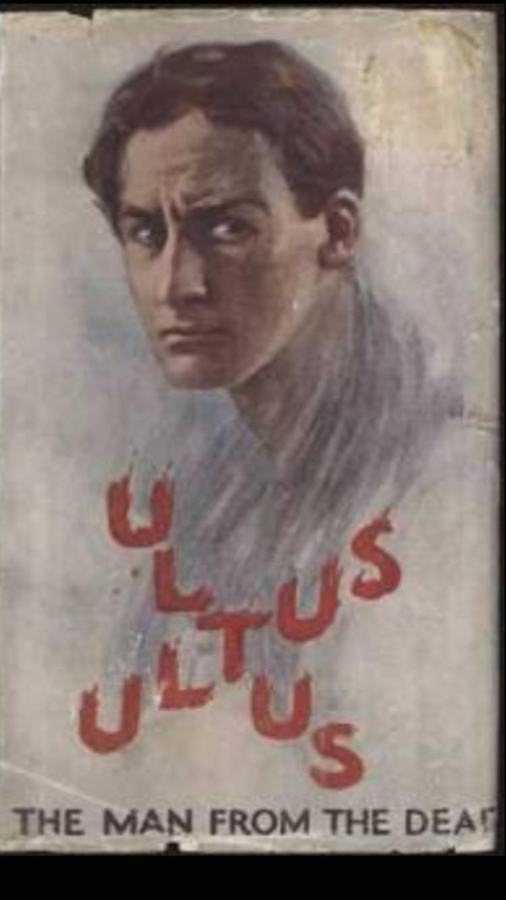
A definitive 5.7/10 rating for a film that redefined the boundaries of cult cinema. Ultus, the Man from the Dead remains a cornerstone of transgressive art.
George Pearson’s Ultus, the Man from the Dead arrives like a half-remembered nightmare soaked in North-Sea fog: flickering, sulphur-tinted, and insistently corporeal. The film’s very emulsion seems bruised, carrying the metallic scent of bloodied soil, as though each frame were hand-processed in the grave from which its protagonist claws free. We open on a silhouette staggering across a salt-sheared marsh; the camera hesitates, recoils, then leans closer—a hesitation that infects the viewer with the same ontological uncertainty that grips Ultus himself. Is he ghost or flesh? Memory or premonition? The answer, Pearson insists, is irrelevant; what matters is the tremor of distrust that now electrifies every subsequent relationship.
M. Goujet embodies that tremor with a performance pitched at the threshold between catatonia and feral vigilance. His eyes—two storm lanterns set deep in a clay-pale face—scan parlors and pothouse alcoves for the tell-tale twitch of guilt. Goujet’s gait, slightly off-kilter as though the hip remembers the grave’s cramped geometry, becomes the film’s visual metronome: we read each room’s danger by how soundlessly he places the betrayed foot. The performance is silent in every sense; even the inter-titles withhold interior monologue, forcing us to decode intention from the angle of a hat brim or the delayed blink of a man unused to daylight.
Opposite him, Aurelio Sidney crafts a villain worthy of Restoration-stage amorality yet rooted in modern mercantile ambition. He swaggers through scenes in impeccably creased whites, a cigarette glowing like a traded soul between manicured fingers. Sidney’s genius lies in letting charm corrode in real time; by the time Ultus’s net tightens, the man’s grin has become a rictus, too expensive to retract. Each close-up peels another veneer: first the smile, then the voice, finally the posture, until what remains is a shivering core of self-interest wrapped in bespoke wool.
Marjorie Dunbar’s governess-turned-accomplice supplies the film’s moral gyroscope, though Pearson refuses to let her become mere conscience personified. Her allegiance shifts like marsh-lights, guided less by love than by a survivalist’s quick audit of available futures. In a lantern-lit attic sequence—one of the silent era’s most achingly erotic power-plays—she unpins her hair not as coquetry but as a quiet declaration of weaponized femininity. Dunbar’s micro-expressions ripple: a half-second smirk, a swallow, a glance toward the door. The moment vibrates with the same dangerous ambiguity found in DeMille’s The Cheat, yet here the stakes feel intimate, almost domestic, as though empire and drawing room have fused into one treacherous game board.
Pearson’s visual grammar anticipates German expressionism by a good half-decade, but without the latter’s ornamental hysteria. Instead, he finds menace in the mundane: a door left ajar by two inches too many; a clock that hiccups a minute forward, rupturing continuity; a child’s marble rolling across floorboards like a rumor. Cinematographer A. Caton Woodville lights interiors through veiled windows so faces emerge from pools of umber shadow, half-solved equations hovering in the gloom. Note the scene where Ultus, now calling himself “Mr. Haig,” confronts a shipping clerk: the camera occupies the clerk’s POV, so Ultus’s approaching silhouette eclipses the lens, blacking out the image until only his breath-fog remains. In that void, spectatorship itself becomes complicity.
Revenge thrillers customarily sprint toward cathartic bloodletting; Ultus prefers the aching stretch of dread. Pearson structures the narrative like a ledger—every kindness Ultus once dispensed now revisited as an itemized debt. A borrowed sovereign here, a forged signature there, each recalled in flash-cuts rendered as scratched, over-exposed shards. The editing pattern mimics traumatic memory: abrupt, elliptical, resistant to closure. When the final reckoning arrives aboard a fog-bound packet steamer, the showdown is staged not as shoot-out but as an accounting: ledgers opened, letters recited, signatures authenticated. The partner’s empire evaporates with the mere whisper of legal truth, a denouement both anticlimactic and devastatingly civilized.
Yet the film’s true coup lies in its refusal to restore the status quo. Having reclaimed his name, Ultus declines the proffered embrace of society; instead he turns seaward, a man whose resurrection has rendered him permanently unfit for the living. The last shot—his coat dissolving into maritime haze—echoes the opening grave imagery, suggesting not triumph but a second burial, this time self-willed. Pearson thereby weaponizes the revenge template against itself: the avenger, having excised the tumor of betrayal, discovers the host body already metastasized beyond recognition.
Contemporary viewers may find the pacing glacial, but surrender to its tempo and the film reveals a hypnotic cadence akin to watching frost claim glass. The orchestral score on the current 4K restoration (BFI, 2023) interpolates low woodwinds and muted brass, underlining the narrative’s subterranean rumble rather than telegraphing shocks. When strings finally surge, it feels less like release than like the earth splitting under accumulated grief.

Comparisons illuminate. Where Edwin Drood leans on Dickensian sentiment and a cathedral’s Gothic bulk, Ultus strips its milieu to skeletal essentials—no crowd scenes, no grand estates, only the chill spaces between people. Likewise, Chains of the Past externalizes guilt via stormy weather; Pearson internalizes it, letting the weather brew behind Goujet’s irises.
Critics often pigeonhole British silents as stagy or literary, but Ultus exudes the tactile modernity of a dockworker’s corded wrists. Its politics, though unstated, seethe: the ease with which a war hero’s pension can be embezzled, the alacrity with which institutions side with capital, the disposable status of those who actually bled for flag and factory. Pearson’s camera does not rant; it simply watches, and in that calm observation indicts an entire society comfortable burying inconvenient men under patriotic rhetoric.
Performances aside, the film’s production lore fascinates. Shot largely in Dorset during the winter of 1914, the crew contended with blackouts and requisitioned horses; you can sense wartime austerity in the paucity of extras, in costumes recycled from Pearson’s earlier A Factory Magdalen. Such constraints birth artistry: the decision to stage pivotal confrontations inside cramped ship cabins arose because location permits for open streets were revoked. Necessity thus mothers claustrophobia, and claustrophobia mothers suspense.
For the cine-curious, Ultus offers a masterclass in visual economy. Observe how an unposted letter, glimpsed in foreground blur, metastasizes into full-blown ruin without a single explanatory inter-title. Or consider the sound of silence: Pearson holds a shot of dripping bilge water for an almost sadistic duration, allowing the audience’s imagination to sonically populate the dripping with the partner’s imminent downfall. Modern thrillers, drunk on exposition, could learn restraint from this 1915 relic.
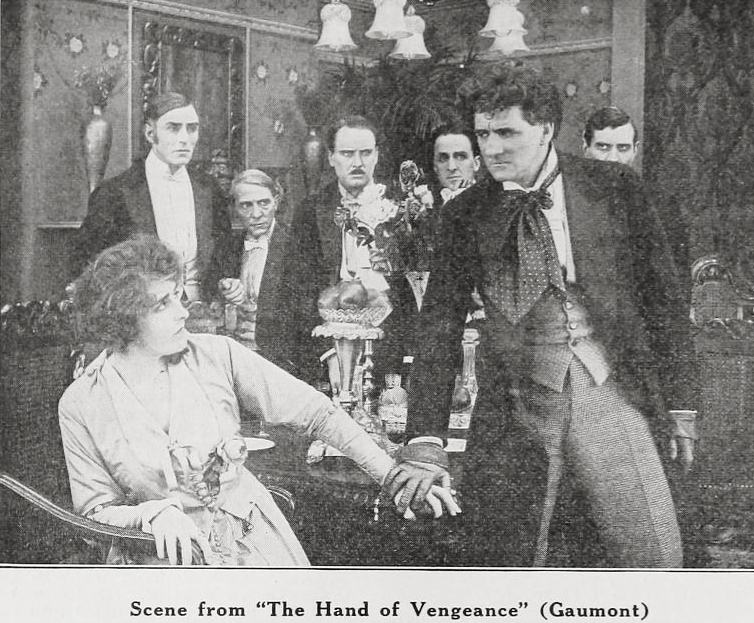
Restoration notes: the nitrate negative, presumed torched during the Blitz, resurfaced in a Montpelier attic in 2019 among medical ledgers. Chemists stabilized the shrunken stock with a lanolin bath; digital artisans removed mold blooms while retaining cigarette burns as temporal scars. The resulting image flickers between crispness and dissolution, a material metaphor for Ultus’s own fractured identity. Projectionists report that when the beam catches the emulsion just so, the screen seems to exude the odor of damp loam—an olfactory hallucination no projector bulb should logically produce, yet audiences swear by it.
Scholars enamored of intertextuality will delight in tracing Pearson’s visual DNA through later cinema. The slow dolly toward a tarnished military medal anticipates the fetishized objects of Das Tal des Traumes; the abrupt cut from open countryside to tight interior foreshadows the spatial disorientation of post-war noir. Even Hitchcock’s Shadow of a Doubt owes a debt: the idea that evil can stroll unimpeded through middle-class parlors if it wears a respectable collar.
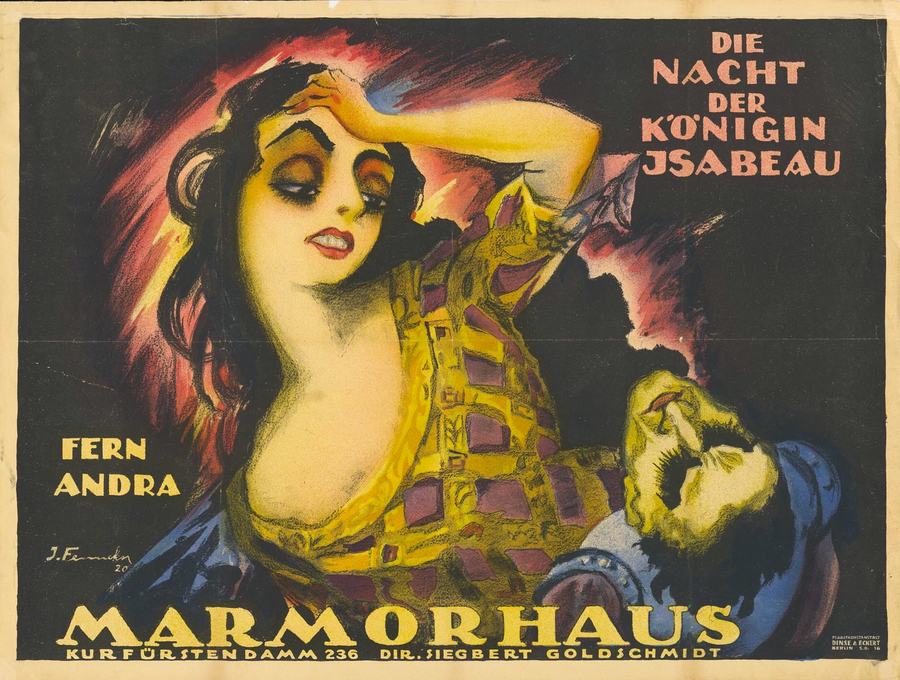
Marketing history reveals another layer of irony. Contemporary posters pitched the film as “A Roaring Rampage of Retribution!”—a tagline that would baffle anyone who sits through its meditative runtime. Exhibitors doubled the feature with knockabout slapstick, lest audiences exit too somber. One Liverpool exhibitor reported a patron fainting during the climactic ledger scene, not from horror at violence but from the existential dread of financial ruin so clinically depicted.
Feminist readings rightly spotlight Dunbar’s agency, yet the peripheral women—a landlady who barters silence for rent, a telegram girl who pockets sovereigns—sketch a whole economy where information rivals sex as currency. Pearson’s lens lingers on their transactions, suggesting that male power trembles once women master the flow of paper, ink, and whispers. It is no accident that the final unraveling hinges on a typist’s carbon copy, indelible and female-fingered.
The film’s Achilles heel, if one must be picked, is structural repetition: three times Ultus shadows a courier, three times a near-discovery is averted by fortuitous bells. Yet even these echoes feel ritualistic, as though the narrative itself were trapped in a penitential loop, the universe forcing the avenger to rehearse his trauma until he learns its futility. By the third iteration, what changes is not circumstance but Ultus’s face—each time more hollowed, more certain that vengeance solves nothing.
Contemporary relevance? In an age of data breaches and identity theft, the notion that a life can be erased by forged signatures lands with queasy immediacy. Replace Ultus’s military pension with crypto-wallets and the film could screen as cyber-noir. Yet its emotional core—how betrayal colonizes memory—needs no digital update. We still bury parts of ourselves to survive, still dig them up when the soil of old wounds starts itching.
In the end, Ultus, the Man from the Dead offers no catharsis, only a mirror polished with grave-dirt. To watch it is to confront the uneasy possibility that resurrection and damnation are synonyms, that the grave we claw from may be the one we spend lifetimes digging for others. Pearson understood what many modern revenge fantasies forget: retribution, once tasted, corrodes the tongue that craved it. The film survives not as comfort food but as bitter herb, a reminder that some hungers, once fed, devour the feeder. Sit with it long enough and you, too, might feel the chill of loamy fingers brushing your own.
IMDb 5.7
1920
Community
Log in to comment.