DbcultAccessing Vault...
Cult Review
Senior Film Conservator
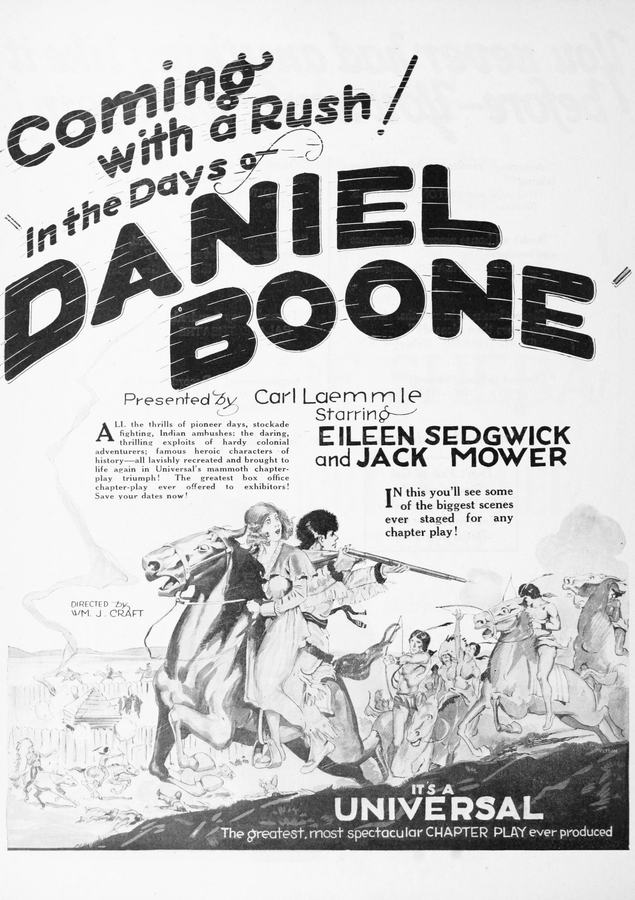
When the silver screen of the early sound era turned its gaze toward the American frontier, few productions managed to capture both the mythic grandeur and the gritty reality of the period as deftly as In the Days of Daniel Boone. Directed by the industrious Jefferson Moffitt, the film assembles an ensemble that includes Ruth Royce, Jack Mower, and Eileen Sedgwick, each delivering performances that oscillate between melodramatic vigor and understated nuance.
The story unfolds in three interlocking acts, each meticulously calibrated to heighten stakes while illuminating the moral ambiguities of colonial expansion. The opening act establishes the precarious equilibrium between settlers and the Shawnee, foregrounded by a tense council scene in which Boone (Mower) negotiates a tenuous peace. This tableau is not merely exposition; it functions as a micro‑cosm of the broader cultural clash that defined the era.
Act two propels the plot forward with the introduction of Silas Hargrave (Jack Lewis), a land baron whose machinations epitomize the exploitative capitalism that plagued the frontier. Hargrave's duplicitous treaty, forged in the shadows of a moonlit clearing, serves as the film's central MacGuffin. The narrative momentum accelerates as Boone allies with Mary Whitaker (Ruth Royce), a fiercely independent scout whose agency rivals that of any male counterpart—a rarity for the period.
The climax, a meticulously choreographed midnight raid on Hargrave’s manor, showcases Moffitt’s command of suspense. The sequence intercuts rapid gunfire with the hushed whispers of clandestine negotiations, underscoring the film’s recurring motif: words can be as lethal as bullets.
Jack Mower embodies Daniel Boone with a stoic gravitas that feels both historic and immediate. His measured cadence and restrained physicality echo the frontier legend’s reputed prudence, while subtle glances betray an inner turmoil that adds dimensionality to an otherwise archetypal hero.
Ruth Royce’s Mary Whitaker is a revelation. Rather than relegated to the role of a decorative love interest, Mary is the narrative’s engine—her strategic mind and daring exploits drive the plot’s resolution. Royce infuses the character with a blend of toughness and vulnerability, making her a forerunner of later feminist icons in western cinema.
Eileen Sedgwick, portraying the enigmatic Shawnee emissary Aiyana, provides a counterpoint to the predominantly white cast. Though her screen time is limited, Sedgwick’s nuanced gestures and accented dialogue lend authenticity to the portrayal of indigenous agency—a commendable effort for a 1930 production.
The film’s visual palette is dominated by stark chiaroscuro, a deliberate homage to the German Expressionist influence that seeped into early American sound pictures. The black‑and‑white stock is punctuated by occasional tinting: night scenes bathe in a deep sea blue (#0E7490), evoking a cold, foreboding atmosphere, while daytime sequences flash with a muted amber reminiscent of the frontier’s relentless sun.
Set pieces such as the log‑constructed militia camp and Hargrave’s opulent manor are rendered with painstaking attention to period detail. The production design team, led by Charles Brinley, utilizes authentic timber framing and period‑accurate weaponry, grounding the mythic narrative in tactile realism.
While In the Days of Daniel Boone stands on its own, it dialogues with several contemporaneous titles. The film’s exploration of deceitful land deals mirrors the thematic concerns of Should Brides Marry?, albeit through a frontier lens. Moreover, the strong female lead finds a kindred spirit in the titular heroine of Her Face Value, where agency and resilience are similarly foregrounded.
In terms of visual storytelling, the tension‑laden raid sequence anticipates the kinetic editing of later westerns such as Captain Kidd. The deliberate pacing of dialogue‑heavy scenes also recalls the measured rhythm of The Love Cheat, underscoring Moffitt’s versatility across genres.
The film’s aural landscape, though constrained by the technical limitations of early talkies, is remarkably effective. A sparse, twangy fiddle motif threads through the opening credits, establishing a sonic identity that recurs during moments of introspection. The climactic duel is underscored by a low‑drone string arrangement, heightening the tension without overwhelming the diegetic sounds of gunfire and horse hooves.
Although In the Days of Daniel Boone never achieved the box‑office heights of contemporaries like Man and Woman, its contribution to the western canon is undeniable. The film pioneered a narrative structure that foregrounds indigenous perspectives—a subtle yet progressive stride for its era.
Scholars have cited the movie in discussions of early American myth‑making, noting how it balances reverence for frontier legend with a critique of colonial greed. Its influence can be traced to later revisionist westerns that interrogate the moral complexities of settlement, such as the 1960s revisionist wave exemplified by Auction of Souls.
In sum, In the Days of Daniel Boone is a richly textured work that rewards both casual viewers and seasoned cinephiles. Its deft interweaving of action, romance, and political intrigue creates a tapestry that feels both historically grounded and mythically resonant. The film’s strengths—stellar performances, meticulous production design, and a narrative that daringly elevates a female protagonist—outweigh its occasional pacing lulls.
For anyone interested in the evolution of the western genre, or in the early sound era’s capacity to grapple with complex themes, this film offers a compelling case study. It stands as a testament to the era’s artistic ambition, proving that even within the constraints of early Hollywood, storytellers could craft works of enduring significance.
IMDb —
1923
Community
Log in to comment.