DbcultAccessing Vault...
Cult Review
Senior Film Conservator
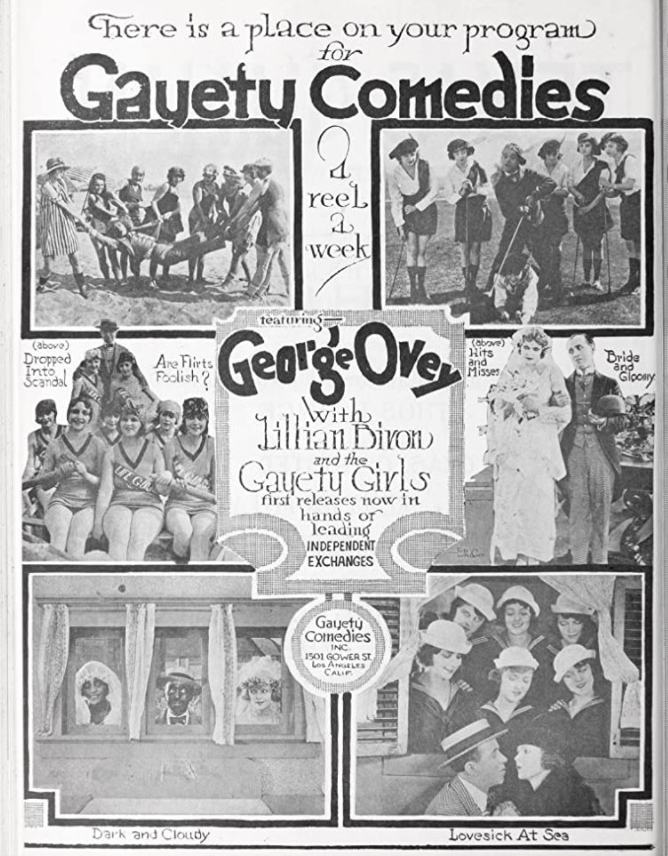
In the vast, often overlooked archives of early cinema, certain titles emerge with a surprising, almost prescient relevance, transcending their historical context to speak to universal human experiences. 'Are Flirts Foolish?' is unequivocally one such gem. This film, featuring the magnetic Lillian Biron and the earnest George Ovey, delves into the intricate dance of social expectations, personal desires, and the often-misunderstood nature of charm. It’s a narrative that, despite its vintage, feels remarkably contemporary in its exploration of how we present ourselves to the world versus who we truly are, and the delicate balance between playful self-expression and genuine connection.
From its very opening frames, the film establishes a vibrant world, bustling with the social intricacies of a bygone era. We are introduced to Daisy Belle, portrayed with a captivating blend of innocence and spirited independence by Lillian Biron. Daisy is, by all accounts, a young woman who delights in the attention her vivacious personality garners. Her eyes sparkle with mischief, her laughter is infectious, and her interactions with the gentlemen of the town are marked by a lightheartedness that, to her, feels entirely harmless. She is not malicious, nor is she intentionally manipulative; rather, she is a creature of her time, perhaps a little too accustomed to the ease with which she can command a room, a little too unaware of the deeper currents flowing beneath the surface of social pleasantries. Biron's performance here is a masterclass in subtle communication, conveying Daisy's inner life through nuanced gestures and expressive glances, a testament to the power of silent acting.
The film’s central conflict blossoms from this very charm. Daisy's seemingly innocent flirtations, far from being mere dalliances, begin to accrue a weight of their own, shaping her reputation and, more importantly, impacting those who genuinely care for her. This is where George Ovey's portrayal of Arthur Sterling becomes pivotal. Arthur is the antithesis of Daisy's fleeting admirers – steady, sincere, and deeply in love. Ovey imbues Arthur with a quiet dignity and an almost palpable sense of vulnerability. His unspoken heartache, as he watches Daisy bestow her playful attentions upon others, is one of the film's most poignant elements. The contrast between Biron's effervescence and Ovey's grounded stoicism creates a powerful dynamic, highlighting the different ways individuals navigate the complexities of love and societal expectation. One might draw a parallel to the earnest, often misunderstood protagonists in films like Somebody's Baby, where genuine intentions are frequently obscured by circumstantial complications or external perceptions.
The narrative cleverly uses the town itself as a character – a Greek chorus of whispering busybodies and judgmental gazes. This communal observation intensifies the pressure on Daisy, transforming her innocent behaviors into subjects of gossip and speculation. Her reputation, a fragile construct in any era, begins to fray around the edges. This aspect of the film is particularly insightful, offering a stark reminder of the societal constraints placed upon women, particularly concerning their conduct and romantic pursuits. In this regard, it shares thematic echoes with films such as His Wife's Good Name, which similarly explores the devastating impact of public perception and moral judgment on a woman's standing within her community.
The film’s plot thickens with the introduction of Mr. Abernathy, an older, wealthy gentleman who misinterprets Daisy's charming demeanor as a direct invitation for a serious courtship. This misunderstanding precipitates a crisis, forcing Daisy to confront the unintended consequences of her actions. Her playful world begins to crumble as Arthur, his patience worn thin and his heart heavy, contemplates leaving town. The impending loss of Arthur, the one person whose affection is truly unconditional and profound, serves as Daisy's profound wake-up call. It's a moment of stark realization, beautifully executed through Biron's changing expressions, as the mask of carefree flirtation begins to crack, revealing the vulnerability beneath.
The climax, set against the backdrop of a bustling social event, is a masterstroke of dramatic irony. Mr. Abernathy's public declaration of his intentions toward Daisy is not a triumph but a moment of acute embarrassment, laying bare the superficiality of her previous pursuits. As Arthur, witnessing this final indignity, begins his sorrowful departure, the emotional stakes reach their zenith. It is here that Daisy's transformation is complete. The film masterfully portrays her desperate race after Arthur, not as a cliché, but as a visceral manifestation of her newfound clarity and the urgency of her love. This scene, devoid of dialogue yet rich with emotional resonance, speaks volumes about the power of silent cinema to convey profound human drama. The raw, unvarnished emotion displayed by Biron in this sequence is genuinely moving, a testament to her capabilities as an actress.
Beyond the compelling narrative and strong performances, 'Are Flirts Foolish?' showcases a commendable understanding of cinematic language for its time. The direction, while adhering to the conventions of early film, demonstrates a keen eye for character blocking and visual storytelling. The use of close-ups to emphasize emotional states, particularly in Biron's moments of realization and Ovey's expressions of quiet despair, is effective. The cinematography, though simple by modern standards, captures the essence of the period with an almost documentary-like authenticity, transporting the viewer to a simpler yet equally complex world. The film's pacing allows for the emotional arcs of its characters to unfold organically, avoiding rushed resolutions and instead building towards a satisfying, earned conclusion.
The resolution, where Daisy confesses her true feelings and explains the misguided nature of her flirtations, is not merely a happy ending but a profound act of vulnerability and growth. Arthur's forgiveness, born of his enduring love and understanding, solidifies their bond on a foundation of honesty and mutual respect. The final frames, depicting them looking towards a shared future, are imbued with a sense of hopeful sincerity, suggesting that true affection, built on genuine connection, far outweighs the fleeting allure of superficial attention. This thematic conclusion resonates deeply, much like the introspective journeys found in films such as Hungry Heart, which also explores the quest for meaningful connection amidst personal turmoil.
In a broader context, 'Are Flirts Foolish?' serves as a valuable historical document, offering a glimpse into the social mores and gender dynamics of its era. It subtly critiques the double standards often applied to women's behavior, while simultaneously celebrating the agency of a woman who ultimately chooses authenticity over societal expectation. The film doesn't preach; instead, it invites the audience to consider the ramifications of their own actions and the true cost of superficiality. It’s a narrative that, despite its seemingly lighthearted title, carries a significant moral weight, delivered with a delicate touch.
Lillian Biron's performance as Daisy Belle is the beating heart of 'Are Flirts Foolish?' She navigates the character's arc with remarkable agility, transforming Daisy from a somewhat naive, attention-seeking young woman into one who understands the profound difference between being admired and being loved. Her initial scenes are filled with a youthful exuberance, a sparkle in her eye that makes her flirtations seem utterly charming and guileless. Yet, as the narrative progresses, Biron subtly introduces cracks in this carefree façade. We see moments of doubt, flashes of hurt, and a growing introspection that culminates in her desperate pursuit of Arthur. Her ability to convey such a complex emotional journey without a single spoken word is a testament to her prowess as a silent film actress. She doesn't just act; she embodies Daisy's evolution, making her relatable and profoundly human. This nuanced portrayal of a woman grappling with societal expectations and personal desires is reminiscent of strong female leads in films like Magdalene, where characters are forced to confront their choices and their impact on their lives and reputations.
George Ovey, as Arthur Sterling, provides the perfect foil to Biron's spirited Daisy. His performance is one of understated strength and quiet despair. Arthur is the steadfast pillar, the man who sees beyond Daisy's superficial charm to the genuine heart beneath, yet struggles to make her see the value of his unwavering affection. Ovey conveys Arthur's deep love, his frustration, and his eventual heartbreak with a subtlety that speaks volumes. His scenes are often marked by a contemplative stillness, a contrast to the bustling energy around him, which effectively highlights his internal struggle. The chemistry between Biron and Ovey, though often expressed through longing glances and unspoken yearning, is palpable, making their eventual reconciliation all the more satisfying. Their dynamic offers a nuanced portrayal of relationship challenges, much like the intricate emotional landscapes explored in The Shadow of a Doubt, where character interactions drive the central conflict and resolution.
The supporting cast, though perhaps less prominently featured, contributes significantly to the film's immersive quality. The gossipy townspeople, the well-meaning but misguided friends, and the figure of Mr. Abernathy all serve to create a believable social fabric against which Daisy's story unfolds. Their reactions and interactions are crucial in highlighting the societal pressures that shape Daisy's choices and ultimately lead to her profound self-realization. The collective portrayal of a community in flux, observing and judging, adds layers of realism to the narrative, echoing the communal scrutiny often depicted in films like Boundary House, where the lives of individuals are inextricably linked to the opinions and actions of those around them.
Ultimately, 'Are Flirts Foolish?' is far more than a simple romantic comedy or drama. It is a thoughtful inquiry into the nature of human connection, the weight of reputation, and the journey of personal growth. It asks a question that remains pertinent: at what point does playful charm cross the line into genuine foolishness, and what are the true costs of such a transgression? The film's answer is delivered with grace and emotional honesty, reaffirming the enduring value of sincerity, commitment, and self-awareness in navigating the labyrinthine paths of love and life. Its legacy lies not just in its engaging plot or strong performances, but in its ability to provoke introspection, making it a film that continues to resonate with audiences long after its initial viewing.
For those interested in the evolution of cinematic storytelling and the nuanced portrayal of human relationships, 'Are Flirts Foolish?' stands as a compelling example of early filmmaking at its most insightful. It demonstrates that even without spoken dialogue, a film can explore complex psychological landscapes and offer profound commentaries on the human condition. It’s a beautiful reminder that the fundamental questions of the heart, irrespective of technological advancements or cultural shifts, remain eternally relevant. The film’s quiet wisdom and its charming, yet impactful, narrative secure its place as a significant piece of cinematic heritage, inviting viewers to ponder its central question anew with each viewing.
IMDb 4.8
1936
Community
Log in to comment.