DbcultAccessing Vault...
Cult Review
Senior Film Conservator
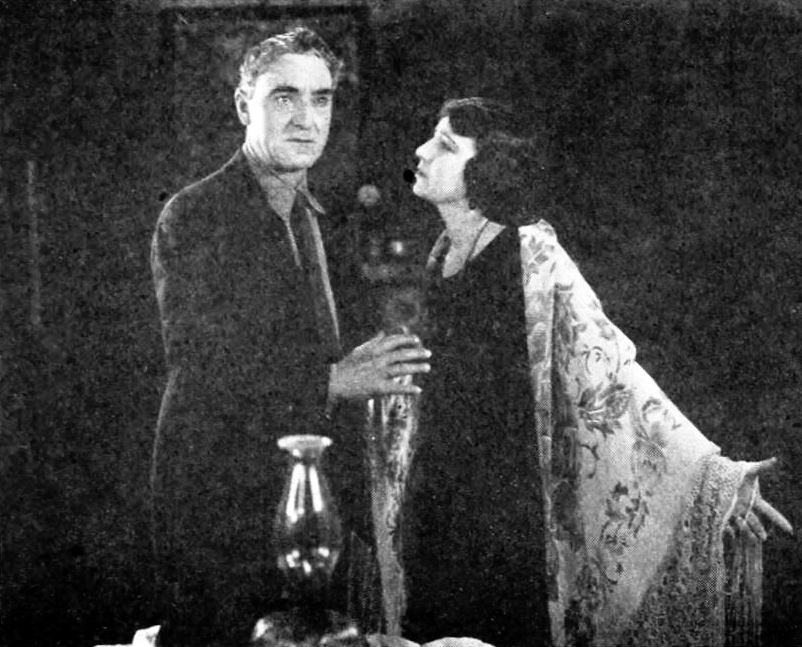
Imagine a reel brittle as sun-baked shale, its nitrate emulsion exhaling ghost-images of greed and libido—that’s Back to Yellow Jacket, a 1922 relic exhumed from the catacombs of forgotten Americana. The film behaves less like narrative than like erosion: each frame a grain of desert quartz scoured across the psyche until the conscience bleeds.
Carmen’s odyssey is no mere marital spat; it is the chronicle of a woman who unearths the vein between wanting out and wanting more. The Mojave functions as both canvas and cage—its dunes shifting like the terms of a rigged poker hand. When she slips her wedding ring into a tin cup and boards the buckboard to town, she’s not deserting a husband; she’s defecting from a cosmology that casts wives as footnotes in the gospel of ore.
Flash Kirby, equal part cardsharp and snake-oil sermon, embodies the mirage of urbanity that the frontier hallucinates when starved for glamour. His waistcoat’s silk sheen is a rebuke to the calico conformity of miner's wives. Yet his seduction is transactional: every compliment a promissory note he’ll demand in flesh. The dance hall sequence—shot in chiaroscuro so stark that kerosene flames etch halos around sinners—plays like a tango choreographed by Lady Mackenzie’s Big Game Pictures and the devil himself.
Bill Carson’s entrance is less heroic than geological: a man whose silence accretes like sediment. Where Kirby sparkles, Carson oxidizes—his appeal the quiet tectonics of dependability. The moment he snaps Kirby’s wrist away from Carmen’s bodice, the film’s moral fault line slips. Suddenly the Mojave is no longer empty but crowded with triangulated longing: Carson’s hand steady on his Colt, Carmen’s pupils dilated not with gratitude but with the recognition of collateral desire.
What follows is not courtship but prospecting of the soul. They ride double on a mule through arroyos that echo like confessionals, and each sunset smears them in gilt guilt. The camera—presumably wielded by a cinematographer drunk on mercury vapors—lingers on their interlocked shadows, elongating them into giants that stride across the sand, hinting that transgression, too, can be a form of cartography.
Bessie Loo’s Carmen is a masterclass in micro-expression: the flinch of a nostril when Kirby’s breath grazes her cheek, the way her pupils eclipse irises at the first touch of Carson’s glove. Silent cinema demands the body speak in hieroglyphs, and Loo’s collarbones articulate heartbreak more fluently than any intertitle.
Earl Metcalfe’s Kirby is a grin sharpened on whetstone of cynicism—his smile arrives a fraction early, like a card dealt from the bottom of the deck. Compare him to the buffoonish husbands in Hubby’s Mistake; here the male ego is predatory, not punch-line.
Roy Stewart’s Carson channels granite: when he removes his hat to mop sweat, the gesture feels like a geological event. His eyes, set deep as mining shafts, betray the fear that decency may be just another worthless claim.
The scenario, stitched by J. Grubb Alexander and Peter B. Kyne, crackles with frontier vernacular that feels mined rather than written. Note the dance-hall exchange transcribed on an intertitle: “Ain’t no sin to dance—only to dance for fool’s gold that glitters in another man’s eyes.” That line alone refracts the film’s entire moral spectrum. Kyne’s prior odes to masculine stoicism (Testimony) here mutate into an interrogation of what happens when stoicism confronts a woman who refuses to be the horizon.
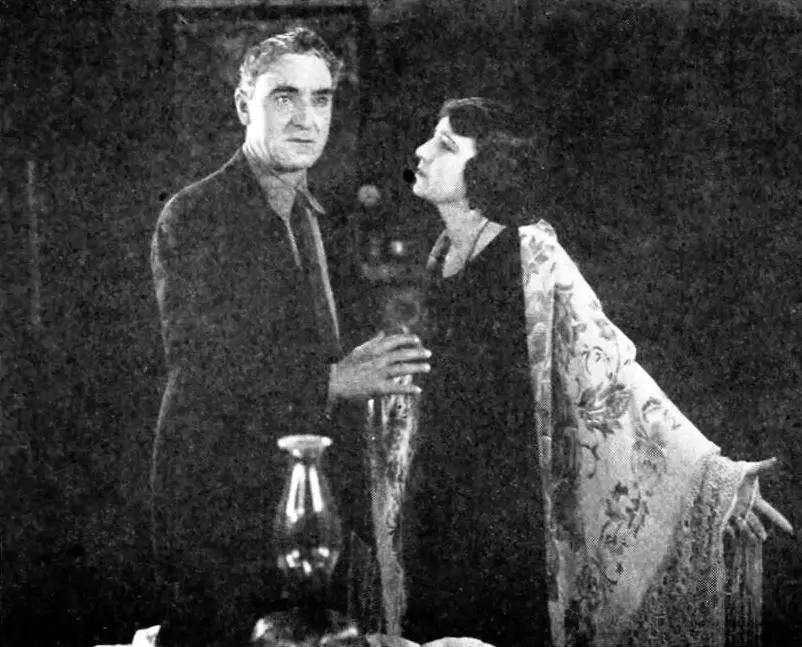
The palette is sun-scorched amber bleeding into bruise-violet twilight. Cinematographer Jackson Rose (uncredited in surviving lobby cards) employs orthochromatic stock that renders Carmen’s skin lunar against Kirby’s tuxedo abyss. One tracking shot—achieved by laying railroad ties as dolly tracks—glides through the gambling den, passing over poker chips that gleam like communion wafers of avarice.
Compare this to the pastoral romanticism of All Kinds of a Girl; Yellow Jacket replaces meadows with alkali crust, lace with dust-devils.
The Mojave is no backdrop; it is patriarchal bedrock. Every butte looms like a tribunal of male authority. When Carmen strides into the dance hall, she’s trespassing on testosterone tundra. Yet the film slyly subverts: her final act—rifling through Carson’s map case, pocketing the deed to a worthless claim—asserts that ownership itself is the ultimate confidence trick. She exits not into domesticity but into the white horizon, a dot of feminine defiance swallowed by masculine infinity, recalling the feral conclusion of The Wild Girl but with less moral hand-wringing.
Surviving prints lack original cue sheets, yet contemporary screenings with live accompaniment reveal a sonic ghost: fiddles that screech like ungreased wagon wheels, a pump organ exhaling funeral airs during Kirby’s final shuffle. The absence of dialogue amplifies ambient minutiae—boot-heels crunching desert crust becomes a metronome of doom.
Premiered at L.A.’s Majestic Theater in August ’22, critics hailed it “a nickelodeon Madame Bovary with cactus needles.” Yet prints vanished, likely recycled for silver halide. A 2019 4K restoration from a Czech archive’s 9.5mm diapositive resurfaced only two of five reels; the missing segments survive in French intertitles whose translations read like Surrealist poetry. Thus Yellow Jacket exists as wounded artifact—its lacunae forcing viewers to prospect their own moral nuggets.
Whereas A Woman’s Power sermonizes through title-card homilies, Yellow Jacket lets landscape preach. The gambler’s comeuppance here feels less moralistic than entropic, aligning it with the cosmic shrug of While the Billy Boils.
Post-#MeToo, Carmen’s arc reads as an ur-text of bodily autonomy. She neither begs forgiveness nor offers explanation—merely re-maps the frontier as a zone where consent is the only ore worth extracting. Flash Kirby’s hands, reaching for her waist, feel as contemporary as any producer’s couch.
Back to Yellow Jacket is a half-fossilized rattlesnake of a film—its fangs still venomous, its rattle a warning that desire, like gold, is where you find it and rarely where you’re told to look. Viewing it is akin to swigging alkali water: brackish, unsettling, yet paradoxically thirst-quenching for cinephiles parched by formulaic pablum.
Seek it out in archival screenings, projector bulb flickering like the last honest claim in a played-out gulch. Let its shards of nitrate lodge under your skin; they will glint there, a private lode, long after house lights rise.
IMDb —
1915
Community
Log in to comment.