DbcultAccessing Vault...
Cult Review
Senior Film Conservator
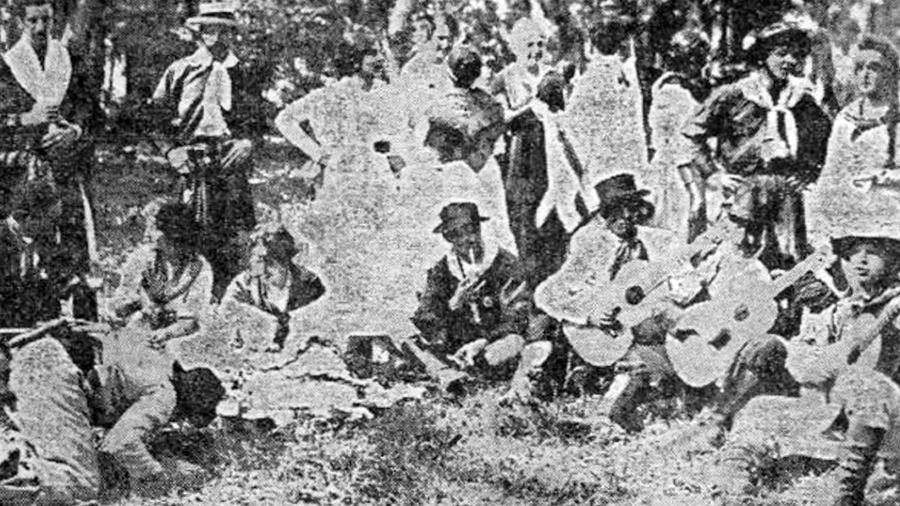
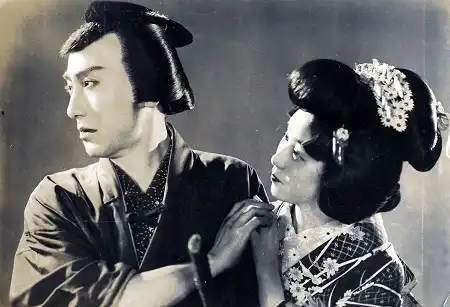
A city that keeps reinventing its own heartbreak, Buenos Aires circa 1918 drips sepia glamour in Un romance argentino, a film once presumed lost in a warehouse flood and now resurrected on 4K DCP from a nitrate negative discovered inside a piano. The celluloid smells faintly of tango, cigar ash, and cheap violet perfume—an olfactory ghost that clings to every frame.
Enrique García Velloso—novelist, playwright, occasional illusionist—anchors the narrative with a performance so restrained it feels like undercranked silence: eyes that telegraph longing without the aid of intertitles, shoulders that sag under the weight of ink-stained morality. His character, simply called El Escribano, is a love-letter ghostwriter for the bourgeoisie who can counterfeit signatures but not desire. In the opening tableau, a handheld camera (rare for the era) snakes through a carnival crowd, the frame bobbing like a drunk partner searching for rhythm; confetti becomes meteor shower, and the viewer is thrust into a city that refuses to stand still.
Unlike the claustrophobic drawing rooms of Poor Little Peppina or the desert alienation in The Alien, this film stages infidelity outdoors: on funiculars climbing like unfinished sentences, in abattoirs where cattle once lowed and now only tango accordions echo, beneath theatre awnings that drip rainwater like slow applause. The camera tilts up to art-nouveau facades, then cuts to gutters swirling with paper—love notes turned into urban sediment. Production designer Leopoldo Barreira allegedly glued actual street posters to the set walls; when the art department ran out of money, they simply shot on location at 3 a.m., bribing beat cops with sips of mate cocido.
Cinematographer José María Beltrán, who would later experiment with hand-tinted newsreels, bathes night sequences in pools of mercury light. Look for the moment when El Escribano first spots the senator’s wife: her face emerges from darkness via a hidden follow-spot, the iris diaphragm closing until only her mouth—half smile, half scar—fills the screen. It is erotic geometry, a study in negative space worthy of Von Sternberg, predating The Sphinx’s chiaroscuro by a full decade.
Plot mechanics hinge on a single forged billet-doux, its paper so thin it flutters like butterfly skin. The screenplay—credited to “varios autores,” a euphemism for three journalists paid in wine—refuses to moralize. Instead it delights in the vertigo of mistaken identities: a senator who thinks his wife is desired, a wife who desires only spectacle, a clerk who desires the idea of being desired. Dialogue intertitles appear sparingly; when they do, letters quiver like guilty signatures. One card reads: “Todo amor es plagio, pero el plagio también arde.” Translation: “All love is plagiarism, but plagiarism burns too.” A line so incendiary contemporary critics feared censorship, yet the Buenos Aires morality board—distracted by a flu outbreak—let it pass.
Compare this narrative economy to the convoluted resurrection hijinks of Hasta después de muerta or the reincarnation arc of The Rack. Where those films pile twist upon twist, Un romance argentino distills betrayal to its essence: a page, a signature, a river.
The score, reconstructed from a 78-rpm disc labeled “Tango #14 (misterioso),” threads every reel. Rather than Mickey-Mouse the action, composer Luis Roncal treats the bandoneón as an unreliable narrator: it gasps when the clerk lies, holds its breath during close-ups, erupts into staccato when carnival fireworks mask a clandestine kiss. Contemporary orchestras performing the restoration tour often place the accordionist behind the screen, turning the musician into a shadow-puppet barfly. The effect is uncanny; you swear the instrument itself is jealous.
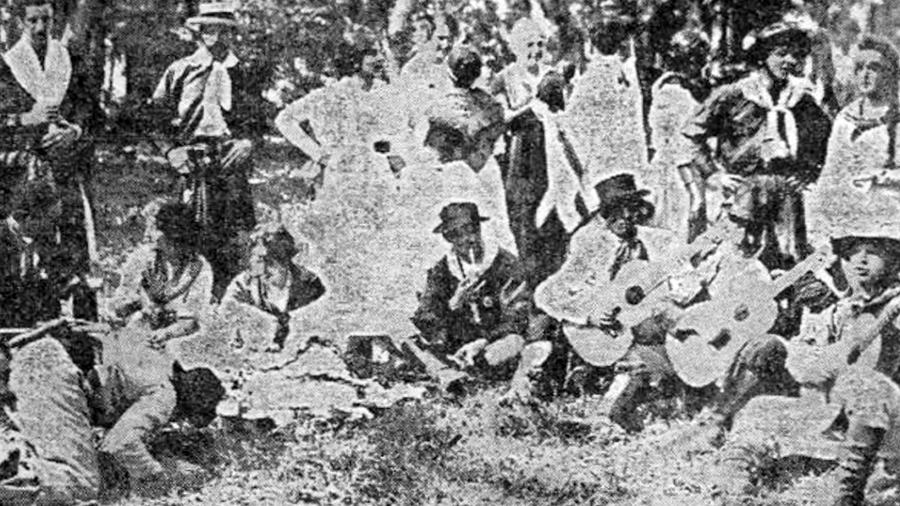
Film scholars still argue whether the famous long take of the duel at dawn was shot at 12 fps or 16 fps; the slight speed variance makes fog drift like cigarette smoke, clouds scroll like unspooling letters. When the pistol misfires, the bandoneón lets out a wheeze that could be laughter or death rattle—Ambiguity capitalized.
García Velloso’s acting philosophy: underplay until the slightest twitch becomes earthquake. In the climactic river scene he removes his hat; the gesture lasts maybe two seconds yet carries the weight of every discarded identity. Compare this to the operatic excess of De levende ladder or the melodramatic flailing in Hands Across the Sea. Here, restraint is seduction.
Supporting players orbit like moths around a candle. The senator, played by real-life politician Faustino Cárdenas, brings the stiff rectitude of a man who has never cleaned his own revolver. The wife, billed only as “Señora de Cárdenas,” possesses the flapper insouciance of a Louise Brooks but with the weary eyes of someone who has read every love letter before it is written.
The rescue story rivals the plot. The nitrate reels, shrunken and blistered, arrived at the lab in a coffin-like crate labeled “Pianola parts.” Technicians soaked them in alcohol baths to flatten curl, then scanned at 8K to capture grain the size of Argentine dust. Digital cleanup removed water stains but left cigarette burns—archival ethics dictates evidence of prior lives. The tinting scheme—amber for interiors, cyan for exteriors, rose for fantasies—follows a distribution log found in a shoebox. Result: an image that glows like a streetlamp seen through rain, colors pulsing between gold, sea blue, and arterial orange.
Where Anime buie uses shadow to evoke supernatural dread and The Crimson Wing saturates the frame with expressionist reds, Un romance argentino opts for nocturnal impressionism: city lights smeared into paint, faces half-lit like guilty thoughts. Its DNA shares strands with Assigned to His Wife’s marital farce, yet the Argentine film refuses to restore social order; instead it chucks the moral compass into the river.
Fans of Dickensian bildungsromans might reach for David Copperfield, but García Velloso’s clerk never evolves into heroism; he dissolves into myth, a ghost haunting his own forgeries. Conversely, The Struggle externalizes addiction; Romance internalizes deception until the viewer becomes co-conspirator.
What lingers is not the plot—easily synopsized in three sentences—but the texture: the way steam rising from a street vent rhymes with breath on a love letter; how carnival confetti becomes snow on a grave never visited; the moment when a bandoneón exhale syncs with a pistol click. Un romance argentino is a 67-minute masterclass in turning ephemera into epitaph.
Watch it on a big screen if you can; let the tango crawl under your skin. When the final iris closes, you will swear the river outside the cinema carries floating letters—each one signed with your name, each one destined to sink.
IMDb 5.3
1926
Community
Log in to comment.