DbcultAccessing Vault...
6.5/10
Senior Film Conservator
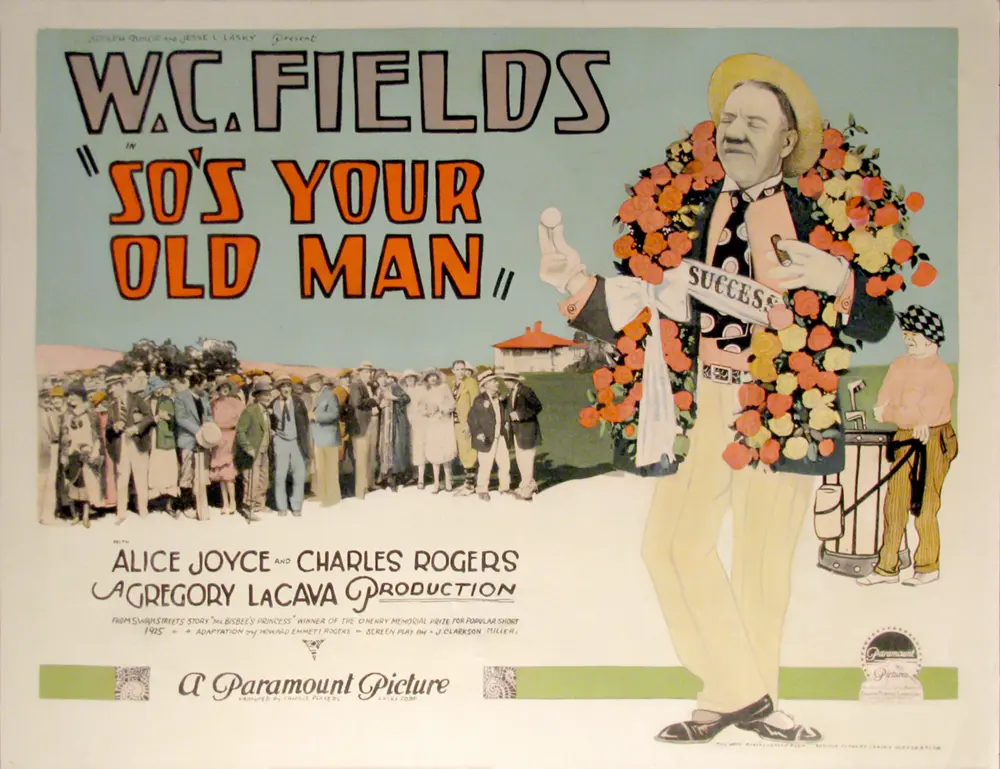
A definitive 6.5/10 rating for a film that redefined the boundaries of cult cinema. So's Your Old Man remains a cornerstone of transgressive art.
Is So's Your Old Man worth watching today? Short answer: yes, but with significant caveats that depend entirely on your cinematic palate. This 1926 silent comedy, primarily a vehicle for the inimitable W.C. Fields, is a peculiar blend of slapstick and understated character study, a snapshot of an era where physical comedy reigned supreme.
It's a film for those who appreciate the foundational humor of early cinema and the unique comedic timing of its star, but it will undoubtedly test the patience of viewers accustomed to modern pacing and narrative sophistication. If you're looking for a brisk, tightly plotted narrative, this isn't it. However, if you're willing to settle into a slower rhythm, there's charm to be found.
At the heart of So's Your Old Man lies W.C. Fields, a comedic titan whose influence reverberates through generations of performers. His portrayal of Samuel Bisbee, the perpetually unlucky inventor, is a masterclass in silent-era character acting. Fields doesn't just play a role; he inhabits it with a lived-in weariness that’s both hilarious and surprisingly poignant.
From the moment Bisbee's 'break-proof' glass shatters spectacularly at the convention, Fields conveys a world of defeated ambition with a single, exasperated sigh and a slumped posture. It's a moment of public humiliation that feels deeply personal, a testament to his ability to communicate complex emotions without uttering a word.
His physical comedy, often subtle rather than grand, is the film's strongest asset. Watch his delicate, almost balletic movements as he tries to navigate a crowded train car, or the way he subtly adjusts his hat to convey annoyance. These aren’t broad gags; they’re meticulously crafted micro-expressions that define his unique style. He’s not just funny; he’s authentically bewildered by the world.
Fields' comedic genius is a strange beast. He often played characters who were morally ambiguous, sometimes selfish, yet always inherently sympathetic in their struggles against an unfair world. Here, Bisbee is a dreamer, a man whose grand visions are constantly undermined by cruel reality, making him an easy figure to root for despite his occasional bluster.
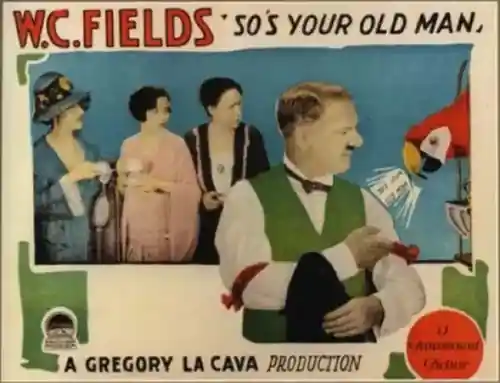
Directed by Gregory La Cava, So's Your Old Man showcases a competent, if not groundbreaking, directorial hand. La Cava, who would later direct classics like My Man Godfrey, understands how to frame Fields to maximize his comedic impact. The camera often lingers on Fields' face, allowing his expressions to tell the story.
The cinematography, while typical for the era, has moments of genuine artistry. The train sequences, in particular, capture a sense of movement and claustrophobia that effectively sets the stage for Bisbee's pivotal encounter. There’s a beautiful shot of the train pulling away from the station, blurring the lines between hope and despair.
However, it’s fair to say that the film doesn't push any visual boundaries. It relies on established silent film techniques, which, while effective, can feel rudimentary to modern eyes. The visual storytelling is clear and functional, serving the narrative and its star, but it rarely ascends to the poetic heights seen in works by a Griffith or a Murnau.
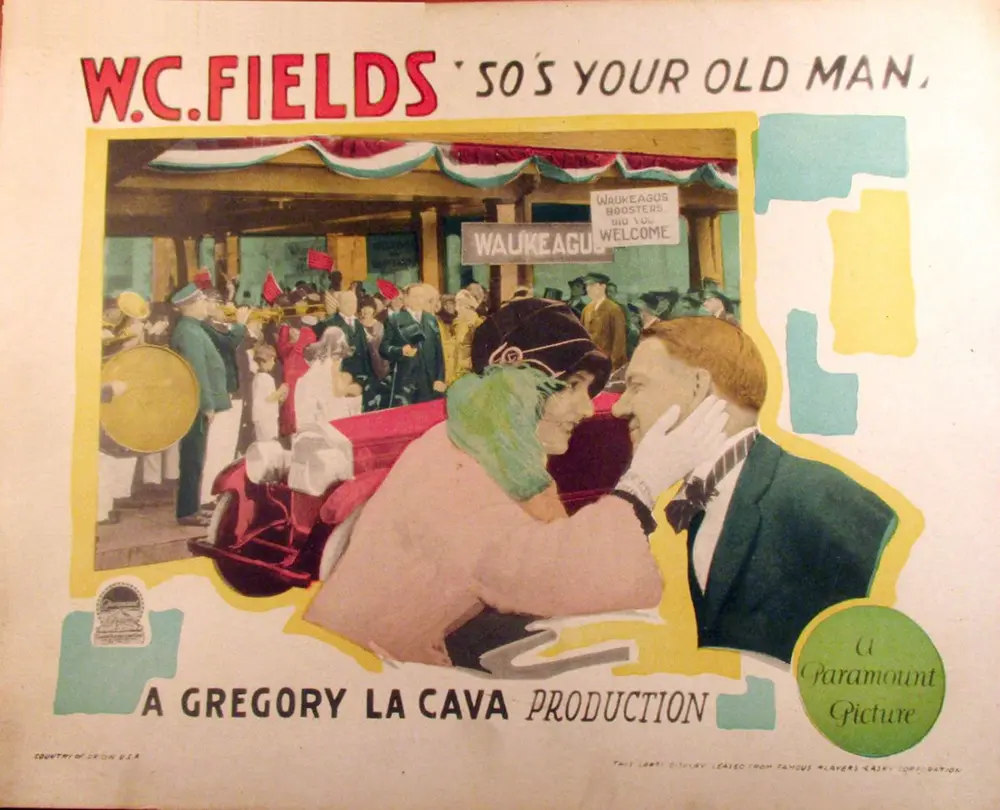
The pacing of So's Your Old Man is undeniably slow by contemporary standards. This isn't a criticism unique to this film, but a characteristic of many silent-era productions. The narrative takes its time, allowing scenes to unfold at a leisurely pace, often punctuated by extended comedic set pieces that feel more like vaudeville sketches than integral plot developments.
The tone is a delicate balance of lighthearted comedy and underlying pathos. Fields' characters often carry a quiet desperation beneath their gruff exteriors, and Bisbee is no exception. The film never devolves into pure farce; there's always a touch of the human condition, the struggle of the common man, at its core. This blend gives the film a surprising depth that elevates it beyond mere slapstick.
The narrative itself, penned by J. Clarkson Miller, Julian Street, and Howard Emmett Rogers, is relatively simple. It’s a character study wrapped in a comedic premise, with a romantic subplot emerging as a catalyst for change. While the initial setup of the convention failure is strong, the subsequent development sometimes meanders, particularly before the crucial train encounter.
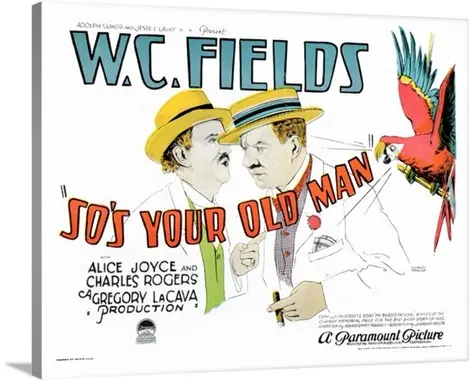
It works. But it’s flawed. The story, especially in its middle act, occasionally loses focus, relying a bit too heavily on Fields' ability to entertain through sheer presence rather than compelling plot progression. This makes it a film that demands patience, rewarding those who are willing to sink into its rhythm rather than expect constant stimulation.
While W.C. Fields is undeniably the sun around which this cinematic system revolves, the supporting cast provides adequate planetary support. Alice Joyce, as the pretty young woman on the train, brings a quiet charm that complements Fields' more boisterous presence. Their chemistry, though subtle and largely non-verbal, is surprisingly effective, hinting at a genuine connection.
Kittens Reichert, as the child character, offers moments of innocent humor, a foil to Fields' world-weariness. The dynamic between Fields and child actors was often a source of great comedy in his career, and here, it adds a layer of warmth to Bisbee's character, showing a softer side beneath the cynical inventor.
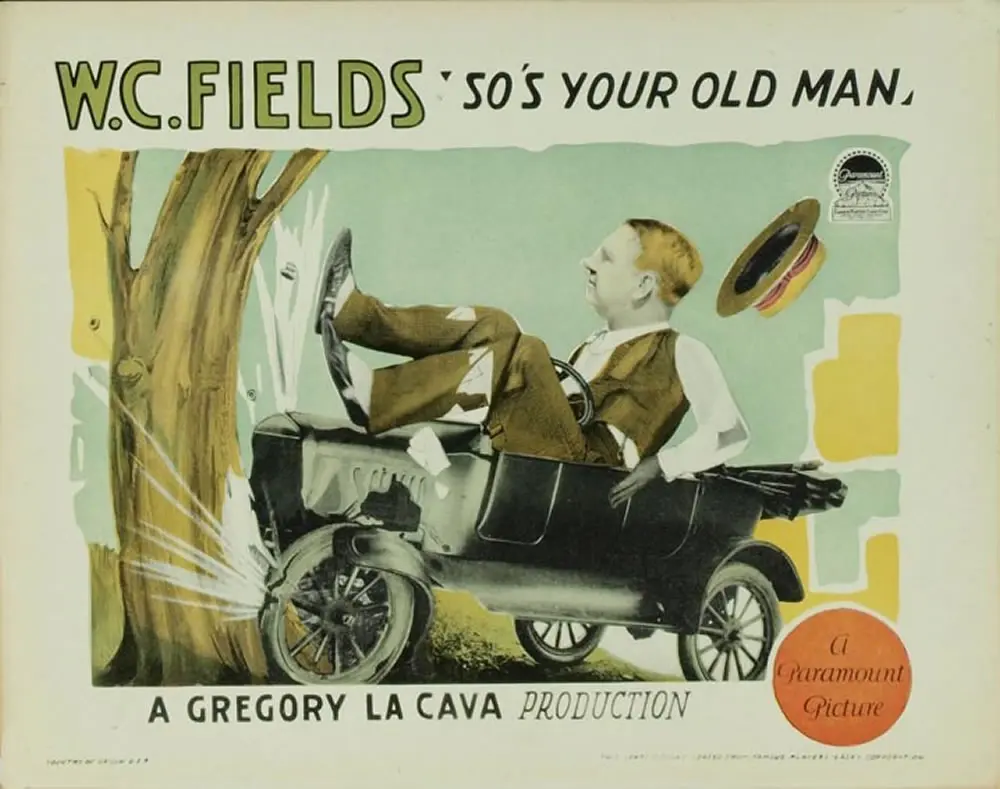
Other cast members like Walter Walker and Frederick Burton fill their roles competently, providing the necessary reactions to Fields' antics. They are largely functional characters, serving to propel Bisbee’s journey rather than developing rich inner lives of their own. This is a Fields vehicle, through and through, and the supporting cast understands their role in that dynamic.
Absolutely, but with a clear understanding of what you're getting into. For those with an appreciation for the history of cinema and the foundational figures of American comedy, So's Your Old Man is an essential viewing. It provides invaluable insight into the early development of W.C. Fields' persona and the comedic sensibilities of the 1920s.
However, if your primary interest lies in fast-paced storytelling, complex character arcs, or modern comedic timing, you might find it a challenging watch. It demands a certain level of patience and a willingness to engage with a different mode of storytelling. It’s a historical artifact that still offers laughs, but they are often gentle, observational laughs rather than gut-busting guffaws.
I would argue that its value today lies less in its narrative ingenuity and more in its archival significance and the sheer charisma of its star. It’s a testament to the fact that true comedic talent transcends the limitations of technology or spoken dialogue. The film's portrayal of invention and failure feels surprisingly modern in its comedic cynicism, predating many contemporary 'fail' videos.
So's Your Old Man is a silent film that lives and dies by its star. W.C. Fields delivers a performance that is both hilarious and subtly heartbreaking, cementing his status as a comedic legend. His portrayal of Samuel Bisbee is a masterclass in non-verbal communication, a character study in exasperation and resilience.
While the film's narrative structure occasionally falters, and its pacing requires a degree of patience, the sheer charm and comedic genius of Fields compensate for many of its shortcomings. It’s not a film that will convert silent film skeptics, but for those already initiated, it’s a delightful, if minor, entry in the canon of a true icon.
Consider it a valuable cinematic artifact, a quiet triumph for its star, and a reminder that sometimes, the most profound humor comes from the simplest, most human struggles. It's a film that deserves to be seen, not just for historical context, but for the enduring pleasure of watching a master at work, even if it feels like a casual stroll rather than a sprint. For a similar, yet perhaps more accessible, silent comedy experience, one might look to films like Laughing Gas, though few can match Fields' unique brand of understated chaos.
IMDb —
1916
Community
Log in to comment.