So, you're scrolling through old French films, right? You stumble on *Un trou dans le mur*. Is it worth a look today? For most folks, probably not. But if you've got a soft spot for early sound comedies, the kind that feel like a stage play taped on film, then yeah, there's some goofy charm here. If you expect quick pacing or modern wit, you'll probably just get annoyed.
The Hole Story
It’s all about a respectable lawyer, Monsieur Courtois (Léon Belières), who just wants a quiet life. Then, a tiny hole appears in his wall. Not a big, dramatic hole, mind you. Just a little, **innocent-looking puncture** 🕳️. But oh, what that little hole leads to!
His initial reaction? Not panic, not even surprise, really. It’s more like a deep, personal offense. *How dare* a hole appear in *his* wall, disturbing his perfectly ordered bourgeois existence? Belières plays it with this wonderful, stiff indignation that totally sells the absurdity.
The hole, of course, isn't just a hole. It's a portal to his neighbor's apartment, and naturally, chaos ensues. Mistaken identities, a bit of romance, and a whole lot of people trying to figure out who’s doing what through this tiny opening. It's all very French, very 1930.
Dating Charm (and Quirks)
This is a film from 1930, so the sound feels a bit… *new*. Like they just figured out how to record talking, and they're really excited about it. Sometimes the dialogue comes at you in these odd bursts. The actors, especially in the earlier scenes, are practically shouting at each other, which I found kinda endearing.
One scene in particular, where Courtois is trying to quietly peek through the hole, and someone on the other side suddenly **screams directly into the microphone**, made me jump. It’s not subtle. Nothing about this film is subtle, honestly.
The pacing is, well, *deliberate*. There are moments where a reaction shot lingers so long you start to wonder if the projectionist fell asleep. But then, a character like Marguerite Moreno pops up as Madame Praxède, the nosy neighbor. She just *dominates* the screen with her theatrical energy. Every gesture, every raised eyebrow, is a masterclass in silent film acting translated to sound. She’s definitely a highlight.
“One reaction shot lingers so long it becomes funny.”
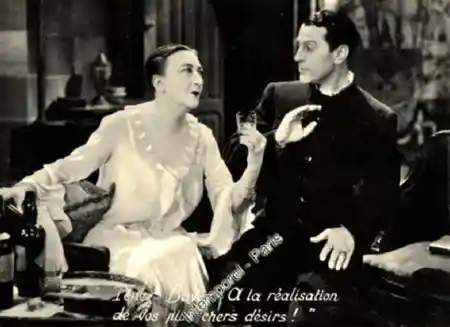
Scene from Un trou dans le mur
Cinematic perspective: Exploring the visual vocabulary of Un trou dans le mur (1930) through its definitive frames.
Small Details, Big Grins
I loved how they used the wall itself. It’s not just a set piece. It becomes a character, almost. People are always pressing their ears against it, tapping on it, or trying to peer through it. The physical comedy of these interactions is pretty great.
There's a sequence where they’re trying to patch the hole, and it just gets *worse*. More holes appear, bigger ones. It’s a great visual gag that keeps escalating. You can almost feel the movie trying to convince you this tiny moment matters, and somehow, it does.
And the simple costumes! Everyone is dressed so formally, even when they’re in the middle of this utter madness. It adds to the charm, seeing these proper people getting flustered over something so silly. Charles Lamy, as the Inspector, has this wonderfully exasperated air about him. He just looks *tired* of everyone’s nonsense.
Final Thoughts
*Un trou dans le mur* isn't a masterpiece, not by any stretch. It’s a relic, really. But it’s a **charming relic** that gives you a peek into what early talking comedies were like. It’s uneven, a little clunky, and sometimes the jokes don’t quite land with a modern audience. But then, a moment of pure, innocent silliness will grab you.
It's like finding an old, slightly dusty toy in an attic. It might not be the flashiest thing, but it’s got a story. And for film buffs or just those curious about how cinema learned to talk, it's worth a quiet afternoon with a cup of tea. Just don't expect to be on the edge of your seat. More like… leaning back, maybe chuckling softly. 😊
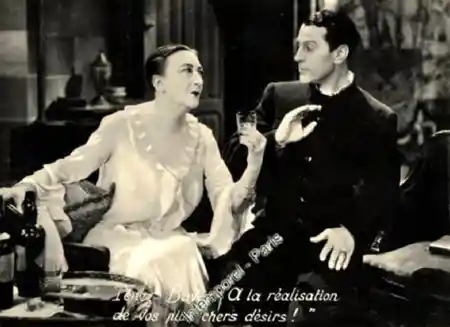
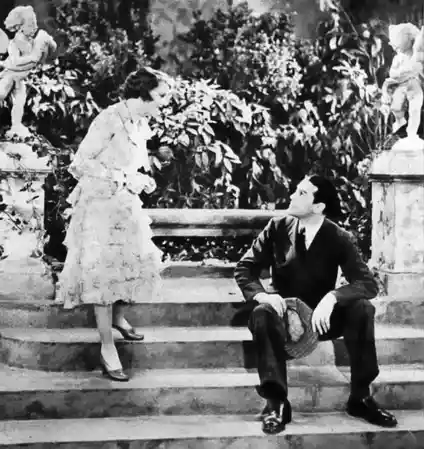
Scene from Un trou dans le mur
Cinematic perspective: Exploring the visual vocabulary of Un trou dans le mur (1930) through its definitive frames.