DbcultAccessing Vault...
5.7/10
Senior Film Conservator

A definitive 5.7/10 rating for a film that redefined the boundaries of cult cinema. Delo Beilisa remains a cornerstone of transgressive art.
Stepping back into the tumultuous year of 1917, one encounters a cinematic artifact of profound historical resonance: Delo Beilisa, or The Beilis Case. This film transcends mere entertainment; it functions as a potent, immediate response to one of Imperial Russia’s most ignominious episodes, the blood libel trial of Menahem Mendel Beilis. Released just months after the February Revolution, when the Provisional Government sought to dismantle the apparatus of Tsarist oppression, this motion picture served as both a historical record and a searing indictment, leveraging the nascent power of the silver screen to expose the depths of state-sponsored antisemitism.
The narrative, meticulously crafted by writer Nikolai Breshko-Breshkovsky, unfolds with a grim fidelity to the historical events. It meticulously reconstructs the atmosphere of Kyiv in 1911, a city simmering with political unrest and virulent nationalist sentiment, ripe for the kind of scapegoating that ultimately consumed Beilis. The accidental discovery of the mutilated body of 13-year-old Andrei Yushchinsky near a brick factory owned by a Jewish man, and where Beilis worked, ignited a propaganda firestorm. The Black Hundreds, an ultranationalist, monarchist group, swiftly seized upon the tragedy, fabricating a narrative of ritual murder—the ancient, baseless blood libel—to incriminate Beilis and, by extension, the entire Jewish community. The film captures this insidious process with chilling precision, illustrating how a local crime was deliberately escalated into a national crisis, meticulously orchestrated by powerful figures within the Tsarist bureaucracy, including the Minister of Justice, who saw in the affair a convenient diversion from the regime's own systemic failures and widespread corruption.
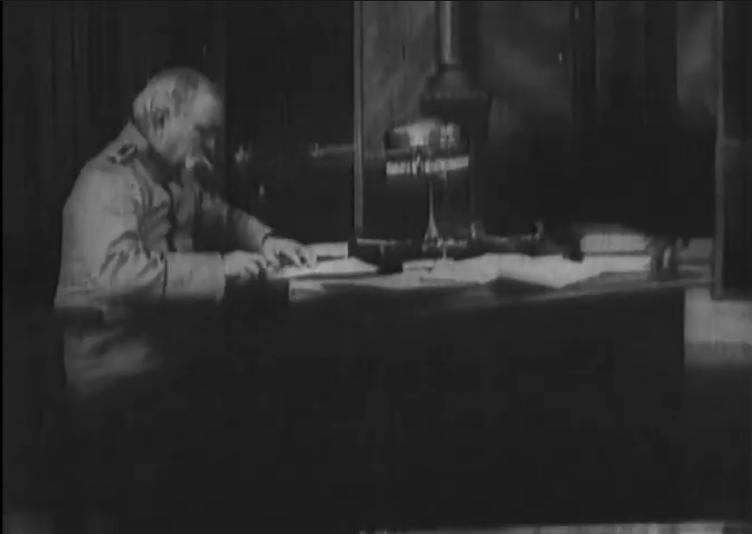
The emotional core of Delo Beilisa rests squarely on the shoulders of its lead performers. Stepan Kuznetsov, in the titular role of Menahem Mendel Beilis, delivers a portrayal of quiet suffering and steadfast dignity that resonates deeply. His performance is a masterclass in understated anguish, conveying the profound psychological toll of unjust incarceration and public vilification without resorting to histrionics. Kuznetsov embodies the Everyman caught in the gears of an oppressive state machine, his eyes reflecting a profound weariness yet also an unwavering resolve. One feels the weight of his family's despair, the isolation of his prison cell, and the sheer terror of facing a predetermined fate. It’s a performance that humanizes a historical figure often reduced to a symbol, reminding us of the individual tragedy at the heart of grand political narratives.
Complementing Kuznetsov's stoicism are the performances of Y. Yakovlev and Malkevich-Khodakovskaya, whose roles, though less central, contribute significantly to the film's dramatic texture. Yakovlev likely portrays one of the defense attorneys or a sympathetic figure, embodying the intellectual and moral resistance against the tide of prejudice. His scenes would have been crucial in depicting the arduous legal battle, the meticulous debunking of false testimonies, and the courageous arguments made against a system rigged for conviction. Malkevich-Khodakovskaya, perhaps as Beilis's wife or another female figure caught in the periphery of the scandal, would have offered a glimpse into the domestic devastation wrought by such an accusation. In an era where female characters often served as emotional barometers, her portrayal would have amplified the human cost, showing the ripple effects of state-sanctioned bigotry on families and communities. The ensemble, under the uncredited but clearly purposeful direction, works to build a compelling tapestry of human experience against a backdrop of systemic injustice.
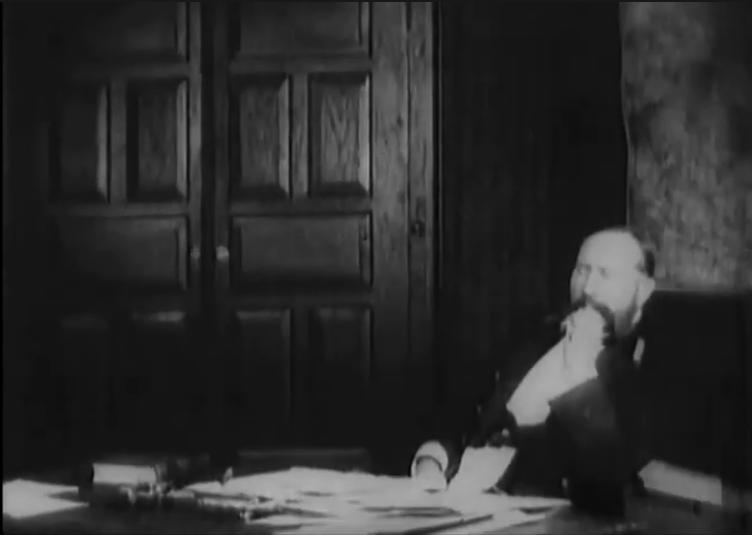
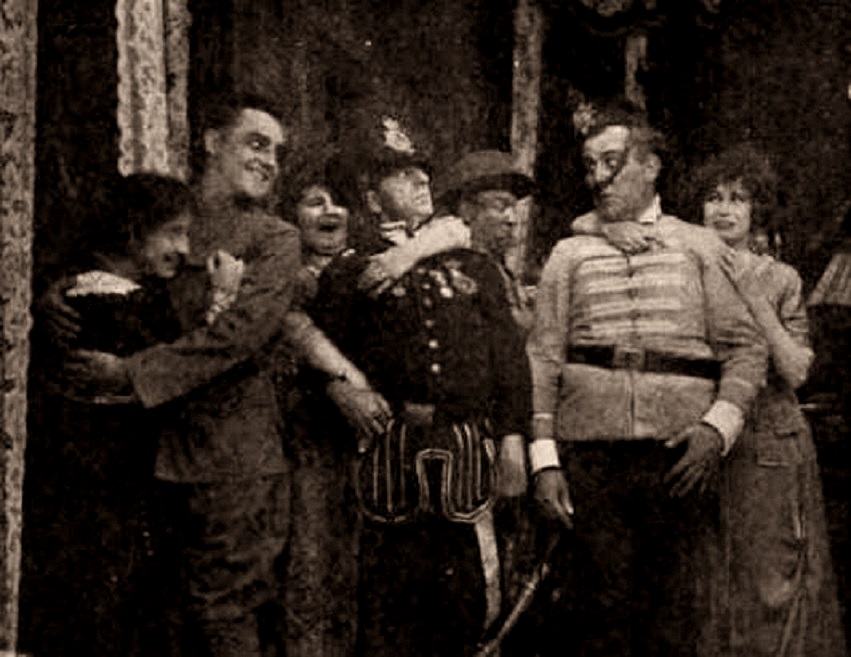
Considering its 1917 vintage, the film's visual language, while adhering to the conventions of early silent cinema, is remarkably effective in conveying its urgent message. The cinematography, though lacking the sophisticated camera movements and intricate editing of later decades, employs stark contrasts and carefully composed tableaux to underscore the drama. Close-ups would have been used sparingly but powerfully, drawing the audience into Beilis's tormented expressions or the venomous glares of his accusers. The production design, even if minimalist by modern standards, would have striven for authenticity, recreating the squalor of the Kyiv slums, the austere grandeur of the courtroom, and the oppressive confines of the prison. The use of intertitles, a standard device of the era, would have been particularly crucial in Delo Beilisa, not just to convey dialogue but to present crucial legal arguments, excerpts from official documents, and the virulent propaganda disseminated by the Black Hundreds, thus providing both narrative progression and vital historical context.
The film’s aesthetic choices are not merely stylistic; they are deeply intertwined with its political agenda. By presenting the events in a straightforward, almost documentary-like fashion, the filmmakers aimed to counter the elaborate disinformation campaigns that had surrounded the actual trial. This directness would have been particularly impactful for an audience still reeling from the events of the revolution and eager for revelations about the corrupt Tsarist past. Unlike more purely melodramatic productions such as The Feast of Life, which focused on personal tribulations, Delo Beilisa boldly tackled systemic societal ills, using the personal plight of one man to illuminate broader issues of governance and prejudice. Its visual narrative, though constrained by the technology of its time, served as a powerful tool for social commentary and historical revisionism in a nation undergoing seismic change.
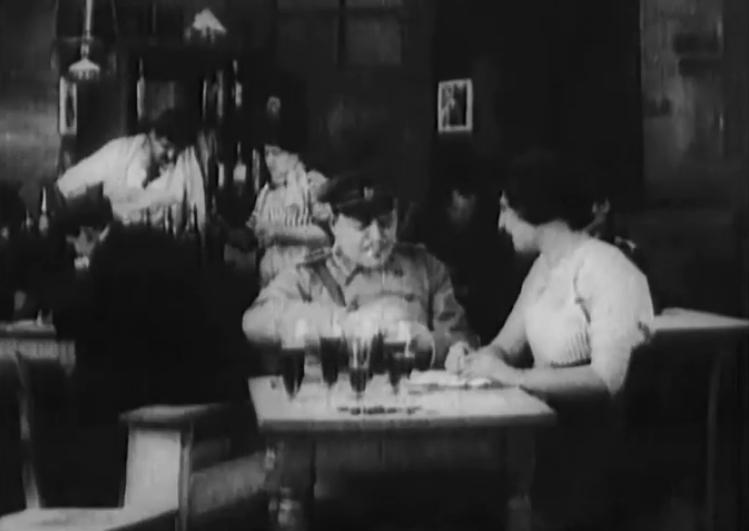
The thematic richness of Delo Beilisa is undeniable. At its core, it is a harrowing exploration of antisemitism as a tool of political manipulation. The film lays bare the mechanics of the blood libel, a pernicious myth used for centuries to demonize Jewish communities, and shows how it was weaponized by the Tsarist regime to consolidate power and deflect blame. This isn't just a story about one man's trial; it's a profound examination of the dangers of xenophobia when sanctioned by the state. The film highlights the fragility of justice in the face of entrenched prejudice and political will, painting a grim picture of a legal system corrupted to serve an ideological agenda. The desperate efforts of the defense team, battling against a torrent of manufactured evidence and biased public opinion, underscore the monumental struggle required to uphold truth and fairness.
Beyond the immediate horror of the blood libel, the film delves into the broader themes of human resilience and the search for dignity amidst degradation. Beilis's refusal to confess, despite immense pressure and the threat of execution, stands as a testament to the indomitable human spirit. His ordeal becomes a metaphor for the enduring struggle against oppression, a narrative thread that could be seen, in a different context, in films like The Foundling, which, though perhaps more focused on personal struggle against societal abandonment, shares a commonality in depicting vulnerable individuals facing overwhelming odds. The film also indirectly critiques the power of propaganda, demonstrating how carefully constructed lies, amplified by official channels, can warp public perception and incite mass hatred. In this respect, it serves as a cautionary tale, as relevant today as it was a century ago, about the need for critical discernment and the perils of unchallenged narratives.
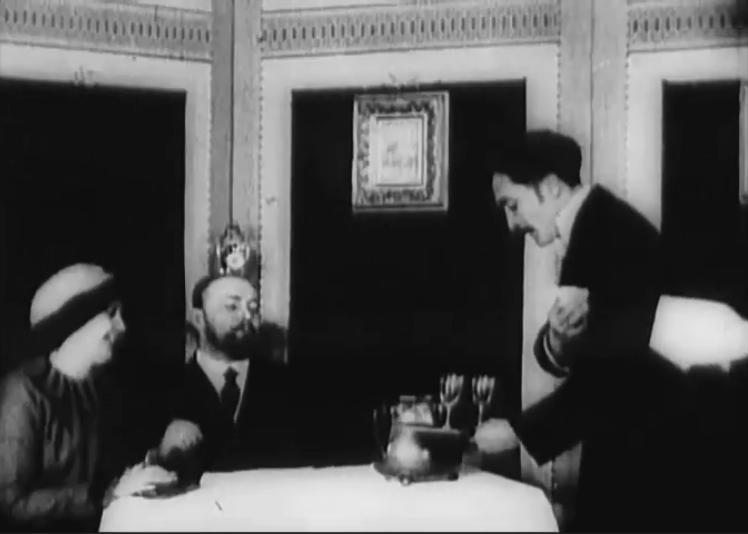
The release of Delo Beilisa in 1917 is intrinsically linked to the seismic political shifts occurring in Russia. The Provisional Government, having overthrown the Tsar, was keen to expose the corruption and barbarism of the old regime. This film was a powerful instrument in that effort, serving as a cinematic trial of the Tsarist state itself. Its timely production and distribution meant that it spoke directly to the anxieties and hopes of a nation in flux, eager to reckon with its past. While many films of the era, such as Arshin mal-alan, prioritized lighthearted romance or cultural celebration, Delo Beilisa chose the path of stark political realism, making it a unique and courageous entry in early Russian cinema. It stands in contrast to escapist fare, demanding intellectual and moral engagement from its audience.
The film's impact, though difficult to quantify precisely given the chaotic period of its release and the subsequent Soviet era's re-evaluation of history, would have been considerable. It likely played a role in shaping public opinion regarding the legitimacy of the Provisional Government and the illegitimacy of the Tsarist state. It also contributed to the nascent genre of political cinema, demonstrating how film could be used not just for storytelling, but for propaganda, education, and historical critique. While its technical limitations are apparent to modern eyes, its daring subject matter and the urgency of its message elevate it beyond a mere historical curiosity. It's a foundational text in the cinematic exploration of human rights and justice, predating many of the more celebrated legal dramas of the 20th century. Its narrative echoes the themes of wrongful accusation and societal prejudice found in works like The Mark of Cain, which, though dealing with personal moral failings, shares an underlying concern for societal judgment and its consequences.
Viewing Delo Beilisa today offers more than just a glimpse into early cinema; it provides a sobering reflection on the enduring nature of prejudice and the insidious ways in which power can manipulate truth. The film's depiction of a state actively constructing a false narrative, coercing witnesses, and weaponizing ancient hatreds is a chilling reminder of history's darker currents. It prompts contemporary audiences to consider how similar patterns of disinformation and scapegoating manifest in different forms across time and cultures. While its stylistic elements belong to a bygone era, the fundamental human drama – a lone individual battling against overwhelming institutionalized injustice – remains acutely relevant. It serves as a powerful argument for vigilance against the forces that seek to divide and dehumanize, underscoring the vital role of an independent judiciary and a critical public in safeguarding societal integrity.
In its unvarnished portrayal of the Beilis affair, Delo Beilisa achieves something rare and significant: it transforms a specific historical injustice into a universal cautionary tale. It asks us to confront the uncomfortable truths about human nature and political power, making it an essential piece of cinematic history for anyone interested in the intersection of film, justice, and social commentary. Its message, delivered with the stark urgency of its revolutionary context, continues to reverberate, urging us to remember the past so that we might better navigate the complexities of the present.
The film's very existence, born from a moment of profound national introspection, highlights cinema's early capacity to function as a mirror reflecting society's darkest corners and its highest aspirations for truth. It’s a testament to the courage of its creators, who dared to tackle such a sensitive and politically charged subject during a period of immense upheaval. And for that, Delo Beilisa remains not just a film, but a vital historical document, a testament to the power of art to bear witness and to advocate for justice, even in the face of overwhelming odds. It is a cinematic echo of the plea for universal human dignity, a plea that, tragically, still requires amplification in our modern world.
IMDb 6.4
1913
Community
Log in to comment.