DbcultAccessing Vault...
Cult Review
Senior Film Conservator
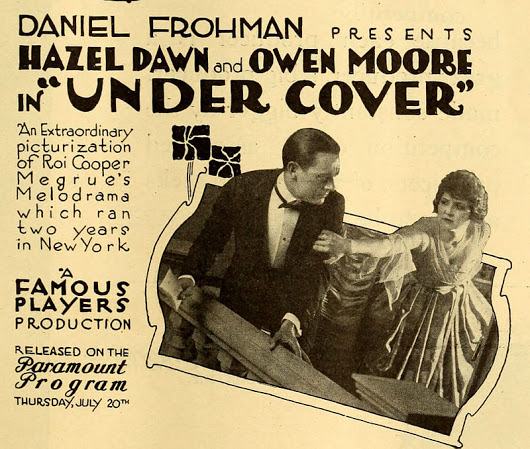
Stepping back into the nascent years of cinematic storytelling, before the advent of synchronized sound irrevocably altered the medium, we encounter a film like Under Cover (1916) — a silent marvel that, even a century later, retains an astonishing capacity to enthrall. More than just a relic, this picture, penned by the inventive minds of Doty Hobart and Roi Cooper Megrue, unfurls a narrative tapestry so intricately woven with double-crosses and concealed identities that it could easily serve as a blueprint for many a modern thriller. It’s a testament to the enduring power of well-crafted suspense, proving that the absence of dialogue in no way diminishes the potency of a gripping plot.
The story commences amidst the opulent backdrop of Parisian high society, where Ethel Cartwright, portrayed with an alluring blend of innocence and burgeoning sophistication by Ethel Fleming, finds herself drawn to the enigmatic charm of Stephen Denby, played by the dashing Owen Moore. Denby, with his seemingly languid demeanor and air of leisurely indifference, appears to be little more than a captivating socialite. Ethel, ever the pragmatist, harbors reservations, her interest tempered by a sensible reluctance to become entangled with a man who seems devoid of any tangible ambition. This initial impression, however, is but the first layer of an elaborate deception. Denby, far from being an idle gentleman, operates as a clandestine purveyor of illicit gems, a master of the underworld’s intricate dance, a fact subtly hinted at by his recent, high-stakes transaction involving a pearl necklace valued at an astounding $200,000.
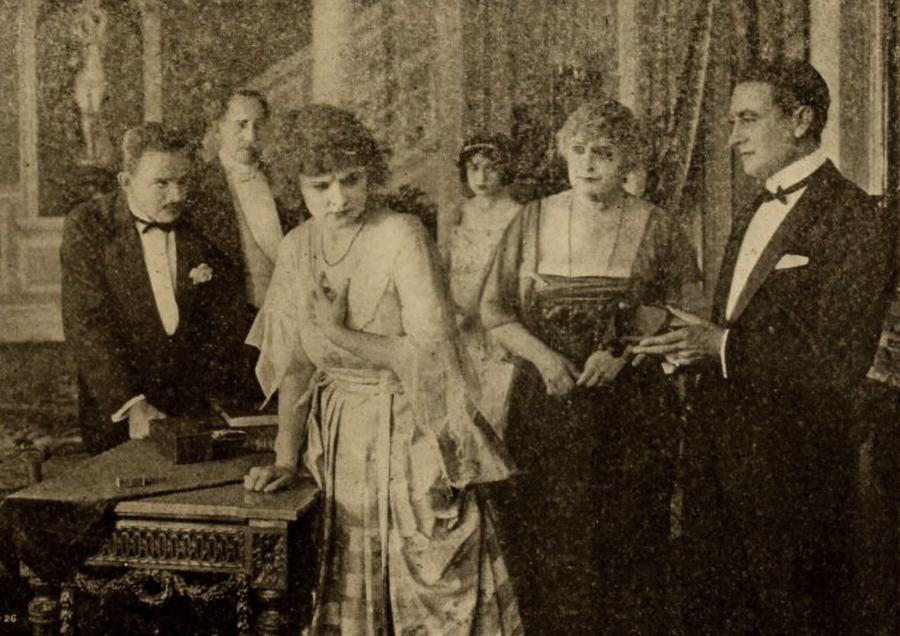
The narrative swiftly transports us across the Atlantic to New York, where Ethel’s life takes an unforeseen turn. Upon her arrival, she discovers her own treasured necklace has vanished, prompting her to file an insurance claim. What begins as a seemingly straightforward matter of loss and compensation quickly spirals into a complex web of intrigue. The insurance company, ever vigilant, dispatches an inspector whose keen eye notes the unusually peculiar behavior of Ethel’s sister, a character brought to life by Ida Darling. This subtle observation triggers an investigation, leading to a startling revelation: the sister herself is the culprit, having pilfered Ethel’s necklace. This unexpected twist sets the stage for the film’s central conflict, introducing Customs Inspector Taylor, portrayed with a chilling blend of authority and corruption by William Courtleigh Jr.
Taylor, a man whose moral compass is clearly askew, seizes upon the sister’s crime as leverage. He approaches Ethel with a cynical proposition: he will overlook her sister’s transgression if Ethel agrees to assist him in framing Denby, whom Taylor falsely paints as a notorious jewel smuggler. It’s a morally compromising situation, one that forces Ethel into an agonizing choice between protecting her family and upholding justice, or so she believes. Reluctantly, and with a heavy heart, Ethel agrees to Taylor’s sordid scheme. The trap is meticulously laid, and Denby, the charming rogue, is ensnared, seemingly destined for a prolonged stay behind bars. But just as the narrative appears to conclude with Denby’s downfall, the film delivers yet another masterful surprise. As he is about to be taken to jail, Denby, with a composure that belies his predicament, offers Taylor a substantial bribe of $30,000 for his immediate release. Taylor, succumbing to his avarice, readily accepts, his true venal nature fully exposed.
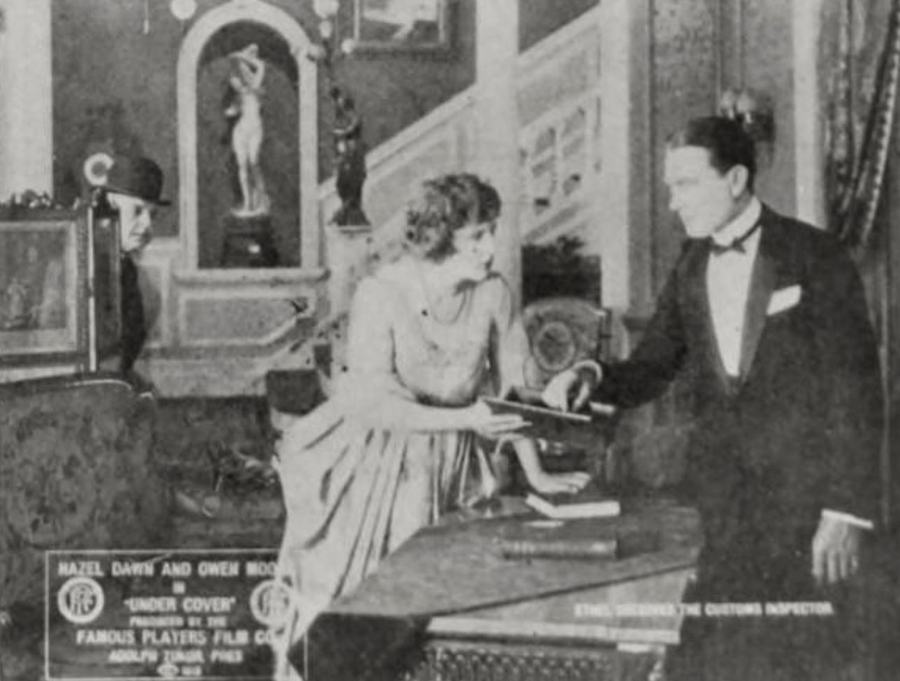
It is in this climactic moment that Under Cover truly distinguishes itself, delivering a revelation that recontextualizes everything that has come before. Denby, with a flourish of theatrical brilliance, unveils his true identity: not a criminal, but a secret service agent, operating deep undercover. His entire charade, from the seemingly idle Parisian encounters to the alleged smuggling and subsequent bribery, was an elaborate, high-stakes operation designed to expose Taylor. For three years, Taylor had been illegally dealing with smugglers, his corruption undermining the very fabric of justice he was sworn to uphold. Denby’s mission was to catch this rogue customs inspector, and Ethel, unwittingly at first, became a vital, if manipulated, pawn in his grand strategy. The film culminates in justice being served, with Taylor’s nefarious activities brought to light, and, in a surprising yet satisfying romantic flourish, Ethel and Denby marry, their union forged in the crucible of deception, danger, and ultimately, profound trust. The transformation of Denby from perceived scoundrel to heroic agent of justice is a narrative triumph, reminiscent of the intricate plotting found in other early thrillers that played with audience expectations, though few were quite as layered as this one. The dexterity with which the writers, Hobart and Megrue, navigate these twists and turns is commendable, creating a sense of genuine surprise that transcends the limitations of silent cinema.
The performances in Under Cover, while adhering to the more expressive, gestural style typical of the silent era, are nonetheless compelling. Owen Moore brings a captivating duality to Stephen Denby, effortlessly oscillating between the charming idler and the steely-eyed secret agent. His nuanced portrayal ensures that Denby’s true intentions are never fully discernible until the very last act, keeping the audience engaged in a constant state of speculation. Ethel Fleming’s Ethel Cartwright is equally crucial, her character’s journey from hesitant admirer to unwitting accomplice and finally to understanding partner providing the emotional anchor for the film’s intricate plot. Her expressions convey the moral turmoil and eventual resolve that define Ethel’s arc. William Courtleigh Jr.’s Customs Inspector Taylor is a masterful study in duplicity, his initial authoritative demeanor slowly giving way to a chilling portrait of corruption. The subtle shifts in his body language and facial expressions effectively communicate his moral decay, making him a truly memorable antagonist. Even supporting roles, such as Ida Darling’s Ethel’s sister and Frank Losee’s portrayal (likely of the insurance inspector or another authority figure), contribute significantly to the film’s rich tapestry, each character serving a pivotal function in driving the complex plot forward.
The uncredited direction, common for many films of this period, demonstrates a keen understanding of silent film aesthetics. The use of intertitles is particularly effective, not merely relaying dialogue but often serving to heighten suspense, introduce crucial plot points, or provide expository detail that meticulously guides the viewer through the narrative’s many convolutions. The pacing is remarkably adept, building tension gradually, punctuated by moments of high drama and thrilling reveals. Cinematography, while constrained by the technology of the time, effectively utilizes close-ups to emphasize character emotions and wider shots to establish the opulent settings of Paris and New York. The film’s visual language, though lacking the sophisticated camera movements of later eras, is clear and purposeful, ensuring that the audience remains fully immersed in the unfolding drama. One might find parallels in the dramatic tension and moral ambiguities explored in other early crime dramas, such as perhaps The Criminal Path, though Under Cover distinguishes itself through its multi-layered deception and ultimately heroic reveal.
At its core, Under Cover is a profound exploration of appearances versus reality. Every character, it seems, wears a mask, and the audience is constantly challenged to discern truth from fabrication. Denby, the ostensible villain, is ultimately revealed as the hero; Taylor, the figure of authority, is unmasked as the true antagonist. This thematic richness elevates the film beyond a simple crime caper, transforming it into a commentary on the inherent difficulty of discerning character and motive in a world rife with superficiality. The film masterfully plays with the audience’s preconceived notions, inviting us to judge characters based on initial impressions only to subvert those judgments with shocking revelations. This narrative strategy, while common in later thrillers, was particularly potent in the silent era, relying heavily on visual cues and the dramatic impact of the intertitles to convey complex emotional and moral shifts.
The film also delves into themes of justice and redemption. While Taylor’s corruption is exposed and punished, Denby’s elaborate scheme, though involving a degree of manipulation, is ultimately justified by its noble aim. Ethel’s journey, too, is one of moral navigation, forced to confront difficult choices that challenge her understanding of right and wrong. Her eventual marriage to Denby is not merely a romantic conclusion but a symbolic affirmation of trust rebuilt and a partnership founded on shared purpose, even if that purpose initially involved profound misunderstanding. The intricate dance of espionage and romance foreshadows later genre conventions, demonstrating the film’s ahead-of-its-time sensibility. In a cinematic landscape that was still defining its narrative grammar, Under Cover emerged as a sophisticated example of how to build suspense and deliver satisfying conclusions without uttering a single word. It stands as a testament to the fact that compelling storytelling, regardless of the technological constraints, is always rooted in strong characters and an ingenious plot.
For contemporary audiences accustomed to high-octane special effects and rapid-fire dialogue, returning to a silent film like Under Cover might initially seem like an exercise in historical appreciation rather than genuine entertainment. Yet, this film defies such facile categorization. Its intricate plot, its compelling characters, and its masterful use of suspense ensure that it remains a genuinely engaging experience. It’s a reminder of the foundational principles of cinematic storytelling: the power of a good story, well told, with twists that genuinely surprise and characters that resonate. The cleverness of Doty Hobart and Roi Cooper Megrue’s script, combined with the capable performances of Owen Moore, Ethel Fleming, and William Courtleigh Jr., crafts a narrative that is both timeless and remarkably modern in its complexity.
In an era when many films were still finding their feet, often relying on simple narratives or theatrical adaptations, Under Cover dared to be ambitious. It presented a multi-layered plot that demanded attention and rewarded it with exhilarating reveals. It’s a film that speaks volumes about the ingenuity of early filmmakers and their ability to captivate audiences with nothing but light, shadow, and human expression. Its enduring appeal lies in its sophisticated narrative structure and its ability to consistently subvert expectations, a quality that keeps viewers on the edge of their seats even today. While it might not have the same widespread recognition as some of its contemporaries, Under Cover undeniably holds its own as a compelling piece of early American cinema, a testament to the enduring power of a well-executed mystery and a thrilling romance. It’s a film that not only entertained but also pushed the boundaries of what silent cinema could achieve, a true hidden treasure awaiting rediscovery by enthusiasts and scholars alike.
IMDb —
1917
Community
Log in to comment.