DbcultAccessing Vault...
Cult Review
Senior Film Conservator
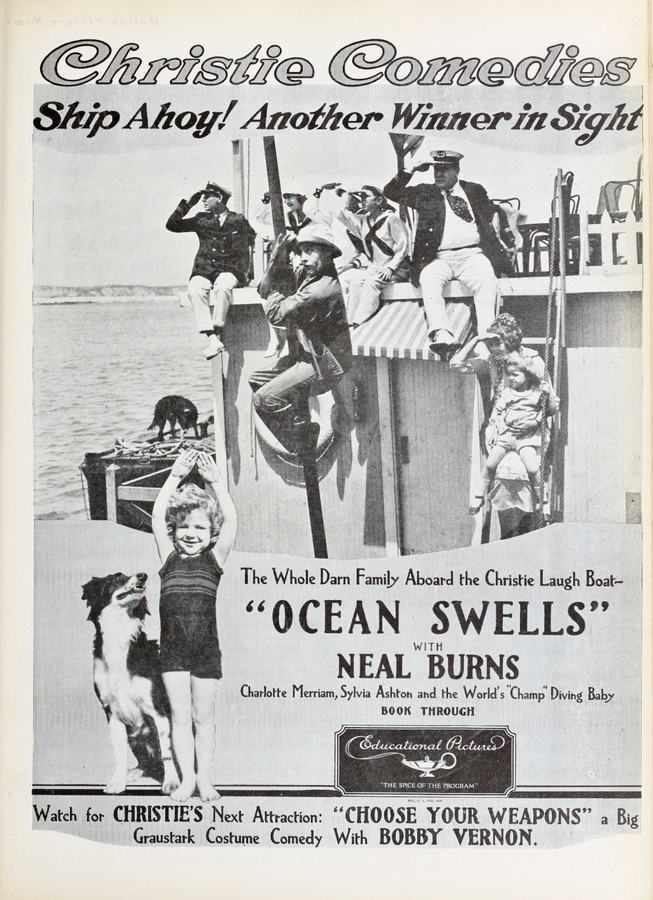
There’s a particular brand of comedic genius found in the silent era, one that often hinges on the absurd escalation of a perfectly relatable predicament. Ocean Swells, a delightful romp penned by Frank Roland Conklin, stands as a testament to this, taking a universally understood desire for peace and quiet and propelling it into a maritime maelstrom of familial chaos. It’s a film that doesn't merely tell a story; it paints a vibrant, albeit silent, picture of domestic exasperation reaching its logical, yet utterly illogical, extreme. At its heart lies Dick, portrayed with a masterful blend of weary ingenuity and escalating despair by Neal Burns, a man pushed to the brink not by grand villains or existential threats, but by the relentless buzz of mosquitoes and the even more persistent presence of his wife's expansive family.
Dick’s initial solution is nothing short of brilliant in its conception: transform his humble beach bungalow into a houseboat, thereby escaping both the insectoid tormentors and the encroaching in-laws in one fell, nautical swoop. The sheer audacity of this plan immediately endears him to the audience. Who among us hasn't, at some point, fantasized about simply sailing away from our troubles, leaving the mundane and the bothersome behind? The film expertly visualizes this transformation, showcasing the comedic ingenuity involved in turning a stationary dwelling into a mobile one. One can almost hear the creaks and groans of the timber, the splash of water, the triumphant, if short-lived, sigh of relief from Dick as his vision takes shape. This initial phase of the film captures a sense of hopeful, if misguided, ambition, reminiscent in its spirit of grand, often ill-fated, schemes explored in films like Hands Up (1920), though here, the stakes are delightfully domestic rather than criminal.
However, the very premise of Ocean Swells is that no good deed, or rather, no good escape plan, goes unpunished, especially when a large, loving, and utterly oblivious family is involved. The moment the houseboat is ready to embark on its maiden voyage, Dick’s dreams of tranquil solitude are summarily dashed. His wife, played with charming earnestness by Charlotte Merriam, brings her entire, sprawling family along for the ride. This isn't just a few relatives; it's an entire contingent, a veritable invasion of privacy on the high seas. Bebe Blackburn, Don Bailey, Sylvia Ashton, and Henry Murdock, among others, embody this familial deluge with a collective energy that is both endearing and utterly maddening from Dick’s perspective. Their arrival transforms his vessel of liberation into a floating prison of familial obligation, a masterclass in situational irony.
The comedic brilliance of Conklin's writing truly shines in the ensuing chaos. Each family member, with their distinct quirks and demands, contributes to the escalating pandemonium. The once spacious bungalow, now a cramped houseboat, becomes a crucible for intergenerational friction. The physical comedy is paramount here, a hallmark of the silent era, as characters bump into each other, vie for space, and generally disrupt any semblance of order Dick desperately tries to maintain. Neal Burns, as Dick, is a revelation, his facial expressions and body language conveying a spectrum of emotions from stoic resignation to outright exasperation. He doesn't need dialogue to articulate his inner turmoil; every twitch of an eyebrow, every slumped shoulder, every futile gesture speaks volumes. His performance anchors the film, allowing the audience to empathize with his plight even as we delight in his misfortune.
Charlotte Merriam's portrayal of Dick’s wife is equally crucial. She is the unwitting catalyst for much of the chaos, her unwavering loyalty to her family clashing with her husband's desire for peace. Her character isn't malicious; she simply doesn't perceive the 'burden' of her family in the same way Dick does, creating a comedic disconnect that drives many of the film's funniest moments. The dynamic between Burns and Merriam is a classic comedic pairing, highlighting the eternal struggle between a husband's yearning for independence and a wife's deep-seated familial ties. This domestic friction, while played for laughs here, echoes the more serious, yet still relatable, marital and family dynamics explored in films like The Spirit of Romance, though with a decidedly more farcical bent.
The supporting cast, particularly Blackburn, Bailey, Ashton, and Murdock, are essential in populating this floating circus. Each brings a distinct personality to the ensemble, ensuring that the comedic energy never wanes. Whether it’s an overly demanding aunt, a perpetually hungry cousin, or a clumsy uncle, their collective presence creates a vibrant tapestry of human foibles. Conklin’s script orchestrates these characters with precision, allowing for a series of escalating gags that build upon one another. The confined space of the houseboat amplifies every interaction, every minor annoyance becoming a major comedic event. The writing understands that true comedy often arises from the clash of desires and the unavoidable proximity of disparate personalities.

Beyond the immediate laughs, Ocean Swells touches upon deeper, universally resonant themes. It’s a comedic meditation on the elusive nature of escape, the idea that sometimes, the very things we try to flee are inextricably linked to our lives. Dick’s attempt to literally sail away from his problems only brings them into sharper, more magnified focus. The film playfully suggests that domesticity, with all its inherent challenges and joys, is not something one can simply abandon at sea. It’s a humorous reminder that family, for better or worse, is often an inescapable, if sometimes overwhelming, part of our journey. This underlying current of inevitability, albeit played for laughs, creates a surprising depth to the slapstick proceedings, contrasting with the more dramatic explorations of inescapable circumstances found in films like The Undercurrent.
The visual storytelling, a cornerstone of silent cinema, is particularly effective in Ocean Swells. The transformation of the bungalow, the crowded quarters on board, the reactions of the characters to various maritime mishaps – all are conveyed with a clarity and comedic timing that transcends the lack of spoken dialogue. The director (uncredited, as was common for many early shorts) masterfully uses framing and blocking to emphasize the cramped conditions and the escalating chaos. Close-ups of Dick’s despairing face punctuate the broader shots of the bustling family, creating a rhythm of personal frustration against collective exuberance. This visual prowess, the ability to tell a compelling and humorous story purely through images, is what makes films like Ocean Swells enduringly fascinating, a testament to the power of pure cinematic expression.
Comparing Ocean Swells to other films of its era provides further insight into its charm. While it shares the adventurous spirit of a film like Overland Red, it subverts the traditional adventure narrative by grounding it in domestic absurdity. Dick's 'adventure' isn't one of grand quests or heroic feats, but a desperate, comedic flight from the mundane. Similarly, while the film revels in pure, unadulterated comedic chaos, much like the animated antics of Feline Follies, it does so with a distinctly human, relatable core. The gags aren't just random; they stem organically from the characters' personalities and the impossible situation they find themselves in. This organic development of humor, rooted in character rather than mere spectacle, elevates it beyond simple slapstick.
The film’s enduring appeal lies in its timeless premise. Who hasn't felt overwhelmed by their surroundings, by the demands of family, or by the simple annoyances of life? Dick’s extreme solution, while far-fetched, taps into a universal fantasy of escapism. The subsequent failure of that escape, and the comedic consequences, are what make the film so utterly charming. It’s a reminder that sometimes, the greatest adventures, and the greatest comedies, are found not in distant lands but in the very heart of our own homes, even when that home is unexpectedly afloat. Frank Roland Conklin’s narrative skill in crafting such a scenario, coupled with the energetic performances of the cast, particularly Neal Burns, ensures that Ocean Swells remains a delightful discovery for anyone exploring the rich tapestry of early cinematic comedy.
In an era where much of silent cinema is often overlooked, films like Ocean Swells serve as vibrant beacons, showcasing the ingenuity, wit, and sheer entertainment value that defined the medium's nascent years. It’s more than just a relic; it’s a living, breathing piece of comedic history that continues to elicit genuine laughter. The film’s ability to transcend its lack of spoken dialogue, relying instead on universal visual gags and relatable human predicaments, speaks volumes about the craft involved. It’s a potent reminder that the foundations of modern comedy were laid in these early, often experimental, works, where a man, a house, and an entire family could set sail into the absurd, creating waves of laughter that resonate even today. The simple joy derived from watching Dick’s valiant, yet doomed, efforts to find peace is a testament to the film's lasting power and its rightful place in the annals of comedic cinema.
Ultimately, Ocean Swells is a triumph of comedic storytelling. It takes a simple, relatable premise – the desire for a bit of peace and quiet – and spins it into a grand, farcical adventure. The performances are pitch-perfect, the writing is clever, and the sheer inventiveness of the situation is consistently engaging. It captures the essence of early cinematic humor: a blend of physical comedy, exaggerated reactions, and a deep understanding of human nature’s more exasperating aspects. For those seeking a hearty laugh and a glimpse into the comedic sensibilities of a bygone era, Dick’s misadventures on his floating bungalow offer an immensely satisfying and genuinely funny experience, proving that sometimes, the most profound truths about family and personal space are best explored when one is literally adrift at sea, surrounded by those you simultaneously love and desperately wish to escape.

IMDb —
1926
Community
Log in to comment.