DbcultAccessing Vault...
Cult Review
Senior Film Conservator
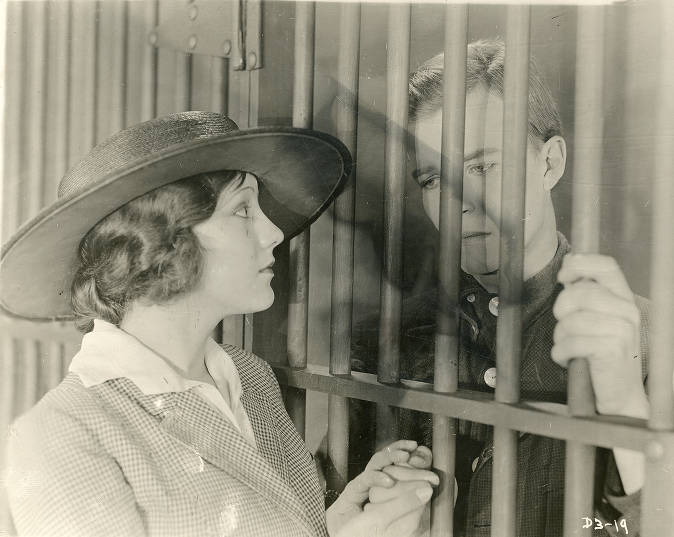
In the burgeoning landscape of 1919 cinema, a year defined by a post-war yearning for moral clarity and the formal maturation of the feature film, Scott R. Dunlap’s Love Is Love emerges not merely as a melodrama, but as a sophisticated inquiry into the elasticity of the human spirit. The film navigates the precarious boundary between predestination and free will, utilizing the character of Gerry Sands (portrayed with a nuanced vulnerability by Albert Ray) as a vessel for a narrative of profound transformation. Unlike the swashbuckling bravado found in contemporary works like The Three Musketeers, Dunlap’s film opts for an internal odyssey, where the primary battleground is the conscience of a man caught between the gears of urban criminality and the beckoning light of intellectual pursuit.
The catalytic moment of the film is perhaps one of the most audacious narrative devices of the silent era. While many films of the period, such as The Fairy and the Waif, relied on sentimental innocence to drive reform, Love Is Love utilizes the intellectual weight of Hamlet. When Gerry Sands, amidst the cold metal and high stakes of a burglary, pauses to read words from a dropped copy of Shakespeare, we witness a rare cinematic depiction of secular grace. It is a moment of high lexical diversity in a medium that was still finding its voice. The juxtaposition of the safe-cracker’s tools with the Prince of Denmark’s existential ruminations creates a jarring, beautiful friction. It suggests that the path to redemption is not always paved with religious fervor, but often through the recognition of one’s own potential for complexity—a theme also explored, albeit with different tonal colors, in Her Atonement.
This literary intervention serves as a sharp critique of the environment Gerry inhabits. Nick Barket and Red Devlin represent the parasitic nature of the industrial underworld, viewing Gerry’s technical skills as mere utilities. By contrast, the act of reading represents the reclamation of his own mind. The film brilliantly portrays the struggle of the 'weak-willed' protagonist, a character type often sidelined in favor of more decisive heroes. In Gerry, we see the agonizing slow-motion turn of a soul regaining its compass. The cinematography during these sequences utilizes a primitive but effective chiaroscuro, highlighting the shadows of the vault against the sudden, illuminating clarity of the printed word.
As the narrative shifts from the claustrophobic interiors of the city to the expansive, albeit briefly glimpsed, Western frontier, the film engages with the quintessential American myth of the 'fresh start.' Gerry’s transition to a typesetter is a masterful piece of symbolic writing by Richard Washburn Child and Joseph Anthony Roach. In the world of safe-cracking, Gerry was breaking things open to steal their contents; in the world of typesetting, he is carefully assembling characters to create meaning. This shift from destruction to construction is the film’s moral backbone. It mirrors the structural integrity seen in The Chaperon, where societal roles are both a cage and a potential site for virtue.
However, the film does not allow Gerry an easy escape. The shadow of Red Devlin looms large, a personification of the past that refuses to stay buried. Devlin’s framing of Gerry is a masterclass in narrative tension, reminiscent of the intricate plotting in C.O.D.. The city is portrayed as a carnivorous entity, ready to swallow those who attempt to transcend their assigned stations. The hotel setting, where Polly Ann Kerry (played with luminous intensity by Elinor Fair) works, serves as a microcosm of this social hierarchy—a place where the elite are served by those struggling to maintain their dignity.
It would be a reductive reading to view Polly Ann Kerry as a mere 'sweetheart' or a passive motivation for the male protagonist. Elinor Fair imbues the role with a gritty determination that predates the more assertive heroines of the 1920s. Polly is the true engine of the film’s justice; her exposure of the criminal syndicate is an act of individual agency that rivals the investigative prowess seen in Unknown 274. Her subsequent illness is not presented as a stereotypical female fragility, but as the physical manifestation of a broken spirit—a psychosomatic response to the perceived betrayal by the man she risked everything for.
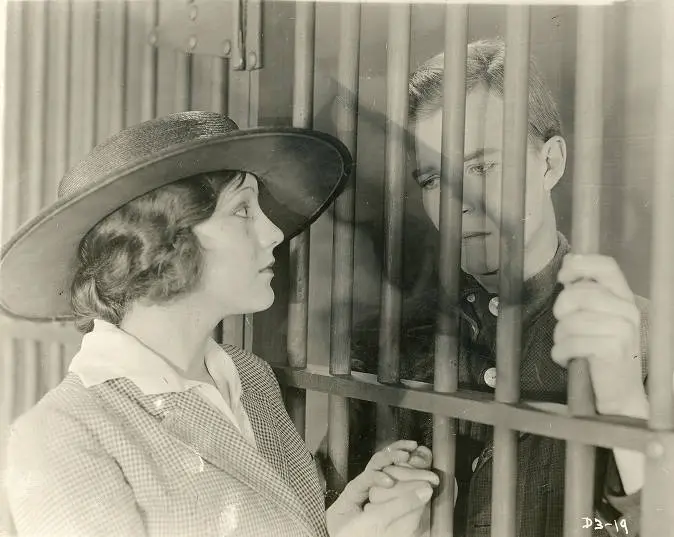
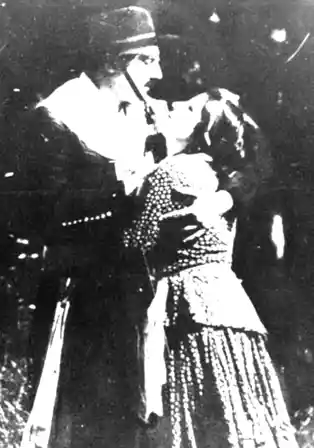
The chemistry between Fair and Ray is palpable even through the grainy texture of the surviving footage. Their relationship is the emotional anchor that prevents the film from drifting into didacticism. When compared to the romantic entanglements in The Ships That Meet, the bond in Love Is Love feels more grounded in shared trauma and mutual salvation. It is a partnership of necessity as much as it is of affection.
The final act introduces a fascinating moral ambiguity in the character of the police captain (John Cossar). In a typical melodrama of this era, the law is often an unyielding force, as seen in the rigid structures of The Spirit of '17. Yet, the captain in Love Is Love is a man of complex desires. He loves Polly himself, yet his realization that her salvation lies with Gerry leads him to a profound act of self-sacrifice. By granting Gerry a twenty-four-hour probation to secure Polly’s hand in marriage, he isn't just bending the law; he is acknowledging a higher moral order.
This sequence is fraught with a tension that is almost Hitchcockian in its execution. The clock becomes a character in its own right, a relentless reminder of the ephemeral nature of Gerry’s freedom. The skepticism Polly feels upon his return—the fear that his proposal is a cynical ploy for legal immunity—adds a layer of psychological realism that is often missing from silent-era resolutions. It requires the captain’s intervention, his vouching for Gerry’s 'integrity,' to bridge the chasm of distrust. This validation by the state of a man’s internal reform is a powerful statement on the possibility of rehabilitation, a theme that resonates with the social consciousness of Paradise Lost.
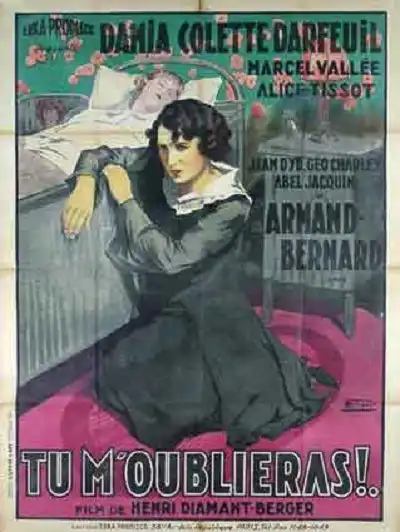
Technically, Love Is Love showcases Scott R. Dunlap’s burgeoning talent for pacing. The transition from the heist’s kinetic energy to the contemplative stillness of the typesetting office demonstrates a sophisticated understanding of narrative rhythm. While it may lack the experimental fervor of El apóstol or the atmospheric dread of Haceldama ou Le prix du sang, it compensates with a clarity of purpose and a sincerity of emotion. The film’s exploration of the 'fallen man' archetype is more nuanced than the similar tropes found in The Last of the Carnabys or Within the Cup.
The title itself, Love Is Love, serves as a tautological affirmation. It suggests that love is an irreducible force, one that defies social standing, criminal history, and even the law itself. It is the catalyst for Gerry’s evolution from a 'weak-willed' pawn to a man of substance. In the context of 1919, this was a message of immense hope. As the world sought to rebuild itself from the ruins of global conflict, stories of individual reclamation offered a blueprint for collective recovery. The film stands alongside A tanítónö and Il giardino del silenzio as a testament to the international cinematic interest in the sanctity of the human soul and its capacity for renewal.
In conclusion, Love Is Love is a vital artifact of silent cinema that deserves more than a mere footnote in film history. It is a work that understands the power of the word—both the written word of Shakespeare and the spoken word of a promise kept. It challenges the audience to look beyond the surface of a man’s actions to find the core of his intent. Through the performances of Ray and Fair, and the thoughtful direction of Dunlap, the film transcends its genre trappings to become a timeless meditation on the nature of integrity. It reminds us that while we may be forced into roles we did not choose, we ultimately possess the power to rewrite our own scripts, provided we have the courage to listen to the poetry of our own consciences. This is a film of quiet power, a cinematic whisper that resonates with the force of a shout, proving that even in the silent era, the message of redemption was heard loud and clear.
IMDb —
1924
Community
Log in to comment.