DbcultAccessing Vault...
Cult Review
Senior Film Conservator
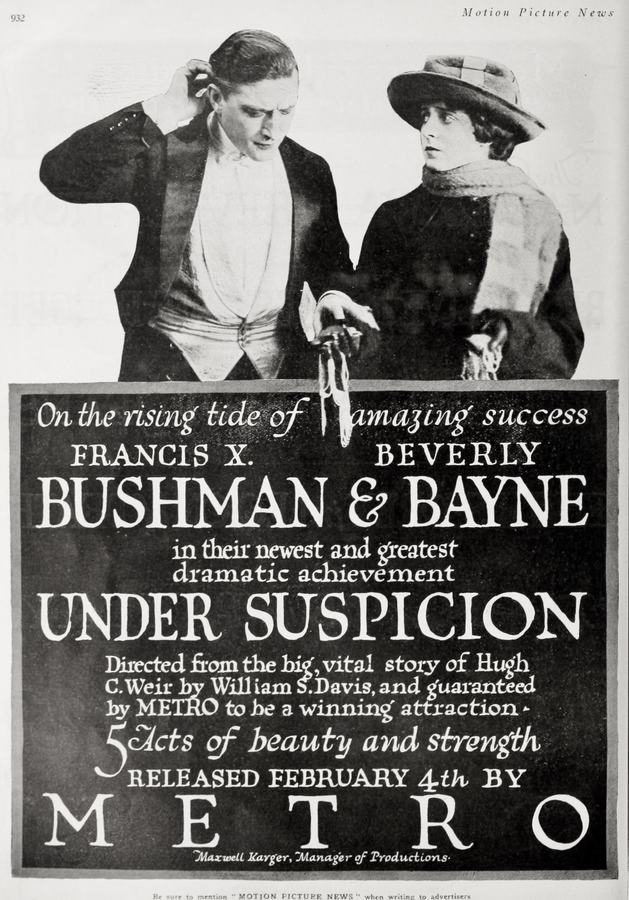
An heiress’s diamonds vanish during a waltz; a monkey becomes the only reliable witness. Welcome to Manhattan, 1928.
The first thing you notice is the shimmer: not the jewels, but the light itself—silver nitrate catching every champagne bubble as if each were a tiny planet orbiting the very concept of excess. Under Suspicion opens inside Alice Woolworth’s limestone palace, a place so opulent it could make Gatsby blush. A string quartet saws through Tschaikowsky while gossip columnists stalk the canapés like big-game hunters. Into this terrarium strolls Gerry Simpson, money leaking from his cufflinks, eyes prowling for novelty. Novelty arrives in the shape of Virginia Blake, whose dress is plain wool but whose tongue could slice foie gras at twenty paces. She calls the partygoers “gilded tapeworms.” He falls—hard.
The film’s central con is less a lie than a reckless self-amputation: Gerry pretends to be a rookie reporter, thinking love can survive on equal paychecks.
Directors Le Vino and Weir stage this masquerade with a droll visual grammar: Gerry’s first newsroom scene frames him against a wall of typewriters clacking like metallic cicadas, his patent-leather shoes betraying everyman credulity. Meanwhile, Virginia’s eyes keep drifting to his uncalloused palms, suspecting orchids in the coal mine. The tension is screwball before screwball had a name: two people courting while circling the truth like wary sharks.
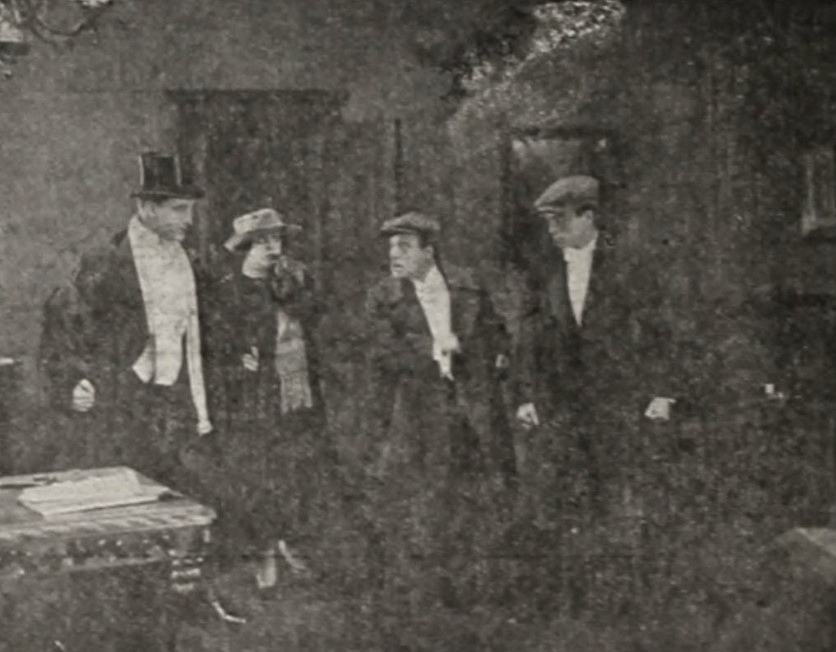
Then the theft detonates the narrative. A butler’s scream ricochets; diamonds scatter across parquet like suicidal stars. Mrs. Wentworth’s monkey—an arbiter of chaos in a frilly diaper—snatches a button off the burglar’s coat, thereby becoming the silent era’s most reliable sleuth. Virginia pockets the evidence, and the hunt begins.
From here the plot folds like origami: each crease reveals a new suspicion, a fresh hypocrisy.
The city becomes a double-exposed photograph: Park-Avenue doormen bow to Gerry while newsboys elbow him in the ribs. He endures both because the alternative—losing Virginia—feels like death by typewriter. In a sly montage, we watch him rewrite society-page puff into fire-breathing exposé, exposing slumlords who happen to be his father’s poker buddies. Eva Gordon, as Virginia, lets her face flicker between admiration and dread: could a man who jettisons privilege be trusted, or is this merely another costume?
Midpoint, the film drops its chandelier of irony: Virginia spots the missing button on Gerry’s coat. Cue a dissolve to her stricken pupils, the camera gliding in until the iris itself seems to indict. What follows is a masterpiece of spatial dread—she rifles his walnut dresser while he’s out chasing a deadline, the shadows stretching like spilled ink. When she lifts the false bottom of a cigar box and discovers the Woolworth diamonds, the orchestral score hiccups into silence. We hear only the tick of a metronome somewhere off-screen, counting down to heartbreak.
But Under Suspicion refuses the easy verdict. Just as Virginia’s finger closes around the gems, the valet Rogers—played by Sidney D’Albrook with a muskrat grin—lunges from behind a portiere. The real thief, he’s been hiding in plain sight, a living reminder that servants know every back staircase to damnation. The ensuing scuffle is staged in a single take, camera bobbing like a boxing referee: knees, elbows, a vase of peonies exploding into confetti. Gerry bursts in, flings Rogers down the service elevator shaft (the film’s one concession to pulp retribution), then cradles Virginia amid the petal-strewn carpet.
Justice dispensed, the epilogue should feel tacked-on; instead, it glows with earned contrition.
Gerry buys the newspaper—lock, stock, and greasy press—and installs himself as editor, pledging muckraking over martinis. The final shot: Virginia types the first headline of the new regime while Gerry rolls up his sleeves, ink smudging the cuffs that once sported platinum links. Fade-out on their intertwined hands, no longer divided by cloth or class.
Francis X. Bushman—matinee idol of the Teens—here weaponizes his aging elegance, letting crow’s-feet show through the pancake. The result: a man aware the clock is ticking on frivolity. Beverly Bayne, once Bushman’s off-screen paramour, plays Alice Woolworth with fluttering fan-work, hinting at a woman who knows jewels are just portable constellations for the insecure.
Arthur Housman, king of cinematic inebriates, cameos as a gin-soaked columnist; watch him balance a notepad in one hand and a highball in the other, a tightrope walker over his own dissolution. Meanwhile, Jack Newton’s monkey receives an on-screen credit—an inside joke that feels oddly democratic.
Cinematographer Hugh C. Weir (also the writer) bathes night exteriors in sodium vapor, giving Manhattan a brassy glow that anticipates noir by a decade. Interior scenes favor high-key glamour until the moment of suspicion; then the key drops, shadows pool like spilled scotch. A memorable dolly shot glides past rows of policemen’s helmets, each reflecting the same diamond necklace—a kaleidoscope of institutional greed.
Compare this visual wit to The New Exploits of Elaine, where tableaux often sit as static as taxidermy, or Selskabsdamen, whose Danish interiors glow candle-soft but lack the American hunger for speed. Under Suspicion marries European chiaroscuro to Yankee momentum.
Nearly a century on, the film’s jabs at inherited wealth land sharper than ever. When Virginia sneers that charity balls are “penance at five hundred dollars a plate,” she could be tweeting about modern-day philanthro-bros. Gerry’s arc—rich man choosing labor—plays more fantasy now, yet the script’s cynicism keeps it from curdling into propaganda. The picture understands that money is a language: learn to speak it, or be forever translated.
Fifty-seven minutes whisk by on feet of mercury. The filmmakers compress exposition into gestures: a shrugged fur, a discarded press badge, a monkey’s twitch. Modern viewers raised on three-hour operatics may gasp at the velocity; others will feel they’ve mainlined narrative espresso. The only lull arrives during a newspaper-office montage that reuses two shots thrice—economy trumping artistry, a reminder of Poverty Row budgets.
Existing prints carry a 1993 piano score by Judith Rosenberg, all staccato chromatics and winking blue notes. Seek it out; the default organ tracks on streaming platforms flatten the film’s sly humor. When Rogers tumbles down the elevator shaft, Rosenberg undercuts with a mock-waltz, turning horror into sardonic shrug—exactly the tonal knife-edge the story demands.
For decades Under Suspicion languished in a Belgian archive, misfiled under its working title Button, Button. A 2019 4K restoration premiered at Pordenone; Kino released a region-free Blu peppered with essays on Bushman’s career resurrection attempts. Avoid gray-market rips that circulate with hardcoded French intertitles—half the puns evaporate in translation.
Cinephiles tracking pre-Code DNA will find echoes in Through the Wall (1934) and The Regenerates (1923), yet neither marries screwball courtship to larceny this effortlessly. Even Ben Blair, with its mountain-film ethos, lacks Manhattan’s intoxicating rot.
Some silents feel embalmed; Under Suspicion still perspires. It is a champagne bottle that remembers the sourness of the grape, a love story that trusts audiences to root for liars, and a crime caper that knows every jewel is just compressed coal waiting for sunlight—or scandal. Watch it for the monkey, revisit it for the moral hangover. Either way, you’ll walk off checking your own buttons.
Under Suspicion (1928). Dir. Albert S. Le Vino & Hugh C. Weir. Cast: Francis X. Bushman, Beverly Bayne, Eva Gordon, Sidney D’Albrook. Runtime: 57 min. Silent with English intertitles. Available on Kino Lorber Blu-ray and select streaming restorations.
IMDb —
1917
Community
Log in to comment.