DbcultAccessing Vault...
Cult Review
Senior Film Conservator
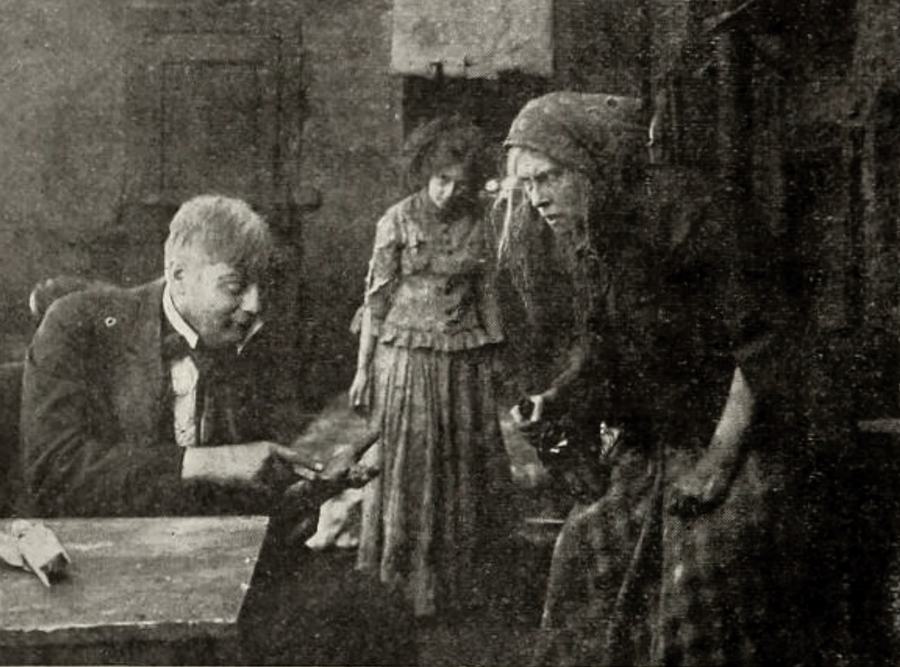
The nickelodeons of 1914 were no strangers to soot—urban audiences wore it on their cuffs and inhaled it in the form of locomotive steam—but even by those standards Under the Gaslight arrives like a soot-storm shot through with magnesium flare. Adapted from Daly’s 1867 barn-burner, the picture compresses a five-act labyrinth of coincidence into a one-reel moral panic, then stretches it again over forty minutes of iris-shot intimacy. The result feels less like a story than like a fever passed hand-to-hand: you leave the theater checking your own palms for Judas’s tell-tale kitchen grease.
Director Maurice Steuart stages the baby swap inside a single, unbroken interior—no exterior establishing shot—so the world beyond the Courtland townhouse becomes rumor, fog, maybe apocalypse. Judas (Rosanna Logan) looms over the bassinet like a Rembrandt night watch, her face split by the diagonal shaft of a gas mantle. The infant’s cry is never heard; intertitles simply insist “The exchange is made.” That muteness is the film’s savviest coup: it turns maternity into a capitalist ledger where affections are debits and bloodlines bearer bonds. When the timeline jumps twenty years via a crumbling calendar page, we meet two adult women who wear their stolen pasts like corsets laced too tight—Pearl’s silk bows itch against the knowledge she is counterfeit, while Laura’s calico chafes with the certainty she deserves better.
Long before he poisoned It’s a Wonderful Life with a flask and a leer, Barrymore’s Byke is pure waterfront entropy—hair slick as wharf planks, voice implied but never heard, a grin that arrives a full second before the rest of his face. In the abduction sequence he binds Snorky to the railroad trestle with sailor knots that read like hieroglyphs of malevolence. Close-ups are rationed—when Byke’s mug finally fills the frame, the iris contracts until his pupils become the black holes of nascent American cinema. Watch how he pockets the ransom note: thumb and forefinger form a bureaucratic precision that says extortion is just another clerical task.
Silent-era rail imagery usually heralds Manifest Destiny; here the locomotive is a guillotine for social mobility gone feral. Laura’s rescue of Snorky occurs on a spur line that dead-ends into the Hudson—a visual admission that upward climb has no track. The editing alternates between authentic location plates and studio mock-ups; the mismatch breeds uncanny torque, as though destiny itself can’t decide whether it’s industrial or theatrical. When Laura hacks the ropes with an axe, each swing lands on a cut, so metal severs both rope and celluloid—frame, frame, frame—until time feels hatcheted open.
Tinting protocols of 1914 follow a quasi-moral code: amber for interiors, blue for night exteriors, red for conflagrations. Under the Gaslight detonates that schema. The Rensaeller reception—supposedly gaslit respectability—soaks in cyan, a hue that makes champagne flutes look arsenic-laced. When Pearl drops Ray’s forged letter, the amber wash drains mid-shot, leaving the parchment fluttering through grayscale like a surrender flag. Judas’s final exit into urban night is hand-painted ember, as though the city itself combusts from her ignominy. These chromatic pivots do the explanatory labor that talkies will later delegate to orchestral stingers.
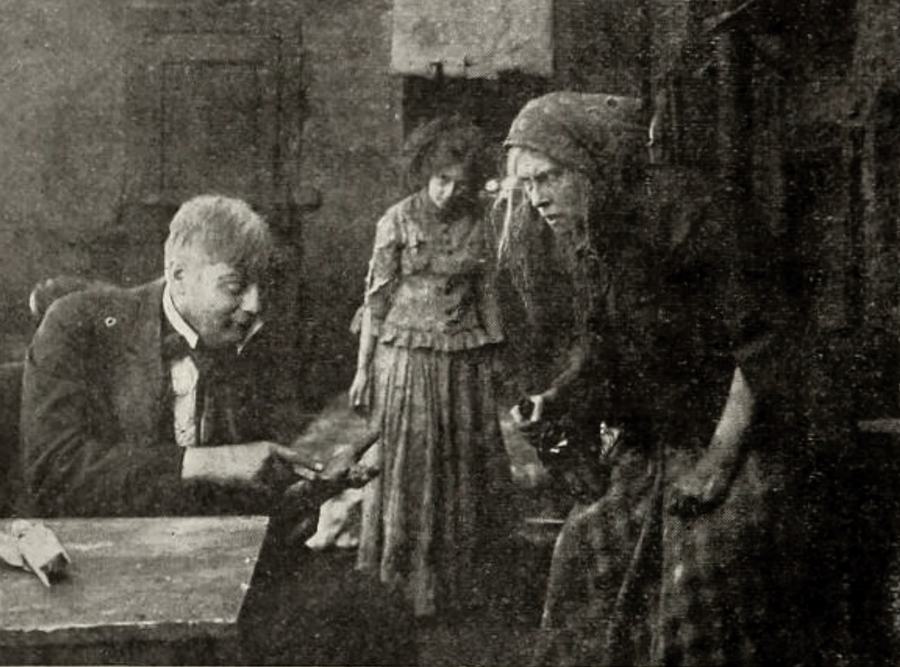
Note the diction of Byke’s letter: “My darling daughter…” The possessive pronoun clenches like a manacle. The studios of 1914 usually crowd cards with Victorian curlicues; here, white space gnaws around each word so isolation becomes typographic. Ray’s undelivered confession—“I love you although your parents are of low origin”—carries the although like a hairline fracture. The line break after origin leaves a silence where class shame reverberates longer than any spoken apology could.
Set Under the Gaslight beside The Lure of New York (same year) and you see two evolutionary branches: one rooted in stage melodrama, the other already flirting with crime-spectacle urbanity. Both trade on swapped identities, yet where Lure uses Manhattan crowds as stochastic chorus, Gaslight keeps its evil hermetic, a chamber play of genealogical vertigo. The difference predicts the fork that will become film noir (claustrophobic) versus police procedural (sociological).
No complete 35mm negative is known to survive; what circulates among private archivists is a 9.5mm Pathéscope abridgement struck for home libraries circa 1921. The image quivers like a jellyfish, perforated edges frayed until characters appear to wade through snowfall. Yet that fragility feels curiously honest: a tale about the brittleness of identity arrives on media that could dissolve in a projector’s carbons. MoMA’s circa-1979 dupe adds a piano score that gallops when it should stalk; I recommend pairing with Satie’s Gnossienne No.3 at half-speed—trust me, the dissonance makes every close-up feel like post-coital guilt.
Because we still swap babies—only now we call them social media personas, résumés, crypto wallets. Because the train still comes, rebranded as algorithmic feed, and we stand on the ties clutching an axe made of attention spans. Because forgiveness, when it finally arrives in the last reel, is shot from so far away that you can’t tell whether Laura’s smile is absolution or the reflex of someone who knows the camera is finally, mercifully, turning away.
TL;DR for the scroll-weary: A 1914 silent that scalds the myth of meritocracy, performed by actors who seem to know nitrate itself is mortal. Seek it out, even in butchered 9.5mm—let the ember tint bleed into your retina until your own living room feels gaslit.
IMDb —
1931
Community
Log in to comment.