DbcultAccessing Vault...
4.9/10
Senior Film Conservator
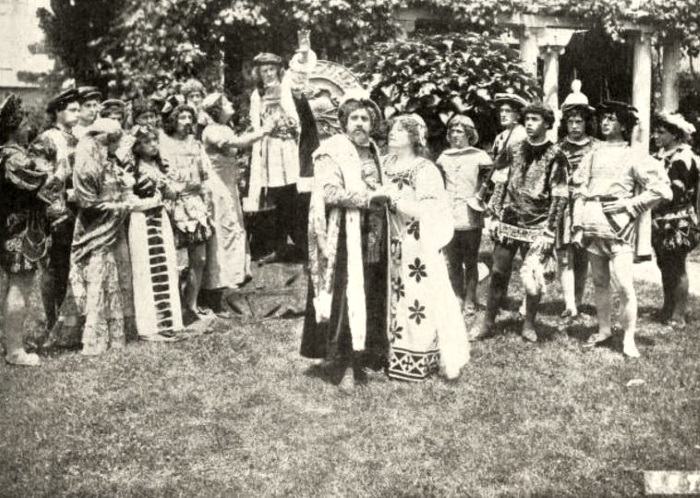
A definitive 4.9/10 rating for a film that redefined the boundaries of cult cinema. As You Like It remains a cornerstone of transgressive art.
When we peer back through the sepia-toned lens of 1912, the cinematic landscape appears as a burgeoning frontier, a wild expanse where the rules of storytelling were being forged in the crucible of the nickelodeon. Among the most ambitious architects of this new medium was the Vitagraph Company of America, which dared to translate the high-brow linguistic gymnastics of William Shakespeare into the visceral, pantomimic language of silent film. The 1912 adaptation of As You Like It stands as a monumental testament to this transition, offering a fascinating glimpse into how early filmmakers grappled with the absence of the Bard’s most potent tool: his words.
To approach this film is to engage with a piece of cultural archaeology. Unlike the more visually static productions of the era, such as Les amours de la reine Élisabeth, which relied heavily on the theatrical prestige of Sarah Bernhardt, Vitagraph’s As You Like It attempts to utilize the natural world as a scenographic partner. The Forest of Arden is not merely a painted backdrop; it is a living, breathing space that facilitates the film’s thematic explorations of liberty and identity.
At the heart of this production is Maurice Costello, an actor whose presence in early cinema cannot be overstated. Playing Orlando, Costello brings a rugged yet refined charisma to the screen, embodying the archetype of the romantic lead long before the star system had even solidified. His performance here is a masterclass in silent expression, conveying Orlando’s yearning and confusion without the benefit of the famous verse. When compared to the more histrionic styles found in films like The Life and Death of King Richard III, Costello’s approach feels remarkably grounded.
Costello’s Orlando is a man of action, defined by his physical prowess in the wrestling match against Charles—a sequence that, while brief, showcases the film’s commitment to dynamism. This physicality is crucial, as it provides the necessary contrast to his later vulnerability as he wanders through the woods, pinning love notes to trees. The chemistry between him and Rose Coghlan’s Rosalind is the film’s emotional anchor, transcending the technical limitations of the time.
Rose Coghlan, a veteran of the stage, delivers a performance as Rosalind that is both commanding and nuanced. The "breeches role"—a staple of Shakespearean comedy—presents a unique challenge in a silent medium. Without the verbal irony of the play’s dialogue, the humor and tension of Rosalind’s disguise as Ganymede must be conveyed through body language and meaningful glances. Coghlan excels in this regard, utilizing subtle shifts in posture to differentiate between the courtly lady and the assertive youth.
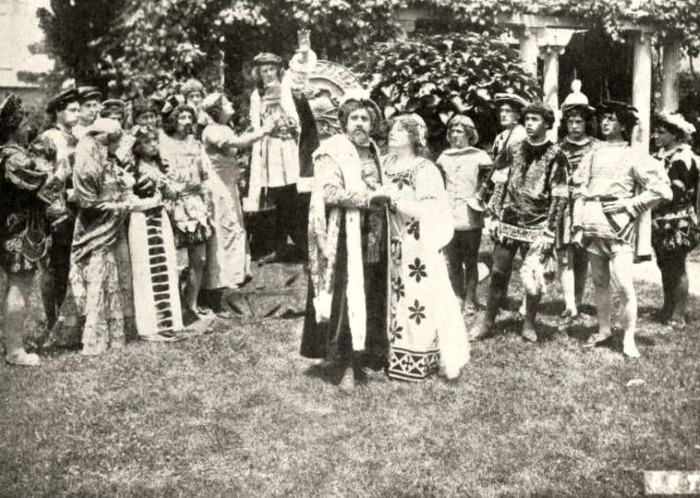
The film leans heavily into the irony of the situation. We see Rosalind-as-Ganymede counseling Orlando on the very art of wooing her, a meta-textual layer that would have been familiar to audiences of the time but takes on a new dimension in the silent era. This subversion of gender roles was a progressive element of the source material that the film captures with surprising fidelity, especially when contrasted with the more traditional moralities seen in contemporary religious epics like From the Manger to the Cross.
One of the most striking aspects of the 1912 As You Like It is its use of location. While many films of this period were confined to the cramped quarters of indoor studios, Vitagraph took their cameras into the sunlight. The dappled shadows and rustling leaves of the forest provide a texture that no studio set could replicate. This commitment to realism—or at least a stylized version of it—aligns the film with the burgeoning "scenic" movement, reminiscent of the vistas captured in Glacier National Park.
The cinematography, though rudimentary by modern standards, demonstrates an evolving understanding of depth and composition. The way the characters move through the trees, often appearing from the background to the foreground, creates a sense of three-dimensional space that was quite sophisticated for 1912. It’s a far cry from the static, stage-like framing seen in Cleopatra (1912), opting instead for a fluid integration of character and environment.
Adapting a five-act play into a short silent film requires a ruthless editorial eye. The writers had to distill Shakespeare’s sprawling narrative into its essential emotional beats. Much of the philosophical musing—including the iconic "All the world's a stage" speech—is inevitably truncated or relegated to intertitles. However, the film manages to maintain the core conflict between the two Dukes, providing a clear stakes-driven framework for the romance to unfold.
The intertitles themselves are used sparingly but effectively, often quoting directly from the text to lend the production an air of literary legitimacy. This was a common tactic in early prestige films, such as Oliver Twist or Les misérables, where the audience’s familiarity with the source material was used to bridge the gaps in the visual narrative. In As You Like It, the titles act as a poetic punctuation to the visual prose of the actors’ performances.
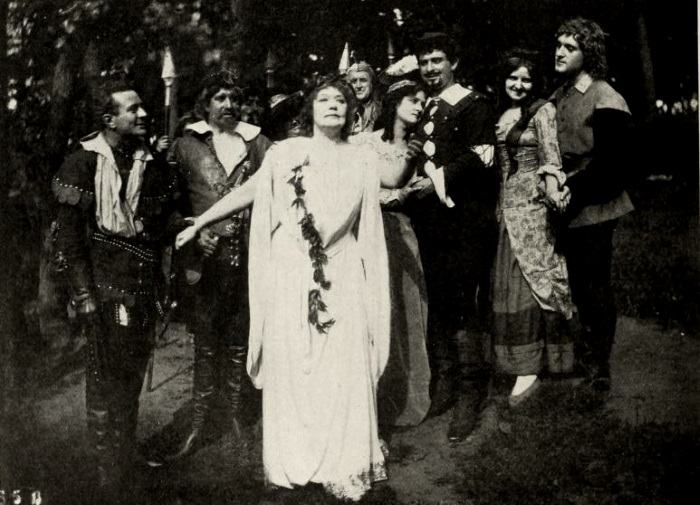
To fully appreciate the achievement of As You Like It, one must look at what else was occupying the screens of 1912. While some filmmakers were focusing on historical reenactments like 1812 or the gritty realism of Defense of Sevastopol, Vitagraph was leaning into the whimsical and the romantic. There is a lightness of touch here that is absent from the heavy-handed moralizing of The Life of Moses.
Furthermore, the film’s production values reflect a studio at the height of its powers. The costumes are intricate and historically evocative, and the staging of the final multiple-wedding scene is handled with a choreographic grace that rivals the spectacle of The Flying Circus. It is a film that wants to be both art and entertainment, a goal it achieves through the sheer charisma of its cast and the timelessness of its story.
Does As You Like It hold up for a modern viewer? The answer depends on one’s appetite for the specific grammar of silent cinema. For the casual observer, the pacing may seem hurried and the acting styles archaic. However, for the cinephile or the Shakespeare enthusiast, the film is a treasure trove of early cinematic technique. It captures a moment when the medium was just beginning to realize its potential to not only record reality but to interpret and transform it.
The film serves as a vital link in the long chain of Shakespearean adaptations, standing alongside other early efforts like Hamlet, Prince of Denmark. It reminds us that the themes of love, identity, and the search for a simpler life are universal, whether they are spoken in iambic pentameter or expressed through the flicker of light on a silver screen. The 1912 version of As You Like It is not just a historical curiosity; it is a vibrant, albeit silent, celebration of the human spirit.
While the director remains somewhat obscured by the collaborative nature of the Vitagraph system of the time, the vision behind the film is remarkably cohesive. There is a clear attempt to balance the pastoral beauty of the setting with the comedic timing required by the plot. The editing, though simple, facilitates a narrative flow that keeps the viewer engaged, avoiding the episodic feel that plagued many other adaptations of the era, such as Pilgrim's Progress.
Ultimately, As You Like It (1912) is a triumph of adaptation. It honors the spirit of Shakespeare while embracing the unique possibilities of the moving image. It proves that even without the spoken word, the story of Rosalind and Orlando remains as enchanting as ever. As we watch these figures move through their black-and-white forest, we are reminded that the world of the screen is, indeed, a stage, and all the actors—Costello, Coghlan, and their contemporaries—were merely players in a grand experiment that would change the world forever.
Reviewer's Note: This film is a must-watch for anyone interested in the intersection of classic literature and early film history. Its preservation is a gift to the medium, offering a window into a time when the possibilities of cinema seemed as endless as the Forest of Arden itself.
IMDb —
1917
Community
Log in to comment.