DbcultAccessing Vault...
Cult Review
Senior Film Conservator
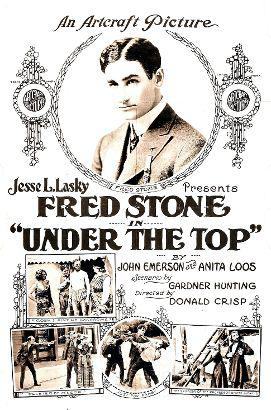
The silent era, a period of unparalleled cinematic innovation, often found its most potent narratives in the grand spectacles of human drama, and few settings offered as much inherent theatricality as the circus. 'Under the Top', a 1917 production, plunges its audience into this vibrant, often perilous world, weaving a tale that is at once a tender romance, a coming-of-age saga, and a thrilling melodrama of ambition and betrayal. It’s a fascinating glimpse into the storytelling prowess of its time, demonstrating how filmmakers like those behind this picture could evoke profound emotion and complex plots without the aid of spoken dialogue, relying instead on the expressive power of performance, visual composition, and evocative intertitles.
At its heart, the film is an exploration of transformation, driven by the purest form of youthful infatuation. We are introduced to Jimmie, portrayed with an earnest charm by Gordon Griffith, a denizen of a quiet, unassuming town. His life, by all accounts, appears destined for the predictable rhythms of rural existence until the arrival of the traveling circus shatters his provincial complacency. This isn't merely a diversion; it's an awakening. The spectacle, the danger, the sheer audacity of the performers captivate him, but it is the luminous presence of Pansy, brought to life by the captivating Althea Worthley, that truly ignites his spirit. Pansy, the daughter of the circus's venerable tightrope walker, embodies the allure and mystique of this transient world. Her very being seems intertwined with the delicate balance and thrilling heights of her father's art.
The catalyst for their burgeoning connection is a moment of spontaneous heroism. Jimmie, witnessing Pansy in peril, beset by a gang of local thugs – a common narrative device of the era, seen in films like The Great Love where external threats often solidify burgeoning affections – intervenes with courage. This act of chivalry, though perhaps simplistic by modern standards, serves its purpose with elegant efficiency, forging an immediate bond between the small-town boy and the circus maiden. It's a classic romantic trope, but one that resonates deeply, setting the stage for Jimmie's subsequent, life-altering decisions. His admiration for Pansy quickly blossoms into a profound love, a love that demands more than mere admiration; it demands participation in her world.
When the circus inevitably moves on, taking Pansy with it, Jimmie is left with an aching void and a burning ambition. This isn't a passive longing; it's an active, transformative desire. He doesn't merely pine for her; he resolves to become worthy of her world. His determination to master the tightrope, an art form so intrinsically linked to Pansy's identity, becomes the driving force of his existence. He constructs a makeshift wire in his own backyard, a humble, almost defiant testament to his dreams, and embarks on a solitary, arduous regimen of practice. This period of self-training, though perhaps condensed for cinematic brevity, speaks volumes about the character's tenacity and the depth of his devotion. It's a powerful depiction of self-improvement born of love, echoing the personal growth often spurred by grand passions in films such as The Marriage Price, where characters undergo significant transformations for the sake of love or ambition.
The narrative then orchestrates the circus's return, a dramatic inevitability that brings Jimmie's solitary efforts to a head. He seeks to re-enter Pansy's life, not as the boy who saved her, but as a man who has embraced her world, however imperfectly. This reunion, however, is not a simple joyous affair. The joyous spectacle of the circus is merely a veneer, beneath which a darker drama is unfolding. The plot thickens considerably with the introduction of a malevolent subplot involving a former employee, a character often embodied by the likes of Noah Beery or Lester Le May, whose presence typically signals impending doom or sinister machinations. This disgruntled figure harbors a deep-seated grudge and an audacious plan to usurp control of the entire circus enterprise.
The tragedy that ensnares Pansy's father is central to this escalating conflict. The tightrope walker, a figure of dignity and skill, becomes a pawn in the former employee's nefarious scheme. The specific nature of this tragedy, whether an accident orchestrated with malicious intent or a direct act of sabotage, would have been conveyed with gripping tension through the visual language of silent film. This kind of high-stakes treachery, where personal vendettas threaten an entire institution, finds thematic parallels in the intense dramas of films like Voodoo Vengeance, albeit without the supernatural element, emphasizing the destructive power of human greed and resentment. The circus, once a symbol of wonder and escapism, transforms into an arena for a struggle for power, with Jimmie and Pansy caught in the crossfire.
The success of such a film hinges significantly on the expressive capabilities of its cast. Althea Worthley as Pansy would have needed to convey not just beauty, but also resilience and vulnerability, a challenging balance given the constraints of silent acting. Her reactions, her gaze, her subtle gestures would have been paramount in communicating her fear, her hope, and her burgeoning affection for Jimmie. Gordon Griffith, as Jimmie, carries the weight of the protagonist's journey, from wide-eyed wonder to resolute heroism. His physical transformation, from clumsy apprentice to confident aerialist, would have been a visual cornerstone of his character's development. The supporting cast, including stalwarts like Julia N. Stark, Noah Beery, and James Cruze (who also served as an actor in many films of the era), would have provided the necessary gravitas and villainy to flesh out the dramatic world. Beery, in particular, often excelled at playing formidable antagonists, lending a palpable sense of menace to the proceedings.
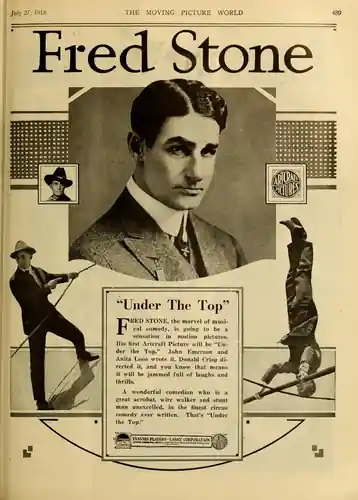
The visual spectacle of the circus itself would have been a major draw. Silent filmmakers were masters of creating illusions and capturing grand scale, and the scenes of tightrope walking, acrobatics, and the general bustle of circus life would have been meticulously staged and filmed. The use of practical effects and clever camera work would have been essential in conveying the danger and grace of the aerial acts, drawing the audience into the thrilling performances. One can imagine the dramatic close-ups on the performers' faces, the sweeping shots of the big top, and the carefully choreographed sequences that would have brought the circus to vivid, silent life. This focus on visual storytelling, making every frame count, is a hallmark of the era, contrasting sharply with the more documentary-style approach of a film like Britain Prepared, which aimed for realism rather than dramatic spectacle.
Beyond the immediate plot, 'Under the Top' delves into universal themes. It explores the transformative power of love, demonstrating how it can inspire individuals to transcend their perceived limitations and pursue seemingly impossible dreams. Jimmie's journey is a testament to the idea that passion, when coupled with unwavering dedication, can lead to extraordinary achievements. It also examines the stark contrast between the idyllic romanticism of the circus and its often harsh, competitive underbelly. The film subtly critiques the pursuit of power and greed, personified by the disgruntled former employee, showing how such destructive forces can corrupt even the most vibrant and communal of environments. The resilience of the human spirit, particularly in the face of adversity and betrayal, is another prominent thread, as Jimmie and Pansy must navigate personal tragedy and external threats to find their happiness.
The structure of the narrative, moving from initial encounter to separation, then to a dramatic reunion fraught with peril, is a classic three-act structure effectively utilized to build tension and emotional investment. The final act, where Jimmie's newfound skills are likely put to the ultimate test in a climactic confrontation or a daring rescue, would have been the film's emotional crescendo. The resolution would not only bring justice but also affirm the power of true love and the triumph of good over malevolence, a common and satisfying conclusion for audiences of the period. This kind of resolution, where characters overcome significant obstacles through courage and ingenuity, is reminiscent of the moral fortitude displayed in films like The Lamb and the Lion, where character strength is tested and ultimately prevails.
Considering its place in cinematic history, 'Under the Top' stands as a compelling example of early narrative filmmaking. It showcases the sophisticated storytelling techniques and visual artistry that characterized the silent era, proving that compelling drama and profound emotion could be conveyed without a single spoken word. It’s a reminder of the foundational principles of cinema: character, conflict, and resolution, all articulated through the universal language of images and human expression. The film's ability to transport its audience to the magical yet dangerous world of the circus, to make them root for its protagonists, and to feel the sting of betrayal and the thrill of triumph, speaks volumes about its enduring appeal and its place within the rich tapestry of silent film history. It's a testament to a time when dreams were spun from celluloid and projected onto the grand canvas of the silver screen, leaving an indelible mark on the imagination, much like the lasting impression of a truly spectacular circus performance.
The use of the circus as a setting also allows for a rich exploration of social dynamics. The traveling performers, often seen as outsiders, create their own tightly knit community, distinct from the staid towns they visit. Jimmie's integration into this world, or his attempt to do so, represents a crossing of social boundaries, a theme that resonates through many narratives of love across different classes or lifestyles. The film likely capitalizes on the inherent drama of the circus, where every performance carries an element of risk, mirroring the personal risks taken by its characters in the pursuit of love and justice. This intertwining of professional danger with personal stakes elevates the narrative beyond a simple romance into a more complex exploration of identity and belonging. The film, in its essence, captures the fleeting magic and underlying struggles of a world that continues to captivate audiences, a world where the highest wires are not just for acrobatics, but for the intricate dance of human fate.
IMDb —
1920
Community
Log in to comment.