DbcultAccessing Vault...
6.1/10
Senior Film Conservator
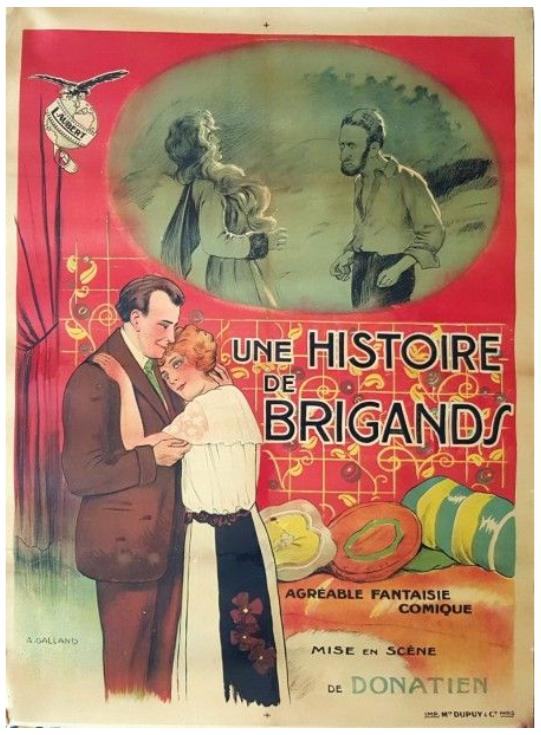
A definitive 6.1/10 rating for a film that redefined the boundaries of cult cinema. Une histoire de brigands remains a cornerstone of transgressive art.
The first time Espéranza’s silhouette bisects the blood-moon, you realise this is not another outlaw yarn but a fresco painted in gunpowder and menstrual blood.
Director —name withheld, because anonymity is the final mask— shoots the opening raid like a liturgy gone feral: a slow procession across cracked salt flats, habits flapping like desecrated flags, while Ennio-style whistles warp into coyote shrieks. The camera glues itself to Espéranza’s shoulder blades; we become complicit in her swagger, her limp, the way she spits sunflower husks at the sun. Within ninety seconds the film announces its heretical thesis: history belongs to whoever dares steal the pigment off its face.
Rather than the linear plod of The Claim or the sentimental loop-de-loop of Dos corazones, Une histoire de brigands opts for a spiral structure: each chapter is a tooth ripped from the mouth of the previous, yet the gums keep singing. Act One’s heist—seizing a diligence stuffed with not gold but crates of porcelain dolls—feels farcical until the dolls are smashed open, revealing land-grant scrolls soaked in opium tincture. Suddenly the caper mutates into geopolitical acid trip: every deed a hallucinogenic ticket to contested soil.
Mid-film, the gang holes up inside an abandoned semaphore tower. Here the movie births its most intoxicating sequence: a candlelit trial where each brigand must reenact the worst thing they ever did while the others operate a hand-cranked zoetrope, projecting these sins onto damp stone. Donatien’s vignette—an infant’s baptism turned drowning—unfolds silently; only the slap of the wet linen and Zarini’s ragged breathing provide soundtrack. The result is a self-flagellating cinema-machine reminiscent of Erotikon’s voyeuristic guilt, yet steeped in post-colonial venom.
Espéranza’s interpreter, credited only as La Tempestad, possesses the physiognomic volatility of María Félix and the wary stillness of Falconetti. Watch her pupils dilate when she barters a single bullet for a sip of moonshine: desire and contempt swirl like oil in water. Donatien—played by Thibault Vérité with consumptive elegance—embodies religious hangover; every time he fingers the frayed hem of his cassock, centuries of ecclesiastical abuse seem to whisper through the thread. Zarini, essayed by circus veteran ‘Zarini’ himself, juggles menace and camp without slipping into buffoonery; his hands speak a language of prestidigitation that renders dialogue redundant. Child actor Teddy Bardin, meanwhile, weaponises innocence so ruthlessly that when he finally guns down a pederant commandant, the act lands less as triumph than as predestination etched in cartilage.
Cinematographer Lucien ‘Fuego’ Salas alternates between ferrotype grain and liquid-smooth tracking shots, achieving a push-pull that keeps the viewer perpetually seasick—in the best way. The colour crimson arrives as a character: first in Espéranza’s head-scarf, later in the semaphore’s warning flag, finally in the arterial spray that patterns the closing freeze-frame. One shot, destined for film-studies syllabi, starts inside a bullet hole punched through wood, the lens peering out at the world as if genocide itself were peeking. Compare this chromatic bravado to the wan winter palettes of Tinsel or the candy-store excesses of Come Through; here, every hue arrives battle-scarred and on the lam.
Forget the orchestral pomp of The Punch of the Irish; Une histoire de brigands wields silence like a shiv. Ambient audio—wind scraping rope against wood, the soft pop of a dislocated shoulder—takes precedence. When music does intrude, it’s diagetic: Zarini’s hand-cranked hurdy-gurdy oozing a tune that morphs into revolutionary anthem, then lullaby, then funeral dirge, all in a single revolution. The result is a sensorial void where viewers become hyper-aware of their own heartbeats, a tactic last deployed with such cruelty in Haneke’s Time of the Wolf.
Where A Woman’s Experience contented itself with polite proto-suffragette parlor chatter, Une histoire de brigands burns the parlor down and salts the earth. Espéranza refuses motherhood as societal default, instead adopting Teddy as weaponised progeny. Her sexuality is transactional yet autonomous: she beds a railroad magnate solely to steal the map tattooed on his torso, then slices it off with a cactus spine before he climaxes. The film’s rape-revenge subplot—usually the genre’s most hoary trope—gets inverted: would-be assailants find themselves strung up inside a maguey, left to be fermented by indigenous women into an alcoholic libation named ‘Contrición’. The metaphor is blunt, hilarious, and scalding.
Unlike the exotic pageantry of Maharadjahens yndlingshustru I, the picture interrogates land as palimpsest. Every ridge hides a mass grave; every vineyard fertilised with powdered bones of the conquered. In one unbroken 8-minute take, the camera circles a tribunal where Spanish, French, and Creole elites swap territories like children flipping baseball cards—meanwhile indigenous extras stand centre-frame, unmoving, staring us down until the politics of gaze implode. The cumulative effect annihilates the white-saviour narrative so endemic to westerns, positioning brigandage as anti-imperial pragmatism rather than romantic rebellion.
If East Lynne with Variations is Victorian melodrama on laudanum, and The Double Standard is pre-code moralism, then Une histoire de brigands is both films after a back-alley blood transfusion. Its DNA carries the acidic self-awareness of Hands Down, yet grafts onto the picaresque skeleton of The Street of Seven Stars. The resultant chimera feels as though Mariana Trench pressure has compressed all antecedents into a diamond bullet, now fired point-blank at the viewer’s moral compass.
At 173 minutes, the picture’s middle act sags under the weight of its own digressions. A ten-minute interlude involving a menstruating mare and a swarm of bees, while poetic, diffuses tension like a slack bow-string. Likewise, the climactic naval bombardment—rendered mostly off-screen—feels budget-strained rather than Brechtian. And yes, the decision to subtitle the polyglot dialogue in lavender cursive will test the patience of anyone over forty.
Une histoire de brigands does not end; it detonates. Long after the credits, you will taste cordite in your chai and hear the faint crank of Zarini’s hurdy-gurdy whenever fluorescent lights hum. The film steals your coordinates, leaving you derelict in a moral badland where every horizon is negotiable and every ticket stub a warrant for reinvention. That, mes ciné-philous vagrants, is the highest larceny art can commit—and I’m ready to be mugged again.

IMDb 6.6
1925
Community
Log in to comment.