DbcultAccessing Vault...
Cult Review
Senior Film Conservator
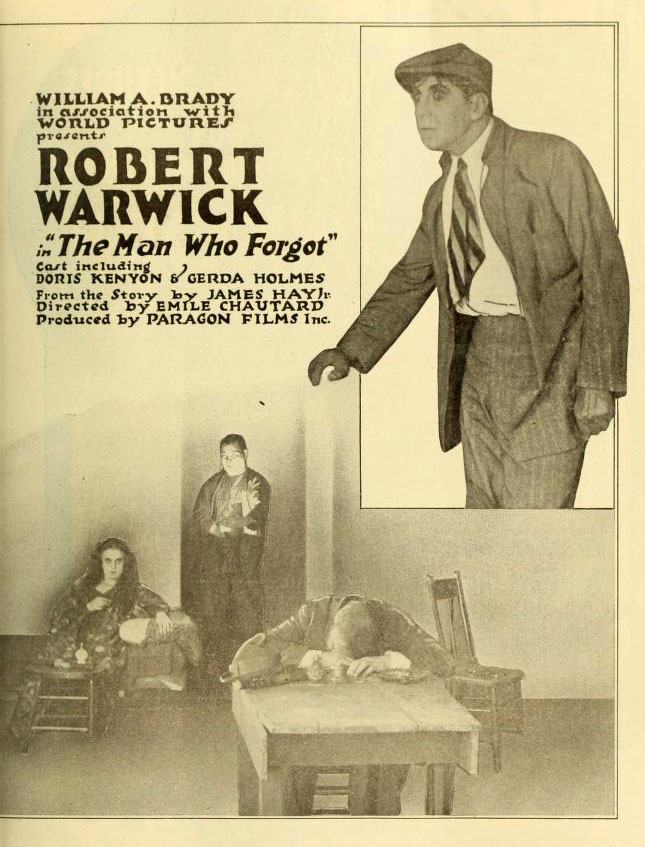
The year 1917 represented a threshold in American cinema, a period where the medium transitioned from mere novelty to a potent sociological weapon. The Man Who Forgot, directed by the sophisticated Emile Chautard, stands as a fascinating artifact of this era—a film that blends the visceral horror of addiction with the soaring rhetoric of political activism. It is a work that interrogates the concept of the 'Tabula Rasa,' suggesting that a man can only truly serve the public good once he has been stripped of the baggage of his own history.
The opening sequence is a masterclass in atmospheric dread. We are thrust into a Chinese opium den, a space rendered with a claustrophobic intensity that rivals the moral weight found in The Price of Silence. Here, Robert Warwick’s character—initially a shell of a human—suffers through the soul-destroying effects of the drug. His sudden epiphany and subsequent flight to America are not merely plot points; they are a rejection of the 'Old World' vices in favor of a rugged, albeit amnesiac, 'New World' morality. The struggle to replace opium with alcohol, only to eventually renounce all intoxicants, mirrors the turbulent national psyche of the time.
"Warwick delivers a performance of startling physicality, capturing the tremors of withdrawal and the steely resolve of a man who has decided to become a monument to his own survival."
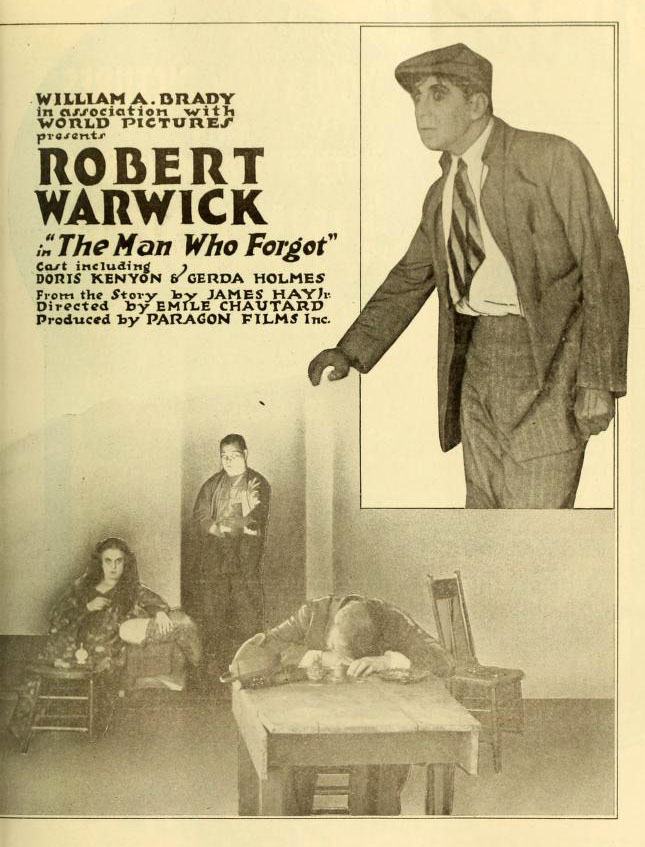
As John Smith, Warwick occupies a liminal space. He is a man without a name, a man without a lineage, and yet he becomes the most powerful voice in the Prohibition movement. This narrative choice is brilliant; by making the protagonist an amnesiac, the writers—James Hay Jr. and Emile Chautard—divest him of personal hypocrisy. He cannot be judged by his past because he literally does not possess one. This creates a stark contrast with the antagonists, specifically Senator Mallon of Ohio, played with oily precision by Ralph Delmore. Mallon represents the 'Whiskey Trust,' a cabal of interests that views the destruction of families as a necessary byproduct of profit. The political machinations here are as intricate as those seen in The Governor, highlighting the inherent corruption of the legislative process.
The romantic subplot involving Edith (Doris Kenyon) serves as the emotional anchor of the film. Kenyon brings a luminous sincerity to the role, portraying a woman caught between her father’s predatory politics and her attraction to Smith’s messianic fervor. However, their union is obstructed by the existential dread of Smith’s forgotten life. When the liquor interests attempt to dismantle Smith’s reputation by introducing a 'wife' from his past, the film shifts into a psychological thriller. The woman, a 'depraved creature' from the opium den, acts as a mirror to Smith’s former self—a reminder of the abyss he crawled out of. The tension here is palpable; Smith’s willingness to accept her claim, despite his lack of memory, underscores his profound humility and his belief in his own capacity for previous sin.
The climax of The Man Who Forgot is perhaps one of the most audacious sequences in early silent cinema. Smith summons a 'huge crowd'—an army of derelicts, the broken men and women who have been discarded by the machine of industrialization and addiction. Their march through the streets of Washington and into the Senate chamber is a proto-activist spectacle that predates the populist cinema of Frank Capra by decades. It is a visceral, unanswerable argument against the liquor trade. These are not actors in the traditional sense; they are a collective memento mori, a visual representation of the costs of 'demon rum.'
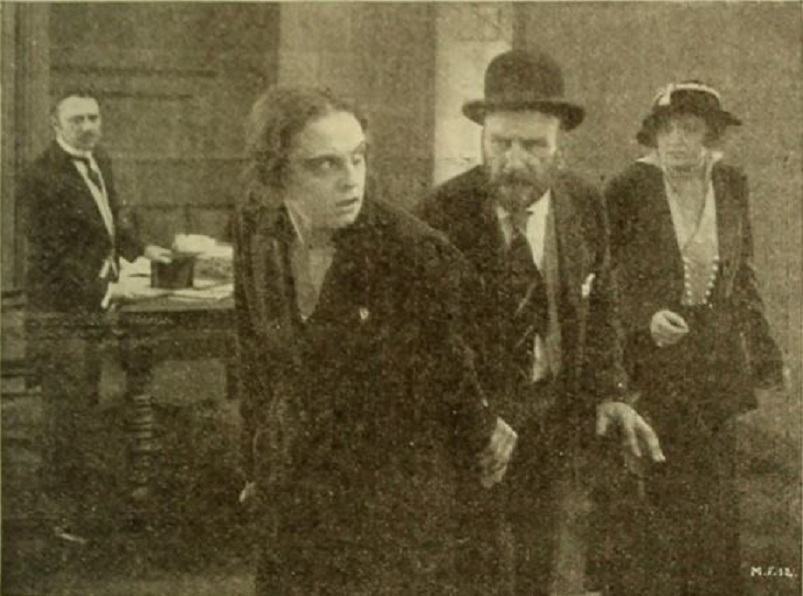
While many films of this period, like The Frame-Up, focused on individual crime and punishment, Chautard’s vision is panoramic. He uses the Senate floor as a stage for a moral reckoning. The voters are not swayed by Smith’s oratory alone, but by the physical presence of the suffering masses. This is cinema as a tool for social engineering, yet it avoids the didactic traps of lesser 'message' movies by maintaining a high level of dramatic stakes.
Technically, the film utilizes lighting and framing to distinguish between the various phases of Smith’s life. The shadows of the opium den are harsh and atavistic, whereas the political arenas of Cincinnati and Washington are bathed in a high-key, aspirational light. Chautard’s direction ensures that the pacing never falters, even as the narrative explores complex themes of identity and false accusation. The moment of Smith’s epiphany—where his memory finally returns after the 'wife' confesses her perjury—is handled with a restraint that is refreshing for 1917. Rather than a melodramatic explosion, it is a quiet, internal restoration of self.
In comparison to the grand historical epics like Marc'Antonio e Cleopatra, The Man Who Forgot feels strikingly modern. It deals with the construction of a public persona and the fragility of the human mind. Robert Warwick’s transition from a derelict to a political powerhouse is convincing precisely because he carries a vestige of that early trauma throughout the film. He is a man haunted by a ghost he cannot see, making his eventual victory all the more cathartic.
Ultimately, the film serves as a fascinating companion piece to other 1917 releases like I Accuse, sharing a preoccupation with systemic failure and the need for individual righteousness. It is a testament to the power of the silent screen to convey complex sociopolitical arguments through the sheer force of visual storytelling. While the Prohibition cause itself may be a relic of the past, the film’s exploration of redemption and the reclaiming of one's identity remains timeless.
Final Verdict: A towering achievement in early narrative film. The Man Who Forgot is not merely a piece of temperance propaganda; it is a sophisticated character study and a masterclass in political drama. Its use of the 'Army of Derelicts' remains one of the most poignant images in the history of the silent era.
IMDb 6.3
1922
Community
Log in to comment.