DbcultAccessing Vault...
6.4/10
Senior Film Conservator
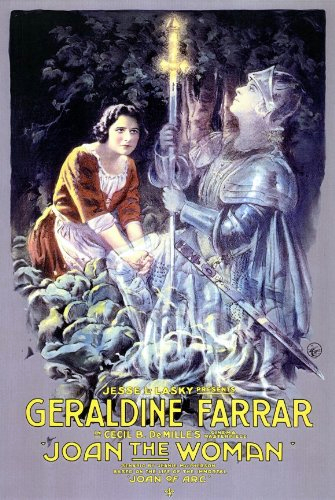
A definitive 6.4/10 rating for a film that redefined the boundaries of cult cinema. Joan the Woman remains a cornerstone of transgressive art.
Cecil B. DeMille’s Joan the Woman, a monumental silent epic from 1917, arrives on the cinematic landscape not merely as a film, but as a thundering declaration of artistic ambition and a profound meditation on faith and sacrifice, all set against the backdrop of the Great War. This isn't just a historical drama; it's a spiritual odyssey, an allegorical call to arms, and a showcase for the incandescent star power of Geraldine Farrar, whose portrayal of the Maid of Orléans remains one of the era’s most compelling performances. DeMille, ever the showman and visionary, understood the potent symbolism of Joan of Arc for a nation grappling with its own wartime anxieties, crafting a narrative that transcends mere historical recounting to become a transcendent experience.
The film daringly opens in the trenches of World War I, a bold framing device that immediately grounds the ancient legend in contemporary relevance. An English officer, Eric Trent (Wallace Reid), finds himself in a moral quandary, facing a potentially suicidal mission and the shadow of a court-martial. His despair is palpable, a reflection of the collective weariness gripping Europe. It is in this crucible of doubt that he unearths an ancient sword, a relic whispered to have belonged to Joan. This discovery acts as a powerful catalyst, plunging him into a vivid, almost hallucinatory vision of Joan's life. This ingenious narrative structure allows DeMille to bridge centuries, demonstrating the timeless resonance of Joan’s unwavering conviction and drawing a direct parallel between her struggle against oppression and the contemporary fight for freedom. The modern-day segment, though brief, sets a somber, reflective tone, imbuing the historical epic with an added layer of gravitas and urgency.
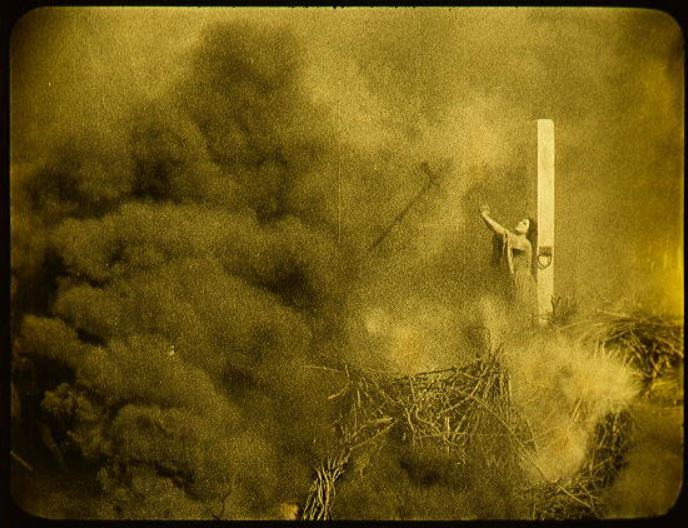
Geraldine Farrar, already a celebrated opera star, brings an unparalleled intensity and theatricality to the role of Joan. Her performance is a masterclass in silent film acting, relying on expressive physicality, piercing gazes, and an almost ethereal presence that perfectly captures Joan’s divine inspiration. Farrar’s Joan is not a demure saint but a fierce warrior, radiating both vulnerability and an unyielding spiritual strength. One can almost feel the weight of destiny on her shoulders as she transforms from a simple peasant girl, tending her flock in Domrémy, to the defiant leader of armies. Her portrayal of Joan’s initial visions, her anointing of the Dauphin, her leadership in battle, and ultimately, her harrowing trial and martyrdom, is rendered with a raw emotional power that transcends the limitations of silent cinema. The camera lingers on her face, capturing every flicker of doubt, every surge of faith, every moment of profound suffering. It is a performance that anchors the film's immense scale, making the epic feel deeply personal.
DeMille’s directorial prowess is evident in every frame, particularly in his handling of the film's ambitious battle sequences and crowd scenes. The siege of Orléans, for instance, is a marvel of early cinematic spectacle, boasting thousands of extras, intricate set designs, and dynamic action that would rival many modern productions. These scenes are not merely chaotic displays; DeMille masterfully choreographs them to convey the ebb and flow of battle, the desperation of the French, and the strategic brilliance attributed to Joan. The use of practical effects and meticulous historical recreation creates a tangible sense of authenticity. This grandiosity, however, never overshadows the film’s emotional core. DeMille consistently brings the focus back to Farrar’s Joan, ensuring that the human element remains paramount amidst the epic sweep. The visual grandeur is consistently breathtaking, leveraging the full potential of the silent medium to convey scale and dramatic tension without spoken words. The cinematography by Alvin Wyckoff, a frequent DeMille collaborator, is particularly noteworthy for its striking compositions and atmospheric lighting, which lend a painterly quality to many scenes, especially those depicting Joan's spiritual encounters or her final moments.
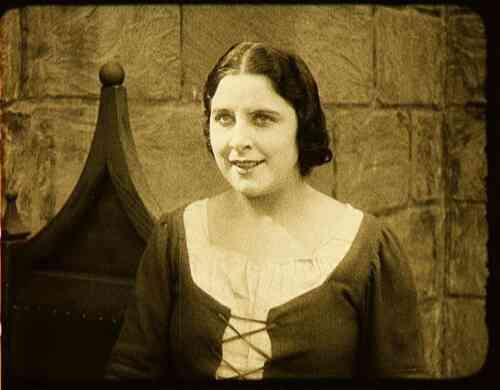
The film delves deep into themes of faith, betrayal, and national identity. Joan’s unwavering belief in her divine mission clashes sharply with the cynicism and political maneuvering of the French court and the English clergy. The film does not shy away from depicting the hypocrisy and fear that ultimately lead to her condemnation. Donald Crisp delivers a chilling performance as Robert de Baudricourt, initially dismissive of Joan, and later as a key figure in her persecution. The film effectively portrays the isolation Joan experiences, her singular conviction standing against a tide of doubt and malice. This narrative arc, from divine inspiration to tragic sacrifice, resonates profoundly, particularly given the contemporary context of a world at war. The film suggests that true leadership often comes from the most unexpected places and that conviction, even in the face of overwhelming odds, can inspire a nation.
While Joan the Woman is undeniably a product of its time, its technical achievements and thematic depth ensure its place as a significant work in cinematic history. It stands as a testament to the power of early filmmaking to tackle grand subjects with both scale and sensitivity. Compared to other historical epics of the era, such as `Sixty Years a Queen`, which focused on broad historical sweeps, DeMille's film distinguishes itself by centering its narrative on a single, compelling figure, allowing for a more intimate exploration of character amidst the spectacle. Even in more contemporary silent dramas like `The Seats of the Mighty`, which often explored complex social dynamics, `Joan the Woman` carved out a unique space by blending historical epic with profound spiritual allegory. The film’s influence can be seen in subsequent historical dramas, establishing a template for how to portray larger-than-life figures with both reverence and dramatic flair.
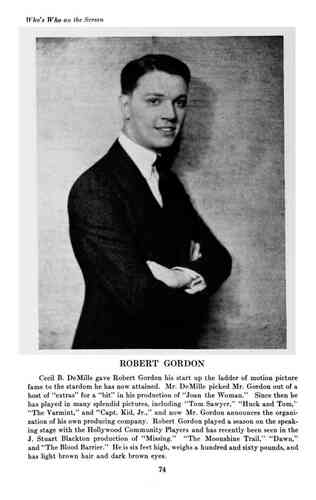
The supporting cast, though often overshadowed by Farrar's luminous presence, contributes significantly to the film's rich tapestry. Tully Marshall, Fred Kohler, and Marjorie Daw, among others, flesh out the world of 15th-century France and the WWI trenches with nuanced performances. The sheer breadth of the cast, including names like Hobart Bosworth and Robert Gordon, speaks to the immense production values and the ambition to populate the screen with believable historical figures, from skeptical nobles to loyal soldiers. Each character, no matter how minor, adds texture to the larger narrative, making the world Joan inhabits feel fully realized and lived-in. Even transient appearances, like those by Raymond Hatton and Ramon Novarro in uncredited roles, hint at the burgeoning talent pool DeMille drew upon.
The screenplay, penned by William C. de Mille and Jeanie Macpherson, is remarkably sophisticated for its time, balancing historical detail with dramatic license. They skillfully weave together the historical facts of Joan's life with the allegorical framing device, creating a cohesive and emotionally resonant narrative. Macpherson, in particular, was a formidable force in early Hollywood, shaping many of DeMille's most successful films. Her ability to craft compelling female characters and imbue them with strength and agency is particularly evident in Joan's portrayal. The dialogue, conveyed through intertitles, is often poetic and impactful, delivering key emotional beats and thematic declarations with precision. This collaborative effort between writers and director resulted in a film that is both intellectually stimulating and viscerally engaging.
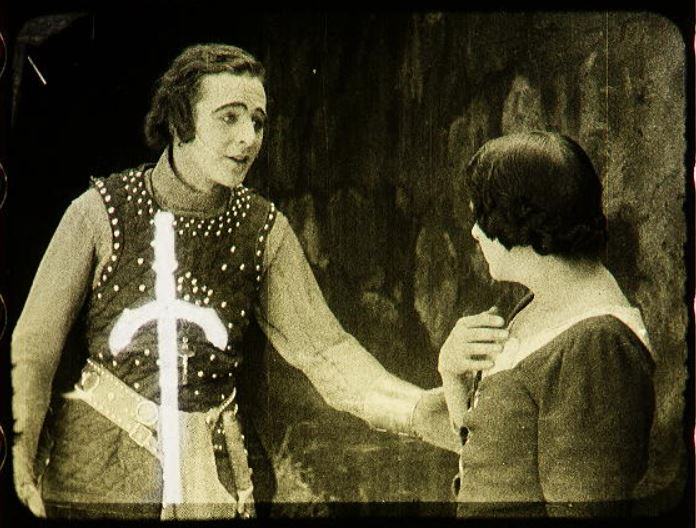
DeMille’s choice to inject a contemporary wartime narrative into a historical epic was a stroke of genius. It transformed what could have been a straightforward costume drama into a powerful commentary on courage, leadership, and the enduring human spirit in times of crisis. The officer's journey, from despondency to renewed purpose through Joan's example, serves as a poignant reminder that history is not merely a collection of past events but a living wellspring of inspiration. The film subtly suggests that the same qualities of faith and sacrifice that defined Joan are essential for overcoming the challenges of any era. This allegorical depth elevates Joan the Woman beyond mere entertainment, positioning it as a profound cinematic statement.
The film's legacy extends beyond its immediate critical and commercial success. It solidified DeMille’s reputation as a master of spectacle and a director capable of handling immense historical subjects with both grandeur and dramatic integrity. For Geraldine Farrar, it cemented her status as a screen icon, demonstrating her versatility beyond the operatic stage. Her Joan became a benchmark for future portrayals of the saint, influencing how actresses would approach such a formidable role. The film is a vital piece of silent cinema history, offering insights into the evolving art form and the ambitions of its pioneers. Its blend of historical accuracy, dramatic flair, and spiritual resonance continues to captivate audiences and scholars alike. The sheer audacity of its production, coupled with the profound emotional impact of Farrar’s performance, ensures that Joan the Woman remains a compelling and essential viewing experience for anyone interested in the foundational works of cinema.
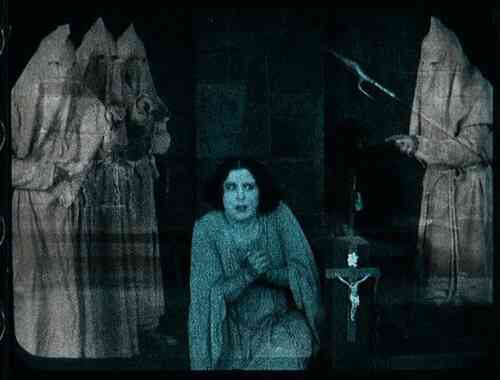
Ultimately, Joan the Woman is more than just a historical recreation; it is a timeless exploration of conviction and sacrifice. DeMille, with Farrar as his muse, crafts a narrative that speaks to the deepest human yearnings for purpose and courage. The film’s monumental scale, combined with its intimate portrayal of Joan’s spiritual journey, creates a cinematic experience that is both awe-inspiring and deeply moving. It stands as a testament to the power of film to transcend time and space, offering solace and inspiration through the stories of the past. Its innovative use of a framing device and its unwavering focus on the human element amidst epic events set it apart, making it a pivotal work in the silent era and a film that continues to resonate with powerful contemporary echoes. The meticulous attention to period detail, from the costumes to the set designs, further immerses the viewer in the 15th century, yet the underlying message of unwavering faith in the face of adversity feels utterly modern. It is a film that challenges, inspires, and ultimately, leaves an indelible mark on the viewer's consciousness.
The lasting impact of Joan the Woman lies not just in its pioneering special effects or its grand scale, but in its ability to connect with universal human experiences. It asks fundamental questions about leadership, belief, and the price of standing true to one's convictions. In an age of skepticism, Joan’s story, as told by DeMille and embodied by Farrar, serves as a powerful reminder of the transformative power of faith and the enduring legacy of those who dare to defy the odds. It is a film that demands to be seen, studied, and appreciated for its artistic merit and its profound historical significance. Its place in the pantheon of silent cinema is well-earned, a shimmering beacon of early cinematic ambition and emotional depth, proving that the silent screen could, indeed, speak volumes.
IMDb 5.5
1915
Community
Log in to comment.