DbcultAccessing Vault...
1.2/10
Senior Film Conservator
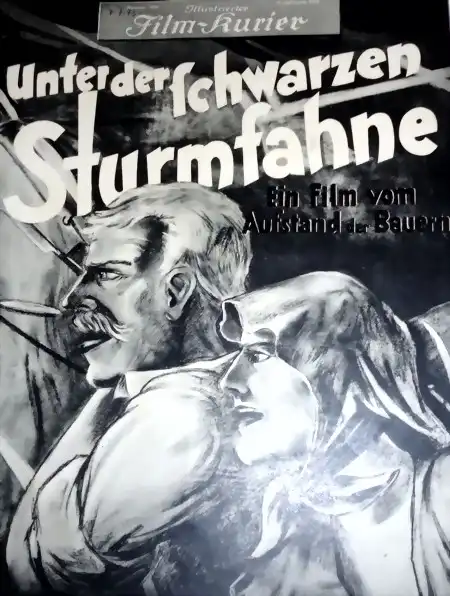
A definitive 1.2/10 rating for a film that redefined the boundaries of cult cinema. Unter der schwarzen Sturmfahne remains a cornerstone of transgressive art.
Alright, so, "Unter der schwarzen Sturmfahne" is definitely not for everyone, let’s be clear upfront. If you’re expecting big war movie heroics or a sweeping romance, you’ll hate it. This is a slow, methodical look at a regular family in Germany during World War I, and it’s **heavy**. But if you appreciate quiet, observational cinema that truly digs into the human cost of conflict *off* the battlefield, then yes, it's absolutely worth your time.
It’s a film that asks you to sit with its characters, to feel the mundane, relentless pressure they face. There’s a quiet, almost suffocating dread that builds as you watch their resources dwindle. It’s a very particular kind of historical drama, stripped of any glamor.
The plot itself is quite simple: it’s the daily lives of this average, middle-class family. They are trying to get by under the German Empire, but WWI is this unseen monster slowly eating away at everything. You don’t see many soldiers; you see the **empty pantry**.
Fritz Gottschalk, as the father, really carries a lot of the film's silent anguish. His face often just says it all. There's this one scene where he's just staring at a half-eaten loaf of bread, and the silence goes on for what feels like forever. It’s *almost* too long, but it works to show his despair. 😟
Babara Bonim, the mother, is the family's anchor, trying to stretch what little they have. You see her patching clothes, always. Her hands are constantly busy, and it feels like a race against time, like she's fighting a losing battle with thread and needle against the tide of poverty.
The kids, played by folks like Veit Rosskopf and Hedwig Jungkurth, aren't given huge dramatic arcs. They are just there, *witnessing*. Their quiet, hungry eyes are what stuck with me. You can almost feel the chill in their sparse home, not just from the cold, but from the lack of hope.
One particular moment that keeps replaying in my head: the family sits for dinner, and it’s just soup. Thin, watery soup. And they eat it so slowly, almost ritualistically, like it’s the last meal they’ll ever have. It’s not just soup; it's a symbol of their fading world. The lack of dialogue here is **powerful**.
The movie gets noticeably more tense once the rationing starts to bite really hard. The earlier scenes feel almost idyllic in comparison, even if they were already struggling. It’s a subtle shift, but you feel it.
There are no grand pronouncements about the war’s futility or anything like that. It’s all communicated through the small indignities, the worn-out shoes, the cold stares from neighbors. It’s a very grounded, almost claustrophobic experience.
I found myself noticing the textures in this film. The rough wool of a blanket, the chipped porcelain of a bowl. These small, tactile details really immerse you in their struggle. It’s not about grand sets; it's about the **threadbare reality**.
The cinematography, for an older film, manages to feel very intimate. Often the camera is just slightly too close, making you feel like you're intruding. It's a bit unsettling, but in a good way.
Niwell, who plays a neighbor, has this brief but impactful scene where he just *snaps* at his kids for wasting a tiny crumb. It's a quick, harsh moment that perfectly encapsulates the desperation boiling under the surface for everyone. It’s a flicker of the wider social tension.
The director, Rolf von Sonjevski-Jamrowski, really lets moments breathe. Sometimes they *over-breathe* a little, to be honest. But it means you really sit in the discomfort. You can almost feel the movie trying to convince you this slow, painful decay matters.
This isn't a film that offers any easy answers or tidy conclusions. It just *shows* you. It’s like a window into a quiet, forgotten corner of history. You're left with a lingering sense of melancholy, a real understanding of how war doesn’t just end on the battlefield. It lingers in every home, every empty stomach. It's a tough watch, but an important one for perspective.
IMDb —
1918
Community
Log in to comment.