DbcultAccessing Vault...
Cult Review
Senior Film Conservator
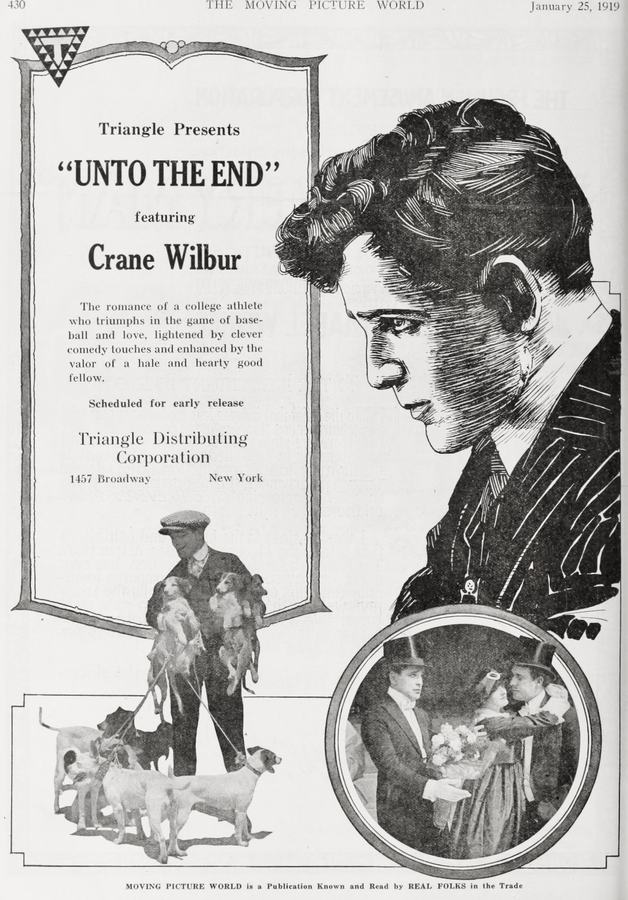
In the annals of early cinema, where narratives often hinged on grand gestures and clear-cut morality, a film like Unto the End emerges as a vibrant, if understated, gem. It’s a delightful snapshot of an era, delivered with an earnestness that feels both nostalgic and refreshingly pure. Far from the brooding dramas or slapstick farces that sometimes dominated the silver screen, this picture offers a harmonious blend of athleticism, burgeoning romance, and an underlying current of good-natured humor that truly sets it apart. It’s a testament to storytelling that doesn't rely on shocking twists or profound social commentary, but rather on the simple, yet potent, appeal of a good person striving for and achieving happiness.
At the heart of Unto the End is the compelling figure portrayed by Crane Wilbur, an actor whose presence here radiates an almost effortless charisma. Wilbur embodies the collegiate athlete not as a caricature of brawn, but as a multi-faceted individual whose prowess on the baseball field is matched by his intrinsic decency and sharp wit. His character is the quintessential "hale and hearty good fellow," a paragon of virtue whose triumphs feel genuinely earned. We witness his journey not just through the arc of a championship season, but through the more intricate dance of winning a heart. This dual narrative thread, weaving together the thrill of the game with the tender intricacies of budding affection, is handled with a deft touch, ensuring that neither aspect overshadows the other.
Wilbur's performance anchors the film, imbuing his character with a palpable sense of integrity and a charming earnestness that makes him instantly likable. He navigates the pressures of collegiate sports with a quiet determination, and the often-awkward overtures of romance with a disarming sincerity. It's a portrayal that resonates because it feels grounded in a believable human experience, making his victories, both on and off the field, all the more satisfying. Unlike some of the more dramatic and often morally ambiguous protagonists found in films like The Kiss of Hate, Wilbur's hero operates from a place of clear ethical standing, making him a refreshing and aspirational figure.
The romance in Unto the End is handled with a delicate balance of sweetness and lighthearted humor. Nan Christy, as the object of our hero’s affections, brings a delightful vivacity to her role. Her character is not merely a prize to be won, but an active participant in the romantic interplay, possessing her own charm and agency. The courtship unfolds with a series of charming encounters and witty exchanges, punctuated by those "clever comedy touches" that the plot summary so accurately highlights. These moments, often delivered through subtle visual gags or well-timed reactions, prevent the romance from becoming saccharine, instead infusing it with an infectious buoyancy.
The comedic elements are not mere distractions; they are integral to the film's texture, providing a pleasant counterpoint to the dramatic tension of the baseball games and the emotional stakes of the burgeoning relationship. Arthur Hoyt, a seasoned character actor of the era, likely contributes significantly to these lighter moments, perhaps as a bumbling friend, a well-meaning but misguided mentor, or a rival whose antics inadvertently aid our hero's cause. His presence, alongside Ida Lewis, Harrish Ingraham, and Florence Printy, forms a supporting ensemble that rounds out the narrative, adding layers of personality and warmth to the collegiate backdrop. This ensemble work is reminiscent of the collaborative spirit seen in films like The Explorer, where supporting roles are crucial to the hero's journey, albeit in a different genre.
While baseball provides the thrilling arena for much of the film's action, the true valor celebrated in Unto the End extends far beyond athletic prowess. It’s the valor of character, of steadfastness in pursuit of one's goals, and of unwavering integrity. Our hero's "good fellow" nature isn't just a descriptor; it’s a driving force. This commitment to virtue is what ultimately allows him to triumph, not just in the visible spectacle of the game, but in the quieter, more profound victory of securing genuine affection and respect. This thematic emphasis on inherent goodness and moral fortitude draws parallels to the spirit of films like Mr. Goode, Samaritan, where altruism and uprightness are central to the narrative's resolution.
The film subtly suggests that true success isn't solely defined by external achievements, but by the cultivation of an honorable spirit. This message, while perhaps simplistic by modern standards, held significant resonance in its time, offering audiences a comforting affirmation of traditional values. It’s a narrative that champions the idea that dedication, honesty, and a generous spirit are ultimately rewarded, making it an uplifting and aspirational piece of cinema. In an era that was rapidly changing, these films often served as moral compasses, reflecting societal ideals and offering blueprints for admirable conduct.
Considering the period of its creation, Unto the End likely showcases the burgeoning artistry of early filmmaking. While specific directorial credits aren't provided, one can infer a thoughtful approach to pacing and visual storytelling. The baseball sequences, for instance, would have required careful choreography and camera placement to convey the excitement and drama of the game without the benefit of rapid cuts or sophisticated special effects. The narrative flow, moving seamlessly between the athletic endeavors and the romantic interludes, speaks to a growing understanding of cinematic rhythm and audience engagement.
The film’s ability to evoke genuine emotion and convey comedic timing without spoken dialogue is a testament to the power of visual performance and well-crafted intertitles. Actors like Crane Wilbur and Nan Christy would have relied heavily on facial expressions, body language, and subtle gestures to communicate their characters’ inner lives and the nuances of their interactions. This emphasis on non-verbal communication often lends silent films a unique, almost balletic quality, and Unto the End, with its clear emotional beats and lighthearted tone, would have been a prime example of this expressive form. One could compare this to the detailed physical acting required in something like Solser en Hesse, where the entire narrative is driven by visual performance.
Placing Unto the End within the broader cinematic landscape of its time offers valuable perspective. While it shares the romantic sensibilities of films like The Cowboy and the Lady, its collegiate setting and focus on athletic achievement give it a distinct flavor. Unlike the often-stark class divisions explored in The Heiress at Coffee Dan's or the more dramatic social commentary of The Lion and the Mouse, Unto the End operates in a slightly more idealized realm, where personal virtue is the primary determinant of success, rather than inherited wealth or social standing.
It avoids the darker, more suspenseful tones of something like Voodoo Vengeance or The Shadow of a Doubt, opting instead for an optimistic narrative arc. Even in its comedic aspects, it differs from the more overtly slapstick or character-driven humor seen in other contemporary shorts. The film's charm lies in its wholesome approach, presenting a world where challenges are overcome through perseverance and good intentions, rather than through cunning or sheer force. This makes it a comforting and engaging watch, a cinematic equivalent of a warm, familiar story.
Furthermore, the depiction of college life, even if stylized, offers a fascinating glimpse into the cultural perception of higher education and youth during this period. It portrays a vibrant environment where academic pursuits, athletic competition, and social interactions intertwine, shaping young individuals into responsible adults. This focus on character development through experience, rather than just dramatic plot points, gives the film a certain depth, despite its lighthearted veneer. It's a film that celebrates youthful exuberance and the journey of self-discovery, aligning it perhaps thematically with films that explore personal growth, even if the settings are vastly different, such as The Girl from Outback which also focuses on a protagonist navigating new challenges.
What truly makes Unto the End resonate, even decades later, is its unwavering commitment to a simple, yet profoundly satisfying narrative. It's a story of a young man who excels in his chosen field, finds love, and navigates life's minor hurdles with an admirable spirit. There are no grand philosophical statements or deeply psychological explorations, nor are there the dramatic societal critiques found in films like The House of Bondage. Instead, its power lies in its unpretentious charm and its celebration of fundamental human aspirations.
The film acts as a delightful time capsule, preserving a particular brand of wholesome entertainment that prioritizes character, light humor, and the universal appeal of a love story. It reminds us that sometimes, the most enduring tales are not those that shock or provoke, but those that uplift and affirm the better angels of our nature. The skill with which the cast—Crane Wilbur, Nan Christy, Arthur Hoyt, Ida Lewis, Harrish Ingraham, Florence Printy—brings these straightforward yet endearing characters to life is commendable, making what could have been a simplistic narrative feel rich and engaging.
In an age where cinematic experiences are often complex and multifaceted, revisiting a film like Unto the End offers a refreshing palate cleanser. It’s a testament to the enduring power of classic narratives, where a good heart, a strong arm, and a dash of humor are all one needs to conquer the world, or at least, a college baseball league and the heart of a beloved. Its legacy lies not in groundbreaking technique or revolutionary themes, but in its ability to consistently charm and entertain, proving that a well-told story about honorable people achieving simple, profound victories will always find its audience. It carries a certain timeless quality, much like the classical beauty captured in Die badende Nymphe, albeit in a narrative rather than visual art form. It's a sweet, satisfying journey, from the first pitch to the final embrace.
IMDb —
1920
Community
Log in to comment.