DbcultAccessing Vault...
Cult Review
Senior Film Conservator
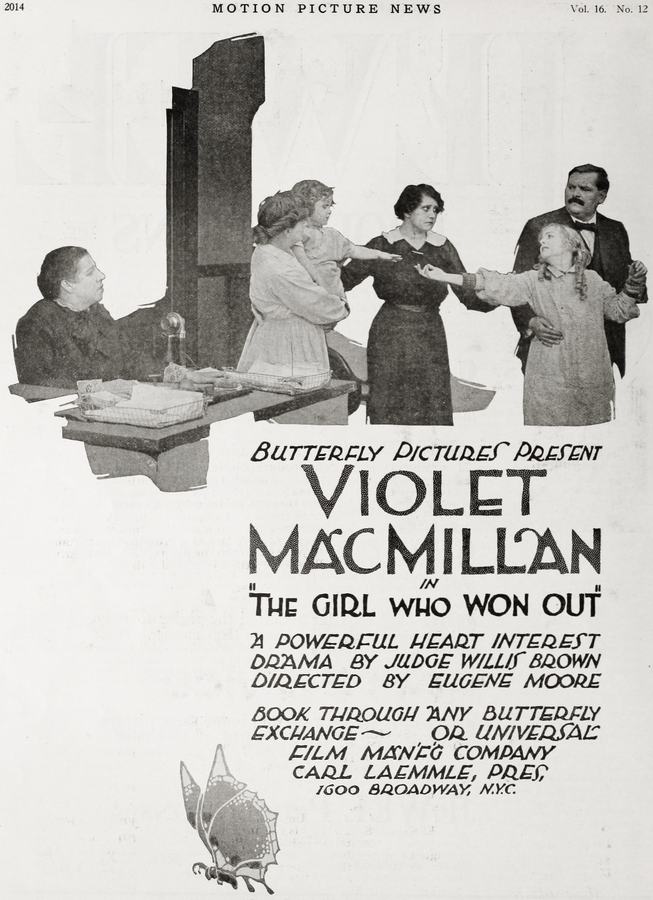
The year 1917 was a crucible for cinematic storytelling, a period where the medium began to shed its stage-bound origins for something more psychologically acute. The Girl Who Won Out stands as a towering, if often overlooked, example of this evolution. It is not merely a melodrama of separated siblings; it is a scathing indictment of the commodification of children and the rigid class structures of early 20th-century America. The film navigates the murky waters of social justice with a precision that echoes the grit of The Iron Woman, yet it maintains a distinct, almost ethereal focus on the internal landscape of its protagonist, Nancy Grimm.
The film opens with a sequence of profound loss that sets the tone for the ensuing struggle. The death of the Grimm matriarch is not treated with the histrionic sentimentality common to the era; instead, it is presented as a cold, logistical catastrophe. When the court separates Nancy and Ellen, the camera lingers on the coldness of the courtroom—a space where human connections are severed by the stroke of a pen. This judicial cruelty is a recurring theme in the works of Judge Willis Brown, whose screenplay infuses the narrative with a palpable sense of jurisprudential weight. Unlike the more fantastical elements found in Dick Whittington and his Cat, the stakes here are grounded in the terrifying reality of the indigent.
The adoption of baby Ellen by the Walsh family is portrayed not as an act of charity, but as a transaction of novelty. Mrs. Walsh, played with a chilling vacuity, views the infant as an accessory to her social standing. This critique of the upper class’s emotional sterility is a sharp contrast to the raw, bleeding heart of Nancy. While Nancy is being exploited as a servant in the Wick household—a setting that rivals the oppressive atmospheres of The Candy Girl—the film meticulously builds a case for her eventual rebellion. The Wicks represent the petty cruelties of the middle class, those who, having achieved a modicum of stability, find solace in the subjugation of those even more vulnerable than themselves.
One of the most striking sequences in The Girl Who Won Out is Nancy’s decision to shear her hair and adopt the identity of a boy. In the context of 1917, this is a radical narrative choice. It suggests that for a young woman to navigate the world with any degree of agency, she must first erase the markers of her femininity. This transformation is not played for laughs or comedic misunderstanding; it is a grim necessity. The visual of Nancy, shorn and soot-stained, wandering the rural landscapes, evokes a sense of existential dread that one might expect from Destiny: or, the Soul of a Woman.
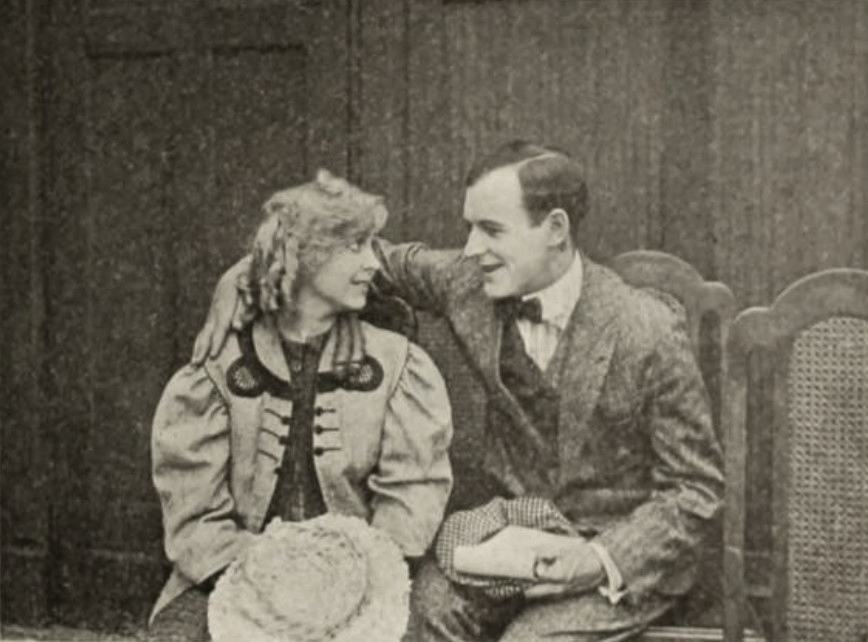
This gender-bending odyssey serves as a bridge between her life as a victim and her life as an actor. By shedding the societal expectations placed upon a girl of her station, Nancy gains the mobility required to infiltrate the Walsh estate. The tension during the retrieval of Ellen is masterfully directed. The use of shadows and the rhythmic editing create a sequence that rivals the suspense of The Fighting Trail. When Nancy finally holds her sister again, the film doesn't offer an immediate catharsis. Instead, it underscores the fragility of their situation. The police intervention that follows is a sobering reminder that in the eyes of the law, Nancy’s act of love is a crime of kidnapping.
Enter Chester Noble, the young attorney who serves as the film’s moral compass. His character represents a burgeoning progressive movement in early 20th-century law—the idea that the spirit of the law should occasionally supersede the letter of the law. Noble’s intervention is not merely a plot device; it is a philosophical argument for empathy. His struggle to convince the court to reunite the sisters mirrors the redemptive arcs found in The Man Who Found Himself. Noble is the bridge between the sterile world of the Walshes and the visceral reality of the Grimms.
The decision to send Nancy to the South is particularly fascinating. In the cinematic language of the time, the South was often depicted as a pastoral utopia, a place where the industrial and social anxieties of the North could be washed away. This transition from the gray, oppressive cityscapes to the sun-drenched, open spaces of the South provides the visual relief the audience craves. It is a thematic resolution that suggests that true healing requires a total removal from the environments that caused the trauma. This geographic shift is handled with more nuance than the rapid-fire pacing of A Million a Minute, allowing the emotional weight of the reunion to settle over the audience.
The cinematography of The Girl Who Won Out utilizes the limited technology of 1917 to create maximum emotional impact. The close-ups of Barbara Conley’s face are particularly noteworthy. Her ability to convey a spectrum of emotion—from the hollow-eyed despair of the orphanage to the fierce, protective fire of the rescue—is a masterclass in silent film acting. The lighting in the Wick household is intentionally harsh, casting long, skeletal shadows that emphasize Nancy’s isolation. In contrast, the Walsh home is filled with an artificial, blinding brightness that underscores the superficiality of their lives. This visual dichotomy is as effective as the moral contrasts explored in The Better Woman.
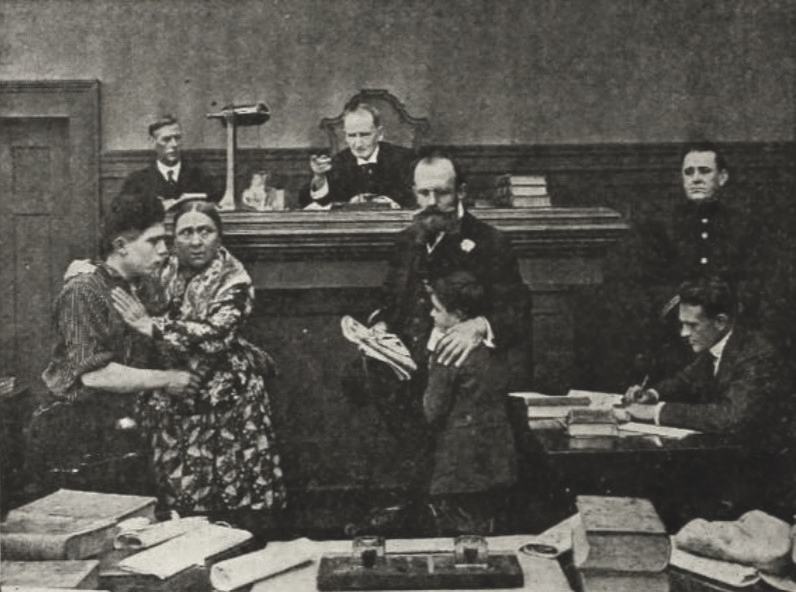
Furthermore, the film’s pacing is deliberate. It allows the moments of silence to breathe, forcing the viewer to inhabit the uncomfortable spaces of Nancy’s journey. There is a sequence in the orphanage where the children move with a synchronized, robotic despair that predates the industrial critiques of later cinema. This attention to background detail and atmospheric storytelling elevates the film above the standard fare of its time, such as the more episodic Beatrice Fairfax Episode 8: At the Ainsley Ball. The film understands that the tragedy lies not just in the major plot points, but in the mundane cruelty of a life lived without affection.
The resolution of The Girl Who Won Out is not a simple “happily ever after.” It is a hard-won peace, brokered through legal maneuvering and personal sacrifice. The final reunion of Nancy and Ellen is a powerful image of restoration, yet it is haunted by the knowledge of what was lost. The film posits that while the system may be flawed, individual acts of courage and legal advocacy can carve out spaces of humanity. This message of systemic reform through individual action is a hallmark of Judge Willis Brown’s writing, distinguishing it from the more cynical or purely escapist narratives like The $5,000,000 Counterfeiting Plot.
In the pantheon of early silent cinema, Nancy Grimm deserves a place alongside the great heroines of the era. Her journey is a precursor to the gritty realism that would eventually dominate the medium. The film’s exploration of class, gender, and the legal system remains strikingly relevant. It challenges us to look at the “unseen” children of our own society and to question the novelty with which we treat the vulnerable. As an artifact of 1917, it is a technical triumph; as a human story, it is a timeless exploration of the lengths to which one will go to protect the only family they have left. Whether compared to the intrigue of The Ghost of Old Morro or the social critiques of A Prince in a Pawnshop, The Girl Who Won Out maintains a singular, haunting power that resonates long after the final frame fades to black.
This review is part of our ongoing retrospective on the works of Judge Willis Brown and the evolution of social justice in early American cinema. For more deep dives into the forgotten gems of the silent era, stay tuned to our cinematic archives.
IMDb —
1936
Community
Log in to comment.