DbcultAccessing Vault...
Cult Review
Senior Film Conservator
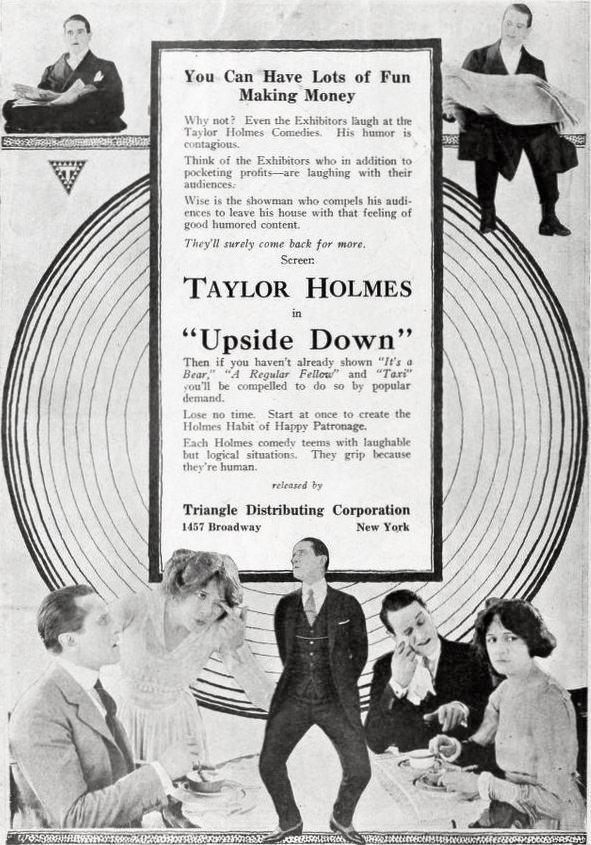
The silent era, often dismissed by casual viewers as merely a precursor to sound, was, in fact, a fertile ground for exploring the intricate psychological landscapes of human relationships. Among its lesser-known gems, Upside Down (1919) stands as a fascinating artifact, a cinematic curio that deftly navigates the turbulent waters of marital ennui, societal expectations, and the surprising lengths to which individuals will go, or be pushed, to re-evaluate their most intimate bonds. Directed with a keen eye for human folly and redemption, and penned by the discerning hand of George Agnew Chamberlain, this film offers far more than a simple narrative of domestic strife; it presents a convoluted, almost theatrical, examination of love, deceit, and the capricious nature of desire.
At the heart of this intricate tapestry is Juliet Pim, brought to life with a nuanced performance by Ruby Hoffman. Juliet is not a woman of dramatic outbursts or overt rebellion; rather, her discontent simmers beneath a veneer of polite society, a quiet despondency born from the predictability of her husband Archibald’s affections. Archibald, portrayed by Roy Applegate, is a man whose devotion is so unwavering, so habitual, that it has paradoxically become a source of profound boredom for his wife. This paradox is a potent starting point, immediately drawing the viewer into a world where comfort can breed complacency, and security, a yearning for chaos. Juliet’s quest for meaning leads her not to a lover, but to a Swami – a figure emblematic of the era’s fascination with spiritualism and self-discovery. The Swami’s pronouncement, echoing the burgeoning psychological and individualistic movements of the early 20th century, that her ‘individualism’ is being crushed, acts as a catalyst, propelling her towards a radical demand: a legitimate ‘reason’ for divorce. It’s a request that is both absurd and deeply resonant, reflecting a societal shift where women, increasingly, sought more than just the status of wife.
Archibald Pim’s response to Juliet’s demand is where the film truly begins its descent into the delightful machinations of its plot. Rather than despair or anger, Pim reacts with a bewildering compliance, a calculated calm that hints at a mind far more cunning than his placid demeanor suggests. He rents a hotel room, a stage for a fabricated indiscretion, setting in motion a chain of events that will spiral far beyond his initial intent. This initial act of staging a divorce pretext is a brilliant stroke, immediately establishing Pim not as a victim, but as an active, albeit unconventional, participant in his own marital drama. It’s a subtle foreshadowing of the grander, more intricate deception he will later orchestrate, suggesting a man who understands that sometimes, the only way to save something is to risk losing it entirely.
The narrative gains considerable momentum with the introduction of James Wortley Tammers, played by Harry Lee, and his equally neglected wife, portrayed by Anna Lehr. The symmetry is striking: another couple, another wife seeking solace from a Swami, another marriage teetering on the brink of unfulfillment. This parallel structure is not merely a plot device; it amplifies the film’s commentary on the widespread marital discontent simmering beneath the surface of seemingly respectable society. It suggests that Juliet’s predicament is not an isolated incident but a symptom of a larger cultural shift, a growing dissatisfaction with conventional roles and expectations. When Pim encounters the Tammers, the stage is set for a confluence of fates, a collision of similar predicaments that will ignite the film's central conflict and resolution.
The ensuing sequence, where Pim joins the Tammers and then embarks on a spontaneous, illicit journey to a roadhouse with Mrs. Tammers, is charged with a delicious sense of impending chaos. This escapade, seemingly an act of infidelity, is revealed to be yet another layer in Pim’s elaborate strategy. When Tammers locates them, the confrontation expected is subverted. Instead of a furious husband, we get a shared misery, culminating in an all-night wine party between the two husbands, punctuated by cabaret dancers. This scene is a masterclass in silent film storytelling, conveying the intoxicating blend of camaraderie, despair, and masculine bravado without a single spoken word. It’s a vivid depiction of men grappling with their wives’ newfound individualism, perhaps understanding, on some level, their own complicity in their wives' unhappiness. The performances of Applegate and Lee here are particularly noteworthy, conveying a range of emotions from drunken bonhomie to underlying desperation through subtle gestures and expressions.
The morning after the revelry, as Tammers sleeps off his excesses, Pim executes the film’s most audacious move: a calculated manipulation of the stock market to seize control of Tammers’ wealth. This isn't merely a personal vendetta; it's a strategic maneuver that elevates the film from a domestic drama to a thrilling narrative of financial intrigue. The silent era, while often focusing on social dramas, was not averse to depicting the cutthroat world of finance, and Upside Down uses it as a powerful tool for both plot advancement and character development. The cold, precise execution of this financial coup by Pim reveals a hitherto unseen dimension of his character – a man of formidable intellect and strategic foresight, capable of operating on multiple chessboards simultaneously. This scene might remind contemporary viewers of similar intricate financial plotting seen in later films, showcasing how early cinema already understood the dramatic potential of economic power plays.
The subsequent newspaper reports, falsely proclaiming Pim’s elopement with Mrs. Tammers, serve as the ultimate test of Juliet’s true feelings. Faced with the stark reality of her husband’s perceived departure, her abstract yearning for ‘freedom’ dissipates, replaced by a profound realization of what she stands to lose. This pivotal moment underscores a recurring theme in many silent films of the era: the idea that sometimes, the true value of something is only recognized in its absence. It’s a sentiment explored in other contemporary dramas like Blind Husbands, which also delves into the consequences of marital neglect and the rediscovery of spousal affection through external threats. Ruby Hoffman’s portrayal of Juliet’s dawning realization is particularly poignant, her expressions conveying a rapid shift from intellectual dissatisfaction to raw, emotional attachment.
The grand reveal of Pim’s true intentions — that he was not eloping, nor ruining Tammers, but rather saving him from a larger, more insidious scheme to bankrupt him — is the film’s most satisfying twist. It transforms Pim from a potentially errant husband into a benevolent, albeit unconventional, hero. This revelation recontextualizes all his preceding actions, imbuing them with a deeper, more noble purpose. It’s a clever narrative device that allows for a resolution where all parties emerge, if not entirely unscathed, then certainly enlightened. The financial manipulation, initially appearing as an act of revenge or opportunism, is unveiled as a strategic defense, a testament to Pim’s loyalty to his friend, even as he uses their wives' discontent as a means to an end. This intricate plotting, courtesy of George Agnew Chamberlain, demonstrates a sophistication in screenwriting often underestimated in early cinema.
The ensemble cast delivers performances that are both era-appropriate and surprisingly nuanced. Ruby Hoffman, as Juliet, carries the emotional weight of a woman grappling with existential boredom, her transformation from a detached intellectual to a passionately devoted wife being the film’s emotional anchor. Roy Applegate, as Archibald Pim, is a revelation, portraying a character whose quiet exterior belies a sharp intellect and a deeply devoted heart. His ability to convey complex motivations through subtle shifts in posture and gaze is a testament to the power of silent acting. Harry Lee and Anna Lehr, as the Tammers, provide excellent foils, their parallel marital woes reflecting and amplifying the central themes. Taylor Holmes, though his specific role details are less prominent in the plot summary, likely contributed to the film’s overall texture, as was common with strong supporting players of the period.
The film’s thematic exploration of individualism versus the sanctity of marriage is particularly relevant. In a society undergoing rapid change, with women gaining more autonomy and questioning traditional roles, Upside Down acts as a fascinating snapshot of these evolving dynamics. Juliet’s initial desire for ‘freedom’ is not necessarily condemned but is skillfully shown to be a journey of self-discovery that ultimately leads her back to a deeper appreciation of her existing bond. This resonates with similar narratives in films like The World and the Woman, which also explored women’s burgeoning independence and their place within societal structures. The film doesn't preach; instead, it observes the complex interplay of desire, duty, and circumstance, allowing the characters to learn through their experiences.
From a technical standpoint, Upside Down showcases the strengths of early silent cinema. The direction is fluid, utilizing effective staging and clear visual storytelling to convey plot points and emotional beats. Intertitles are used judiciously, complementing rather than overshadowing the visual narrative. The pacing, while deliberate by modern standards, allows the audience to fully absorb the unfolding drama and the psychological nuances of the characters. The film's ability to maintain suspense and deliver satisfying twists without the aid of dialogue speaks volumes about the filmmakers’ mastery of visual rhetoric. The portrayal of the roaring twenties’ burgeoning financial markets, even if simplified, adds a layer of historical authenticity and dramatic tension. This intertwining of personal drama with broader societal and economic currents is a hallmark of intelligent filmmaking, regardless of the era.
The resolution, with Pim selling back most of the stocks and the couples reuniting, might seem a neat wrapping-up, but it’s earned through the elaborate journey of self-deception and mutual rediscovery. It’s a testament to the idea that sometimes, the most circuitous routes lead to the most profound truths. The film ultimately champions the idea of a conscious, re-affirmed partnership over a complacent one. It suggests that true love isn't just a given, but something that must be tested, challenged, and ultimately, chosen anew. In its intricate plot, its insightful characterizations, and its surprisingly modern themes, Upside Down emerges as a compelling piece of cinematic history, inviting contemporary audiences to appreciate the sophistication and enduring relevance of silent film. It’s a delightful journey into the unexpected convolutions of the human heart and the ingenious lengths to which one man will go to set his world, and his marriage, right side up again. The film, despite its age, offers a timeless reflection on the complexities of relationships and the often-unforeseen paths to happiness, making it a worthy subject for rediscovery and appreciation today. It reminds us that even in the most mundane of existences, the potential for grand, transformative drama always lurks just beneath the surface, waiting for a Swami's advice, or a clever husband's scheme, to bring it to light.

IMDb 6.5
1936
Community
Log in to comment.