DbcultAccessing Vault...
5.9/10
Senior Film Conservator
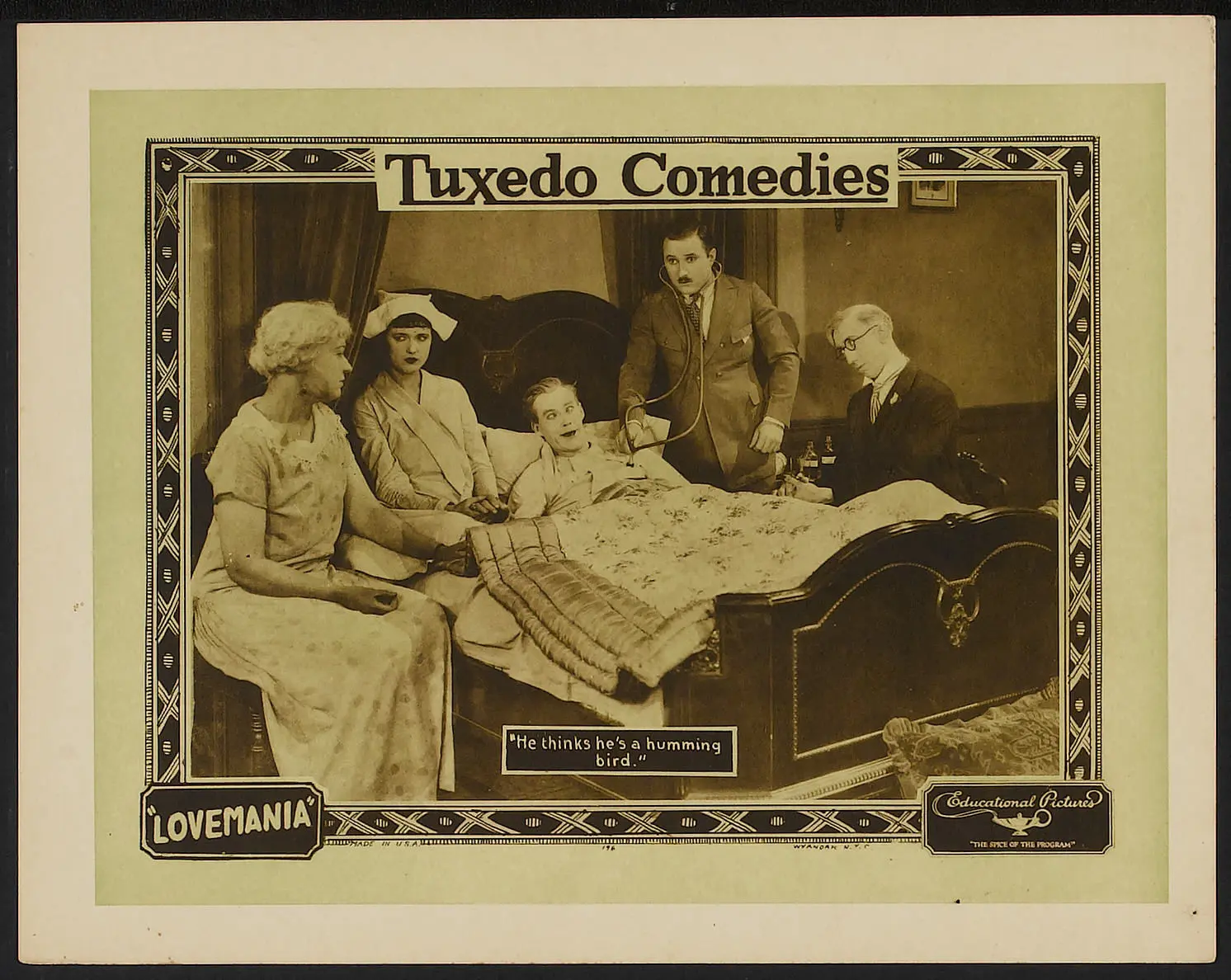
A definitive 5.9/10 rating for a film that redefined the boundaries of cult cinema. Lovemania remains a cornerstone of transgressive art.
In the annals of early cinematic farce, few narratives spiral into such delightful and unexpected absurdity as Al St. John's 1924 silent comedy, Lovemania. This isn't merely a film; it's a meticulous orchestration of deceit, a comedic ballet of mistaken identities and fabricated madness that culminates in one of the most exquisitely ironic plot twists of its era. At its core lies a premise ripe for comedic exploitation: a man, Al St. John's character, already comfortably ensconced in matrimony with Doris, receives a tantalizing letter. The missive, ostensibly from his affluent Uncle George Davis, promises a staggering million-dollar inheritance—a life-altering sum—but with a single, maddening caveat: the beneficiary must remain unwed. This seemingly straightforward predicament, which in lesser hands might lead to a simple, if unethical, pretense of bachelorhood, instead ignites a spark of elaborate genius in the minds of St. John and his quick-thinking best man, John Sinclair.
What unfolds is a masterclass in theatrical charade. Eschewing the obvious, St. John and Sinclair devise a strategy so convoluted, so audacious, that it borders on the brilliant. Their aim is not just to fool Uncle George, but to win his profound sympathy for the very institution of marriage, thereby circumventing the inheritance clause through emotional manipulation. St. John takes center stage in this grand performance, adopting the persona of a man utterly unhinged by the cruel irony of his situation. He is, to all appearances, driven to the brink of madness by the thought that his love for Doris and the sanctity of marriage are irreconcilable with his impending fortune. His wife, Doris, a willing accomplice, transforms into his dedicated 'nurse,' her every gesture imbued with a concerned, professional air. A trusted friend, presumably Glen Cavender, assumes the role of a vigilant 'keeper,' ensuring the 'patient's' erratic behavior remains contained, while John Sinclair, with a gravitas befitting his fabricated medical credentials, steps into the shoes of the 'doctor.'
The conspirators weave a compelling narrative for Uncle George: St. John's profound despair over his inability to marry due to the inheritance clause has utterly shattered his mental faculties. To further solidify this illusion, St. John performs a series of breathtakingly exaggerated fits and tantrums, particularly whenever the subject of 'love' or 'marriage' is broached. He 'raises the roof' with his theatrical outbursts, flailing and bellowing, convincing Uncle George that he is witnessing a man truly tormented by his predicament. These moments, delivered with the characteristic physical prowess of silent era comedians, are the very essence of Lovemania's comedic power. The sheer commitment to the bit, the escalating absurdity of St. John's 'madness,' is both hilarious and, within the context of the film, surprisingly convincing to the mark.
Al St. John, a prolific comedian and character actor of the silent screen, brings a robust physicality and expressive range to his role. His comedic timing, honed through years in vaudeville and countless two-reelers, is impeccable. He understands the mechanics of the visual gag, the power of a well-timed stumble, a wild-eyed stare, or a dramatic collapse. Doris Deane, as his wife and 'nurse,' provides a crucial grounding element, her feigned concern adding a layer of authenticity to the madness. John Sinclair, as the 'doctor,' often plays the straight man, his serious demeanor amplifying the comedic impact of St. John's antics. The ensemble works in concert, a well-oiled machine of deception, each member contributing to the elaborate illusion. The film's pacing is brisk, typical of silent comedies designed to keep audiences engaged with a rapid succession of gags and plot developments. Title cards, used judiciously, provide necessary exposition and comedic punchlines, guiding the viewer through the increasingly intricate web of lies.
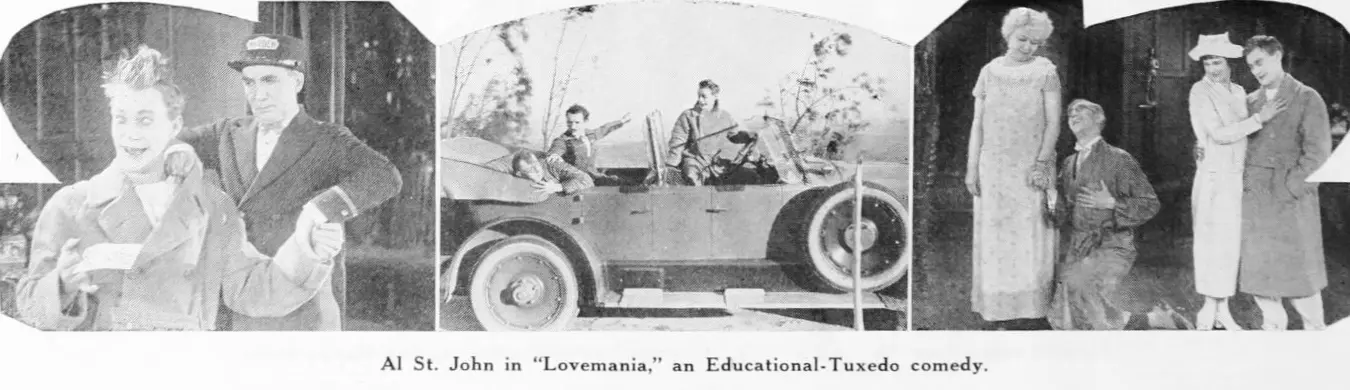
The comedic heart of Lovemania beats strongest in its willingness to push the boundaries of plausibility. The audience is privy to the deception from the outset, allowing for a rich vein of dramatic irony. We watch, amused, as Uncle George falls deeper and deeper into the trap, his exasperation and eventual sympathy growing with each of St. John's fabricated episodes. The film doesn't just rely on slapstick; it builds its humor on the intellectual delight of witnessing a meticulously planned con unfold. The absurdity of the situation is amplified by the sheer earnestness with which the conspirators execute their roles, and the genuine distress they manage to evoke in their target.
The intricate, multi-layered deception at the heart of Lovemania finds a fascinating kinship with other silent comedies that revel in elaborate schemes and mistaken identities. One cannot help but draw parallels to the ingenious setups found in films like Buster Keaton’s The High Sign. In Keaton's masterpiece, a down-on-his-luck protagonist inadvertently becomes entangled in a convoluted plot involving a secret society and a contract hit, navigating a labyrinth of misunderstandings and fabricated scenarios. Both films masterfully exploit the comedic potential of a central character forced to maintain a preposterous façade, leading to escalating farcical situations. While Keaton’s character is primarily motivated by survival and a desire to avoid trouble, St. John’s is driven by pure avarice, yet the mechanics of their respective deceptions share a common thread: the meticulous construction of an alternative reality to manipulate others for personal gain. The joy for the audience in both cases stems from watching these elaborate plans unfold, often teetering on the brink of exposure, yet miraculously sustained by quick thinking and sheer comedic will. This shared DNA underscores a particular strain of silent comedy that valued ingenuity in plotting as much as physical humor.
The film also subtly touches upon themes prevalent in the early 20th century: the allure of sudden wealth, the lengths to which individuals might go to secure it, and the often-absurd conditions attached to such fortunes. Inheritance plots were a staple of literature and theater, reflecting societal anxieties and aspirations surrounding class mobility and economic opportunity. Lovemania taps into this cultural zeitgeist, turning a potentially dramatic scenario into a vehicle for lighthearted, yet pointed, social commentary on human greed.
The culmination of their elaborate stratagem sees Uncle George, thoroughly convinced and emotionally drained, finally capitulate. He is informed that St. John, in a miraculous recovery spurred by his 'love,' has indeed married. The much-coveted million-dollar check is ceremoniously handed over, seemingly bringing the convoluted scheme to a triumphant close. The audience, much like the conspirators, might breathe a sigh of relief, perhaps even a chuckle at the audacity of it all. But it is precisely at this moment, when victory seems assured, that Lovemania delivers its most devastating and brilliant comedic blow.
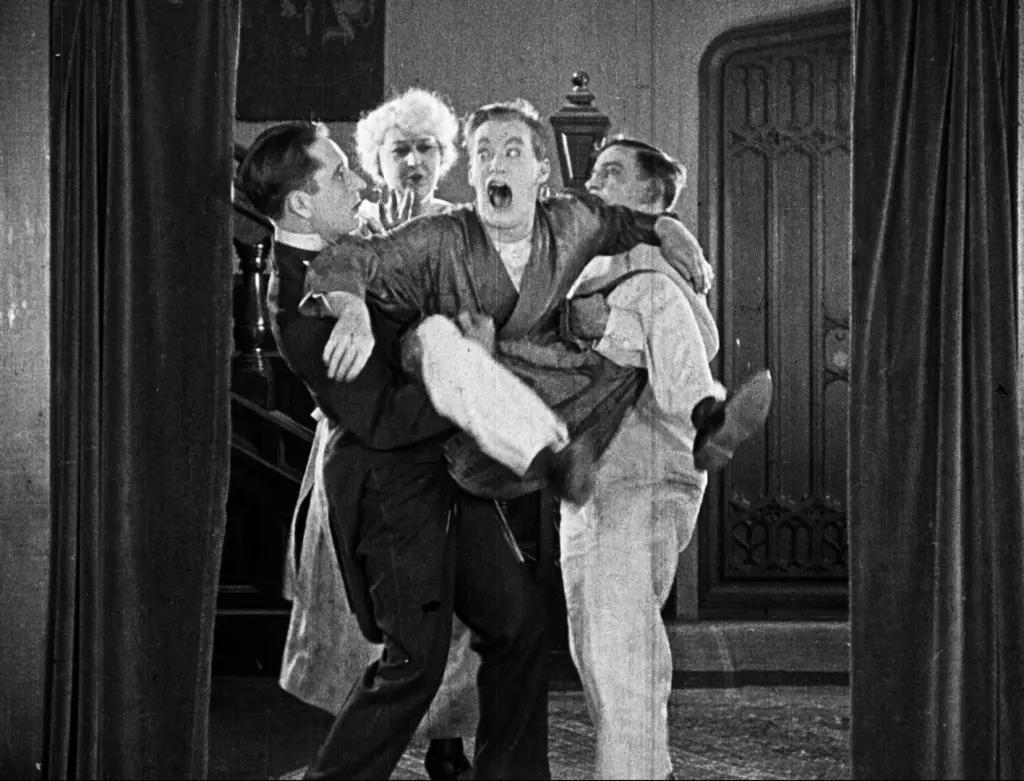
A stranger materializes, seemingly out of nowhere, and unceremoniously apprehends 'Uncle George,' escorting him away. The revelation that follows is nothing short of a comedic masterpiece: the man they had so painstakingly, so theatrically, and so cunningly deceived was not the genuine Uncle George at all, but an escaped lunatic from a nearby asylum. This extraordinary twist recontextualizes every preceding moment of the film. The entire intricate edifice of their deception crumbles into a pile of glorious, ironic rubble. Their elaborate charade of feigned madness was performed for a man who was genuinely, clinically insane. The layers of irony are almost dizzying, transforming what was already a clever farce into a profound meditation on the nature of reality, perception, and the fine line between sanity and madness—or perhaps, more accurately, the fine line between the sane performing madness and the truly insane behaving… well, as they do.
This final reveal isn't just a punchline; it's a structural triumph. It retroactively imbues every scene with a new layer of meaning, making the audience re-evaluate Uncle George's reactions, his gullibility, and even the very premise of the joke. Was his susceptibility a symptom of his own condition, or merely the natural consequence of an expertly executed con? The film leaves us to ponder these questions, adding intellectual depth to its slapstick humor. It's a testament to the ingenuity of silent film writers like Al St. John, who understood that true comedy could also be profoundly clever and surprisingly poignant.
Lovemania, while perhaps not as widely celebrated as the works of Chaplin or Keaton, stands as a vibrant example of the creative spirit thriving in the silent era. It showcases the inventiveness required to tell compelling stories without spoken dialogue, relying instead on visual storytelling, exaggerated performances, and meticulously crafted plot mechanics. The film's ability to build such an elaborate comedic structure and then demolish it with a single, devastatingly clever twist speaks volumes about its quality.
The performances are energetic and committed, particularly St. John's, who navigates the delicate balance between convincing madness and overt theatricality with aplomb. His physical comedy is a delight, but it's the underlying intelligence of the screenplay, penned by St. John himself, that truly elevates the film. It's a narrative that rewards attention, inviting viewers to appreciate the layers of misdirection and the sheer audacity of its premise. For enthusiasts of silent film, or anyone with an appreciation for well-crafted comedic irony, Lovemania offers a delightful journey into a world where the pursuit of wealth leads to the most unexpected, and hilariously futile, of endeavors. It serves as a charming reminder that even in the absence of sound, the power of a good story, a clever twist, and genuine comedic talent can resonate across decades, continuing to entertain and surprise audiences with its timeless appeal.
The film’s enduring relevance lies not just in its historical context as a product of early American cinema, but in its universal themes. The desire for wealth, the willingness to deceive, and the profound irony of unintended consequences are all elements that transcend time and medium. St. John's portrayal of a man teetering on the edge of sanity, albeit a feigned one, is both exaggerated for comedic effect and surprisingly nuanced in its execution. The chemistry between the main conspirators—St. John, Deane, and Sinclair—is palpable, their collective effort in maintaining the illusion driving much of the film’s sustained humor. Their shared glances, subtle cues, and synchronized reactions to Uncle George’s growing exasperation are masterstrokes of silent acting, conveying volumes without a single uttered word.
Ultimately, Lovemania is more than just a forgotten relic; it’s a vibrant testament to the ingenuity and boundless creativity that defined the golden age of silent comedy. It challenges viewers to engage with its narrative on multiple levels: to laugh at the physical gags, to admire the cleverness of the plot, and to revel in the ultimate, deliciously ironic punchline. This film serves as a compelling argument for revisiting the vast and varied landscape of early cinema, where gems like Lovemania continue to sparkle with their unique blend of humor, wit, and unexpected depth. It's a reminder that sometimes, the greatest jokes are those that are played not just on the characters within the story, but subtly, expertly, on the audience itself.
IMDb —
1919
Community
Log in to comment.