DbcultAccessing Vault...
5.3/10
Senior Film Conservator
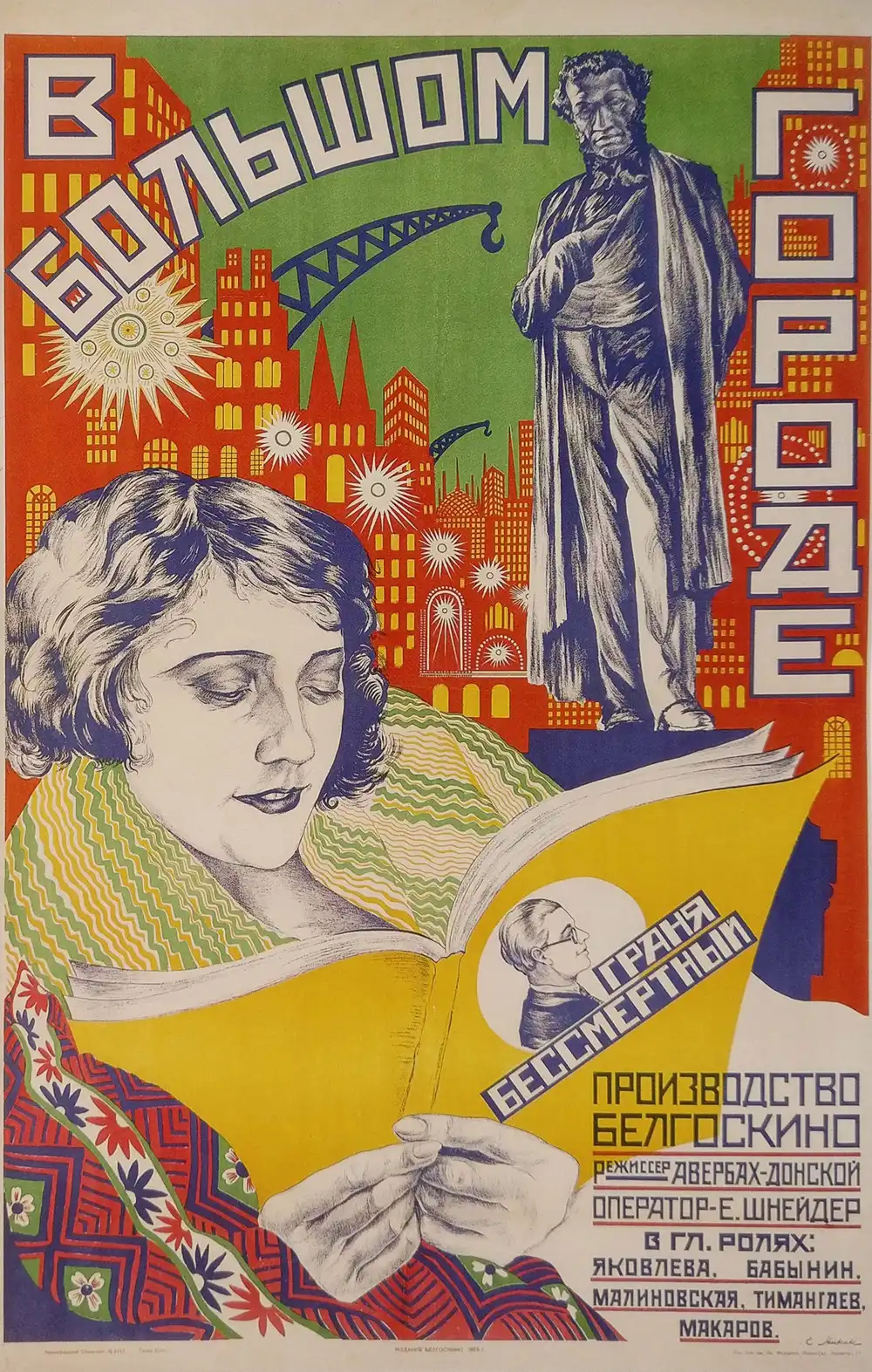
A definitive 5.3/10 rating for a film that redefined the boundaries of cult cinema. V bolshom gorode remains a cornerstone of transgressive art.
V bolshom gorode is a bit of a curious watch, honestly. If you're into those early Soviet era silent films that try to capture the spirit of a new world, you might find something interesting here, especially its raw energy. But if you're expecting a tight plot or polished acting, well, you'll probably be bored stiff. This one's really for the film history buffs or folks who enjoy seeing Moscow grow on screen, even if the story feels a little... wandering. 🏗️
The movie kicks off with Ivan and Pyotr, two country lads, heading to Moscow. You immediately get this sense of big hopes, even without dialogue. They're just two faces in a crowd, eager.
Ivan, played by Aleksandr Gromov, pretty quickly lands a job in construction. And this is where the film really shines for a bit. You see these incredible shots of actual building sites, cranes swinging, people toiling. It’s almost like a documentary segment slipped into the narrative.
He dreams of being an inventor, always sketching things. It’s a very earnest portrayal. There's a scene where he's looking at blueprints, and the camera just holds on his face for a good few seconds. You really feel his quiet ambition.
Pyotr, on the other hand, well, he goes a different route. He hooks up with this crowd of poets and intellectuals. They hang out in smoky rooms, reciting verse, looking very serious. Aleksandr Timontayev plays him with this kind of brooding intensity that felt a little overdone sometimes. Like, you can almost feel him trying to look profound. 🎭
His journey is supposed to be the "decadent" one, I guess. Lots of dramatic hand gestures during his poetry readings. One bit, he's reciting, and the camera is zooming in and out on his face. It’s all very theatrical.
The contrast between Ivan and Pyotr is the whole point, of course. City life offering two very different paths. One building the new world, the other… well, writing about it, I suppose.
There’s a young woman, Lisa (Galina Malinovskaya), who Ivan meets. Their interactions are sweet, very simple. A shared glance, a small smile. It’s a nice counterpoint to all the city's hustle and bustle. Their little moments feel quite genuine.
What really sticks with me are the shots of Moscow itself. The sheer scale of the city, the new buildings rising. It’s a character on its own. The film often pulls back to show the busy streets, the trams, the crowds. It makes you realize how much the city was changing then.
Sometimes the pacing feels a bit off. There are long stretches of just showing people working or walking, which is good for atmosphere, but it doesn't always push the story forward. You kind of just exist in the moment with the characters.
Pyotr’s world, with all its artistic angst, gets a bit repetitive. How many times can you see someone dramatically read a poem while smoking? It feels a little like the movie is saying, "See? This is what happens when you don't build things."
Ivan, though, his story feels more grounded. You believe in his simple goals. There’s a scene where he's high up on a scaffold, looking over the cityscape. It's a quiet, powerful image. Just him and the future he's helping build.
The ending wraps things up in a way that probably felt very satisfying to audiences at the time. It really hammers home the message about which path is the "right" one for the new society. No spoilers, but you can guess.
Overall, it’s a fascinating glimpse into a specific time and place. Not a perfect film, by any means. But it has these little pockets of real sincerity, especially when it focuses on the city and the workers. Don't expect a thrilling narrative, but for a slice of history, it's pretty neat.
IMDb 7.8
1926
Community
Log in to comment.